That is 0 articles you have read today.
The Aporia is free and carries no advertising, so readers are the only
thing paying for it. If you are getting this much out of it, a small
donation is what keeps it independent.
Daily limit reached
You have read 0 articles today.
That is more than the 15 a day The Aporia gives away,
and well past what it can carry on nothing. Your allowance resets at
midnight.
There is no advertising here and nothing about you is sold, so readers
are the only thing paying for it. If the site is worth this much of
your day, it is worth a few dollars.
Everything else stays open: the
maps, the
directory and
search do
not count against this, and neither does re-opening something you have
already read today.
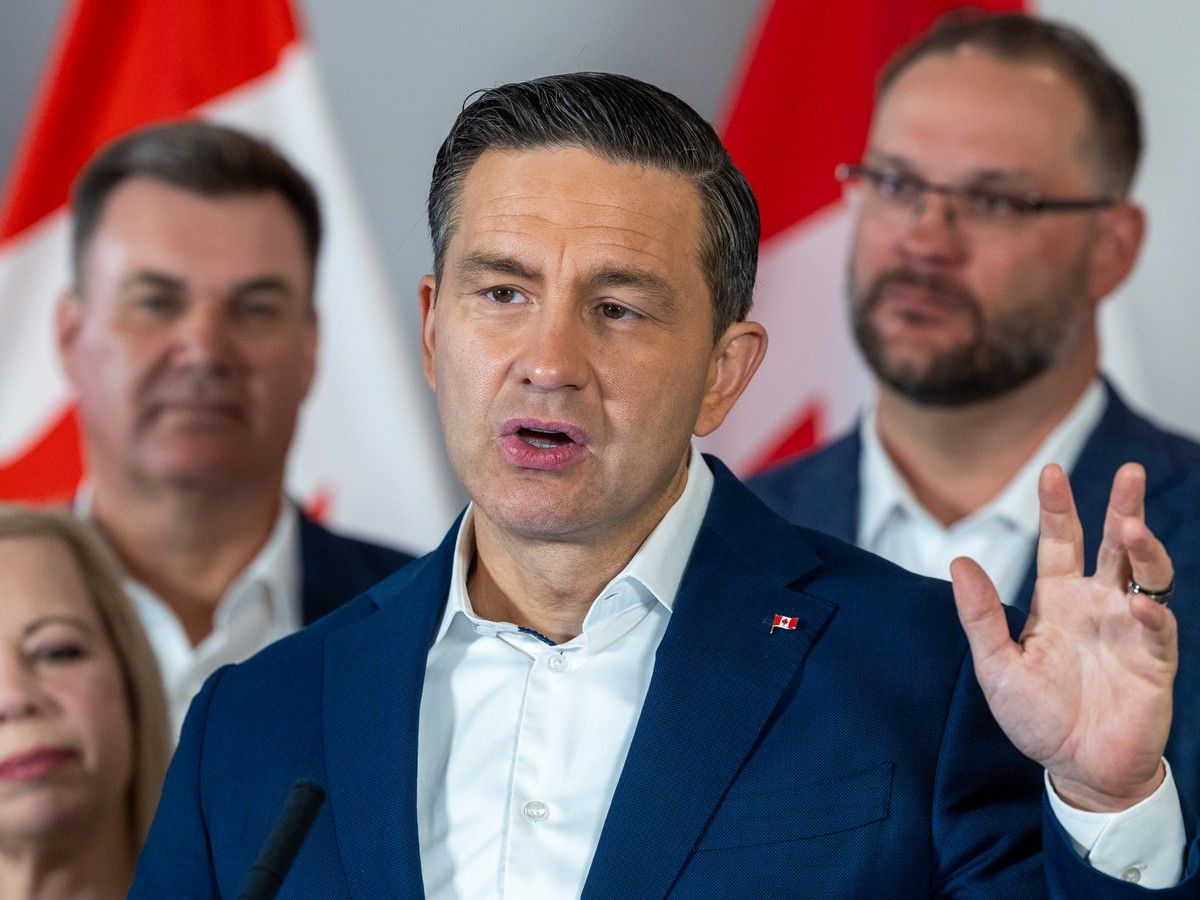
Erin O'Toole's successor as Conservative leader, Pierre Poilievre, addressed his party’s caucus in Penticton, British Columbia, emphasizing plans for significant budget cuts from wasteful spending and bureaucracy. He criticized the governing Liberals for being out of touch with financially strained Canadians and proposed focusing on outcompeting rather than taxing American competitors. Amid reports of internal dissension and declining support, Poilievre did not address his party’s struggles directly but instead focused on differentiating the Conservative stance from those of Prime Minister Mark Carney's government, which has seen growing approval in recent opinion polls.
Written by the local model on 2026-09-17,
using this article's own text rather than the other coverage of the
same event (that is the story summary below).
Story summary
Pierre Poilievre, leader of the Conservative Party in Canada, convened a strategy session with Conservative MPs in Penticton, B.C., ahead of Parliament's fall return. The meeting follows a summer marred by internal conflicts within the party and polling data showing the Conservatives trailing Prime Minister Mark Carney’s Liberals by over 10 percentage points (46% for Liberals vs. 33% for Conservatives). During his address, Poilievre urged unity behind national interests, criticized government policies on foreign trade and immigration, and promised to cut wasteful spending if elected. He emphasized that Canada should compete with rather than mirror the U.S., rejecting potential EU influence over Canadian policy decisions.
Written for “Canadian Politics Poilievre Moves” on 2026-09-17,
grounded in this article and the 2 other(s) covering the same event.
Why this leaning score
The article's own words the score was based on. Each is quoted
verbatim and was checked against the article text before being
stored, so you can find it in the original.
Leaning score +0.45 for article 14825 (high confidence, 1 verified quote) · logged 2026-09-17
—
Repeating his recent emphasis on saving Canadians’ money, Poilievre said the cuts would come largely from reducing the federal bureaucracy, foreign aid, corporate welfare, fake asylum claims and “boondoggles” like the government’s high-speed rail plan.
uncertain
cuts → repeat → plan
Canadian businesses and consumers can’t afford the wasteful spending, Poilievre told his party’s MPs during the first of two days of caucus meetings.
asserted
Poilievre → afford → meetings
“They’re out of touch,” he said of the governing Liberals, “and Canadians are out of money.”
asserted
Canadians → ’re → money
The Conservative leader also tried to create space between himself and Prime Minister Mark Carney by saying that Canada doesn’t need to match American tariffs with counter-tariffs.
asserted
Canada → try → tariffs
“We must outcompete the Americans, not out-tax them.”
And in response to reports that Carney may be moving Canada towards a closer relationship with the European Union, Poilievre told his caucus that Conservatives support free trade but not European taxes, laws and open borders.
uncertain
Conservatives → outcompete → trade
Canadian policy decisions can’t be made in Washington, Beijing or Brussels, he added.
asserted
he → make → Washington
“Canadians are not pawns on a global chess board,” he said.
asserted
he → say → board
Poilievre, facing reports of dissension within his caucus as Carney and his government soar in recent opinion polls, did not address his party’s struggles during his 20-minute speech.
asserted
Carney → face → speech
But MP Melissa Lantsman, the party’s deputy leader, acknowledged earlier in the day to reporters that “this is not the position we want to be in at this juncture,” she said when asked about caucus morale.
asserted
she → acknowledge → morale
Lantsman also said that MPs were gathering to discuss their tactics and strategies for the upcoming parliamentary session, which would be shared once MPs return to Ottawa.
asserted
MPs → say → Ottawa
Carney and the Liberals are attracting widespread support among Canadians, according to opinion polls, as they attempt to tackle the country’s economic challenges, particularly the Trump trade tariffs.
uncertain
they → attract → challenges
Recent opinion polls show the Conservatives’ challenges.
asserted
polls → show → challenges
The Liberals have been in power for more than a decade and some Conservative MPs are beginning to question if they see a light at the end of the tunnel.
asserted
they → begin → tunnel
An Abacus Data poll from earlier this month found that 54 per cent of Canadians have a positive impression of Carney, with just 27 per cent of respondents saying they have a negative view of the prime minister.
asserted
they → find → minister
And 59 per cent said they approve of the government’s performance.
asserted
they → say → performance
The Liberals also lead the Conservative in most recent polls by at least a dozen percentage points, raising questions about the Tories’ strategies and leader.
asserted
Liberals → lead → strategies
The Conservatives have also been hit with internal squabbles and four caucus defections to the Liberals over the last year.
asserted
Conservatives → hit → year
In a recent byelection in Quebec that following the appointment of MP Richard Martel to the Senate, the Conservatives finished third.
asserted
Conservatives → follow → Senate
 The Aporia