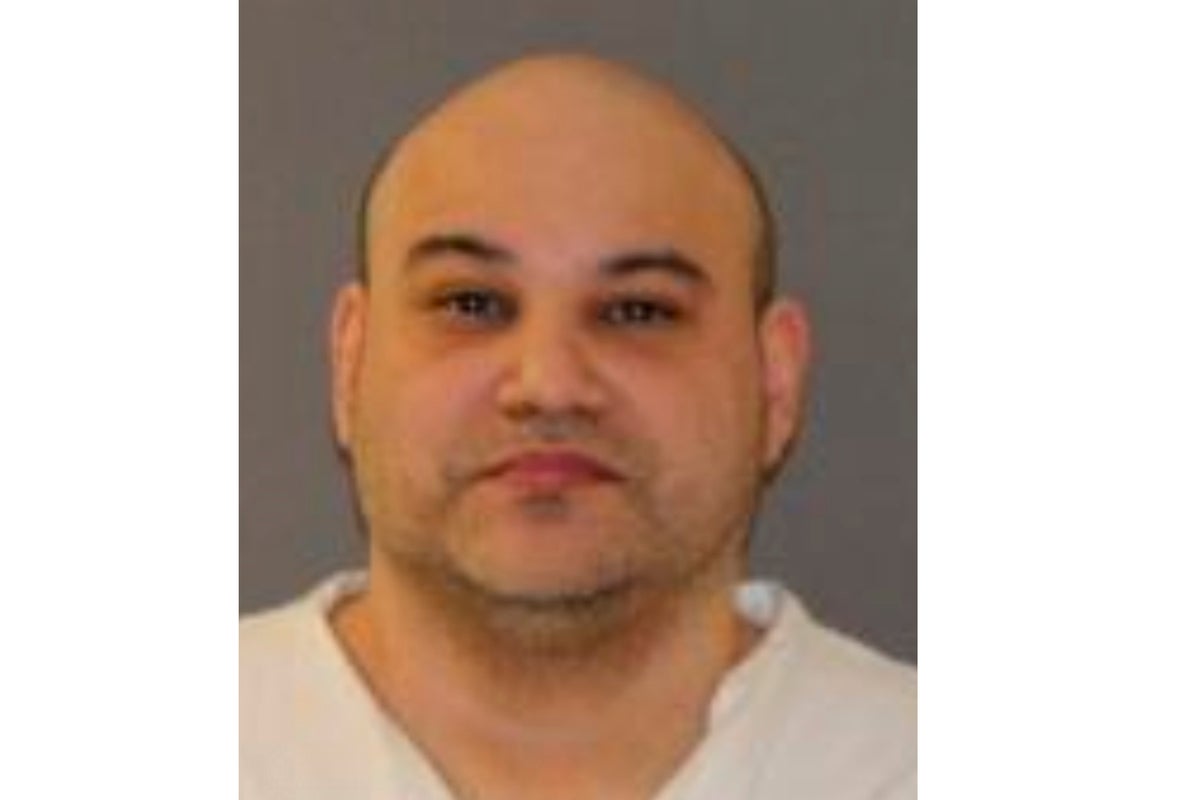
The U.S. was preparing to carry out two executions on Thursday, one in Oklahoma and one in Texas.
asserted
U.S. → prepare → Texas
In Texas, the condemned man is John Allen Rubio, 46, who was set to be put to death at the state prison in Huntsville.
asserted
who → condemn → Huntsville
He was convicted of beheading three young children he was raising in a 2003 killing that rattled a community along the U.S.-Mexico border.
asserted
that → convict → border
The other man facing execution is James Pavatt, 73, who was set to die by lethal injection at Oklahoma's state penitentiary in McAlester.
asserted
who → face → McAlester
His crime was the fatal shooting of the estranged husband of a woman with whom he was having an affair.
asserted
he → have → affair
Prosecutors say he carried out the killing with her, and she is currently the state's only woman on death row.
asserted
she → say → row
The two executions come as the U.S. is on track to surpass 40 executions for a second consecutive year, a pace driven by Florida.
asserted
U.S. → come → Florida
The death penalty is under renewed attention.
asserted
penalty → renew → attention
Last week, California Gov. Gavin Newsom announced he would commute hundreds of death sentences before leaving office, which experts say would be the largest mass clemency in American history.
asserted
experts → announce → history
Rubio and his girlfriend, Angela Camacho, were accused in the killings of 3-year-old Julissa Quesada, 14-month-old John E. Rubio, and 2-month-old Mary Jane Rubio.
asserted
Rubio → accuse → Quesada
The children died in the squalid, windowless apartment the couple shared in Brownsville, located on Texas' border with Mexico.
asserted
couple → die → Mexico
Camacho pleaded guilty and is serving a life sentence.
asserted
Camacho → plead → sentence
Rubio's first capital murder conviction in the killings was overturned by an appeals court, which ruled that statements by Camacho were wrongly allowed as evidence in his trial.
asserted
statements → overturn → trial
Rubio again pleaded not guilty by reason of insanity for his second trial, but he was once again convicted and sentenced to death.
asserted
he → plead → death
Rubio, according to court records, wasn't the biological father of the two older children but treated them as if they were his own.
uncertain
they → accord → them
At various points, Rubio claimed the children were possessed and that he was the “chosen one” intended to save the world.
asserted
he → claim → world
Defense experts diagnosed Rubio as suffering from paranoid schizophrenia, a determination rejected by prosecution experts.
asserted
experts → diagnose → experts
Those testified that his childhood – filled with violence at home, “toxic” parents, drug use, and prostitution – damaged him developmentally.
asserted
childhood → testify → him
The apartment building where the children were killed was later demolished and the land was turned into a park and a community garden.
asserted
land → kill → park
Pavatt was convicted of first-degree murder and conspiracy to commit murder in the 2001 death of Rob Andrew, a 39-year-old advertising executive.
asserted
Pavatt → convict → Andrew
Andrew was fatally shot in the garage of the Oklahoma City home he'd previously shared with his wife as he picked up their two young children before Thanksgiving.
asserted
he → shoot → Thanksgiving
Pavatt, who attended the same church as the Andrew family, had been having an affair with Andrew's wife, Brenda Andrew.
asserted
who → attend → wife
They were convicted at separate trials and each was sentenced to death.
asserted
each → convict → death
Weeks before the shooting, Rob Andrew had told police someone was trying to kill him after the brake lines on his car were cut.
asserted
lines → tell → car
Brenda Andrew told police after her husband was killed that masked intruders shot her in the arm and fatally shot him.
asserted
intruders → tell → him
Pavatt and Brenda Andrew went to Mexico with her two children after the shooting and were arrested three months later while reentering the U.S.
At a clemency hearing last month, Pavatt said he was “not guilty of shooting anyone,” and that he'd fallen in love with Brenda Andrew and believed “everything she told me.”
“It was not until my trial that I began to see the extent to which I had been manipulated by Brenda,” Pavatt told the board.
asserted
Pavatt → go → board
“I can see why the jury believed that we were both involved in Rob’s murder.”
asserted
we → see → murder
Prosecutors have said that Pavatt and Andrew plotted to kill Rob Andrew, and that no matter who fired the shots, both were equally guilty.
asserted
both → say → shots
 The Aporia