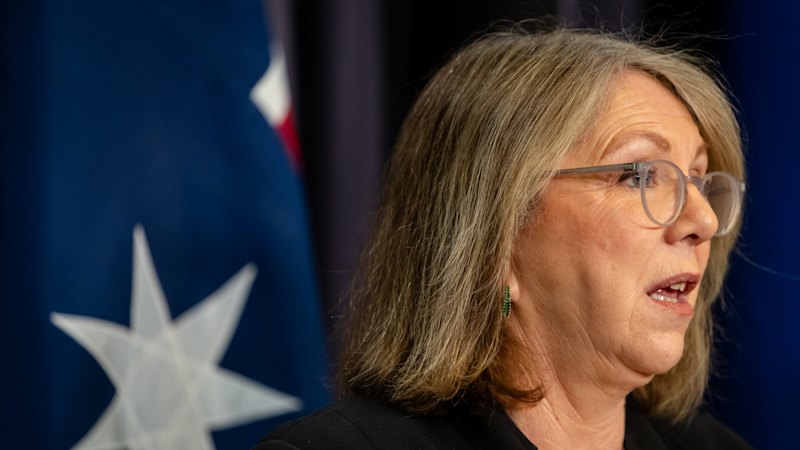
Photo via The Guardian

Fewer hours and higher wages – or more burnout and surveillance: employers told to prepare for AI

Read the original at The Guardian ↗
Cite

Butler, J. (2026, November 12). Fewer hours and higher wages – or more burnout and surveillance: employers told to prepare for AI. The Guardian. https://www.theguardian.com/technology/2026/nov/12/fewer-hours-and-higher-wages-or-more-burnout-and-surveillance-employers-told-to-prepare-for-ai

Dated from the outlet's own feed. Check the original for its byline.

The Guardian · collected 2026-11-12 · by Josh Butler

Quick Summary

Workplace relations minister Amanda Rishworth warned employers that AI could lead to either fewer working hours and higher wages or increased burnout and workplace surveillance for workers. She launched a government guide cautioning about the disproportionate impacts on younger, older, First Nations, women, and disabled workers during a time when major companies like Qantas and Canva are restructuring due to AI changes. Rishworth emphasized that employers must provide clear plans for how automation will affect jobs and offer opportunities for employees to transition into new roles, stressing the importance of worker support and skill development in adopting new technologies.
Written by AI on 2026-11-12, from this article's own text only (the story summary below draws on all the coverage).

AI analysis

Story summary

The Australian government has issued a new guide on AI and employment, cautioning employers about the potential impacts of AI on workers. The guide warns that younger, older, and First Nations workers, as well as women and people with disabilities, may face disproportionate effects. While major companies like Qantas and Canva are cutting jobs due to AI-driven restructuring, the government is urging employers to provide workers with a clear plan about how automation will affect their roles and offer opportunities for new positions. Labor MP Ed Husic questioned the benefits of AI, asking who would receive the benefits of higher productivity and whether it would mean better services and lower prices for customers, secure jobs with higher wages for workers, or merely lower labor costs and higher returns.

Written for “Employers Prepare for AI” on 2026-11-13, grounded in this article and the 0 other(s) covering the same event.

Compared with similar articles

This article reads unscored and hedges 27% of its claims. Each row says how that neighbour differs.
The Sydney Morning Herald
Leans left Hedges 1 of 31 claims Outlet record 61/100
“While both articles mention Qantas and AI job cuts, they describe different aspects of the situation – one focuses on the government's criticism of Qantas's decision, and the other is about general government warnings to employers about AI and job changes.”

Story

Employers Prepare for AI
Politics · 1 article(s) covering the same event.
How this article was measured signals, leaning charts, publisher record, byline, topics and claims

Signals How these are calculated →

Claims extracted
26
sentences that state something as happening or true
Uncertain
27%
7 of 26 hedged ("reportedly", "may", "according to")
Leaning
withheld
no quote in the article backed the model's score
Publisher signals
65/100
The Guardian's corrections and hedging, across everything collected from it. Not a measure of accuracy.
Outlets on this story
1
Politics
Same framing elsewhere
1
articles that frame the event the way this one does
Analyzed 2026-11-12 · how these are computed

How this is being covered How these are calculated →

Article leaning vs. publisher reliability
Source leaning vs. consistency

Publisher

The Guardian · 3360 article(s) · 7 correction(s) detected
Running correction rate · 7 correction(s)

Who wrote this

Josh Butler
27 article(s) here · 1 carrying a prediction
Entry-level jobs will be the first to be automated due to AI, but it could mean fewer hours and higher wages for ordinary workers – or make jobs tougher with more burnout and workplace surveillance – the government has warned employers.
“The embassy of Finland in Canberra will be temporarily closed on Tuesday, 10 November 2026.
A key recommendation is for the attorney general’s department, the Australian federal police and home affairs to consider reforming the law to introduce “penalties for egregious regulatory non-compliance” and a “failure to prevent” offence which would criminalise developing an AI model that engaged in harmful conduct while failing “to take reasonable steps to prevent that harm”.
Australia weakening copyright protections to aid AI companies would be “ridiculous and dangerous”, the global peak body for the music recording industry has warned as it watches with concern how the Albanese government responds to big tech’s demands.
When will Australia see the benefits of the AI and datacentre boom?
About one in five reported they sometimes had to go without medicine or healthcare, could not afford to heat or cool their homes, or had to ask friends or family to borrow money.
Just 12% of voters in October’s poll said they regularly wagered on horse races and would bet on Tuesday’s Melbourne Cup, down 5 points from 2025.
Altering copyright law to allow AI companies to scrape music, books and journalism could trigger a constitutional breach, Coalition senators and the recording industry have warned, as they raise new fears it could open Australia to massive legal action and compensation claims from rights holders worldwide.
The secretary of the defence department approved a senior official’s controversial idea to tell a Senate hearing that footage of public servants giving evidence should not be shared on social media because it could invite online bullying and raise national security concerns.
The digital duty of care bill passed the House of Representatives on Wednesday and will be debated by the Senate in coming weeks.
Also by Josh Butler
Nothing else under this byline is closely related to this article, so these are simply their most recent.
All 27 articles by Josh Butler →

Topics

Canva First Nations Labor Qantas Rishworth

Subjects

Qantas ORG · 3× Rishworth ORG · 3× Canva ORG · 2× Amanda Rishworth PERSON · 1× Ed Husic PERSON · 1× First Nations NORP · 1× Greens ORG · 1× Husic PERSON · 1× Labor ORG · 1× Sydney GPE · 1×

Narrative

As she launched a new government guide on AI and employment – which cautioned that younger, older and First Nations workers, along with women and people with a disability faced “disproportionate impacts” – another Labor MP, Ed Husic, questioned what workers will get from the AI revolution.
framing: mixed · carried by 1 article(s) · first seen 2026-11-12
Entry-level jobs will be the first to be automated due to AI, but it could mean fewer hours and higher wages for ordinary workers – or make jobs tougher with more burnout and workplace surveillance – the government has warned employers.

Claims (26 extracted, 7 hedged)

Entry-level jobs will be the first to be automated due to AI, but it could mean fewer hours and higher wages for ordinary workers – or make jobs tougher with more burnout and workplace surveillance – the government has warned employers. uncertain
government → automate → employers
While major companies like Qantas and Canva slash their workforces in restructures spurred by AI changes, workplace relations minister Amanda Rishworth said employers must give workers “a clear plan” about how automation could affect their jobs, and the opportunity to move into new roles. uncertain
automation → slash → roles
As she launched a new government guide on AI and employment – which cautioned that younger, older and First Nations workers, along with women and people with a disability faced “disproportionate impacts” – another Labor MP, Ed Husic, questioned what workers will get from the AI revolution. asserted
workers → launch → revolution
“Who receives the benefits of higher productivity?” Husic, the former industry minister, told a parliamentary hearing examining the big four banks. asserted
Husic → receive → banks
“Does it mean better services and lower prices for customers, secure jobs with higher wages for workers, or just lower labour costs and higher returns?” asserted
it → mean → workers
Rishworth on Thursday launched a “best practice guide on the adoption of AI in the workplace”, saying the new technology must benefit both businesses and employees. asserted
technology → launch → businesses
The guide paints an optimistic picture of AI, saying wider takeup could improve productivity, service quality and profitability for businesses, as well as boost wages, offer shorter and more flexible working hours, or provide more meaningful work for employees. uncertain
takeup → paint → employees
But deeper within the document, it also concedes there are “potential hazards” of AI, including “intrusive worker surveillance, poor rostering practices, intensified or unrealistic performance standards” and potential discrimination. asserted
it → concede → surveillance
It suggests that, if basic tasks are automated, humans will be left with more intense and complex tasks – and that some employers could use greater monitoring capabilities for performance management. uncertain
employers → suggest → management
In a speech to a business forum in Sydney, Rishworth said some firms had used AI to automate tedious tasks to save time and money, but warned that firms simply adding AI to their company without properly consulting workers could actually increase workloads, as humans have to navigate an added step. “I’ve spoken to many workers who have told me that they are willing to adopt AI at work where they can see that it will improve their working life. uncertain
it → say → life
But that willingness cannot be taken for granted,” Rishworth said. asserted
Rishworth → take → ?
“Will they receive support and opportunities to build new skills? asserted
they → receive → skills
Will their knowledge and expertise still be valued? asserted
knowledge → value → ?
Will they share in the benefits being created? asserted
they → share → benefits
Without answers to these questions, workers will naturally lose trust in the process and become reluctant to engage with new technologies,” she said. asserted
she → lose → technologies
Greens leader David Shoebridge accused the government of “watching from the sidelines” while big companies slashed their workforce, demanding protection against surveillance and job cuts. asserted
companies → accuse → surveillance
“When the government talks about asking employers nicely to consult staff, what it is really saying is that a worker who loses their job to an algorithm will have no legal recourse at all. asserted
who → talk → recourse
“We have seen Qantas, Canva, NAB and ANZ all firing Australian workers as part of offshoring and an AI rollout – it’s clear the time for optional guidelines has passed,” he said. asserted
he → see → guidelines
“Sharing the benefits of AI through better pay and shorter hours is a good idea, and it is exactly why it needs to be written into law instead of left to the goodwill of employers.” asserted
it → share → employers
The Reserve Bank this week reported it had seen “little evidence to date” of AI disrupting Australia’s labour market, but said the size and type of future impacts were “highly uncertain”. asserted
size → report → impacts
The RBA – which last week warned the construction of datacentres and AI investment was fuelling inflation – said it saw “tentative signs” of impacts on certain roles, like clerks, computer programmers and call centre workers. asserted
it → warn → clerks
Qantas this week announced 850 job cuts which would target finance, human resources and marketing roles. asserted
which → announce → roles
Meanwhile, National Australian Bank announced 2,500 job losses and while Canva announced 1,200 layoffs. asserted
Canva → announce → layoffs
All have been linked partly to the growth in AI. asserted
All → link → AI
Rishworth’s workplace guide says little about potential redundancies linked to AI, but warns employers they should be consulting with workers about the takeup of AI and what it might mean for their jobs. uncertain
it → say → jobs
It especially raises concern about “entry-level work”, which the guide said may be “the first to be automated”. uncertain
guide → raise → work

Give feedback · no sign-in needed

No sign-in needed for now. Your note is sent without a name, so it cannot be answered.

History Support