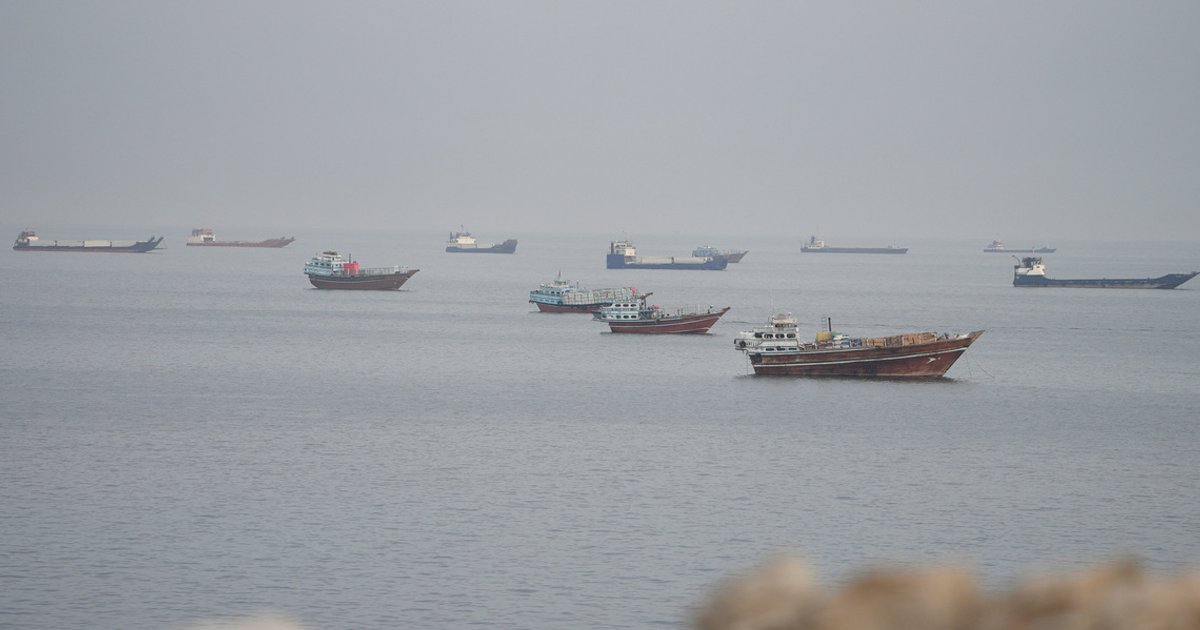
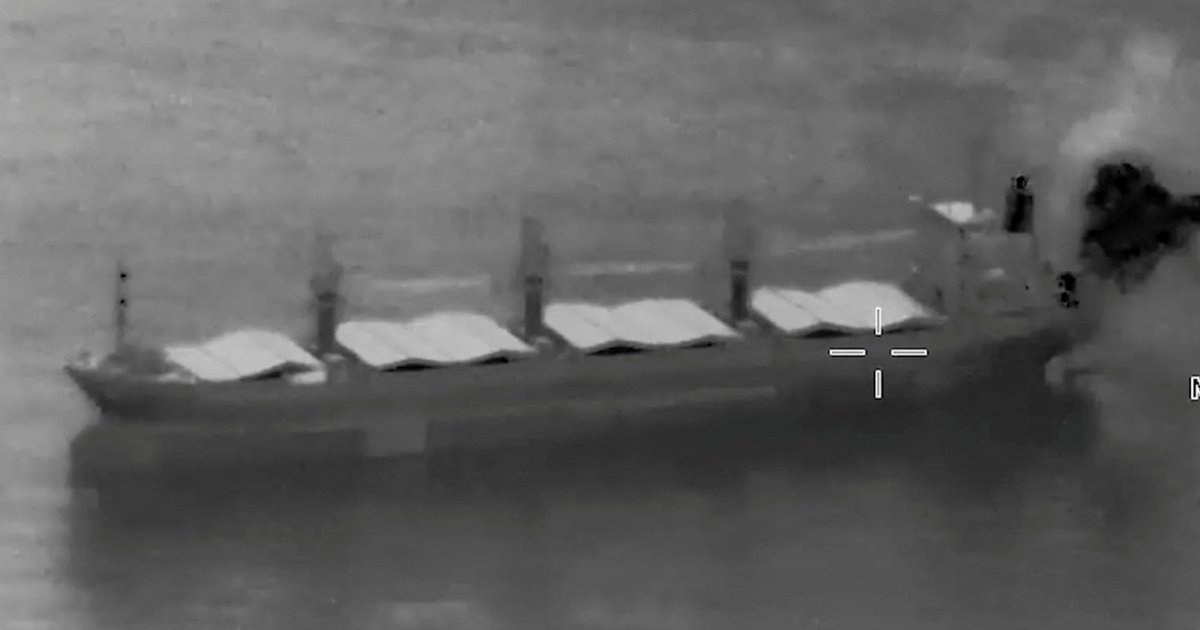
Photo via The Guardian

Oil slicks seen from space: the devastating impact of boat strikes on fragile Gulf ecosystems

Read the original at The Guardian ↗
Cite

Tondo, L. (2026, November 12). Oil slicks seen from space: the devastating impact of boat strikes on fragile Gulf ecosystems. The Guardian. https://www.theguardian.com/world/2026/nov/12/oil-slicks-seen-from-space-the-devastating-impact-of-boat-strikes-on-fragile-gulf-ecosystems

Dated from the outlet's own feed. Check the original for its byline.

The Guardian · collected 2026-11-12 · by Lorenzo Tondo

Quick Summary

Satellite images reveal extensive oil slicks in the Strait of Hormuz following missile and mine strikes on oil tankers throughout October. These spills threaten marine ecosystems vital for numerous species including dolphins, sea turtles, and fish. Over eight months into the conflict between the US and Iran, more than 500 instances of oil spills have been identified across the Gulf region, covering an area nearly as large as Wales. Marine biologist Bernhard Riegl warns that these events could cause long-term damage to already stressed marine environments due to shallow waters and high temperatures in the Gulf.
Written by AI on 2026-11-12, from this article's own text only (the story summary below draws on all the coverage).

AI analysis

Story summary

Since February 28, Greenpeace has identified over 500 oil spills through satellite monitoring in the Gulf due to boat strikes and explosions from the ongoing war between the US and Iran. The pollution is evident from space as dark slicks spreading across the strait of Hormuz, a critical waterway connecting the Gulf to the Arabian Sea. This has endangered marine life, including dolphins, sea turtles, and numerous fish species.

Marine biologist Bernhard Riegl warns that this conflict could cause long-term damage to the already stressed ecosystem, which includes coral reefs, mangrove forests, and seagrass meadows vital for nutrient circulation and marine mammal migration. The naval blockade has hindered ground-level documentation, but satellite images corroborate environmental experts' concerns about irreversible harm to these fragile habitats.

Written for “Oil Slicks From Boat Strikes Detected” on 2026-11-13, grounded in this article and the 0 other(s) covering the same event.

Compared with similar articles

This article reads leans strongly left and hedges 17% of its claims. Each row says how that neighbour differs.
The Hindu
Hedges 0 of 8 claims Outlet record 78/100
“Article A discusses oil slicks caused by multiple boat strikes throughout October, while Article B reports on two specific tankers catching fire on November 12 due to an 'accident'.”
Al Jazeera
Leans left further right than this Hedges 7 of 45 claims Outlet record 60/100
“While both articles discuss conflicts affecting the Strait of Hormuz, Article A focuses on the general attacks on commercial vessels since the war began nine months ago, while Article B specifically discusses oil slicks and environmental damage caused by strikes in October, eight months into the conflict.”
The Straits Times
Hedges 1 of 21 claims Outlet record 65/100
“While both articles discuss tanker strikes in the Strait of Hormuz, they appear to describe different time periods and impacts.”
The Hindu
Hedges 0 of 8 claims Outlet record 78/100
“Article A discusses a broader environmental impact over several months due to multiple strikes in the Strait of Hormuz, while Article B reports on a single incident of an oil tanker striking a mine and catching fire on November 11, 2026.”
The Straits Times
Hedges 2 of 13 claims Outlet record 65/100
“While both articles discuss attacks on tankers in the Strait of Hormuz, they appear to describe different time periods or separate incidents.”
The Straits Times
Hedges 3 of 23 claims Outlet record 65/100
“The articles discuss different aspects related to the Strait of Hormuz but do not describe the exact same incident occurring at the same time.”
The Hindu
Leans right further right than this Hedges 0 of 18 claims Outlet record 78/100
“The articles describe different phases or consequences of events in the Strait of Hormuz, not the exact same incident.”
Al Jazeera
Hedges 0 of 2 claims Outlet record 60/100
“Article A describes IRGC striking three tankers near Hormuz on a specific day, while Article B discusses oil spills and environmental damage caused by strikes in October, not specifying the same incident.”

Story

Oil Slicks From Boat Strikes Detected
Environment · 1 article(s) covering the same event.
How this article was measured signals, leaning charts, publisher record, byline, topics and claims

Signals How these are calculated →

Claims extracted
54
sentences that state something as happening or true
Uncertain
17%
9 of 54 hedged ("reportedly", "may", "according to")
Leaning
Leans strongly left
of the writing, not the subject · beta estimate
Publisher signals
65/100
The Guardian's corrections and hedging, across everything collected from it. Not a measure of accuracy.
Outlets on this story
1
Environment
Same framing elsewhere
1
articles that frame the event the way this one does
Analyzed 2026-11-12 · how these are computed

How this is being covered How these are calculated →

Article leaning vs. publisher reliability
Source leaning vs. consistency

Publisher

The Guardian · 3360 article(s) · 7 correction(s) detected
Running correction rate · 7 correction(s)

Who wrote this

Lorenzo Tondo
6 article(s) here · 1 carrying a prediction
Bernhard Riegl, a marine biologist at Nova Southeastern University in Florida, who has studied the Gulf for more than 30 years, warned that the war could cause lasting damage to its confined waters, already under severe pressure from the climate crisis.
In an interview with the Guardian, Tirosh said Abu Safiya’s weight had fallen from 90kg (14st 2lb) in January 2025 to 76kg this May.
As Israel prepares to go to the polls, Palestinians in Gaza are bracing for an outcome that could shape their future, knowing their fate rests with the country that has reduced much of the territory to rubble and killed nearly 75,000 people.
The 1.4km cable car route, approved by the Israeli government in 2019 and upheld by the high court in 2022, would connect West Jerusalem to a planned 16,000 sq metres tourist complex promoted by Elad, a settler organisation seeking to consolidate Israeli control over Palestinian areas of occupied East Jerusalem.
On the streets of Jerusalem, crowded with secular and ultra-Orthodox Jews, religious nationalists, settlers, Palestinians, and soldiers returning from deployments, uncertainty hangs over an election less than a month away that could mark a turning point for a country profoundly changed after the Hamas attacks of 7 October 2023 and nearly three years of war in Gaza, Lebanon and Iran.
NAZA, the award-winning documentary from Israeli film-makers Yuval Abraham and Rachel Szor, is set to be released in cinemas in more than 50 countries before a digital global release on theguardian.com.
Also by Lorenzo Tondo
Nothing else under this byline is closely related to this article, so these are simply their most recent.
All 6 articles by Lorenzo Tondo →

Topics

Florida Greenpeace Iran Nova Southeastern University Wales

Subjects

Greenpeace ORG · 4× Bernhard Riegl PERSON · 1× Florida GPE · 1× Iran GPE · 1× Nina Noelle PERSON · 1× Nova Southeastern University ORG · 1× Riegl PERSON · 1× Wales GPE · 1× the United Arab Emirates GPE · 1× the Washington Institute for Near East Policy ORG · 1×

Narrative

Not for the unlucky humans that are drawn into it, nor for the unlucky environment in which the conflict takes place.” Strikes and spills Since the war began on 28 February, Greenpeace has identified more than 500 instances of oil spills through satellite monitoring across the Gulf, the strait of Hormuz and the Arabian Sea.
framing: assertive · carried by 1 article(s) · first seen 2026-11-12
Bernhard Riegl, a marine biologist at Nova Southeastern University in Florida, who has studied the Gulf for more than 30 years, warned that the war could cause lasting damage to its confined waters, already under severe pressure from the climate crisis.

Claims (54 extracted, 9 hedged)

Throughout October, oil tankers were struck by missiles or sea mines in the waterway and spilled crude into the sea. asserted
tankers → strike → sea
The pollution has spread across the Gulf, contaminating coastlines and threatening to cause lasting damage to marine ecosystems that are home to dolphins, sea turtles and countless species of fish. asserted
that → spread → fish
Eight months into the war between the US and Iran, one of the world’s busiest oil shipping routes has become a battlefield and the centre of a growing environmental disaster. asserted
one → become → disaster
The naval blockade of the strait has made documenting the pollution from on the ground almost impossible. asserted
documenting → make → ground
But analysis of satellite images, combined with the testimony of environmental experts and marine biologists, can help build up a picture. asserted
analysis → combine → picture
The strait of Hormuz, the only maritime passage between the Gulf and the Arabian Sea, is home to a rich but fragile marine environment including coral reefs, mangrove forests and seagrass meadows that support a wealth of marine life. asserted
that → include → life
It plays a vital role in the circulation of water and nutrients and serves as a migration route for marine mammals. asserted
It → play → mammals
Even in peacetime, its ecosystems have faced mounting pressure from shipping, oil extraction and coastal development. asserted
ecosystems → face → shipping
Oil can coat birds’ feathers, making it difficult for them to float and find food. asserted
them → coat → food
It can cover mangrove roots, preventing the trees from absorbing oxygen and potentially killing them. asserted
It → cover → them
Bernhard Riegl, a marine biologist at Nova Southeastern University in Florida, who has studied the Gulf for more than 30 years, warned that the war could cause lasting damage to its confined waters, already under severe pressure from the climate crisis. uncertain
war → study → crisis
“Since the Gulf is shallow, and summer is the least windy period of the year, atmospheric heat is rapidly translated into ocean heat. asserted
heat → translate → heat
That heat kills corals, algae, fishes. asserted
heat → kill → corals
There is no cold, deep water that could mix and buffer this heat,” Riegl said. uncertain
Riegl → be → heat
“Everybody knows that oil in water is not good. asserted
oil → know → water
Not for the unlucky humans that are drawn into it, nor for the unlucky environment in which the conflict takes place.” Strikes and spills Since the war began on 28 February, Greenpeace has identified more than 500 instances of oil spills through satellite monitoring across the Gulf, the strait of Hormuz and the Arabian Sea. asserted
Greenpeace → draw → Hormuz
The findings include major spills linked to attacks on vessels, as well as others detected around the time of strikes but whose origins could not be confirmed. uncertain
origins → include → strikes
“Adding together the daily mapped footprints [of the spills] gives a cumulative total of approximately 20,000 square kilometres – almost the size of Wales,” said Nina Noelle, a Greenpeace expert on environmental disaster relief. asserted
Noelle → add → relief
More than 133 attacks on oil tankers have taken place since the beginning of the conflict, according to Greenpeace. uncertain
attacks → take → Greenpeace
October was the worst month, with more than 30 confirmed or reported attacks in the strait of Hormuz and surrounding waters, according to the Washington Institute for Near East Policy. uncertain
October → confirm → Policy
The attacks have continued into November. asserted
attacks → continue → November
Among the most polluting of the October attacks was a strike on the supertanker Gem No 2 off the coast of the United Arab Emirates, which left a slick stretching more than 21 miles (35km). asserted
left → leave → miles
A satellite image dated 19 October shows a huge patch of black moving into the clear waters off the coast of Umm Al Quwain. asserted
patch → date → Quwain
Greenpeace estimates that an attack on a tanker in early June resulted in a slick off the coast of Oman that covered more than 600 sq km (230 sq miles) at its peak. asserted
that → estimate → peak
Two Iranian naval vessels hit in March continued leaking oil for months, said Wim Zwijnenburg, an environmental researcher with the Dutch peace organisation Pax. asserted
Zwijnenburg → hit → organisation
An attack on the Liberian-flagged Minoan Pioneer on 3 August has also been linked to a major slick. asserted
attack → flag → slick
Oil pollution has reached several coastlines since the war began. asserted
war → reach → coastlines
In March, a slick from the Shahid Bagheri was detected near the Hara mangroves. asserted
slick → detect → mangroves
In April, pollution threatened the protected Shidvar Island, home to coral reefs, seabirds and turtles. asserted
pollution → threaten → reefs
Oil was also reported washing ashore at Qeshm Island in August, near important fishing grounds and turtle nesting sites. asserted
Oil → report → grounds
Satellite imagery also shows slicks near Oman’s Musandam national park and Iran’s Minab River delta, two areas rich in wildlife. asserted
imagery → show → wildlife
Musandam is home to coral reefs and seabird breeding grounds, while the Minab delta has protected mudflats and forests of mangroves. asserted
delta → protect → mangroves
Environmental organisations are continuing to analyse satellite imagery but warn that the full extent of the damage cannot be established without investigations on the ground, which remain extremely difficult. asserted
which → continue → ground
Some of the researchers and environmentalists contacted for comment in Iran and Gulf states said they had been instructed by domestic authorities not to speak publicly about the environmental damage caused by the war. asserted
they → contact → war
Establishing responsibility is not straightforward, but Iran’s Islamic Revolutionary Guard Corps (IRGC) has been blamed for most of the attacks. asserted
Corps → establish → attacks
US forces have also targeted tankers, disabling Iranian vessels attempting to cross a US naval blockade and striking others in response to Iranian missile attacks on US warships. asserted
forces → target → warships
According to a Wall Street Journal report, the largest oil spill was caused by a strike carried out by the UAE’s air force on oil storage tanks on Lavan Island. uncertain
spill → accord → Island
The strikes resulted in crude oil flushing into the Gulf and affecting coastal areas, including the nearby nature reserves of Shidvar Island. asserted
oil → result → Island
In some instances, countries bordering the strait have responded to spills. asserted
countries → border → spills
After the attack on the Gem No 2, for instance, the UAE closed beaches, launched a major cleanup and monitored its desalination plants. asserted
UAE → close → plants
…and 14 more, not listed.

Give feedback · no sign-in needed

No sign-in needed for now. Your note is sent without a name, so it cannot be answered.

History Support