Victoria’s next state government will inherit an economy dogged by rising unemployment and slower growth that is propped up by the increasingly volatile boom in data centres.
asserted
that → inherit → centres
The final budget update before the November 28 election, released on Thursday, revealed a modest improvement to the state’s operating surpluses since the last fiscal report in October because of a surprise $1.3 billion dividend from WorkSafe.
asserted
update → release → WorkSafe
It confirmed Victoria’s economy would grow by just 1 per cent this financial year, down from 1.5 per cent predicted in the state budget in May, and will underperform budget expectations in the two following years.
uncertain
economy → confirm → years
Economic growth is now not due to hit 2.5 per cent until 2029-30.
asserted
growth → hit → 2029
Outside of the pandemic, this year will be the lowest rate of growth since 2008-09, when the global financial crisis rocked world markets.
asserted
crisis → rock → markets
Unemployment will also be higher than expected over the next two years, sitting at 5.25 per cent compared to 4.75 per cent forecast in the budget.
asserted
Unemployment → expect → budget
“Lower population growth, as well as persistent inflation and the RBA’s monetary policy response, present headwinds for economic growth, both in Victoria and nationally, for 2026-27,” Treasury’s pre-election budget update says.
asserted
update → present → 2026
Consumer spending will be held back by rising interest rates and inflation, as well as a slowdown in population growth now that federal migration changes have begun to take effect.
asserted
changes → hold → effect
But Treasury said investment in data centres was expected to “offset these headwinds”, and that business spending would provide some ballast to the economy.
asserted
spending → say → economy
“Growth will be primarily driven by data centre investment, while investment in renewable energy projects is expected to remain elevated,” the report says.
asserted
report → drive → projects
Treasury cautioned that data centre investment had the capacity to both help and hinder the economy, with a large pipeline of projects at the mercy of community concerns and mounting government efforts to regulate the industry.
asserted
investment → caution → industry
“Investment in data centres could be stronger than implied in the base case forecasts,” the report says.
uncertain
report → imply → forecasts
“However, community concerns, evolving regulation, and investor scrutiny could lead to delays or affect the feasibility of projects, slowing growth in data centre investment.”
uncertain
concerns → evolve → investment
The comments highlight a thorny issue for political parties as the imposition of data centres on communities has become an election issue in many seats – just as it was in the recent US midterm elections.
asserted
it → highlight → elections
Even as the centres have helped the economy, the pace of the rollout has been met with local pushback.
asserted
pace → help → pushback
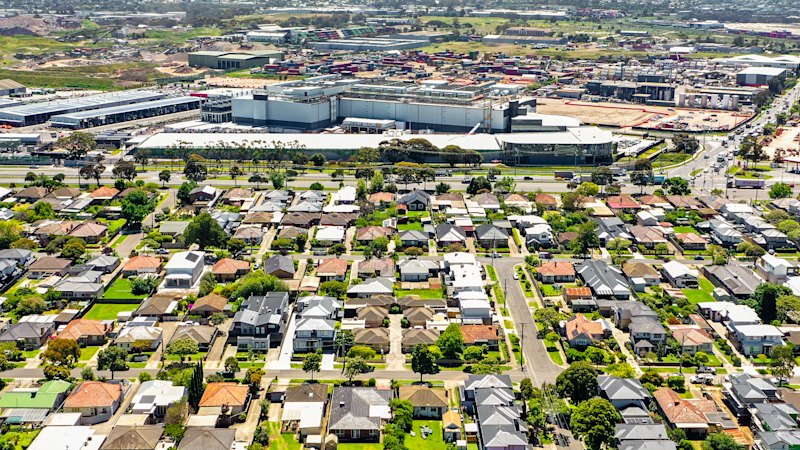
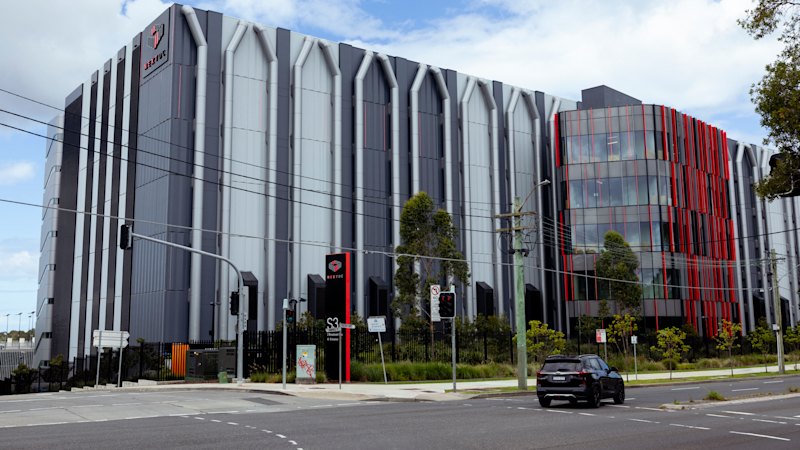
This has been exemplified by NextDC’s M3 centre in West Footscray.
asserted
This → exemplify → Footscray
Its expansion plans now face a major delay after energy network operator Jemena paused plans to install 15-metre-high industrial power poles on suburban streets, in response to protesting residents.
asserted
Jemena → face → residents
The delay cost the company hundreds of millions of dollars in forecast earnings, as it suffered a 40 per cent drop in its share price.
asserted
it → cost → price
Before the election campaign, Labor unveiled a policy requiring a 150-metre buffer zone between data centre buildings and homes, along with requirements for them to source their own renewable energy and recycled water.
asserted
them → unveil → energy
Opposition Leader Jess Wilson has pledged that if the Coalition wins the election, data centres will not be built in or next to residential areas or in green wedge zones.
asserted
centres → pledge → zones
The pre-election budget update confirmed the operating surplus would be $700 million in this financial year and $800 million in 2027-28, up from a $300 million surplus forecast in both years last month.
asserted
surplus → confirm → years
This has been primarily driven by $1.3 billion in revenue the state will receive from WorkSafe.
asserted
state → drive → WorkSafe
The income had not previously been disclosed, with Treasury reporting the income had been reclassified from “capital repatriations to dividend revenue”.
asserted
income → disclose → revenue
Although the Transport Accident Commission regularly makes dividend payments to state coffers, WorkSafe has not made a contribution for years and was instead propped up by a bailout worth more than $1 billion over several years from 2020.
asserted
WorkSafe → make → 2020
The government declared in 2023 that it was “fundamentally broken”.
asserted
it → declare → 2023
To stop further bailouts, the government hiked average premiums on businesses by 42 per cent and legislated changes to the scheme that excluded claims for stress and burnout, with mental health payments making up the biggest growth in claims.
uncertain
payments → stop → claims
- The polls: Labor is facing an election day wipeout
- ‘You sweating?’
asserted
You → face → wipeout
One Nation and Nationals face a grilling
asserted
Nation → face → grilling
- High-rise horizons: See how activity centres will change Melbourne suburbs
- The 13 seats to watch:
asserted
centres → see → suburbs
These races will determine the election
-
asserted
races → determine → election
See how your neighbours voted in 2022: And what it means for this election
asserted
it → see → election
 The Aporia