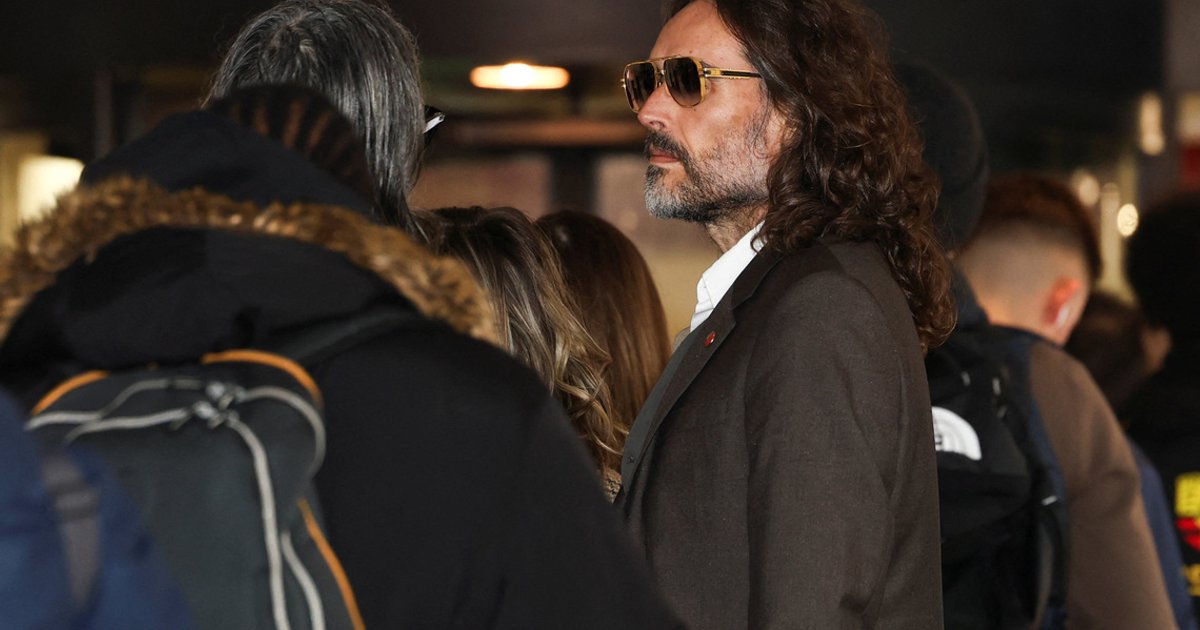
Photo via ABC News (AU)

With rape cases involving a celebrity, the media too often miss the point

Read the original at ABC News (AU) ↗
Cite

Gilmore, J. (2026, November 11). With rape cases involving a celebrity, the media too often miss the point. ABC News (AU). https://www.abc.net.au/news/2026-11-12/rape-cases-celebrities-media-miss-the-point/107373236

Dated from the outlet's own feed. Check the original for its byline.

ABC News (AU) · collected 2026-11-11 · by Jane Gilmore

Quick Summary

Russell Brand has been convicted and sentenced to 10 years and six months in prison for rape and sexual assault. Multiple media outlets extensively covered this case, highlighting issues with reporting on celebrity rape trials. The article critiques how such reports often perpetuate myths like the "monster myth" and the belief that men charged with rape are pitiable objects or victims themselves. It also points out that cases involving rape in family and domestic violence contexts receive significantly less coverage despite being common.
Written by AI on 2026-11-11, from this article's own text only (the story summary below draws on all the coverage).

AI analysis

Story summary

Russell Brand, a 51-year-old comedian and actor, was convicted of one count of rape and three counts of sexual assault in Southwark Crown Court in London. He faces a sentence of 10 years and six months in prison. The trial began on October 12, 2026, where Brand appeared alongside his wife Laura Gallacher and was flanked by security guards. Prosecutors allege that he committed these offenses against six women between 1999 and 2009, including incidents at a hotel room during the Labour Party conference in Bournemouth, a workplace setting, a toilet cubicle, and at his home address. On November 11, Thames Valley Police confirmed they were called to Jemima Goldsmith's house in Oxfordshire in 2014 following an alleged assault by Brand, but no charges were pressed at the time.

Written for “Russell Brand Conviction Developments” on 2026-11-11, grounded in this article and the 280 other(s) covering the same event.
Why this leaning score
The article's own words the score was based on. Each is quoted verbatim and was checked against the article text before being stored, so you can find it in the original.
Reading Leans left (beta estimate) Confidence high
Leaning: leans left for article 145606 (high confidence, 5 verified quotes) · logged 2026-11-11

Story

Russell Brand Conviction Developments
Entertainment · 281 article(s) covering the same event. Compare every outlet's account →

Compared with similar articles

This article reads leans left and hedges 11% of its claims. Each row says how that neighbour differs.
The Sydney Morning Herald
Leans left Hedges 4 of 37 claims Outlet record 61/100
The Daily Wire
Leans right further right than this Hedges 46 of 343 claims Outlet record 59/100
Daily Mail
Hedges 2 of 68 claims Outlet record 69/100
“While both articles discuss Russell Brand's legal troubles and sentencing, Article A focuses on a specific incident involving Brand's father outside court after the verdict, whereas Article B discusses broader issues of media coverage related to celebrity rape trials.”
Daily Mail
Hedges 7 of 37 claims Outlet record 69/100
“Article A discusses the deadline for appealing an injunction refusal related to sexual misconduct allegations, while Article B reports on Russell Brand's conviction and sentencing for rape and sexual assault.”
Daily Mail
Hedges 8 of 40 claims Outlet record 69/100
“The articles discuss related topics but do not describe the exact same incident; Article A focuses on potential additional victims and claims against Russell Brand following his conviction, while Article B critiques media coverage of celebrity rape trials in general.”
The Straits Times
Hedges 2 of 7 claims Outlet record 66/100
“Article A reports on British minister Lisa Nandy's comments about sexual abuse in the media industry following Russell Brand's conviction, while Article B focuses more narrowly on the nature of media reporting regarding celebrity rape trials and does not describe the same specific incident.”
Evening Standard
Leans left Hedges 2 of 15 claims Outlet record 64/100
“While both articles discuss Russell Brand's conviction and sentence for rape and sexual assault, Article A focuses on the likelihood of an appeal against the sentence, while Article B comments more broadly on the nature of reporting such cases.”
Evening Standard
Hedges 3 of 15 claims Outlet record 64/100
“Article A focuses on criticism of Russell Brand's barrister for remarks during sentencing, while Article B discusses the broader context and nature of reporting on celebrity rape trials involving Russell Brand.”
The Daily Wire
Leans strongly left further left than this Hedges 3 of 26 claims Outlet record 59/100
“While both articles discuss Russell Brand's conviction for rape, they describe different aspects of the case and do not clearly refer to the exact same occurrence.”
Daily Mail
Hedges 2 of 28 claims Outlet record 69/100
“While both articles discuss Russell Brand's conviction and sentencing, Article A focuses on the nature of media reporting about celebrity rape trials in general, while Article B covers an exclusive podcast discussing the cultural implications of the verdict with a psychologist.”
How this article was measured signals, leaning charts, publisher record, byline, topics and claims

Signals How these are calculated →

Claims extracted
28
sentences that state something as happening or true
Uncertain
11%
3 of 28 hedged ("reportedly", "may", "according to")
Leaning
Leans left
of the writing, not the subject · beta estimate
Publisher signals
67/100
ABC News (AU)'s corrections and hedging, across everything collected from it. Not a measure of accuracy.
Outlets on this story
281
Entertainment
Same framing elsewhere
1
articles that frame the event the way this one does
Analyzed 2026-11-11 · how these are computed

How this is being covered How these are calculated →

Article leaning vs. publisher reliability
Source leaning vs. consistency

Publisher

ABC News (AU) · 5395 article(s) · 11 correction(s) detected
Running correction rate · 11 correction(s)

Who wrote this

Jane Gilmore
1 article(s) here · 1 carrying a prediction
Journalists could report these cases using those pseudonyms, preserving the victim-survivor's anonymity while still informing the public about the rape.
The only article under this byline in the corpus.

Topics

ABC FDV Guardian The Age The Herald Sun

Subjects

ABC ORG · 2× Brand PERSON · 2× Carr PERSON · 2× FDV ORG · 2× Silvagni PERSON · 2× The Age ORG · 2× The Australian ORG · 2× The Guardian ORG · 2× The Herald Sun ORG · 2× Russell Brand PERSON · 1×

Narrative

The Age, the Herald Sun, The Guardian, The Australian and the ABC all published editorials or opinion pieces on the principles of open justice and how suppression orders prevented journalists reporting on the functioning of criminal courts — an essential component of a journalist's role in keeping the public informed about the functions of a democratic society.
framing: assertive · carried by 1 article(s) · first seen 2026-11-11
Journalists could report these cases using those pseudonyms, preserving the victim-survivor's anonymity while still informing the public about the rape.
2026-11-11 · ABC News (AU)
With rape cases involving a celebrity, the media too often miss the point · assertive framing

Claims (28 extracted, 3 hedged)

Russell Brand has been convicted of one count of rape and three counts of sexual assault, and sentenced to 10 years and six months in prison. asserted
Brand → convict → prison
The Age, The Herald Sun, The Guardian, the ABC and The Australian all reported extensively on the trial, verdict and sentencing. asserted
Age → report → trial
While it's certainly newsworthy that another public figure has finally been held to account for years of predatory behaviour, the nature of reporting on celebrity rape trials is worth examining. asserted
nature → hold → trials
As the UK's Channel 4 reported, rape myths were a frequent and misleading feature in Brand's trial. asserted
myths → report → trial
Research in Australia has found rape myths are routinely relied on in rape trials, not only by defence lawyers, but also by prosecutors, judges, juries and police. asserted
myths → find → prosecutors
One pervasive one is the "monster myth": the belief that rape is committed by monstrously deviant strangers who attack innocent young girls in public places. asserted
who → commit → places
Research shows this myth is prevalent in media reporting of rape, which has an impact on public perception and acceptance of the monster myth. asserted
which → show → myth
In reality, as Australian Bureau of Statistics data shows, the person most likely to rape a woman is a man who is her intimate partner. asserted
who → show → woman
In my research (which has not yet been peer reviewed) I used the AustLii database to identify 32 rape cases in the County Court of Victoria that resulted in a guilty outcome between July 2025 and August 2026. asserted
that → review → July
I also searched for news reporting on those trials, finding 198 articles that fit the inclusion criteria. asserted
that → search → criteria
Between them, Silvagni and Carr received 85 per cent of the media coverage of the entire dataset. asserted
Silvagni → receive → dataset
They appeared in more than 60 per cent of the non-celebrity cases (almost entirely centred on the monster myth), and just over 40 per cent of the celebrity cases (where the myths that women commonly lie about rape and that men charged with rape are an object of pity predominated). asserted
men → appear → pity
Every publication in the study included rape myths in some of their headlines about rape trials. asserted
publication → include → trials
In other words, if media is reporting on a celebrity trial, too often the celebrity becomes the story, not the crime or the victim-survivor. asserted
celebrity → report → trial
If they're reporting on rape cases, the monster myth is more likely to appear in the headline than the facts. asserted
myth → report → facts
Of the 32 cases I identified, 13 were cases of rape in a family and domestic violence (FDV) context. asserted
13 → identify → context
Fewer than 3 per cent of the articles were about the cases involving rape in an FDV context. asserted
cent → involve → context
Journalists cannot identify the complainant (the legal term for the victim-survivor) in a rape trial, so if they report a FDV-related rape case, they often cannot name the perpetrator because it can identify the victim-survivor. But the courts often use pseudonyms for both people when they publish sentencing remarks. asserted
they → identify → remarks
Journalists could report these cases using those pseudonyms, preserving the victim-survivor's anonymity while still informing the public about the rape. uncertain
Journalists → report → rape
I could not find a single article in my dataset that did this. uncertain
that → find → this
Focusing such breathless attention on celebrity cases and the rare stranger-danger rape cases endorses exactly the kind of monster myths that The Guardian yesterday praised the judge in Brand's trial for dispelling in his sentencing remarks. asserted
Guardian → focus → remarks
Suppression orders and the principles of open justice In both the Silvagni and Carr cases, the men involved had been granted suppression orders that prevented media identifying them before they were convicted. asserted
they → involve → them
The Age, the Herald Sun, The Guardian, The Australian and the ABC all published editorials or opinion pieces on the principles of open justice and how suppression orders prevented journalists reporting on the functioning of criminal courts — an essential component of a journalist's role in keeping the public informed about the functions of a democratic society. asserted
journalists → publish → society
The media cannot claim to be serving the principles of open justice and ride a wave of their own self-righteous anger at suppression orders when those orders do not prevent them covering the trial. uncertain
them → claim → trial
Particularly when they are failing to cover so many trials that do not feature a well-known perpetrator. asserted
that → fail → perpetrator
The victim-survivor and the effect the person had on their life is the story. asserted
person → have → life
The structures that allowed someone to commit these crimes can be the story, but breathless sensationalism has no place in reporting on rape. asserted
sensationalism → allow → rape
This piece first appeared on The Conversation. asserted
piece → appear → Conversation

Give feedback · no sign-in needed

No sign-in needed for now. Your note is sent without a name, so it cannot be answered.

History Support