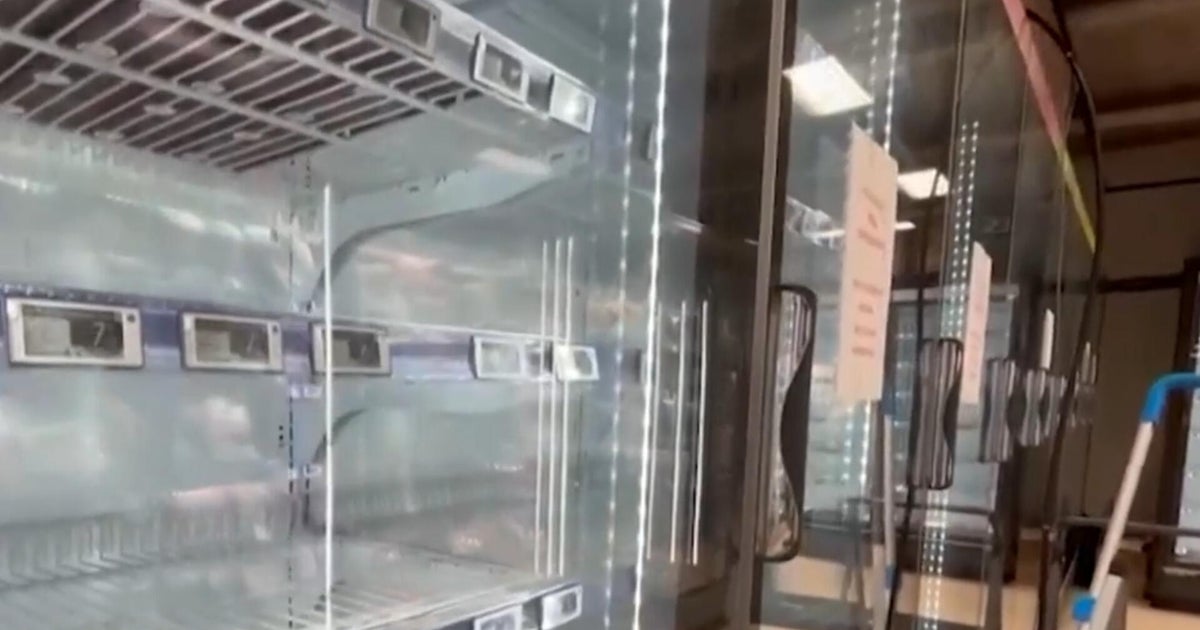
Photo via The Sydney Morning Herald

Hackers plunged dozens of European supermarkets into chaos. It should worry Australians how easy it was

Read the original at The Sydney Morning Herald ↗
Cite

Swan, D. (2026, November 10). Hackers plunged dozens of European supermarkets into chaos. It should worry Australians how easy it was. The Sydney Morning Herald. https://www.smh.com.au/technology/hackers-plunged-dozens-of-european-supermarkets-into-chaos-it-should-worry-australians-how-easy-it-was-20261110-p61axl.html?ref=rss&utm_medium=rss&utm_source=rss_feed

Dated from the outlet's own feed. Check the original for its byline.

The Sydney Morning Herald · collected 2026-11-10 · by David Swan

Quick Summary

On November 2, hackers remotely raised freezer temperatures in dozens of European supermarkets across 11 countries including Belgium, Sweden, Finland, and Ireland. This incident followed a similar attack on hundreds of French stores three weeks prior. The hacks exploited vulnerable internet-connected controllers that lacked proper security measures such as firewalls and strong passwords. These same systems are used in critical infrastructure like hospitals and data centers, raising concerns about potential broader impacts if not secured properly.
Written by AI on 2026-11-10, from this article's own text only (the story summary below draws on all the coverage).

AI analysis

Story summary

French Foreign Minister Jean-Noël Barrot has blamed Iran’s Islamic Revolutionary Guard Corps (IRGC) for carrying out a cyberattack in October that raised temperatures inside commercial refrigerators and freezers across hundreds of supermarkets in France. The attack caused significant damage by spoiling fresh and frozen food, potentially costing tens of millions of euros nationwide. French officials suspect Iranian state-backed hackers were behind the incident, which they consider one of the most disruptive cyberattacks since February when the conflict with Iran began. Barrot warned that there will be consequences for this action and hinted at imposing sanctions against Iran both nationally and at a European level.

Written for “France Blames Iran For Supermarket Fridge Cyberattacks” on 2026-11-10, grounded in this article and the 23 other(s) covering the same event.
Why this leaning score
This article does not take a side on a contested political question, so it has no leaning score. That is an answer rather than a gap: a match report or a rescue can be warmly or critically written without being left or right, and scoring it anyway is how approval of a subject gets recorded as a political position.
No political leaning scored for article 140209 · logged 2026-11-10

Story

France Blames Iran For Supermarket Fridge Cyberattacks
Politics · 24 article(s) covering the same event. Compare every outlet's account →

Compared with similar articles

This article reads unscored and hedges 8% of its claims. Each row says how that neighbour differs.
CBS News
Hedges 4 of 13 claims Outlet record 68/100
“Article A warns about potential future attacks while Article B describes a recent incident that occurred in Europe.”
CBS News
Hedges 0 of 2 claims Outlet record 68/100
“Article A describes a general warning about potential cyberattacks targeting refrigerators and industrial cooling equipment, while Article B details a specific incident that occurred in November where hackers remotely increased temperatures in supermarkets across multiple European countries.”
The Straits Times
Leans right Hedges 7 of 23 claims Outlet record 66/100
Daily Mail
Hedges 5 of 19 claims Outlet record 69/100
“The articles describe two different attacks: one in October affecting French supermarkets and another in November impacting stores across at least 11 countries.”
Global News
Hedges 0 of 4 claims Outlet record 63/100
“The articles describe two distinct attacks: one in October affecting French supermarkets and another in November impacting multiple European countries.”
The Sydney Morning Herald
Hedges 2 of 24 claims Outlet record 61/100
The Guardian
Leans right Hedges 2 of 22 claims Outlet record 65/100
“The articles describe different attacks: one specifically targets French supermarkets with no messages displayed, while the other mentions dozens of stores across at least 11 countries including Belgium, Sweden, Finland, and Ireland.”
South China Morning Post
Hedges 1 of 6 claims Outlet record 62/100
“Article A refers to attacks that occurred in October, while Article B discusses an incident on November 2nd involving multiple European countries.”
CBS News
Hedges 2 of 12 claims Outlet record 68/100
“Article A discusses a hacking incident in French grocery stores specifically on October 11th, while Article B mentions multiple incidents across at least 11 countries including an earlier attack three weeks before the one discussed in Article A.”
NPR
Hedges 4 of 42 claims Outlet record 60/100
“Article A specifically describes attacks on French retail sites and hydroelectric power plants in October, while Article B mentions a series of attacks across at least 11 countries including France that occurred on November 2.”
How this article was measured signals, leaning charts, publisher record, byline, topics and claims

Signals How these are calculated →

Claims extracted
49
sentences that state something as happening or true
Uncertain
8%
4 of 49 hedged ("reportedly", "may", "according to")
Leaning
not political
takes no side on a contested political question
Publisher signals
61/100
The Sydney Morning Herald's corrections and hedging, across everything collected from it. Not a measure of accuracy.
Outlets on this story
24
Politics
Same framing elsewhere
1
articles that frame the event the way this one does
Analyzed 2026-11-10 · how these are computed

How this is being covered How these are calculated →

Article leaning vs. publisher reliability
Source leaning vs. consistency

Publisher

The Sydney Morning Herald · 6610 article(s) · 15 correction(s) detected
Running correction rate · 15 correction(s)

Who wrote this

David Swan
21 article(s) here · 1 carrying a prediction
Artificial intelligence companies that fail to rein in rogue agents may face criminal penalties and mandatory reporting requirements for cyber incidents, as the government responds to OpenAI’s hack of Medicare data which shook the industry.
It couldn’t say how many are in Australia.
Canva chief executive Melanie Perkins told staff on Wednesday that 1,271 people would be affected by a restructuring, aimed at resetting the business after growth started to slow this year.
More than a thousand jobs will be impacted in a major restructure at design giant Canva, with some staff to lose their roles and others asked to relocate to centralised hubs.
A Finnish satellite maker says it could help Australia build its own alternative to Elon Musk’s Starlink, made locally and owned by Australians.
CBA economists estimated this week that the local data centre build-out could attract about $260 billion in investment by the mid-2030s.
Michelle Simmons, founder and chief executive of Silicon Quantum Computing, was asked at the John Monash Foundation oration on Thursday evening whether Australia could produce a quantum equivalent of OpenAI or Anthropic.
If no better offer emerges, the company has told the court its platform “will be wound down”.
Telstra’s nationwide mobile outage in July wiped an estimated $552 million from the Australian economy, according to new modelling that consumer advocates will put before senators this week.
OpenAI, Anthropic, Microsoft, and Google all put Canberra on notice – Australia’s copyright rules will dictate whether they train their flagship models on local soil.
Also by David Swan
Nothing else under this byline is closely related to this article, so these are simply their most recent.
All 21 articles by David Swan →

Topics

Belgium Danfoss Finland France French

Subjects

French NORP · 5× Danfoss ORG · 4× Australia GPE · 3× Belgium GPE · 3× ANSSI ORG · 2× Claroty ORG · 2× Finland GPE · 2× France GPE · 2× Carrefour ORG · 1× Ikea ORG · 1×

Narrative

Leah Pinto, a director in the intelligence team at Melbourne-based security company CyberCX, says attackers are getting better at hitting the internet-connected gear that runs lifts, air-conditioners and fridges.
framing: assertive · carried by 1 article(s) · first seen 2026-11-10
It couldn’t say how many are in Australia.

Claims (49 extracted, 4 hedged)

You didn’t need to be a cyber genius to cook the frozen peas in supermarkets across Europe this month. asserted
You → need → Europe
On November 2, freezers in dozens of stores across at least 11 countries were cranked up remotely, some to 50 degrees. asserted
freezers → crank → degrees
Carrefour and Ikea in Belgium, ICA and Coop in Sweden, Kesko in Finland and SuperValu in Ireland were among those hit. asserted
Carrefour → hit → those
Three weeks earlier, hackers had done the same to hundreds of French supermarkets. asserted
hackers → do → supermarkets
Security agencies have been warning about this since 2014, when France’s cyber agency, ANSSI, first told operators never to put these controllers directly online. asserted
agency → warn → controllers
Overnight, French Foreign Minister Jean-Noël Barrot named Iran as the country behind the hacks and called for European sanctions against Tehran, amid broader concerns about Iranian cyberattacks and terrorism. asserted
Barrot → name → cyberattacks
It sounds innocuous – defrosted peas, carrots and cauliflower – but it should worry Australians. asserted
it → sound → Australians
The same controllers, the small computers that set a fridge’s temperature, also run cold rooms in hospitals, medicine warehouses and data centres. asserted
that → set → hospitals
In France, hackers have already reached the cold storage of at least three blood banks, the national blood service said last week. asserted
service → reach → banks
The blood was moved, and no patients were harmed. asserted
patients → move → ?
The French attackers barely had to try. asserted
attackers → have → ?
ANSSI chief Vincent Strubel told the French Senate the controllers had been sitting on the open internet with no firewall, their admin screens guarded only by weak passwords. asserted
screens → tell → passwords
The second wave looks no more sophisticated. asserted
wave → look → ?
A spokesperson for Danish controller maker Danfoss said the Dutch systems that were hit were not on a secure network and still had their factory passwords. asserted
that → say → passwords
The default passwords for one company’s systems were printed in its manuals, according to Paul Chichester, director of operations at Britain’s National Cyber Security Centre. uncertain
passwords → print → Centre
On the day of the second wave, at least 1000 Danfoss store systems were exposed online worldwide, according to US security company Claroty. uncertain
systems → expose → Claroty
It couldn’t say how many are in Australia. asserted
many → say → Australia
Sabcobel, Belgium’s refrigeration industry group, says the damage would have been far worse if its members hadn’t started patching the vulnerabilities after October 12. asserted
members → say → October
Danfoss said in a statement that most of the equipment that was hit was old and no longer received security updates. asserted
that → say → updates
That leaves no excuse for operators who left their systems exposed. asserted
who → leave → systems
Nobody has yet claimed the attacks or asked for money. asserted
Nobody → claim → money
Tom Hegel, a lead researcher at US security company SentinelOne, says Russian-aligned groups are also credible suspects because they have attacked similar systems before. asserted
they → say → systems
But that is “only context, not the missing evidentiary link”, he says. asserted
he → say → ?
Romania’s cyber security director, Dan Cîmpean, called the attacks “semi-amateurish”. asserted
director → call → attacks
Samuli Bergström, who used to run Finland’s national cyber emergency team and now leads threat intelligence at Finnish security company WithSecure, suspects it is “less about food than about opportunity”. asserted
it → use → opportunity
Retailers’ defences are generally weaker than those of banks or energy companies, he told this masthead, and “if the security is poor, someone will find it”. asserted
someone → tell → it
Who pays Breaking in is getting cheaper, largely thanks to AI. asserted
Breaking → pay → AI
In August, Claroty published details of security holes in controllers made by Danfoss and US company Copeland. asserted
Claroty → publish → Danfoss
A day after the French attack, its researchers showed an AI tool could build a working attack on those holes, on a test device, in about 28 minutes. uncertain
tool → show → minutes
It cost $US6 (about $9). asserted
It → cost → US6
Luc De Laet, who runs a small butcher chain in Belgium, told Reuters he lost about €15,000 ($24,000) of meat in a single night. asserted
he → run → night
That’s more than 2500 times what the AI test cost asserted
test → cost → what
“A hacked bank is abstract, but an empty shelf is visible within a day and triggers stockpiling that makes things worse,” Bergström says. asserted
Bergström → hack → stockpiling
No attacks have yet been reported in Australia. asserted
attacks → report → Australia
Woolworths is understood to have no store refrigeration controllers connected to outside networks, and Aldi is similarly understood not to use outside networks to manage or maintain its refrigeration. asserted
Aldi → understand → refrigeration
Coles did not respond to questions. asserted
Coles → respond → questions
Leah Pinto, a director in the intelligence team at Melbourne-based security company CyberCX, says attackers are getting better at hitting the internet-connected gear that runs lifts, air-conditioners and fridges. asserted
that → base → lifts
They are also keener to try, “particularly as criminals experiment with artificial intelligence”. asserted
criminals → try → intelligence
“Cyberattacks can now be highly disruptive to our daily lives and the broader economy,” she says. asserted
she → say → lives
But Bergström says the real question is whether a device needs to be reachable from the internet at all. asserted
device → say → internet
…and 9 more, not listed.

Give feedback · no sign-in needed

No sign-in needed for now. Your note is sent without a name, so it cannot be answered.

History Support