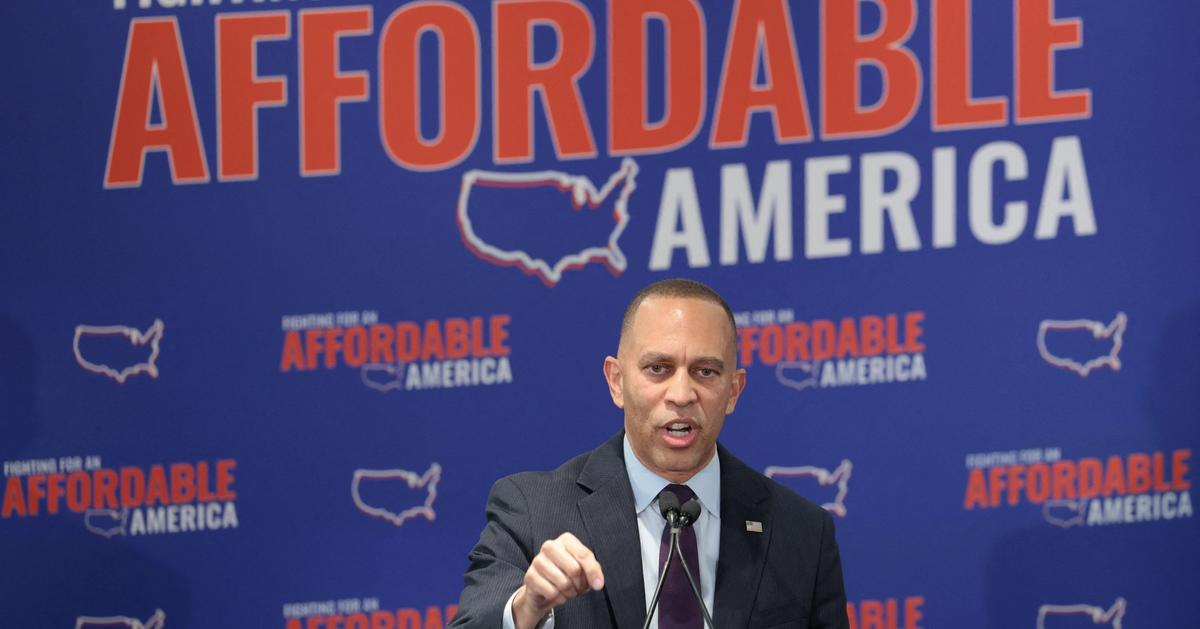
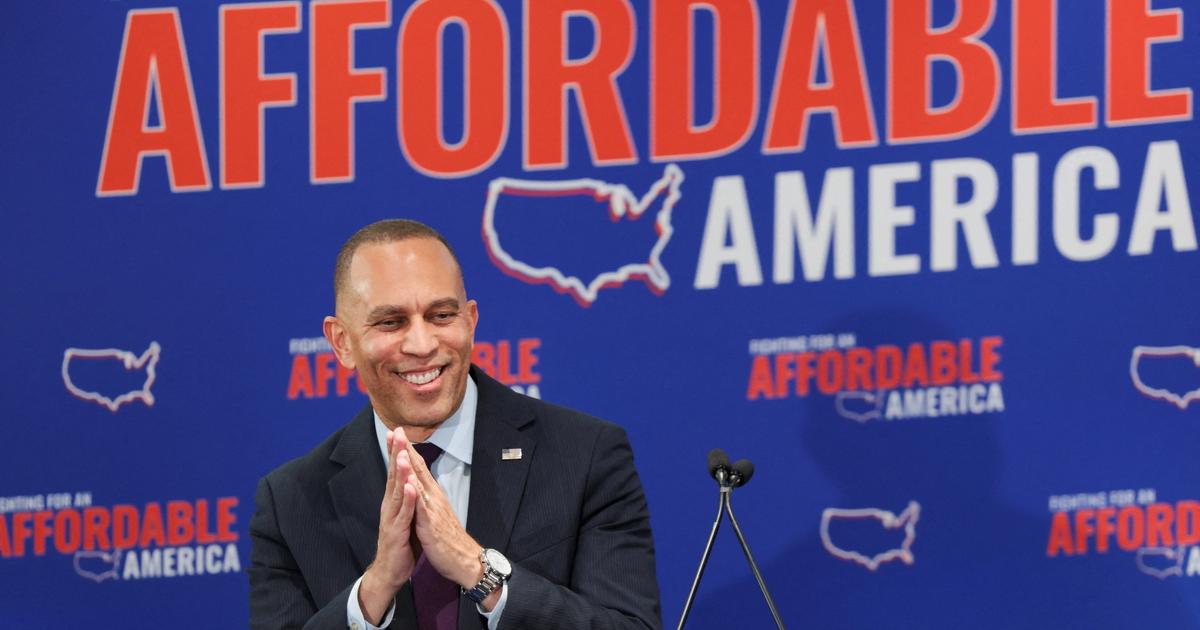
Photo via The Guardian

Economic relief is on the way, Democrats say. But what, how and when?

Read the original at The Guardian ↗
Cite

Washington, H. T. i. (2026, November 9). Economic relief is on the way, Democrats say. But what, how and when? The Guardian. https://www.theguardian.com/us-news/2026/nov/09/democrats-midterms-economy-healthcare

Dated from the outlet's own feed. Check the original for its byline.

The Guardian · collected 2026-11-09 · by Heather Timmons in Washington

Quick Summary

Senate Majority Leader Chuck Schumer announced plans for economic relief after Democrats won key midterm races. Promised initiatives include reducing food and healthcare costs, regulating corporations, and supporting workers. However, disagreements on funding safety nets and controlling costs remain. The period between elections and the new Congress's swearing-in is typically filled with lobbying and political maneuvering. Governor JB Pritzker has proposed a 200-point policy agenda for Congress’s first day, while other leaders push specific bills like an affordability bill and universal healthcare legislation. With President Trump able to veto any passed bills, Democrats will need bipartisan support to advance their proposals, using those vetoes as political leverage against Republicans.
Written by AI on 2026-11-09, from this article's own text only (the story summary below draws on all the coverage).

AI analysis

Story summary

Democrats are promising economic relief to Americans following their recent midterm election victories, with Senator Chuck Schumer stating that "relief is on the way." However, specifics about what form this relief will take and when it will be implemented remain unclear. Governor JB Pritzker of Illinois has already released a 75-page list of 200 policy proposals for Congress's "day one agenda," while Columbia professor Tim Wu is advocating for an "affordability bill." The upcoming period between the election and the new Congress's swearing-in in early January is expected to be filled with intense lobbying efforts from various interest groups. This includes debates over how the federal government should fund safety nets and regulate healthcare and food costs, with President Trump still having the power to veto bills, complicating the legislative process further.

Written for “Economic Relief Plan Details” on 2026-11-09, grounded in this article and the 0 other(s) covering the same event.
Why this leaning score
The article's own words the score was based on. Each is quoted verbatim and was checked against the article text before being stored, so you can find it in the original.
Reading Leans left (beta estimate) Confidence high
Leaning: leans left for article 138203 (high confidence, 3 verified quotes) · logged 2026-11-09

Story

Economic Relief Plan Details
Economy/Business · 1 article(s) covering the same event.

Compared with similar articles

This article reads leans left and hedges 6% of its claims. Each row says how that neighbour differs.
The Guardian
Hedges 10 of 43 claims Outlet record 65/100
“The articles discuss different aspects of the economic situation leading up to an election, with Article A focusing on promises made after a Democratic win and Article B analyzing the impact of economic concerns during the election campaign.”
Semafor
Leans left Hedges 0 of 2 claims Outlet record 68/100
“The articles discuss similar topics related to Democratic victories and future policy directions but describe different time points and events.”
Dawn
Leans left Hedges 2 of 32 claims Outlet record 72/100
“While both articles discuss Democrats' victory in the US midterms, Article A reports immediate reactions to the election results, whereas Article B covers subsequent promises and plans made by Democratic leaders after the election.”
Evening Standard
Leans left Hedges 2 of 28 claims Outlet record 64/100
“The articles discuss different aspects of the aftermath of the US midterm elections; Article A focuses on Andy Burnham's comments about the world focusing on cost of living issues, while Article B reports on Chuck Schumer promising economic relief to Americans.”
Semafor
Leans strongly left further left than this Hedges 3 of 11 claims Outlet record 68/100
“The articles discuss different stages of planning and promises by Democrats after winning midterm elections, rather than describing the same specific incident at a single time and place.”
The Hindu
Leans left Hedges 0 of 6 claims Outlet record 78/100
“Article A discusses the results of the 2026 U.S. midterm elections, while Article B focuses on the promises made by Democrats following their win in those midterms.”
The Intercept
Leans strongly left further left than this Hedges 5 of 223 claims Outlet record 97/100
“The articles discuss different aspects of the Democratic victory but do not describe the same specific incident.”
Deutsche Welle
Hedges 11 of 40 claims Outlet record 95/100
“Article A discusses initial market reactions following the midterm election results, while Article B covers promises made by Democrats at a press conference about relief measures after winning the elections. They describe different aspects of the same general topic but not the same specific event.”
NPR
Leans left Hedges 1 of 41 claims Outlet record 60/100
“The articles discuss different timeframes and aspects of Democratic plans post-midterm elections, with Article A focusing on immediate goals after winning control of Congress and Article B discussing a press conference where Senator Schumer outlined broader relief measures.”
How this article was measured signals, leaning charts, publisher record, byline, topics and claims

Signals How these are calculated →

Claims extracted
50
sentences that state something as happening or true
Uncertain
6%
3 of 50 hedged ("reportedly", "may", "according to")
Leaning
Leans left
of the writing, not the subject · beta estimate
Publisher signals
65/100
The Guardian's corrections and hedging, across everything collected from it. Not a measure of accuracy.
Outlets on this story
1
Economy/Business
Same framing elsewhere
1
articles that frame the event the way this one does
Analyzed 2026-11-09 · how these are computed

How this is being covered How these are calculated →

Article leaning vs. publisher reliability
Source leaning vs. consistency

Publisher

The Guardian · 2211 article(s) · 7 correction(s) detected
Running correction rate · 7 correction(s)

Who wrote this

Heather Timmons in Washington
3 article(s) here · 1 carrying a prediction
Already, JB Pritzker, the Illinois governor, has issued a 75-page list of 200 policy proposals for Congress’s “day one agenda”; Columbia professor Tim Wu is pushing an “affordability bill”; Texas’s new senator James Talarico is promising universal healthcare for all; there’s an 181-page investigation memo circulating; and moderate Democrats are arguing for more incremental steps. Meanwhile, Trump’s power to veto bills means anything the president doesn’t like will need a clutch of Republicans to pass, making things more complicated.
“The best thing that could happen for the Democrats is for [Senator Chuck] Schumer and [Hakeem] Jeffries to be voted out in January,” Nader told the Guardian during one of several long phone calls, speaking of the Democratic leaders in both houses of Congress.
The FTC will “scrutinize the opaque methodology that some companies in these industries may be using to determine how much consumers pay or how much gig workers are paid for the same product or service”, chair Andrew Ferguson said in a statement.
Also by Heather Timmons in Washington
Nothing else under this byline is closely related to this article, so these are simply their most recent.

Topics

Americans Columbia Congress Democrats Illinois

Subjects

Democrats NORP · 9× Congress ORG · 6× Trump PERSON · 6× Republicans NORP · 4× Medicaid ORG · 2× Americans NORP · 1× Chuck Schumer PERSON · 1× Columbia ORG · 1× Illinois GPE · 1× JB Pritzker PERSON · 1×

Narrative

Already, JB Pritzker, the Illinois governor, has issued a 75-page list of 200 policy proposals for Congress’s “day one agenda”; Columbia professor Tim Wu is pushing an “affordability bill”; Texas’s new senator James Talarico is promising universal healthcare for all; there’s an 181-page investigation memo circulating; and moderate Democrats are arguing for more incremental steps. Meanwhile, Trump’s power to veto bills means anything the president doesn’t like will need a clutch of Republicans to pass, making things more complicated.
framing: assertive · carried by 1 article(s) · first seen 2026-11-09
Already, JB Pritzker, the Illinois governor, has issued a 75-page list of 200 policy proposals for Congress’s “day one agenda”; Columbia professor Tim Wu is pushing an “affordability bill”; Texas’s new senator James Talarico is promising universal healthcare for all; there’s an 181-page investigation memo circulating; and moderate Democrats are arguing for more incremental steps. Meanwhile, Trump’s power to veto bills means anything the president doesn’t like will need a clutch of Republicans to pass, making things more complicated.
2026-11-09 · The Guardian
Economic relief is on the way, Democrats say. But what, how and when? · assertive framing

Claims (50 extracted, 3 hedged)

Don’t worry, cash-strapped Americans, “relief is on the way”, the senator Chuck Schumer promised last week in a press conference celebrating Democrats’ massive midterms win. asserted
senator → worry → win
Winning candidates promised to cut food and healthcare costs, rein in corporations ripping off consumers and workers, curb billionaire power and make the world’s biggest economy better serve the working class. asserted
economy → win → class
But the big win is bringing decades-old battles to the fore, about how the US federal government should fund safety nets and check healthcare and food costs. asserted
government → bring → costs
The “lame duck” period between an election and a new Congress’s swearing-in in early January is often a frenzy of behind-the-scenes battles and public posturing as corporate lobbyists, thinktanks, voter groups and big donors try to influence the agenda. asserted
lobbyists → try → agenda
This time, it’s all that on steroids. asserted
it → ’ → steroids
Already, JB Pritzker, the Illinois governor, has issued a 75-page list of 200 policy proposals for Congress’s “day one agenda”; Columbia professor Tim Wu is pushing an “affordability bill”; Texas’s new senator James Talarico is promising universal healthcare for all; there’s an 181-page investigation memo circulating; and moderate Democrats are arguing for more incremental steps. Meanwhile, Trump’s power to veto bills means anything the president doesn’t like will need a clutch of Republicans to pass, making things more complicated. asserted
things → issue → Republicans
Expect a mix of affordability bills the president will back, like curbs on private equity and credit card interest rates, and ones he will veto, which Democrats will use for anti-Republican political messaging. asserted
Democrats → expect → messaging
Most voters want Congress to protect social security, raise wages and lower the costs of basic necessities, healthcare and family care, a recent Equal Rights Advocates Action Fund survey found, echoing many others. asserted
survey → want → others
“Everyone’s on notice now. asserted
Everyone → ’ → notice
This is probation and not a mandate,” Carrie Joy Grimes, the founder of WorkMoney, a non-profit that advocates for lower costs and higher wages for US workers, said of Tuesday’s election results. asserted
that → advocate → results
“People have not suddenly become Democrats. asserted
People → become → ?
People are very clear that they want something different.” asserted
they → want → something
Grimes said she’s telling the group’s millions of members: “It’s incumbent on everyday people to take what just happened and keep thumping on both parties. asserted
what → say → parties
Here’s the concrete areas where Congress is planning to respond: asserted
Congress → ’ → ?
Grocery and gas costs Schumer and other Democrats have pledged to end the Iran war, which has pushed up heating oil and other costs, and to end Trump’s tariffs, which cost the average household $1,110 this year. asserted
which → pledge → 1,110
They should move immediately, insists Chris Van Hollen, a Maryland senator who is exploring a 2028 presidential bid. asserted
who → move → bid
“Democrats should not advance spending to continue to fund this war” by refusing to vote for a continuing resolution that expires in mid-December, he told the Lever. asserted
he → advance → Lever
“The Vietnam war ended only when Congress defunded it,” he added. asserted
he → end → it
The path for ending Trump’s tariffs is unclear; he and his cabinet have ignored links to high costs. uncertain
he → end → costs
But some congressional Republicans are now criticizing them, making the two-thirds majority needed to pass a bill without Trump a possibility. asserted
majority → criticize → Trump
Earlier this year, Democrats, including the Vermont senator Peter Welch, introduced a bill to end tariffs on Canadian goods that was blocked by Republicans. asserted
that → include → Republicans
In the new Congress, it’s headed to the White House, Welch told CBC: “We can’t force the president to sign the legislation we put on his desk, but we can pass it in good faith.” asserted
we → head → faith
Healthcare Democrats have promised to immediately roll back the cuts to subsidies in the Affordable Care Act and the work requirements to Medicaid that were part of the $1tn in Medicaid cuts in Trump’s One Big Beautiful Bill Act. asserted
that → promise → Act
Passing those changes will have to be negotiated with Trump or Republicans, and could come as part of a bigger spending package. uncertain
Passing → pass → package
Many Democrats, including Michigan’s Abdul El-Sayed and South Carolina’s Annie Andrews, ran on pledges to upend an expensive, ineffective healthcare system that leaves millions with crushing medical debt and are pushing universal healthcare. asserted
that → include → healthcare
New York’s Alexandria Ocasio Cortez will head a House “working group” on healthcare that will figure out what to do next, Jeffries said Wednesday in response to questions. asserted
Jeffries → head → questions
“We’ll be having conversations as a House Democratic family,” he said. asserted
he → have → family
On the Senate side, the Help committee (health, education, labor and pensions), chaired by Vermont’s Bernie Sanders, is expected to take a lead role. asserted
committee → chair → role
He’s already calling for a Medicare for All plan, and immediately for lowering the Medicare age to 55 and adding vision and dental care. asserted
He → call → care
Expect revivals of the Patients Before Monopolies Act, a bipartisan bill that promises to break up big healthcare conglomerates, and bills to curb private equity’s healthcare acquisitions. asserted
that → expect → acquisitions
Republican states including Arkansas and Tennessee have already passed laws banning companies from owning pharmacies and pharmacy benefit managers. asserted
states → include → pharmacies
David Joyner, the CEO of CVS Health, said Wednesday that the monopolies bill was a reason the company decided to break up. asserted
company → say → Health
Affordability Voters are concerned about the high cost of living, but also about Trump administration corruption and foreign policy chaos, Democrats say. asserted
Democrats → concern → corruption
They hope to tie that all together. asserted
They → hope → that
Likely House leader Hakeem Jeffries set up five “affordability working groups” in 2026 on issues including grocery and gas prices and childcare. asserted
Jeffries → set → prices
He’s asked House members to try to link every investigation they do back to one of these affordability issues. asserted
they → ask → issues
Already, sitting Congress Democrats sent out “target” letters to oil companies, airlines, tech companies, banks, grocery stores and others asking about their practices that have made life more difficult or expensive for the American consumer. asserted
life → sit → consumer
They’re making plans to grill CEOs in public hearings about algorithmic pricing, executive compensation and skyrocketing corporate profits, before introducing bills to change corporate behavior. asserted
They → make → behavior
Democrats will scrutinize “the extent to which corporations engaged with the Trump administration”, said Ronak D Desai, who heads the congressional investigations practice for the global law firm Paul Hastings. asserted
who → scrutinize → firm
They’ll be looking for evidence that companies helped Trump or his allies in unethical ways, and then seek to tie that to affordability, he said. asserted
he → look → affordability
…and 10 more, not listed.

Give feedback · no sign-in needed

No sign-in needed for now. Your note is sent without a name, so it cannot be answered.

History Support