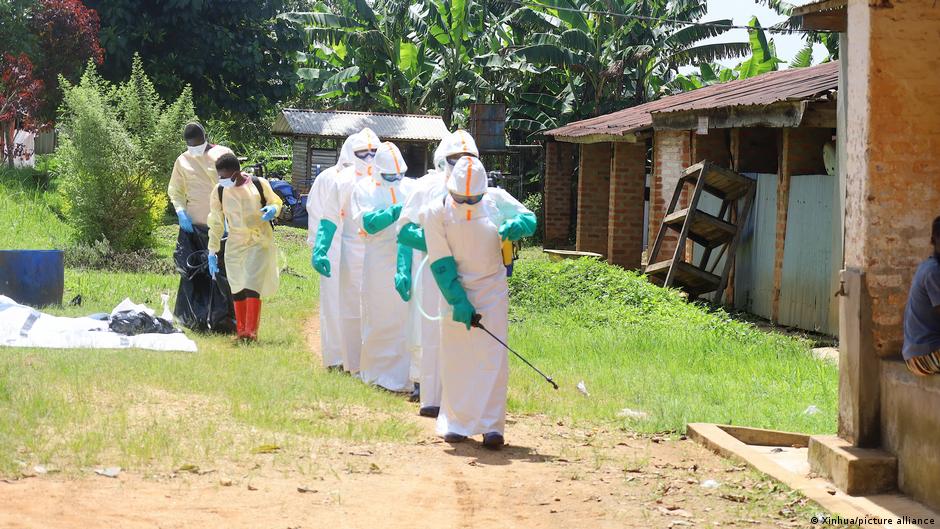
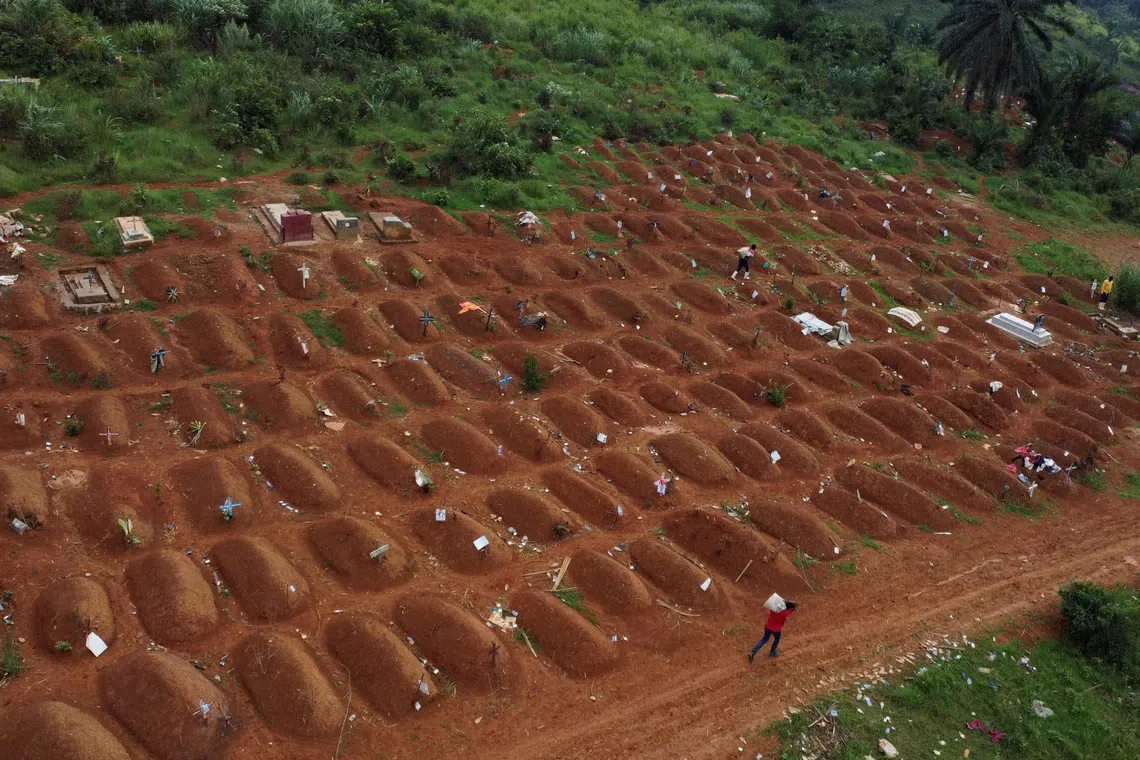
The Democratic Republic of Congo officially declared the Ebola outbreak caused by the Bundibugyo variant on May 15.
uncertain
Republic → declare → May
However, the first infections likely occurred much earlier.
asserted
infections → occur → ?
Just how far back the start of the epidemic actually goes is still a matter of debate.
asserted
goes → go → debate
But one thing is certain: Congolese authorities did not respond in the best possible way, with several international organizations highlighting delays in the initial response.
asserted
organizations → respond → response
The country experiences Ebola outbreaks on a regular basis, and has in the past been praised for its expertise in combating the disease.
asserted
country → experience → disease
Early warnings came from WHO, Africa CDC
A good starting point for tracing the origins of the outbreak is the timeline provided by the World Health Organization (WHO) in collaboration with the Africa Centres for Disease Control and Prevention (Africa CDC).
asserted
point → come → Control
According to their data, the first known case, identified retrospectively, was a health worker from Mongbwalu in northeastern Ituri Province.
uncertain
case → accord → Province
The person, sources said, developed symptoms characteristic of Ebola around April 24 or 25.
asserted
sources → say → April
They died at a medical center in Bunia, the capital of Ituri.
asserted
They → die → Ituri
To date, 80% of all cases have been reported in the province.
asserted
% → report → province
It wasn't until May 5 that the WHO said it had been informed of "an unknown illness with high mortality reported in Mongbwalu Health Zone."
uncertain
it → say → Zone
The global health body then issued its first warning.
asserted
body → issue → warning
Congo's delayed response questioned as Ebola spread
Ten days later, on May 15, the Congolese government announced the Ebola outbreak.
uncertain
government → delay → outbreak
Tests conducted by the National Institute for Biomedical Research in Kinshasa had confirmed the presence of the rare Bundibugyo type of Ebola.
asserted
Tests → conduct → Ebola
Three days later, the Africa CDC raised concerns about the speed of Congo's response.
asserted
CDC → raise → response
About three weeks had passed between the onset of the first symptoms in the suspected index case and the laboratory confirmation — even though the fatality was a health worker.
"This significant delay [...] highlights a critically low initial index of clinical suspicion among local healthcare providers, which facilitated wider geographic spread prior to the initiation of containment efforts," the Africa CDC concluded.
asserted
CDC → pass → efforts
According to reports gathered by DW, residents of Mongbwalu had already reported suspicious deaths as early as the end of April.
uncertain
residents → accord → April
"Several deaths were reported following high fevers, and the victims often showed traces of blood around various body orifices," said Dieudonne Lossa Dekhana, the provincial coordinator for civil society in Ituri.
asserted
Dekhana → report → Ituri
Red Cross reported 'widespread' public fear 'since March 30'
asserted
Cross → report → March
There were other indications that Ebola was already circulating long before the emergence of this first confirmed case.
asserted
Ebola → be → case
A May 16 report by the Red Cross of the Democratic Republic of the Congo stated: "Since March 30, 2026, there has been widespread fear among the population of the Mongbwalu Health Zone following a series of deaths."
uncertain
report → state → deaths
Here, too, the symptoms matched those of Ebola: high fever, chest pain, severe exhaustion, persistent cough, nosebleeds, vomiting, loss of consciousness, a comatose state and ultimately death.
asserted
symptoms → match → consciousness
The Red Cross report said the trigger was believed to have been the body of a Mongbwalu resident "who died and was placed in a coffin purchased in Bunia, which was then replaced by another in Mongbwalu."
US researchers: February outbreak is plausible
The funeral that brought various people into direct contact with the body and the contaminated coffin is believed to have been the cause of a rising number of infections and deaths that were subsequently observed in Mongbwalu and Bunia.
But from the data available, it is not possible to confirm without doubt that these deaths were related to the Bundibugyo virus.
asserted
deaths → say → virus
However, they show that an unusual health phenomenon had already been observed more than six weeks before the outbreak was officially declared on May 15.
uncertain
outbreak → show → May
In addition, investigations since May 15 have come to support the thesis that Ebola might have been circulating even earlier than that.
uncertain
Ebola → come → that
In a study published in the Morbidity and Mortality Weekly Report on June 11, a team of researchers from the US Centers for Disease Control and Prevention (CDC) reconstructed the early course of the epidemic.
asserted
team → publish → epidemic
An initial transmission from an animal to a human, or spillover, between mid- and late February is "plausible," the researchers concluded.
asserted
researchers → conclude → February
A late-April spillover, on the other hand, would be difficult to reconcile with the scale the epidemic had already reached at the time of the study.
asserted
epidemic → reconcile → study
WHO: Genome sequencing suggests February outbreak
On August 10, Mohamed Janabi, the WHO Regional Director for Africa, said genome sequencing analyses suggested the outbreak likely began "as early as February 2026.
uncertain
outbreak → suggest → February
"
Several early infections were mistakenly attributed to diseases that were far more common in the region, particularly malaria and typhus, he said.
asserted
he → attribute → region
In an August interview, Janabi told DW that there was a significant gap in case reporting.
asserted
Janabi → tell → reporting
In three months, we only had access to one-third of the patients," he said.
asserted
he → have → patients
Could 'pig Ebola' shed some light on the matter?
uncertain
Ebola → shed → matter
Jules Villa, a researcher in the anthropology and ecology of disease emergence at the Pasteur Institute in Paris, points to a phenomenon observed in the connection with previous Ebola epidemics.
asserted
Villa → point → epidemics
Villa'sstudy does not encompass the 2026 outbreak, but takes stock of local reports collected during earlier Ebola outbreaks in northeastern Congo.
asserted
Villa'sstudy → encompass → Congo
Villa shows that livestock farmers, veterinarians and residents had reported unusually high animal mortality even before the outbreak of at least two Ebola epidemics in humans.
asserted
farmers → show → humans
In 2017, several witnesses reported on what they called "pig Ebola" — a high mortality among pigs, which was ultimately attributed to swine fever.
asserted
which → report → fever
According to Villa's research, monitoring livestock in the general population could provide the first useful warning signs long before an outbreak is confirmed by a laboratory.
uncertain
outbreak → accord → laboratory
This article was originally written in French.
asserted
article → write → French
 The Aporia