Photo via TIME

When Will We Know the Results of the Midterm Elections?

Read the original at TIME ↗
Cite

Greene, C. (2026, November 3). When Will We Know the Results of the Midterm Elections? TIME. https://time.com/article/2026/11/03/2026-midterm-elections-polls-close-results-when/

Dated from the outlet's own feed. Check the original for its byline.

TIME · collected 2026-11-03 · by Connor Greene

Quick Summary

Election Day for the U.S. midterm elections is ongoing, with millions voting across different states. Official results determining control of Congress may take days or even weeks due to varying state procedures and deadlines; for example, Florida usually has quick counts while California’s process can extend longer. Media projections on election night are predictions rather than official outcomes, which could be delayed by up to 30 days as per some experts. Polling stations close at different times depending on the state's time zone and specific rules; most states have polls closing between 7 p.m. and 8 p.m. local time, though variations exist within individual states too.
Written by AI on 2026-11-04, from this article's own text only (the story summary below draws on all the coverage).

AI analysis

Story summary

On November 3, 2026, U.S. citizens voted in midterm elections that determined control of Congress during President Donald Trump's final two years in office. Voters across the country cast ballots for all 435 seats in the House of Representatives and a third of Senate seats. The results saw Democrats gain significant ground, reversing Republican control of both chambers. Prior to the election, Trump had held rallies in traditional Republican strongholds and promised $5,000 USD to every adult U.S. citizen if his party retained control; however, exit polls showed his job approval rating at a record low 38%, down from 45% in 2018 midterms during his first term. The shift is attributed to voter discontent over rising costs of living and energy prices.

Written for “Midterm Elections Unfold Against Trump” on 2026-11-04, grounded in this article and the 122 other(s) covering the same event.
Why this leaning score
This article does not take a side on a contested political question, so it has no leaning score. That is an answer rather than a gap: a match report or a rescue can be warmly or critically written without being left or right, and scoring it anyway is how approval of a subject gets recorded as a political position.
No political leaning scored for article 126776 · logged 2026-11-04

Story

📰 Midterm Elections Unfold Against Trump
Politics · 123 article(s) covering the same event. Compare every outlet's account →

Compared with similar articles

This article reads unscored and hedges 20% of its claims. Each row says how that neighbour differs.
BBC News
Hedges 13 of 67 claims Outlet record 66/100
Al Jazeera
Hedges 1 of 2 claims Outlet record 60/100
The Independent
⚖️ Leans left Hedges 6 of 45 claims Outlet record 59/100
Al Jazeera
Hedges 11 of 59 claims Outlet record 60/100
The Hindu
Hedges 3 of 35 claims Outlet record 77/100
“The articles provide general information about election results timelines but do not describe a single specific incident.”
ABC News (AU)
Hedges 2 of 21 claims Outlet record 67/100
“The articles discuss general aspects of the midterm election day process but do not describe a single specific incident or occurrence.”
CBC News
Hedges 0 of 6 claims Outlet record 60/100
“The articles discuss the general process and timeline for the midterms but do not describe a single, specific incident or outcome.”
Fox News
Hedges 6 of 59 claims Outlet record 68/100
“Article A discusses expectations before the midterm elections, while Article B covers the actual voting day and potential delays in results announcement.”
The Independent
Hedges 1 of 16 claims Outlet record 59/100
“While both articles discuss the uncertainty surrounding the outcome of the midterm elections on November 7, 2026, they describe different stages of the election process: Article A discusses the general stakes and potential outcomes before Election Day, while Article B focuses on the day itself and the challenges in determining results.”
New York Post
Hedges 2 of 23 claims Outlet record 66/100
“Both articles discuss Election Day in 2026 but describe different aspects: Article A provides guidance on how to watch election results, while Article B focuses on the timeline and uncertainty of when results will be known.”
How this article was measured signals, leaning charts, publisher record, byline, topics and claims

Signals How these are calculated →

Claims extracted
51
sentences that state something as happening or true
Uncertain
20%
10 of 51 hedged ("reportedly", "may", "according to")
Leaning
not political
takes no side on a contested political question
Publisher signals
59/100
TIME's corrections and hedging, across everything collected from it. Not a measure of accuracy.
Outlets on this story
123
Politics
Same framing elsewhere
1
articles that frame the event the way this one does
Analyzed 2026-11-04 · how these are computed

How this is being covered How these are calculated →

Article leaning vs. publisher reliability
Source leaning vs. consistency

Publisher

TIME · 815 article(s) · 2 correction(s) detected
Running correction rate · 2 correction(s)

Who wrote this

Connor Greene
27 article(s) here · 1 carrying a prediction
🔮 But it could be days, or even weeks, before it becomes clear which party will control each chamber of Congress for the remainder of President Donald Trump’s second term.
2026-11-03 · assertive framing · When Will We Know the Results of the Midterm Elections?
🔮 Complaints allege further Hatch Act violations Top Trump officials have additionally been accused of violating the Hatch Act through other means than direct statements and appearances in support of—or opposition to—midterm candidates that complaints allege may also affect the outcome of upcoming elections.
🔮 The fate of Congress hangs in the balance as the outcome of a few key races will determine which party controls the House and Senate for the remainder of Donald Trump's presidency.
2026-10-30 · assertive framing · The Key Congressional Races to Watch on Election Night
🔮 “His sonorous voice and singular talent will forever be synonymous with indelible performances in every genre,” the statement read.
🔮 He would read through the credits of movies, looking for names like “Garcia,” “Hernandez,” and “Rodriguez,” or scan the library for books by Latino authors.
🔮 But with early voting for the midterms underway in nearly every state, tens of millions of Americans have already cast their ballots, offering an initial glimpse into how the pivotal elections may play out.
🔮 Trump said that the decision was ultimately hers, and that he would speak with Zacharia following a trip to Georgia.
🔮 “A lot of times people don’t know what they’re looking for, they can’t describe it, and so perhaps we offer you a journey that will resonate,” she said.
🔮 Griffiths acknowledged the uncertainty that comes with rapidly developing tech, but he said that human decision-making will determine the impact of that advancement—for good or ill.
🔮 “A lot of times people don’t know what they’re looking for, they can’t describe it, and so perhaps we offer you a journey that will resonate,” she said.
Also by Connor Greene
Nothing else under this byline is closely related to this article, so these are simply their most recent.
All 27 articles by Connor Greene →

Topics

California Congress Florida U.S. the U.S. Constitution

Subjects

Washington GPE · 3× Alaska GPE · 2× California GPE · 2× Florida GPE · 2× U.S. GPE · 2× Auburn University ORG · 1× Congress ORG · 1× Donald Trump PERSON · 1× Mitchell Brown PERSON · 1× TIME ORG · 1×

Narrative

“There are all these differences, both in process and deadlines, and geography, and who the voters are, and who the candidates are, that make a difference in what this looks like,” Mitchell Brown, a professor of political science at Auburn University and the author of “How We Vote: Innovations in American Elections,” tells TIME.
framing: assertive · carried by 1 article(s) · first seen 2026-11-04
🔮 But it could be days, or even weeks, before it becomes clear which party will control each chamber of Congress for the remainder of President Donald Trump’s second term.
2026-11-04 · TIME
When Will We Know the Results of the Midterm Elections? · assertive framing

Claims (51 extracted, 10 hedged)

Election Day is underway, with tens of millions of voters heading to the polls around the U.S. asserted
millions → head → U.S.
But it could be days, or even weeks, before it becomes clear which party will control each chamber of Congress for the remainder of President Donald Trump’s second term. uncertain
party → become → term
Some races are likely to be called on Tuesday night, while in other, tighter contests it could take multiple days—if not longer—to determine a winner. uncertain
it → call → winner
It all boils down to the states, which the U.S. Constitution empowers to establish the times, places, and manners of holding elections and counting ballots. asserted
It → boil → ballots
Certain states are known for having shorter count times, such as Florida. asserted
states → know → Florida
Others typically take longer, like California, due to its size, and Alaska, where ranked-choice voting can make the process of certifying votes more complicated. asserted
process → take → votes
“There are all these differences, both in process and deadlines, and geography, and who the voters are, and who the candidates are, that make a difference in what this looks like,” Mitchell Brown, a professor of political science at Auburn University and the author of “How We Vote: Innovations in American Elections,” tells TIME. asserted
We → be → TIME
Mitchell says that it could take up to 30 days before all the states certify their results. uncertain
states → say → results
She stresses that official midterm results released by the states themselves are different from projections from media outlets, which will call races sooner. asserted
which → stress → races
“It's really important for everyone to understand that what happens on election night when we're watching TV or looking online, and we're seeing races called, those are predictions by media outlets. asserted
those → understand → outlets
They're not the official results,” adds Chris Mann, the research director at The Center for Election Innovation & Research. asserted
Mann → add → Innovation
“With close elections, we may end up not knowing who the winner is until we get to those official certifications that every vote has been counted. uncertain
vote → end → certifications
Here’s what to know about how the midterm votes will be tabulated, and when we are likely to know the results. asserted
we → ’ → results
When do the polls close? asserted
polls → close → ?
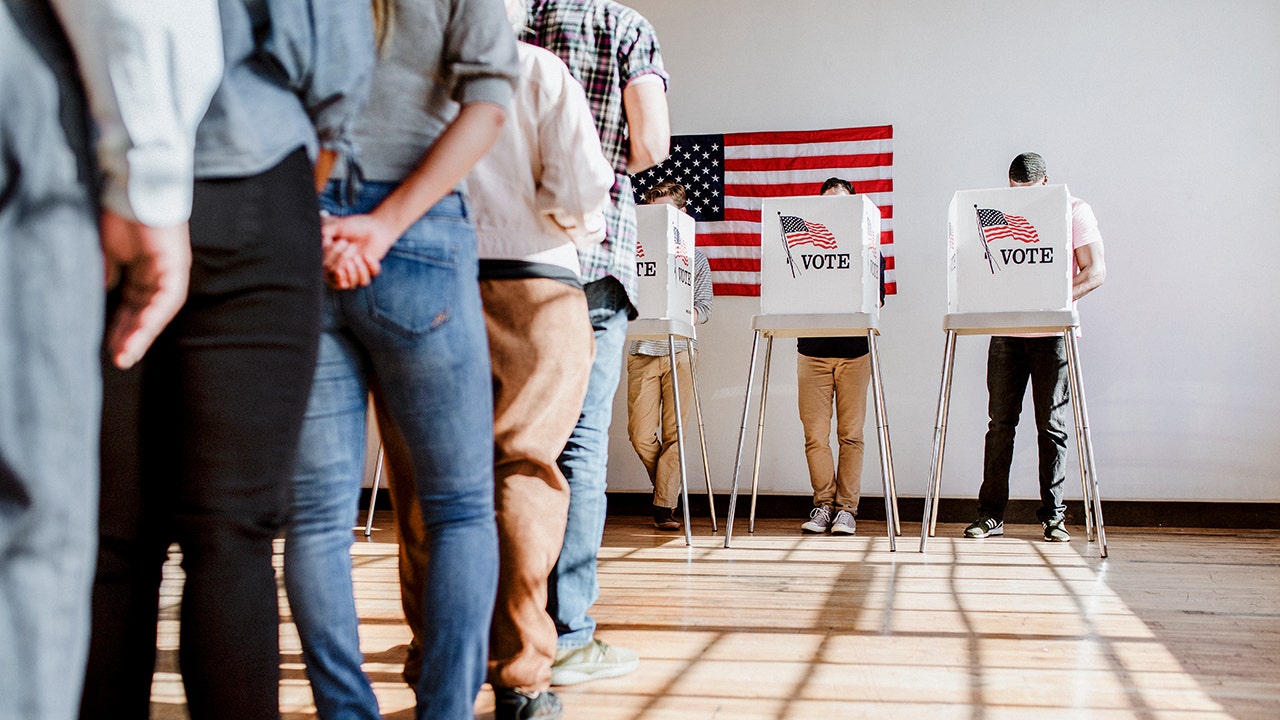
Polls open and close at varying times in different states around the country, with most closing their polls around 7 p.m. or 8 p.m. local time. asserted
most → open → p.m.
Because the U.S. is divided across several time zones, however, those closures are spread over several hours on Election Day. asserted
closures → divide → Day
And in some cases closing times vary even between different parts of the same state. asserted
times → vary → state
Here is when the latest polls close in each of the 50 states and Washington, D.C., in Eastern Standard Time. asserted
close → close → Time
North Carolina also typically closes its final polls at this time, but due to minor technical issues reported in some localities on Tuesday—which have since been resolved—the state’s board of elections has extended voting hours in some precincts. asserted
board → close → precincts
8 p.m. EST: Alabama, Connecticut, Delaware, Florida, Illinois, Maine, Maryland, Massachusetts, Mississippi, Missouri, New Hampshire, New Jersey, Oklahoma, Rhode Island, Tennessee, and Washington, D.C. In Pennsylvania, most polling sites will close at 8 p.m., but in three precincts they will stay open for an additional half hour “due to machine set-up issues” that delayed the opening of those polls this morning, according to Chester County officials. uncertain
that → close → officials
1 a.m. EST: Alaska How are ballots counted? asserted
ballots → count → ?
After their respective polls close, states must verify and count ballots that were cast in various ways, including those made in person during the early voting period and on Election Day, mail-in ballots, and provisional ballots. asserted
that → close → Day
Depending on the state, ballots are either counted right at voting locations, or transported back to county counting facilities. asserted
ballots → depend → facilities
Mann says these facilities are like warehouses containing machines that can quickly and accurately count votes. asserted
that → say → votes
Provisional ballots allow people to vote who fail to meet certain eligibility requirements that can later be verified. asserted
that → allow → requirements
If, for example, someone arrives at a polling site and does not have their ID, they may be able to vote through a provisional ballot that can then be counted if and when they have verified their identity. uncertain
they → arrive → identity
Brown says the process of confirming provisional ballots is called “curing” and can add additional time to the tallying process. asserted
process → say → process
Fourteen states and Washington D.C. also allow ballots postmarked by Election Day to be counted if they are received during a set post-election window, which can also add delays to final vote counts. asserted
which → allow → counts
Why does it take longer to get results from some states than others? asserted
it → take → others
It will take significantly longer for the results of the election to be officially tabulated—or even projected by media outlets—in some states than in others. asserted
results → take → others
When it comes to the media calling races, projections may take longer to come in cases when races are tight, and the winner does not become clear until nearly all the votes are counted. uncertain
votes → come → cases
“If there is a high margin of victory, they can make that projection sooner,” Wren Orey, who runs the Elections Project at the Bipartisan Policy Center, a policy think tank, tells TIME. asserted
who → be → TIME
“Whenever there's a very narrow margin of victory, that means that election officials need to process and report more results before a media outlet can be confident projecting a winner. asserted
outlet → be → winner
In terms of the actual process of states counting votes, meanwhile, differences in speed can boil down to physical factors, such as the distance ballots must be transported before being counted. asserted
ballots → count → distance
In states such as Alaska, for instance, vast and rural territories create delays for counting ballots. asserted
territories → create → ballots
“There are sometimes ballots being flown back to Anchorage in order to be processed,” says Orey. asserted
Orey → be → Anchorage
They add that some states may also simply have more infrastructure to count ballots, including more machines, employees, and counting locations. uncertain
states → add → machines
State laws governing how votes are cast and counted can also play a role in the timeline of election results. asserted
votes → govern → results
Alaska and Maine, for example, use ranked-choice voting, a process in which voters rank their top candidates instead of choosing one person for a position. asserted
voters → use → position
Mann describes this method as a “more complicated process” in tight races, where ballots may need to be recounted due to one candidate not receiving an outright majority in the first or even subsequent rounds of counting. uncertain
candidate → describe → counting
…and 11 more, not listed.

💬Give feedback
🕘History 🎫Support