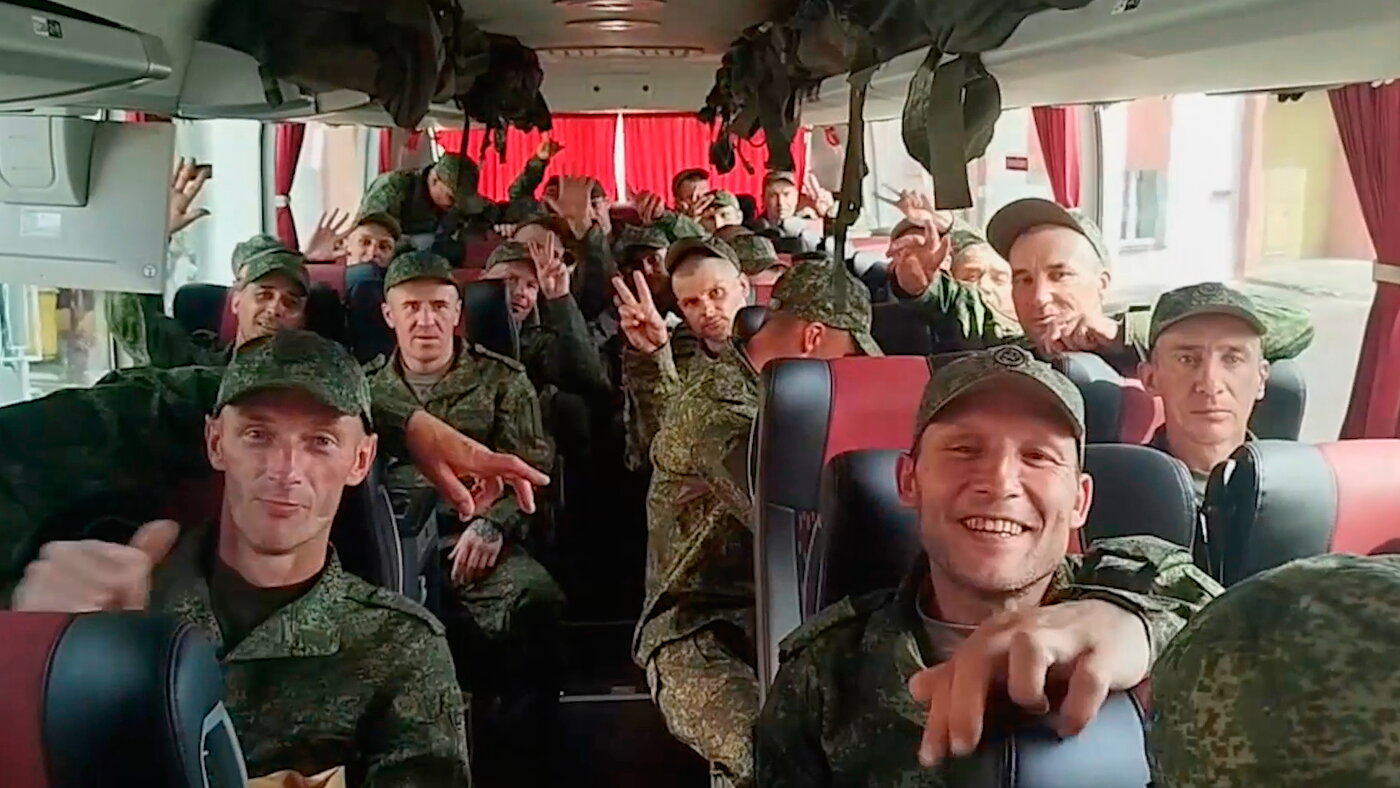
Russia seizes Ukrainian POWs, then it demands favors from their relatives
KYIV, Ukraine -
asserted
it → seize → relatives
Polina is a middle-aged woman from eastern Ukraine who was devastated when Russian troops captured her hometown in 2022 and seized her ailing father, who's blind in one eye and walks with a cane.
asserted
who → devastate → cane
Then came another gut-wrenching blow.
asserted
blow → come → ?
Russian authorities contacted her on social media and demanded she assist them to ensure that her father — who's now 71 — was well treated.
asserted
who → contact → them
"They pressured me for four months.
asserted
They → pressure → months
They wanted me to gather some information about one of their attacks," said Polina.
asserted
Polina → want → attacks
Another time, the Russians sent her a video of her father.
asserted
Russians → send → father
"They said, 'Look, he's OK.
asserted
he → say → ?
He's smiling.
asserted
He → smile → ?
And you haven't done anything for us yet.'
asserted
you → do → us
They kind of pressured me, like, 'It's time to do something,'" said Polina, who fled her hometown and now lives in a northern part of the country that's still under Ukrainian control.
asserted
that → pressure → control
She didn't help the Russians, and they eventually stopped contacting her.
asserted
they → help → her
But they accused her father of spying for Ukraine and have held him nearly four years.
asserted
they → accuse → him
Polina asked that we use only her first name because she fears for her father's safety.
asserted
she → ask → safety
Taking advantage of vulnerable families
asserted
Taking → take → families
Russia is believed to be holding thousands of Ukrainian soldiers and civilians as prisoners of war, according to human rights groups and reporting from media outlets like the Kyiv Independent.
uncertain
Russia → believe → Independent
And what happened to Polina has happened to many relatives of the prisoners, Ukrainians say.
asserted
Ukrainians → happen → prisoners
They are trying to learn anything about their loved ones in Russian captivity," said Petro Yatsenko, the Ukrainian government spokesman for the agency that deals with Ukrainian families of prisoners held by Russia.
asserted
that → try → Russia
He said Russia exploits this by withholding information in formal government channels.
asserted
Russia → say → channels
Instead, the Russians contact Ukrainian families directly.
asserted
Russians → contact → families
"Russia never shares any official information about people who are imprisoned," said Yatsenko.
asserted
Yatsenko → share → people
He believes two Russian agencies, military intelligence, or GRU, and the main domestic security agency, the FSB, are running this highly orchestrated campaign.
asserted
agencies → believe → campaign
When the Russians capture a Ukrainian — a soldier or a civilian — they look up the prisoner's social media profile and begin contacting family members, Yatsenko said.
asserted
Yatsenko → capture → members
Russia often tells the relatives to do things like check out security at key locations in their hometowns, or join demonstrations against Ukraine's government.
asserted
Russia → tell → government
Guidance for the families
Yatsenko said most Ukrainians refuse and pass on the information to Ukrainian authorities.
asserted
Ukrainians → say → authorities
He offers a simple message to families on how to respond to the Russians.
asserted
He → offer → Russians
And don't be afraid," he said.
asserted
he → say → ?
Russia and Ukraine periodically exchange POWs.
asserted
Russia → exchange → POWs
Nearly 10,000 Ukrainian troops have been freed and a similar number of Russians have been released, according to both sides.
uncertain
number → free → sides
Neither side says how many prisoners are still being held.
asserted
prisoners → say → ?
While both sides capture enemy soldiers, only Russia holds a large number of civilians, and rarely releases them.
asserted
Russia → capture → them
Russia sometimes lets Ukrainian prisoners speak to their families.
asserted
prisoners → let → families
But Yatsenko says they're forced to deliver false messages that go like this: "Russia is treating me well and they are ready to free us.
asserted
they → say → us
But the Ukrainian government does nothing and that's why I'm still here.
asserted
I → do → nothing
"Of course, this is not true," he added.
asserted
he → add → ?
Widespread reports of abuses
Many Ukrainian prisoners say upon their release that they were tortured in Russian captivity.
asserted
they → say → captivity
A 2024 report from the United Nations human rights office found that "Russian authorities have subjected Ukrainian POWs to widespread and systematic torture and ill-treatment."
asserted
authorities → find → torture
The office said nearly all of the 174 Ukrainian POWs interviewed since March 2023 reported "torture or ill-treatment" that included "severe beatings, electric shocks, sexual violence, suffocation ... and threats of severe violence to the individual or their family."
asserted
that → say → individual
The same report found that 104 of 205 Russian POWs, or 51%, said they were abused "during the initial stages of their captivity."
asserted
they → find → captivity
The report added that "nearly all cases, torture and ill-treatment stopped when prisoners arrived at official places of internment (in Ukraine), where conditions appeared generally compliant with international standards."
asserted
conditions → add → standards
…and 18 more, not listed.
 The Aporia