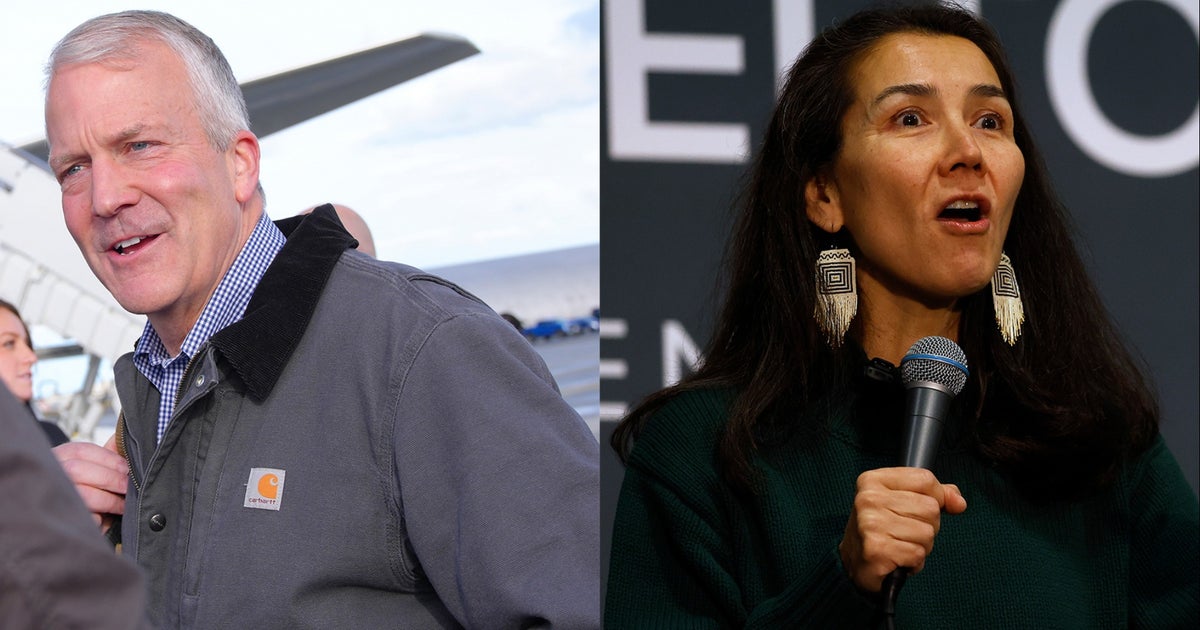
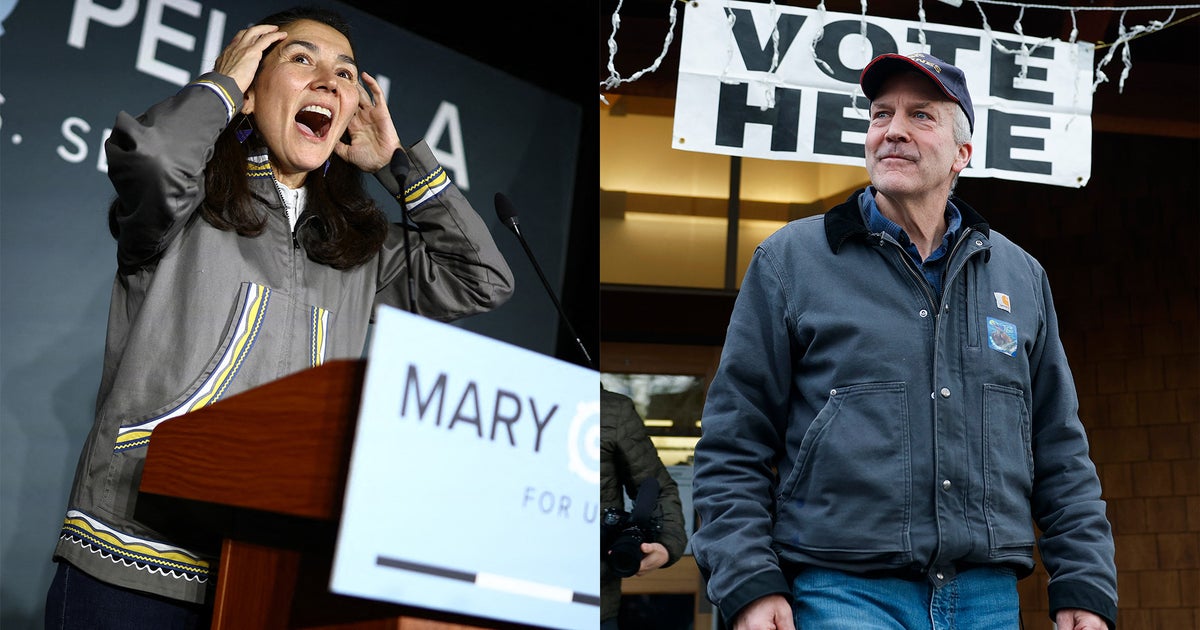
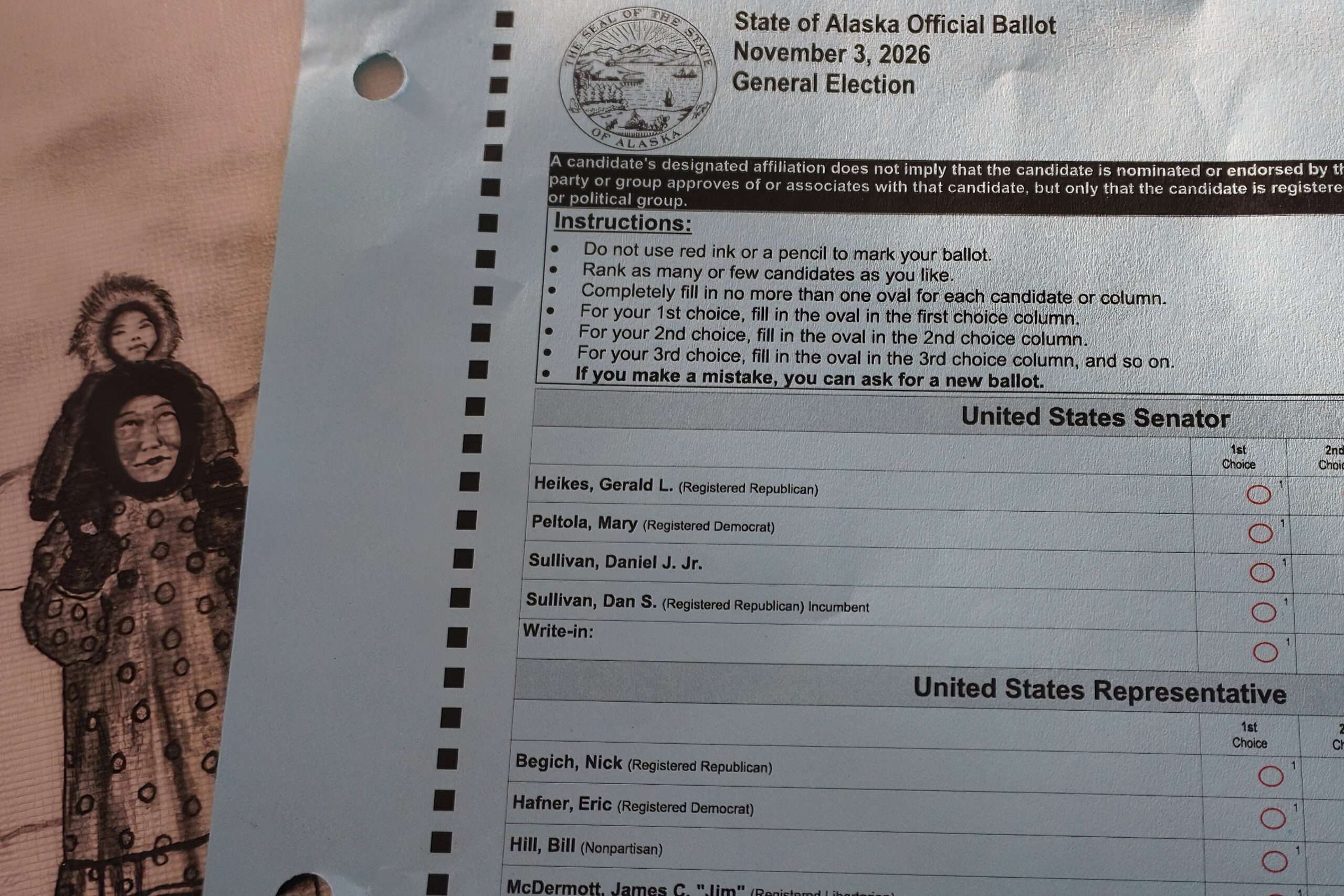
Days after the midterm elections, one of the only national races still left to be resolved is the U.S. Senate race in Alaska.
asserted
one → leave → Alaska
As of this writing, with about three-fourths of the votes tallied, Republican Sen. Dan Sullivan trails Democratic challenger Mary Peltola by just over 600 votes—three tenths of a percentage point—with the two remaining candidates trailing further behind, with just a couple of percentage points each.
asserted
candidates → tally → points
The race received intense scrutiny in its final days after it came to light that the Peltola campaign and other Democrats recruited current fourth-place finisher Daniel J. Sullivan Jr. specifically to siphon votes from Republicans confused about which Dan Sullivan to vote for.
asserted
campaign → receive → Sullivan
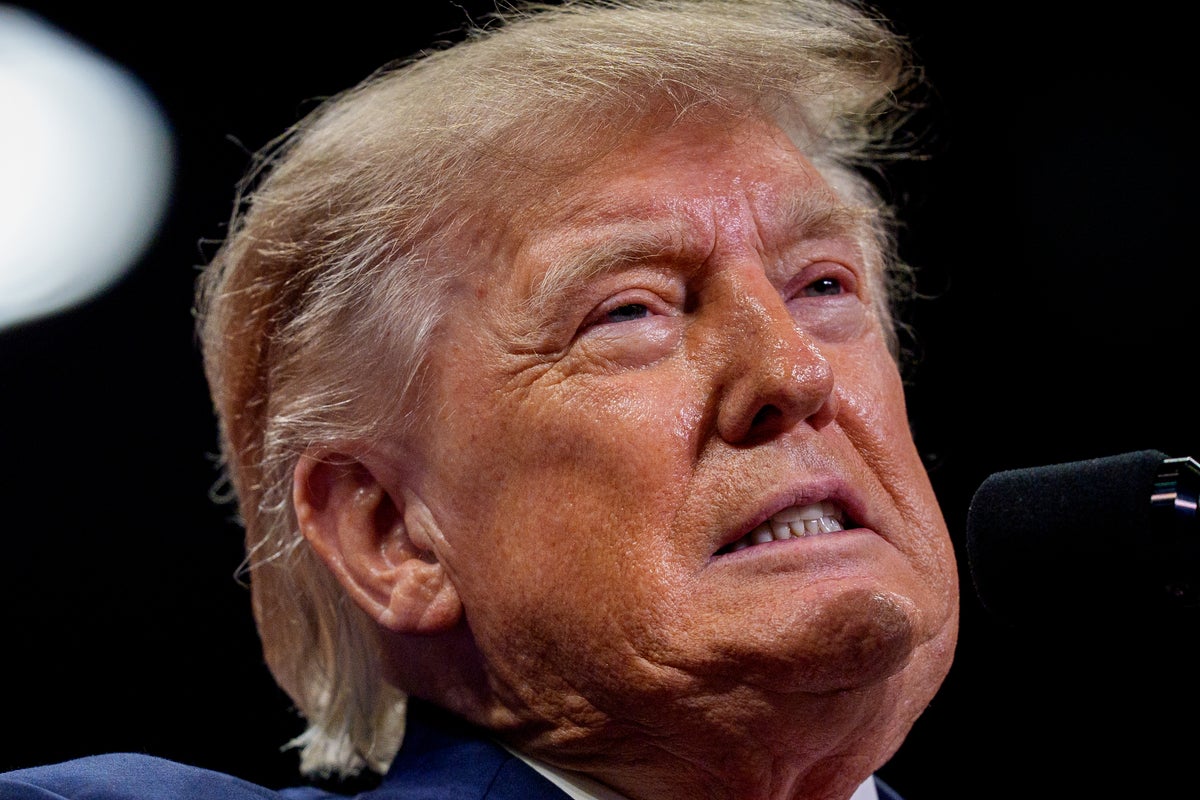
President Donald Trump called for Peltola and the other Sullivan to be criminally prosecuted.
asserted
Peltola → call → ?
The Department of Justice sued, asking the state to set aside ballots that picked the non-incumbent Sullivan.
asserted
that → sue → Sullivan
(A federal judge dismissed the lawsuit earlier this week.)
asserted
judge → dismiss → lawsuit
There are still plenty of votes left to count, but it appears unlikely for Sullivan—either one—to pull out a victory.
asserted
Sullivan → be → victory
Not only that, it seems like he's losing fair and square.
asserted
he → seem → ?
For its general elections, Alaska uses a ranked-choice ballot, listing up to four candidates for each office regardless of party affiliation.
asserted
Alaska → use → affiliation
Voters rank the candidates in order of preference.
asserted
Voters → rank → preference
In the event that nobody receives an outright majority when the votes are counted, the lowest performer is eliminated, and all of their ballots are retallied and assigned to their second choices.
asserted
all → receive → choices
Besides that, even just collecting and processing ballots in such a large and mostly rural state means it'll take a while.
asserted
it → collect → while
The state must count all ballots by November 18—15 days after Election Day—and it has another seven days to certify the results.
asserted
it → count → results
But the state released preliminary results this week on the approximately 215,000 votes it had collected, which suggests people who voted for the other Sullivan did so not out of confusion, but to vote against the incumbent.
uncertain
who → release → incumbent
"Mr. Sullivan might not even claw back half of a point in ranked-choice tabulation, which would not be enough to overcome Ms. Peltola's expected advantage," reports The New York Times.
uncertain
Times → claw → advantage
"One reason Mr. Sullivan doesn't fare better is that more of the voters who backed the other Dan Sullivan…ranked Ms. Peltola as their second choice rather than Mr. Sullivan.
asserted
who → fare → Sullivan
The Times analyzed the data available, which includes all but about 10,000 ballots that could not be scanned electronically and must be counted by hand.
uncertain
that → analyze → hand
Only about four percent of ballots ranked someone other than Peltola or Sullivan first.
asserted
percent → rank → Peltola
Of those who picked the other Sullivan, over one-third left the rest blank, nearly 30 percent picked Peltola second, and 16 percent and 18 percent picked the incumbent Sullivan and fellow Republican Gerald Heikes, respectively.
asserted
percent → pick → Sullivan
This suggests that at least 16 percent, and perhaps as many as 34 percent, of voters followed the senator's advice to just list all the candidates other than Peltola and let the process sort it out.
uncertain
process → suggest → it
It also indicates nearly three in 10 voters who picked the spoiler Sullivan actually did intend to vote for Peltola, and ranked her second.
asserted
who → indicate → her
Of the voters who picked Heikes first, 36 percent picked Sullivan second, and a nearly identical amount left the rest blank; 14 percent picked the other Sullivan, while 12 percent chose Peltola.
asserted
percent → pick → Peltola
Of course, there is the matter of the 36 percent who picked the other Sullivan and nobody else—were those protest votes, or confused voters?
Thankfully, there is reason to think the Peltola campaign's dirty trick did not actually sway the results:
asserted
trick → be → results
"Even if all the voters who voted for Daniel J. Sullivan Jr. and did not rank a second choice at all had actually intended to vote for the incumbent," the Times added, "he would only gain about one percentage point in vote margin—an increase that would not offset Ms. Peltola's expected gains from uncounted mail vote."
asserted
that → vote → vote
Of course, that hasn't stopped Trump from fulminating over the results.
asserted
that → stop → results
"The vote totals for the Fake Dan Sullivan, plus the other 'slug' that the Dems put on the Ballot, should be immediately given to the REAL Dan Sullivan, and the Election is over
asserted
Election → put → Sullivan
- He easily wins," the president wrote on Truth Social.
asserted
president → win → Social
While we're at it, why not just give him Peltola's votes too and declare a unanimous victory?
asserted
we → give → victory
This impotent posturing is Trump's natural response when he comes up short in elections.
asserted
he → come → elections
After he won the 2016 election but lost the popular vote, Trump complained that if not for "the millions of people who voted illegally," he would have won both.
asserted
he → win → both
Then, before the 2020 election, he reportedly indicated that he planned to just declare victory before all the votes were counted—which he then did, as state totals were trending away from him.
uncertain
totals → indicate → him
Even in this campaign cycle when he's not on the ballot, Trump's administration has tried to meddle in states' counting processes: Before Election Day, his Department of Justice tried to force Alaska to segregate all ballots that voted for the other Dan Sullivan, in order to conduct some sort of "investigation" into whether each voter actually meant to vote for the incumbent senator.
asserted
voter → try → senator
And this week, attorneys for Sen. Cindy Hyde-Smith (R–Miss.) sent a letter to election officials in Mississippi, where Democratic challenger Scott Colom currently leads Hyde-Smith by about two-tenths of a percentage point.
asserted
Colom → send → point
Hyde-Smith's attorneys wrote "to demand the immediate separation, secure custody, and preservation" of all provisional ballots, in the event of a lawsuit challenging the results.
asserted
attorneys → write → results
As Madeline Nguyen of Mississippi Today reported in April, Mississippi Secretary of State Michael Watson contracted with Experian to verify voters' eligibility even as the company warned that it couldn't guarantee the data was reliable.
asserted
data → report → eligibility
As a result, thousands were likely removed from the voter rolls erroneously and had to cast provisional ballots.
asserted
thousands → remove → ballots
Both before and since the election, Trump complained about the Alaska Senate race, saying the Peltola campaign had committed fraud and must be punished.
asserted
campaign → complain → fraud
Ultimately, it looks like Peltola will win not because of malfeasance, but because voters simply liked her opponent less.
asserted
voters → look → opponent
 The Aporia