[This post is co-authored with Professor Seth Barrett Tillman.
asserted
post → co → Tillman
]
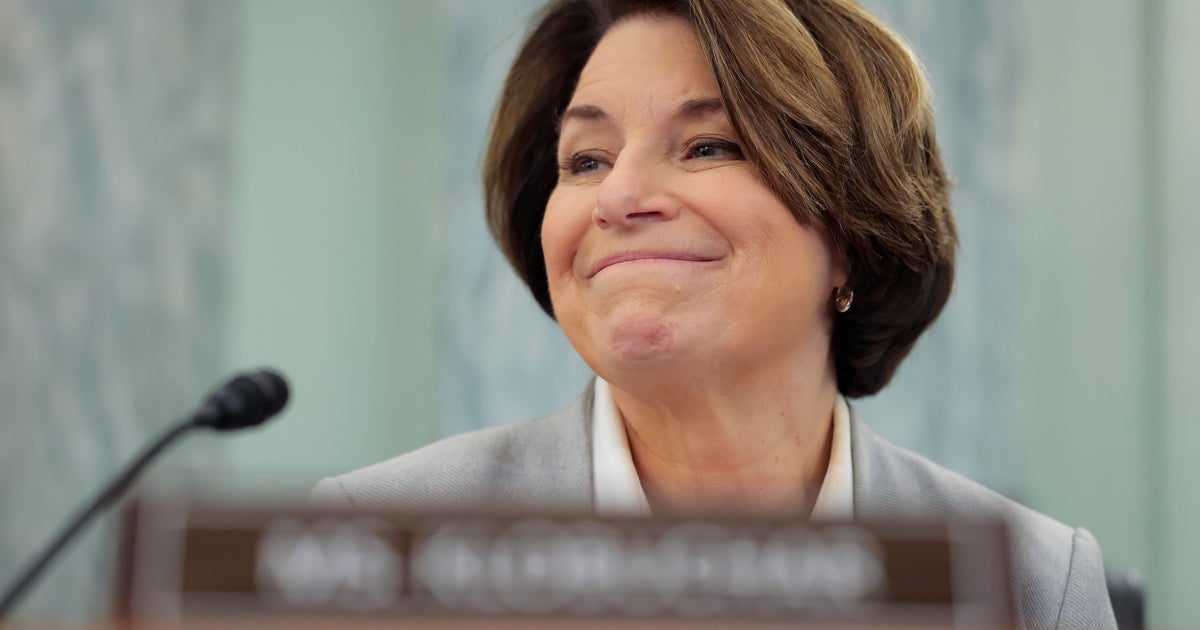
On November 3, 2026, U.S. Senator Amy Klobuchar (Minnesota-Democratic Party) was elected Governor of Minnesota.
asserted
Klobuchar → elect → Minnesota
It is expected that, at some point, she will resign her U.S. senate seat, then take up the governor's position, and subsequently make a temporary appointment to fill her then-vacant senate seat.
asserted
she → expect → seat
That dance of musical chairs happens from time-to-time.
asserted
dance → happen → time
But some have also reported that Klobuchar must resign her senate seat.
asserted
Klobuchar → report → seat
CBS News quoted political science professor David Schultz (Hamline University, Minnesota): "At some point she's going to have to step down as U.S. [S]enator."
asserted
she → quote → S]enator
And sometimes, federal and state constitutional and statutory law bar dual-officeholding.
asserted
law → bar → officeholding
In these circumstances, the law does not expressly bar dual-officeholding where, as here, the two positions are U.S. Senator and Minnesota Governor.
asserted
positions → bar → officeholding
The U.S. Constitution's Incompatibility Clause (Article I, Section 6, Clause 2) bars U.S. Senators and Representatives from concurrently holding certain other federal positions.
asserted
Clause → bar → positions
So, this provision has no application here.
asserted
provision → have → application
The Minnesota State Constitution has a similar provision (Article IV, Section 5).
asserted
Constitution → have → provision
That provision bars Minnesota's state (not U.S.) Senators and Representatives from holding other state and federal positions.
asserted
provision → bar → positions
So, this provision has no application here.
asserted
provision → have → application
The federal double-dipping statute, 5 United States Code Section 5533 bars drawing two salaries for two positions, where both positions are at the federal level.
asserted
positions → dip → level
It has no application to state positions, e.g., governor.
asserted
It → have → positions
Moreover, it does not bar actual dual-officeholding; rather, it bars receiving two streams of full-time compensation or salary.
asserted
it → bar → compensation
Again, this provision has no application here.
asserted
provision → have → application
The more narrow doctrine prohibits one person holding two positions where one position supervises the other position or determines its compensation.
asserted
position → prohibit → compensation
Here, the two positions—U.S. Senator and Minnesota Governor—neither supervise one another, nor determine one another's compensation.
asserted
positions → supervise → compensation
So, this doctrine has no application here.
asserted
doctrine → have → application
This doctrine holds that, where as a practical matter, one person cannot carry out both sets of duties connected to two positions, the two positions are incompatible.
asserted
positions → hold → positions
It might be argued that a governor, particularly in an emergency, must reside within her state, and that a U.S. Senator, should generally be on hand, at short notice, to carry out Senate business.
uncertain
Senator → argue → business
Given the physical distance between Minnesota and Washington, D.C., it is not entirely frivolous to suggest that this doctrine might act as a bar here.
uncertain
doctrine → give → bar
But the bar here is not distance, it is whether one can practically carry out both sets of duties.
asserted
one → carry → duties
Governors frequently leave their states for short periods of time—even for vacations.
asserted
Governors → leave → vacations
That's allowable as long as they are within reach by telephone or video link, and as long as they can return quickly in the event of an emergency.
asserted
they → return → emergency
Likewise, the U.S. Senate can choose to accommodate a Senator with responsibilities distant from D.C.—the Senate could allow participation in debate by video link, and it could allow remote voting, as long as the votes are reasonably authenticated.
uncertain
votes → choose → voting
In other words, it is not a slam dunk that this expansive doctrine should apply on these facts, particularly given that this doctrine is merely a judicial creation lacking any foundation in both the U.S. Constitution and the Minnesota Constitution.
asserted
doctrine → apply → Constitution
More generally, we should not allow ad hoc judicial creations to supersede democratic elections and add to the qualifications and incompatibilities expressly set out in positive law.
asserted
creations → allow → law
Having one person hold two government positions—including state governor and U.S. Senator—is not a particularly good result.
asserted
person → have → governor
But the fact that a result is bad does not mean, without more, that that result is barred by our law.
asserted
result → mean → law
And pretending the U.S. Constitution and Minnesota Constitution bar what we think is bad today elevates our intuition into legal duties only by undermining what the legal system actually commands.
asserted
system → pretend → what
And if today, our intuition is vindicated, we might do well to remember that tomorrow, it might be someone else's intuition being vindicated and in ways that we might come to regret.
uncertain
we → vindicate → that
Among those who have considered this issue, I expect that many (and, perhaps, most) believe, as Professor Shultz believes, that Klobuchar must resign her senate seat before she becomes Minnesota's governor.
asserted
she → consider → seat
And that should tell you all you need to know about . . . the received wisdom.
asserted
you → tell → all
 The Aporia