Photo via Toronto Star

Arab parties extend a hand to try and topple Netanyahu, but challenges remain

Read the original at Toronto Star ↗
Cite

Metz, S. (2026, November 5). Arab parties extend a hand to try and topple Netanyahu, but challenges remain. Toronto Star. https://www.thestar.com/news/world/middle-east/arab-parties-extend-a-hand-to-try-and-topple-netanyahu-but-challenges-remain/article_c8512f6d-de13-5cb8-97cf-b51347d2364b.html

Dated from the outlet's own feed. Check the original for its byline.

Toronto Star · collected 2026-11-05 · by Sam Metz

Quick Summary

Ahmad Tibi, a senior member of Israel’s Arab Joint List, announced that his bloc is willing to support an anti-Netanyahu government without joining it, marking a significant shift from past practices. This move comes after recent elections where Arab-led parties gained a record share in parliament, making their potential backing crucial for forming the next government. However, such an alliance could be politically challenging due to differing stances on issues like Israel’s identity as a Jewish state and policies toward Palestinian territories.
Written by AI on 2026-11-05, from this article's own text only (the story summary below draws on all the coverage).

AI analysis

Story summary

As of November 5, 2026, the Arab Joint List, Israel's largest Arab-majority party, is willing to support an opposition-led government to replace outgoing Prime Minister Benjamin Netanyahu’s coalition but will not join the cabinet. This offer comes after the inconclusive Israeli Knesset elections on October 27, where Netanyahu secured 53 seats while the opposition bloc won 48 seats, leaving 19 votes from Arab-majority parties as a potential tiebreaker. Senior party leader Ahmad Tibi announced this decision to help form a government that could unseat Netanyahu. However, challenges remain due to some of Eisenkot’s allies who are opposed to partnering with the Joint List, citing past statements by its leaders they believe deny Israel's legitimacy or support its enemies.

Written for “Arab Parties Back Eisenkot To Oust Netanyahu” on 2026-11-05, grounded in this article and the 7 other(s) covering the same event.
Why this leaning score
The model judged this article politically coded and scored it -0.35, but 1 quote(s) could not be found in the article and the other 1 are attributed speech rather than the article's own narration, so the score is not published.
Written under an earlier scoring contract, which gave a paragraph rather than checkable quotes. Re-analysing this article replaces it.
Leaning score withheld for article 130760: no verified evidence · logged 2026-11-05

Story

📰 Arab Parties Back Eisenkot To Oust Netanyahu
Politics · 8 article(s) covering the same event. Compare every outlet's account →

Compared with similar articles

This article reads unscored and hedges 12% of its claims. Each row says how that neighbour differs.
The Hindu
⚖️ Leans strongly left Hedges 1 of 30 claims Outlet record 77/100
“The articles describe different aspects of political developments related to Arab parties in Israel, but not the same specific event.”
The Hindu
⚖️ Leans left Hedges 1 of 34 claims Outlet record 77/100
“The articles cover related political developments but describe different occurrences and timeframes.”
Times of India
Hedges 4 of 23 claims Outlet record 59/100
The Straits Times
⚖️ Leans left Hedges 0 of 22 claims Outlet record 66/100
South China Morning Post
⚖️ Leans left Hedges 1 of 3 claims Outlet record 62/100
Al Jazeera
⚖️ Leans left Hedges 0 of 3 claims Outlet record 60/100
“The articles describe related political developments but different specific events occurring on different dates.”
Al Jazeera
⚖️ Leans left Hedges 10 of 52 claims Outlet record 60/100
The Free Press
⚖️ Leans left Hedges 1 of 19 claims Outlet record 97/100
“The articles discuss different aspects of political developments related to Netanyahu's rule and do not describe a single specific incident occurring at the same time.”
Al Jazeera
⚖️ Leans left Hedges 6 of 45 claims Outlet record 60/100
“While both articles discuss the political situation involving Arab parties and Netanyahu's rule, they describe different aspects of the ongoing political deadlock: Article A focuses on election results and their implications, while Article B discusses a potential coalition to remove Netanyahu.”
The Dispatch
Hedges 0 of 2 claims Outlet record 61/100
“While both articles discuss efforts to form a new Israeli government and challenge Netanyahu, they describe different stages of this process, with Article B focusing on Arab parties' willingness to cooperate, which is not the central focus of Article A.”
How this article was measured signals, leaning charts, publisher record, byline, topics and claims

Signals How these are calculated →

Claims extracted
40
sentences that state something as happening or true
Uncertain
12%
5 of 40 hedged ("reportedly", "may", "according to")
Leaning
withheld
no quote in the article backed the model's score
Publisher signals
64/100
Toronto Star's corrections and hedging, across everything collected from it. Not a measure of accuracy.
Outlets on this story
8
Politics
Same framing elsewhere
1
articles that frame the event the way this one does
Analyzed 2026-11-05 · how these are computed

How this is being covered How these are calculated →

Article leaning vs. publisher reliability
Source leaning vs. consistency

Publisher

Toronto Star · 11699 article(s) · 28 correction(s) detected
Running correction rate · 28 correction(s)
2026-10-26
Correction
2026-10-24
Correction
2026-10-07
Correction
2026-09-24
Correction

Who wrote this

Sam Metz
11 article(s) here · 1 carrying a prediction
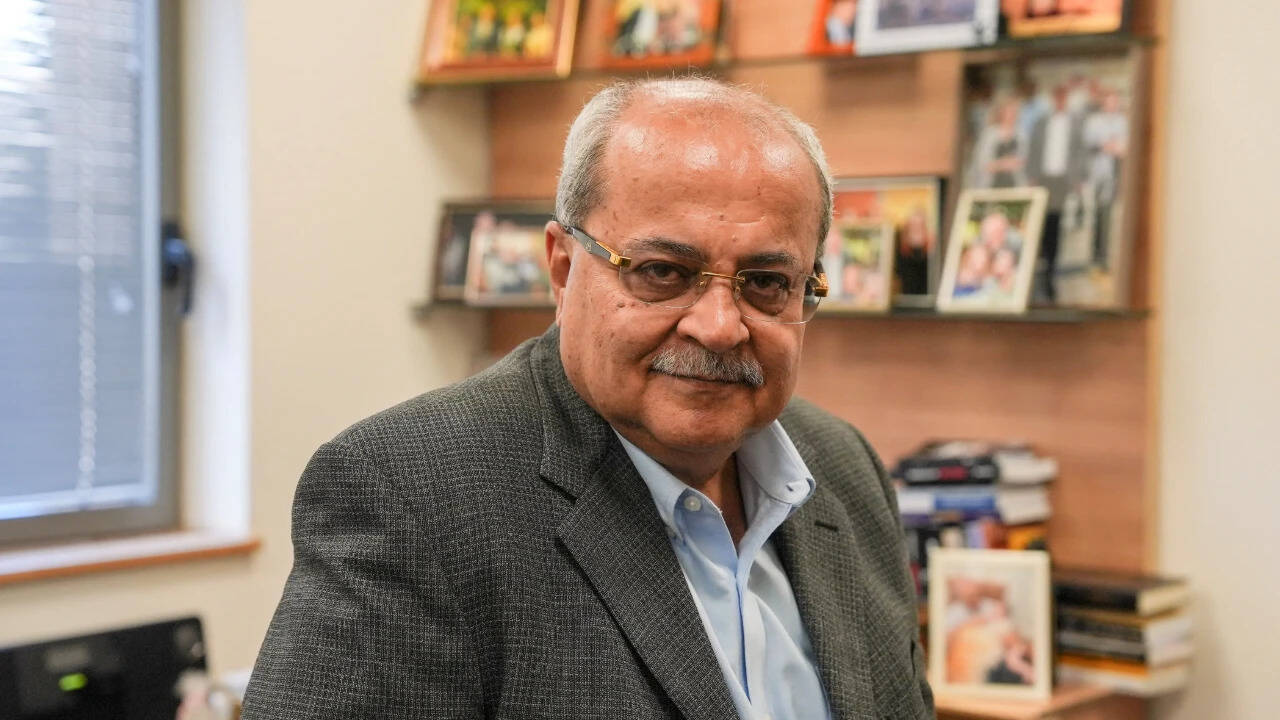
🔮 A veteran Arab lawmaker in Israel says his bloc is willing to break with decades of precedent and join forces with Jewish-led parties in a shared bid to end Prime Minister Benjamin Netanyahu ‘s long rule.
🔮 A Jewish ex-cop and self-described Zionist might seem an unlikely candidate to represent an Islamist party in Israel’s parliament.
🔮 The surge makes them a major political force that could enable opposition parties to assemble a coalition to oust Prime Minister Benjamin Netanyahu.
🔮 The far-right government that has emboldened the settlers could soon be voted out of power — or win another term.
🔮 None is expected to win anywhere near 61 seats, so whoever succeeds in cobbling together a majority coalition will be the next prime minister.
🔮 President Mahmoud Abbas postponed what would have been the first Palestinian elections in nearly 20 years, issuing a decree on Friday to further delay voting for the Palestinian Legislative Council almost another year.
🔮 But he said the election timing will be part of a “dialogue and national consensus” among the factions and that the potential postponement will be discussed by the executive committee of the Palestine Liberation Organization.
🔮 “That will probably change now and crew members will be subject to heavier screening.”
🔮 At times, the Israeli leader, facing a tough race for re-election next month, became emotional and indignant as he lectured his critics, among them New York’s mayor.
🔮 Families living in similar structures said they couldn’t afford any other shelter.
Also by Sam Metz
Nothing else under this byline is closely related to this article, so these are simply their most recent.
All 11 articles by Sam Metz →

Topics

Arab Israel Israelis Jewish the Joint List

Subjects

Israel GPE · 11× the Joint List ORG · 9× Jewish NORP · 8× Netanyahu PERSON · 7× Arab NORP · 6× Israelis NORP · 4× anti-Netanyahu PERSON · 4× Ra’am ORG · 3× Tibi PERSON · 3× Israeli NORP · 2×

Narrative

Some of Eisenkot’s allies welcome Arab support while others are opposed, pointing to past statements by Joint List leaders they argue deny Israel’s legitimacy or support its enemies. Tibi said he was under no illusions that a partnership with Netanyahu’s opponents would end the wars or bring about a Palestinian state.
framing: assertive · carried by 1 article(s) · first seen 2026-11-05
🔮 A veteran Arab lawmaker in Israel says his bloc is willing to break with decades of precedent and join forces with Jewish-led parties in a shared bid to end Prime Minister Benjamin Netanyahu ‘s long rule.

Claims (40 extracted, 5 hedged)

A veteran Arab lawmaker in Israel says his bloc is willing to break with decades of precedent and join forces with Jewish-led parties in a shared bid to end Prime Minister Benjamin Netanyahu ‘s long rule. asserted
bloc → say → rule
“We want to do things that we did not do in the past in order to remove this criminal government,” Ahmad Tibi, a senior member of the Arab Joint List, told The Associated Press. asserted
Tibi → want → Press
For the Joint List, it would mean backing a government unlikely to end Israel’s wars or curb settlement expansion in the occupied West Bank. asserted
it → mean → Bank
For Netanyahu’s opponents, it would mean aligning with parties that not only criticize Israeli policies, but reject its identity as a Jewish state. asserted
it → mean → state
After historic voter turnout delivered Arab-led parties a record share in Israel’s parliament, Tibi said the Joint List is willing to support an anti-Netanyahu government without joining it. asserted
List → deliver → it
That could reassure Jewish-led factions that view them with suspicion and satisfy their own constituents. uncertain
that → reassure → constituents
It would still give the Joint List major influence. asserted
It → give → influence
Only one Arab party has ever served in an Israeli government, in 2021. asserted
party → serve → 2021
But that party, Ra’am, is much more conciliatory than the Joint List and held fewer seats. asserted
party → hold → seats
Ra’am is willing to join another anti-Netanyahu government as a partner, but any such arrangement would still need the support of the Joint List. asserted
arrangement → join → List
If the Jewish-led parties reject such a partnership, then it would prove Israel is “an ethnocracy, not an absolute democracy for all citizens,” Tibi said. asserted
Tibi → lead → citizens
The Joint List’s positions put it at odds with most Israelis. asserted
positions → put → Israelis
Most of the Palestinian population in what is now Israel fled or were expelled during the 1948 war surrounding its creation. asserted
what → flee → creation
Those who remained were granted citizenship, including the right to vote, and today they and their descendants make up some 20% of the population. asserted
they → remain → population
Many Jewish Israelis have historically viewed Arab-led political parties with suspicion. asserted
Israelis → view → suspicion
That distrust has been reinforced by lawmakers who have defended or praised Israel’s enemies. asserted
who → reinforce → enemies
The Joint List, a coalition of three left-wing and nationalist parties, rejects what it refers to as the “racist Zionist consensus” in Israel. asserted
it → reject → Israel
It calls for partnering with Jewish Israelis who support a Palestinian state in the West Bank, Gaza and east Jerusalem, territories occupied in the 1967 Mideast war. asserted
who → call → war
It rejects Israel’s identity as a Jewish state, calling for equal rights for all its citizens. asserted
It → reject → citizens
Many Jewish Israelis see that as support for the country’s enemies at a time of war. asserted
Israelis → see → war
Netanyahu has encouraged such sentiments, lodging unproven accusations of electoral fraud against the Arab-led parties and portraying them as a threat to national security. asserted
Netanyahu → encourage → security
In the campaign, they portrayed Netanyahu as a corrupt leader who failed to prevent the Oct. 7, 2023, attack and then blocked a public inquiry into it. asserted
who → portray → it
They cast the election in existential terms, saying Netanyahu’s far-right government threatened Israel’s democratic institutions. asserted
government → cast → institutions
They won 48 seats in the 120-member Knesset, compared to 53 for Netanyahu’s coalition. asserted
They → win → coalition
The Joint List won 11 seats and Ra’am won 8, making them crucial to forming an anti-Netanyahu majority. asserted
them → win → majority
The Joint List could help an anti-Netanyahu bloc take power by voting for it or by abstaining to lower the threshold needed for a majority. uncertain
bloc → help → majority
Either arrangement could allow opposition parties to form a government without requiring the Joint List to become part of their administration. uncertain
parties → allow → administration
Joining could put its lawmakers in the uncomfortable position of being part of a government waging wars in Gaza and Lebanon that they oppose. uncertain
they → join → that
Some of Eisenkot’s allies welcome Arab support while others are opposed, pointing to past statements by Joint List leaders they argue deny Israel’s legitimacy or support its enemies. Tibi said he was under no illusions that a partnership with Netanyahu’s opponents would end the wars or bring about a Palestinian state. asserted
partnership → welcome → state
But he said a “repair government” would improve the lives of Palestinian citizens, by ending Netanyahu’s rule and also potentially addressing local issues like a wave of violent crime in Arab communities. asserted
government → say → communities
It’s unclear what conditions would be required Eisenkot has said Arab-led parties must meet certain conditions in any partnership, including calling Hamas a terrorist group that needs to be destroyed. uncertain
that → require → Hamas
Tibi said the conditions do not apply to parties like the Joint List that want to provide outside support. asserted
that → say → support
The Joint List and Ra’am have denounced Hamas’ Oct. 7, 2023, attack and any violence against civilians. asserted
List → denounce → civilians
But they have refused to brand Hamas a terrorist group or call for its destruction, saying that doing so would justify Israel’s devastating military campaign in Gaza. asserted
doing → refuse → Gaza
Tibi said both the Oct. 7 attack and Israel’s response to it were immoral. asserted
attack → say → it
During Israel’s 2019 elections, Netanyahu, popularly known as Bibi, campaigned on the slogan “Bibi or Tibi?” to warn voters that opposing him meant relying on Arab-led parties to form a government. asserted
opposing → know → government
Tibi said Tuesday that the election result had turned the slogan on its head. asserted
result → say → head
“When he said ‘Bibi or Tibi,’ he incited against Arabs,” he said. asserted
he → say → Arabs
“Now, it’s ‘Tibi,’ because Arab voters went in a very massive way to take part in the elections. asserted
voters → ’ → elections
It’s definitely our story this time.” asserted
It → ’ → ?

💬Give feedback · no sign-in needed

No sign-in needed for now. Your note is sent without a name, so it cannot be answered.

🕘History 🎫Support