Hundreds of thousands voted in record numbers, giving two Arab-led parties their largest-ever number of seats in Israel’s parliament.
asserted
thousands → vote → parliament
Many boycotted past elections, seeing little point.
asserted
Many → boycott → point
But after years of their communities being demonized or neglected, some of Israel’s most marginalized citizens turned to the ballot box to fight back against the most right-wing government in the country’s history.
asserted
some → demonize → history
“We are here and we’re not on the sidelines,” declared Mansour Abbas, leader of the Ra’am party, as supporters cheered in a wedding hall Tuesday night, watching the exit polls.
asserted
supporters → ’re → polls
The surge makes them a major political force that could enable opposition parties to assemble a coalition to oust Prime Minister Benjamin Netanyahu.
uncertain
that → make → Netanyahu
But the question is whether Netanyahu’s main rival, Gadi Eisenkot, and other opponents will ally with them.
asserted
rival → ally → them
Only once has an Arab-led party ever served in an Israeli government.
asserted
party → lead → government
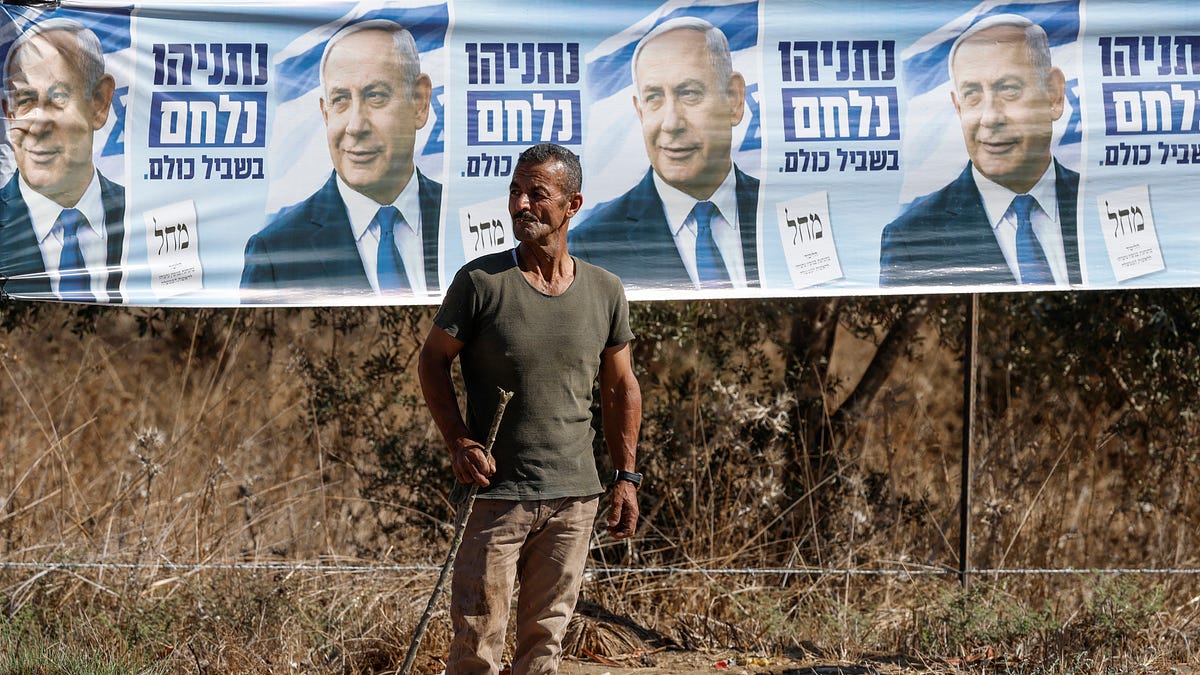
During the campaign, Netanyahu had accused his main opponents of planning to form a coalition with them, which Eisenkot denied.
asserted
Eisenkot → accuse → which
Netanyahu and his allies are now turning up the anti-Arab rhetoric even further, making unproven claims that foreign powers bribed voters to back Arab-led parties.
uncertain
powers → turn → parties
In a Thursday post on X, Netanyahu warned against any party forming a government with them, saying it would lead to the “Islamization of Israel.”
asserted
it → warn → Israel
Palestinian grievances fueled the surge
More than 800,000 people on Tuesday voted for Ra’am and the Joint List, a coalition of three Arab-led parties, a more than 60% increase from the last elections in 2022, according to figures from the Central Election Committee.
uncertain
people → fuel → Committee
The parties won 19 seats in Israel’s 120-member Knesset, surpassing the previous record of 15.
asserted
parties → win → 15
Crowds packed polling places in Arab communities from the Negev Desert to the northern Galilee.
asserted
Crowds → pack → Galilee
In Tarabin, a Bedouin village in the Negev, Netanyahu’s party had won majorities the past two elections.
asserted
party → win → elections
Turnout nearly doubled on Tuesday and Ra’am won 93% of the vote.
asserted
Ra’am → double → vote
The northern town of Sakhnin had Israel’s highest voter turnout, at 87%.
asserted
town → have → %
Mayor Mazen Ghnaim said voters saw it as an emergency measure to fight rising violent crime in Arab communities and incitement by Netanyahu’s far-right allies.
asserted
voters → say → allies
“I want to protect my constituents from being killed, my children from being attacked at their universities and Arab doctors getting attacked at hospitals,” said Ghnaim, a Ra’am supporter, referring to recent incidents of anti-Arab violence.
asserted
Ghnaim → want → violence
The parties worked hard to overcome past reluctance to vote among Palestinians, who have long felt ignored in the halls of power.
asserted
who → work → power
They held community meetings in cities and towns that Jewish-led parties mostly ignored.
asserted
parties → hold → that
A grassroots movement went door-to-door in Bedouin villages to encourage women to vote.
asserted
movement → go → women
A reaction to Israel’s most far-right government ever
Voters and candidates said their heightened participation did not reflect faith in Israeli democracy — it was a sign of desperation to unseat Netanyahu.
asserted
it → say → Netanyahu
Ben Gvir, the national security minister, raised alarm on Election Day over Arab turnout, telling his supporters, “If you want this country to remain Jewish and Zionist … then get out and vote!”
asserted
country → raise → supporters
The rhetoric, also echoed by Netanyahu and Smotrich, may have only galvanized Arab voters.
uncertain
rhetoric → echo → voters
“We see the government going from bad to worse,” 52-year-old Awni Zoabi said after voting in Nazareth.
asserted
Zoabi → see → Nazareth
“We want to live, we want a future for our children, and we want a future for ourselves.”
asserted
we → want → ourselves
The parties offer different visions
asserted
parties → offer → visions
Palestinians who managed to stay in Israel after the 1948 war surrounding its creation — when hundreds of thousands were expelled or fled — today, along with their descendants, make up more than 20% of the population.
asserted
thousands → manage → population
They have Israeli citizenship, including the right to vote, but also feel deep solidarity with Palestinians in Gaza and the West Bank.
asserted
They → have → Gaza
Ra’am and the Joint List both campaigned on combating crime and securing investment for Arab communities.
asserted
Ra’am → campaign → communities
But they offered different visions for how to approach the wider conflict.
asserted
they → offer → conflict
Ra’am made the advantages of joining a coalition government central to its pitch to voters and said little that could alienate potential Jewish allies.
uncertain
that → make → allies
It placed a Jewish former police official second on its candidate list.
asserted
It → place → list
In contrast, members of the Joint List called Israel’s campaign in Gaza a genocide and compared the occupation of the West Bank to apartheid South Africa.
asserted
members → call → Africa
Most Jewish Israelis ardently reject both accusations.
asserted
Israelis → reject → accusations
“People are clever enough to see what’s happening.
asserted
what → see → ?
Of the two options, one is proposing a genocide, and the other is proposing apartheid.
asserted
other → propose → apartheid
These are the choices: bad or worse,” said Sami Abou Shehadeh, the leader of one of the slate’s parties.
asserted
Shehadeh → say → parties
Strong showing doesn’t guarantee a role in government
Mainstream Israeli parties have long resisted partnering with Arab-led parties elected to the Knesset, portraying them as threats to Israel’s Jewish character or questioning their loyalty to the state.
Netanyahu’s opponents welcomed Ra’am into a short-lived coalition government in 2021, in return offering investment in Arab communities and legal status for unrecognized Bedouin villages facing the threat of demolition.
asserted
opponents → guarantee → demolition
The Islamist party’s inclusion broke a longstanding taboo and gave it newfound political influence.
But given Israel’s rightward shift, it will be difficult for Eisenkot to maintain support if he partners with Arab-led parties this time, said Tamar Hermann, senior research fellow at the Israel Democracy Institute.
asserted
Hermann → break → Institute
…and 12 more, not listed.
 The Aporia