
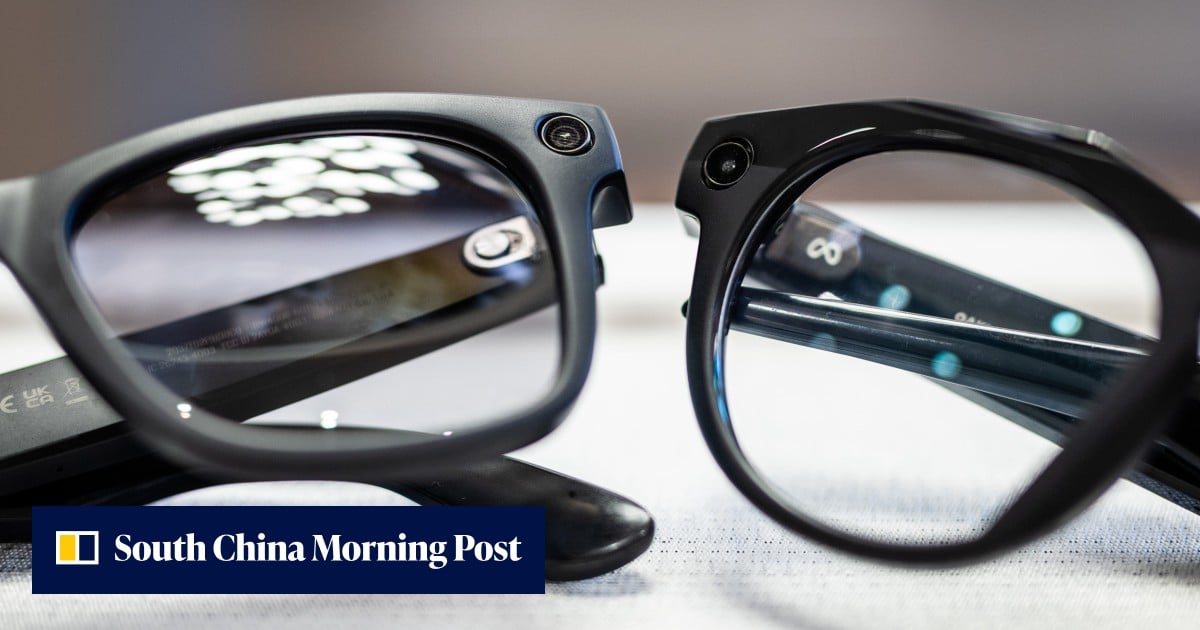
Photo via The Guardian

UK government considers smart glasses ban over secret filming concerns

Read the original at The Guardian ↗
Cite

Badshah, N. (2026, November 4). UK government considers smart glasses ban over secret filming concerns. The Guardian. https://www.theguardian.com/uk-news/2026/nov/04/uk-government-considers-smart-glasses-ban-over-secret-filming-concerns

Dated from the outlet's own feed. Check the original for its byline.

The Guardian · collected 2026-11-04 · by Nadeem Badshah

Quick Summary

The UK government is exploring restrictions on smart glasses due to concerns over secret filming, particularly against women. Safeguarding minister Satvir Kaur mentioned the potential for banning sales "to certain users" while acknowledging the benefits of smart glasses for visually impaired individuals. Liberal Democrat MP Anna Sabine highlighted instances where women unknowingly had videos filmed and shared online by men using these devices, emphasizing privacy risks in public spaces.
Written by AI on 2026-11-05, from this article's own text only (the story summary below draws on all the coverage).

AI analysis

Story summary

The UK government is considering placing restrictions on smart glasses due to concerns that they are being used to secretly film women without their consent. Speaking in the House of Commons, safeguarding minister Satvir Kaur hinted at a ban on selling the technology "to certain users." Liberal Democrat MP Anna Sabine highlighted instances where women reported waking up after nights out to discover videos of themselves had gone viral online, filmed by men wearing smart glasses without their knowledge or consent. The government is currently evaluating options to restrict the use and sale of smart glasses in specific contexts such as healthcare and education, with NHS England and the Department for Education already investigating the implications of wearable technology in these settings.
Written for “UK Smart Glasses Ban Considered” on 2026-11-05, grounded in this article and the 0 other(s) covering the same event.
Why this leaning score
The model judged this article politically coded and scored it -0.35, but 1 quote(s) could not be found in the article and the other 2 are attributed speech rather than the article's own narration, so the score is not published.
Written under an earlier scoring contract, which gave a paragraph rather than checkable quotes. Re-analysing this article replaces it.
Leaning score withheld for article 129997: no verified evidence · logged 2026-11-05

Story

📰 UK Smart Glasses Ban Considered
Technology · 1 article(s) covering the same event.

Compared with similar articles

This article reads unscored and hedges 12% of its claims. Each row says how that neighbour differs.
South China Morning Post
Hedges 2 of 3 claims Outlet record 62/100
“The articles describe different governmental responses to concerns about smart glasses in Hong Kong and the UK, not a single incident.”
How this article was measured signals, leaning charts, publisher record, byline, topics and claims

Signals How these are calculated →

Claims extracted
16
sentences that state something as happening or true
Uncertain
12%
2 of 16 hedged ("reportedly", "may", "according to")
Leaning
withheld
no quote in the article backed the model's score
Publisher signals
66/100
The Guardian's corrections and hedging, across everything collected from it. Not a measure of accuracy.
Outlets on this story
1
Technology
Same framing elsewhere
1
articles that frame the event the way this one does
Analyzed 2026-11-05 · how these are computed

How this is being covered How these are calculated →

Article leaning vs. publisher reliability
Source leaning vs. consistency

Publisher

The Guardian · 3007 article(s) · 6 correction(s) detected
Running correction rate · 6 correction(s)

Who wrote this

Nadeem Badshah
11 article(s) here · 1 carrying a prediction
🔮 She said one of the selling points of the glasses in advertisements was that they could be used “to film discreetly”.
🔮 McCallum added: “As we continue to investigate the circumstances surrounding this incident, we would appeal to anyone who may have information that could assist with inquiries to contact us on 101, quoting reference number 261 30/10/26.”
🔮 No further action will be taken against Sarah Helm, the wife of the prime minister’s national security adviser, after she was accused of supporting the banned protest group Palestine Action.
🔮 A would-be Reform UK MP told an undercover reporter that Muslims could not be British and asylum seekers should be put in “concentration camps”.
🔮 The Met Office said sightings could continue during clear skies until Tuesday.
2026-10-10 · assertive framing · Skies across the UK illuminated by the northern lights
🔮 The MP for Runcorn and Helsby in Cheshire bought the property two days after she submitted a written question on 15 June to the housing minister Matthew Pennycook, according to the Will Hayward newsletter.
🔮 The charge relates to activity alleged to have taken place between 31 May 2024 and 8 July this year, counter-terrorism police said.
🔮 Airlines will be blocked from charging parents extra to sit with their children on planes, according to government plans.
🔮 We are confident that we will manage to retrieve all the bodies.”
🔮 In May, the WHO declared the outbreak in the DRC and Uganda as a public health emergency of international concern.
Also by Nadeem Badshah
Nothing else under this byline is closely related to this article, so these are simply their most recent.
All 11 articles by Nadeem Badshah →

Topics

Liberal Democrat NHS England Senedd the Department for Education the House of Commons

Subjects

Kaur PERSON · 3× Anna Sabine PERSON · 1× Jason O’Connell PERSON · 1× Liberal Democrat NORP · 1× NHS England ORG · 1× Sabine PERSON · 1× Satvir Kaur PERSON · 1× Senedd ORG · 1× the Department for Education ORG · 1× the House of Commons ORG · 1×

Narrative

Anna Sabine, a Liberal Democrat MP and a culture spokesperson for the party who held Wednesday’s debate, said: “Women are reporting waking up after nights out to find videos of themselves have gone viral online, filmed without their knowledge or consent by men wearing smart glasses.
framing: assertive · carried by 1 article(s) · first seen 2026-11-05
🔮 She said one of the selling points of the glasses in advertisements was that they could be used “to film discreetly”.
2026-11-05 · The Guardian
UK government considers smart glasses ban over secret filming concerns · assertive framing

Claims (16 extracted, 2 hedged)

The government is considering placing restrictions on smart glasses amid concerns the technology is being used to surreptitiously film women, a minister has said. asserted
minister → consider → women
Speaking in the House of Commons, the safeguarding minister, Satvir Kaur, hinted at a ban on selling the technology “to certain users”. asserted
minister → speak → users
Kaur said: “The benefits of smart glasses must be weighed against the harms they can cause. asserted
they → say → harms
The government is already looking into options to restrict smart glasses in certain settings and restricting the sale to certain users.” asserted
government → look → users
The minister said people who used smart glasses for filming already risked breaking the law in certain settings, such as in a court where cameras are prohibited. asserted
cameras → say → court
Kaur added: “Other settings, such as healthcare and education, have existing safeguarding or professional policies that are relevant to smart glasses and any kind of digital recording. asserted
that → add → recording
NHS England and the Department for Education are currently looking into wearable technology in certain settings as well.” asserted
England → look → settings
Anna Sabine, a Liberal Democrat MP and a culture spokesperson for the party who held Wednesday’s debate, said: “Women are reporting waking up after nights out to find videos of themselves have gone viral online, filmed without their knowledge or consent by men wearing smart glasses. asserted
videos → hold → glasses
“To me, these devices not only have the potential to erode safety and privacy in public spaces, but raise really important questions about consent.” asserted
devices → have → consent
She said one of the selling points of the glasses in advertisements was that they could be used “to film discreetly”. uncertain
they → say → advertisements
Sabine said she did not want parliamentarians to “only regulate once it is too late”. asserted
it → say → ?
Kaur said smart glasses, which can come with built-in cameras, microphones and displays, could “be hugely beneficial” to some people. uncertain
which → say → people
“For example, for those that are visually impaired, smart glasses have been a gamechanger, helping them navigate the world around them.” asserted
them → help → them
A politician in the Senedd has defended his use of smart glasses in the debating chamber. asserted
politician → defend → chamber
Jason O’Connell, a Reform UK MS for Pontypridd Cynon Merthyr, read a speech from an in-built teleprompter feature in his glasses last month. asserted
O’Connell → read → glasses
He told the BBC’s Politics Wales: “One of the things I identified, a weakness of mine, was that my head was down looking at my notes a lot and I wanted to get away from that.” asserted
I → tell → that
💬Give feedback · no sign-in needed

No sign-in needed for now. Your note is sent without a name, so it cannot be answered.

🕘History 🎫Support