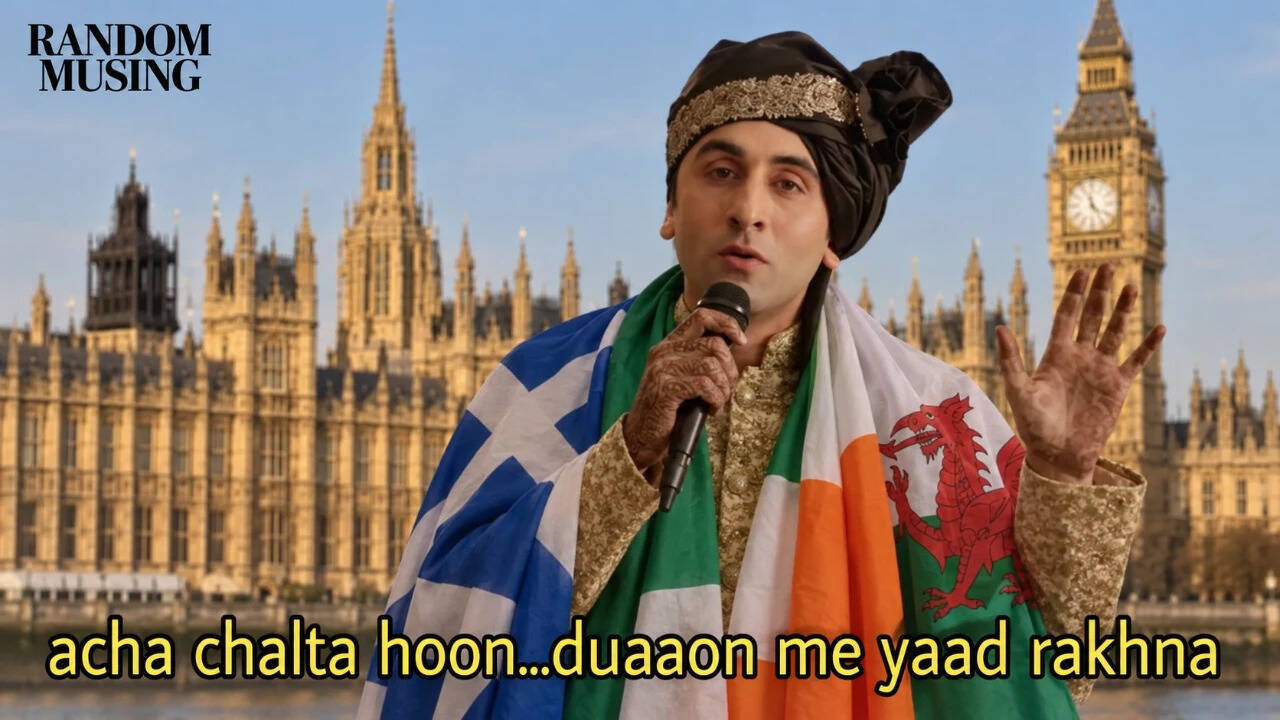
That minority groups are often used by progressives as a political football is evident to all, but no one summed it up as sharply as Malcolm X, who observed: “The white liberal differs from the white conservative only in one way: the liberal is more deceitful than the conservative.
asserted
liberal → use → conservative
Both want power, but the white liberal is the one who has perfected the art of posing as the Negro's friend and benefactor.”
asserted
who → want → friend
Today, the average Indian-American voter finds herself in a similar conundrum, except that, unlike the African-American voters of yore, neither liberals nor conservatives – with a few honourable exceptions – even care to pay lip service to earn a few brownie points.
asserted
liberals → find → points
Consider how little noise the American political machine – on both sides of the aisle – made when
a potential massacre was averted because a crazy 19-year-old's rifle jammed in the parking lot of a Hindu temple in suburban Chicago.
As the midterms arrives, Indian-Americans find themselves in familiar territory: between a rock and a hard place, staring into the abyss of political irrelevance.
asserted
Americans → consider → irrelevance
Despite being one of the richest immigrant groups in the country, Indian-Americans may feel that America has rarely been more hostile towards them.
uncertain
America → feel → them
On one side are MAGA’s open racists, who see
Indian-American students enjoying a football game and imagine a great replacement in a strange iteration of the Tebbit Test, where even loyalty to one’s new land cannot overcome skin pigmentation.
Bo French started the fresh anti-India hate on social media after he posted a photo of the students of University of Texas.
On the flip side are the Democrats, who, despite claiming to stand for minority rights, can’t even call Indians by their proper name, referring to them as “South Asians”, and are wont to platform people who are usually found at Dismantle Global Hindutva conferences.
asserted
who → see → conferences
It’s a delicious twist of Shakespeare’s tongue that, after labelling Native Americans as “Indians”, so much of the American commentariat likes to call Indians “South Asians”.
asserted
much → ’ → Indians
Unfortunately for us, when white folks make a faux pas, it lives on through history as the correct term.
asserted
it → make → term
As Pushpita Prasad, an Indian-American community leader, pointed out to
TOI Digital
asserted
Prasad → point → Digital
: “It’s frankly disrespectful to try and roll an India label into something else.
asserted
It → ’ → something
Yet in 2020, Kamala Harris, the daughter of an Indian woman, gets called South Asian, while Jill Biden's Italian American heritage is respectfully used, even though her family immigrated in 1900.”
asserted
family → call → 1900
Prasad also made a similar point about Diwali in a 2022 essay for the Coalition of Hindus of North America (CoHNA), co-authored with Smitha Raj, arguing that rebranding the Dharmic religious festival as a generic “South Asian” celebration amounted to cultural appropriation and erased its religious roots.
asserted
rebranding → make → roots
terminology vacillates wildly depending on the context.
asserted
terminology → vacillate → context
A dish invented in India becomes Pakistani or South Asian; grooming gangs, on the other hand, earn the South Asian label.
asserted
gangs → invent → label
Anti-India hatred in Texas is labelled rising hatred of South Asians, while caste is always an Indian problem, as is “Hindu nationalism”, which is always rising and is almost always blamed for every evil in the world when it cannot be explained by Zionism or white supremacy.
Twenty-six years after Jagdish Bhagwati named Indian-Americans the “new Jews”, Hindus are now often labelled the “new Zionists”.
asserted
Hindus → label → Americans
In fact, the caste bogey has been so prevalent in American discourse that California Democrats tried to push through a specific
caste-discrimination bill that was eventually buried by Governor Gavin Newsom – ostensibly after a quiet word from the White House – because common sense prevailed and grown-ups realised that California didn’t have a raging caste issue.
asserted
California → try → issue
The more under-reported irony of that particular kerfuffle was that the campaign was spearheaded by Equality Labs, whose caste-sensitivity material was examined in a
2024 NCRI-Rutgers study.
asserted
material → report → study
The researchers found that exposure to the material actually increased prejudice rather than reducing it.
asserted
exposure → find → it
Participants became more likely to perceive caste discrimination where none was established and to endorse dehumanising descriptions of Brahmins.
asserted
none → become → Brahmins
That’s not to say Indian-Americans cannot move the needle.
asserted
Americans → ’ → needle
They can when it exists within the ambit of the culture-war sphere, like
getting Apu banned in The Simpsons, but in general, Indian-Americans struggle to counter global Anglosphere narratives about India, and that tends to pass the burden of Indian politics onto the diaspora.
asserted
that → exist → diaspora
this predicament is rather curious because Indian-Americans have never had greater representation in the US establishment, but with greater power didn’t come a greater voice.
asserted
voice → have → power
We’ve come a long way from the Samosa Caucus.
asserted
We → come → Caucus
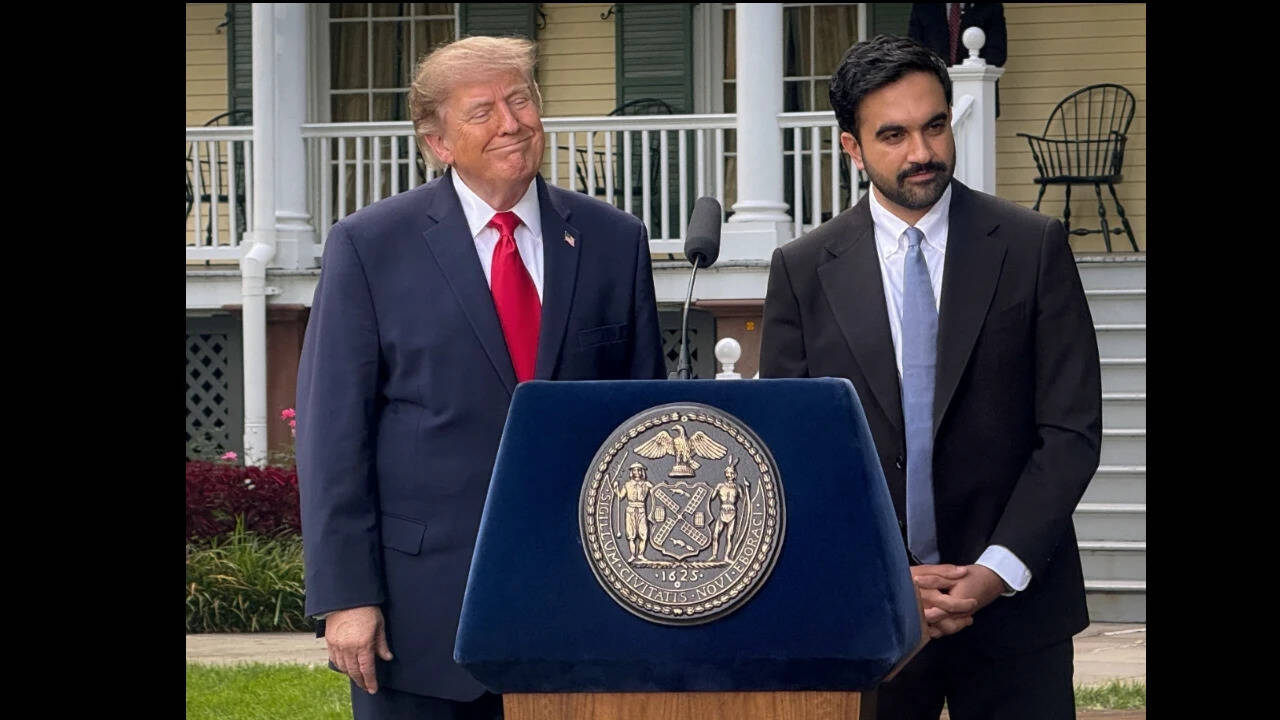
New York Mayor Zohran Mamdani, an Indian-American, is one of the most well-known Democratic faces across the country, but while he might
shake a leg to the title track of Dhoom, he is still averse to referring to himself as Indian-American and even repeats mendacities about his ancestral state.
uncertain
he → know → state
Kash Patel might say
Jai Shree Krishna at his FBI confirmation hearing but seldom speaks about atrocities against his co-religionists.
uncertain
Patel → say → religionists
Then again, he has been busy jet-setting across the country with his country-singer fiancée or
chugging beer with hockey players.
asserted
fiancée → set → players
Vivek Ramaswamy, who was co-head of DOGE – before his abrupt exit following
an epic diatribe on American laziness – is hoping to become governor of Ohio.
asserted
who → follow → Ohio
While he was vocal about being Hindu during the presidential election debates – albeit presenting his version of Hinduism as crypto-Catholicism – he has been quieter in the run-up to the Ohio governor race.
asserted
he → present → race
After the temple attack in Chicago, Ramaswamy’s silence was louder than
his campaign’s obnoxious video attacking his opponent, Amy Acton.
asserted
silence → attack → opponent
Ro Khanna, Pramila Jayapal, Ami Bera and Suhas Subramanyam are seeking re-election to Congress.
asserted
Khanna → seek → Congress
In California, Khanna faces fellow Indian-American Ritesh Tandon, while in Washington, Jayapal is being challenged by another Indian-American Republican, Nirav Sheth.
asserted
Jayapal → face → Republican
Elsewhere, Amish Shah is contesting Arizona's 1st Congressional District, and
Pooja Sethi is attempting to become the first Indian-American elected to the Texas Legislature.
asserted
Sethi → contest → Legislature
Yet, while Indian-Americans have become more prominent, none of the issues that affect the Indian community are particularly at the forefront.
asserted
that → become → forefront
Racism against Indians is hardly worth discussing in American media outlets, and when it is, it is bundled together as discrimination against South Asians, which is often mentioned alongside Islamophobia.
asserted
which → discuss → Islamophobia
While there are numerous groups that now speak exclusively for the problems faced by Hindu-Americans, some of them, as Voltaire showed with the Holy Roman Empire, barely make a peep for actual Hindu issues – like the atrocities faced by minority Hindus in Bangladesh – but are more willing to hold forth on the Middle East.
asserted
Voltaire → be → East
While MAGA, as Malcolm X famously described white conservatives’ reaction to black people, is fairly open about its animus towards Indians, claiming without proof that they participate in nepotism or H-1B fraud, the other side of the aisle is filled with people who often paint Indian-Americans as oppressors at the top of the caste hierarchy.
asserted
who → describe → hierarchy
While MAGA goes bonkers about a
Hanuman statue on private land in Texas, its liberal opponents use the BAPS case in France to claim parochialism and misogyny among Hindu groups, even though
a probe confirmed that the group had never explicitly asked for women to be removed from the Eiffel Tower.
uncertain
women → go → Tower
Neither of these issues directly affects the midterm results, but they show how easy it is to make Hindus or Indian-Americans pantomime villains.
asserted
Hindus → affect → villains
For a long time, Indian-Americans have been held up as a “model minority”, and perhaps that’s because they were never particularly bothered about political power, thinking that their status and money could protect them from the racism aimed at other minority groups.
uncertain
status → hold → groups
Or perhaps it was for
that reason that Indian-Americans now find themselves at a crossroad.
asserted
Americans → find → crossroad
…and 26 more, not listed.
 The Aporia