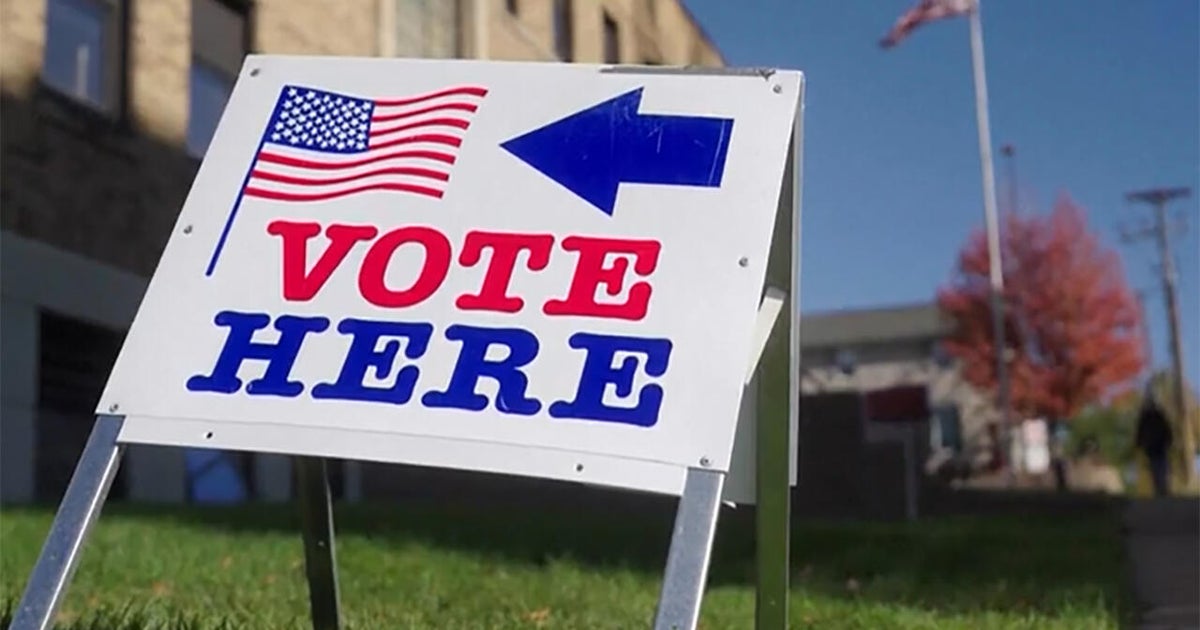
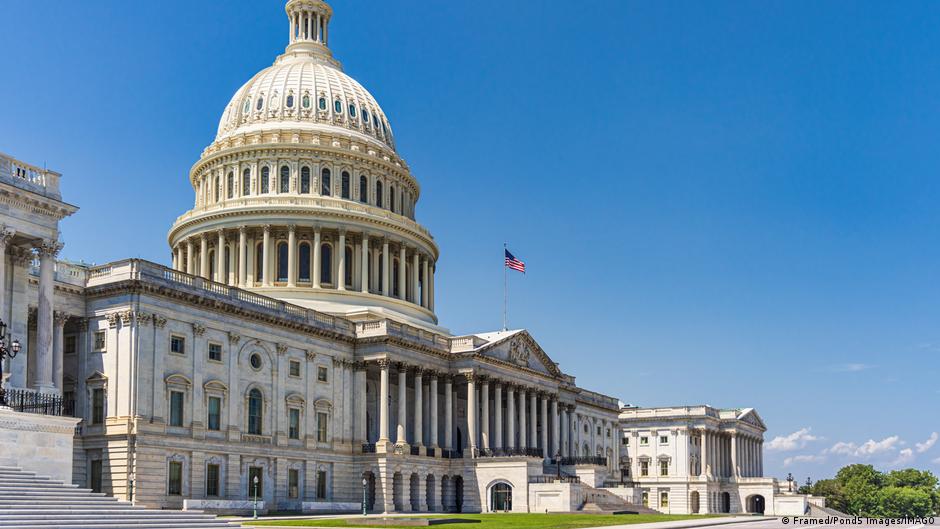
Photo via Deutsche Welle

US midterm election: How it works, why it's important and races to watch

Read the original at Deutsche Welle ↗
Cite

Bleiker, C. (2026, November 3). US midterm election: How it works, why it's important and races to watch. Deutsche Welle. https://www.dw.com/en/us-midterm-election-how-it-works-why-it-s-important-and-races-to-watch/a-79789932?maca=en-rss-en-world-4025-rdf

Dated from the outlet's own feed. Check the original for its byline.

Deutsche Welle · collected 2026-11-03 · by Carla Bleiker

Quick Summary

US citizens vote in midterm elections on November 3, deciding representatives for both chambers of Congress and some state governors. All 435 seats in the House of Representatives and around one-third (35) of the 100 seats in the Senate are up for election. Currently, Republicans hold a slim majority with 218 seats in the House and 53 in the Senate; analysts predict Democrats will likely gain control of the House.
Written by AI on 2026-11-03, from this article's own text only (the story summary below draws on all the coverage).

AI analysis

Story summary

On November 3, 2026, United States citizens will vote in midterm elections to decide who represents them in Congress and state governments. These elections determine all 435 seats in the House of Representatives and some Senate positions, along with gubernatorial races in several states. According to J. Miles Coleman from the University of Virginia's Center for Politics, midterms often reflect voter approval of the incumbent president and their party; currently, President Donald Trump's approval ratings are at a record low. Voters will consider various factors beyond just legislative seats, including overall satisfaction with the current administration.

Written for “US Midterm Election Overview” on 2026-11-03, grounded in this article and the 0 other(s) covering the same event.
Why this leaning score
This article does not take a side on a contested political question, so it has no leaning score. That is an answer rather than a gap: a match report or a rescue can be warmly or critically written without being left or right, and scoring it anyway is how approval of a subject gets recorded as a political position.
No political leaning scored for article 125399 · logged 2026-11-03

Story

📰 US Midterm Election Overview
Politics · 1 article(s) covering the same event.

Compared with similar articles

This article reads unscored and hedges 2% of its claims. Each row says how that neighbour differs.
South China Morning Post
Hedges 2 of 6 claims Outlet record 62/100
“Both articles discuss the US midterm elections of 2026, but they cover general information about how midterms work and their importance rather than a specific incident or occurrence.”
ABC News (AU)
Hedges 0 of 16 claims Outlet record 68/100
“Both articles discuss the US midterm elections in general, but do not describe a single specific incident or occurrence.”
Fox News
Hedges 6 of 59 claims Outlet record 69/100
“The articles discuss different aspects of the midterm elections and do not refer to a single specific occurrence on Election Day.”
ABC News (US)
Hedges 1 of 4 claims Outlet record 70/100
“Article A describes live updates about voters going to polls on a specific election day, while Article B provides an overview of how midterm elections work and their significance.”
CBS News
Hedges 14 of 89 claims Outlet record 66/100
“Both articles discuss midterm elections broadly, but do not focus on a single specific incident or occurrence.”
CBS News
Hedges 8 of 46 claims Outlet record 66/100
“The articles discuss midterm elections in general and their importance, rather than describing a single specific election incident or outcome.”
The Hindu
⚖️ Leans left Hedges 4 of 31 claims Outlet record 77/100
“While both articles discuss the upcoming midterm elections, Article A focuses on the political context and potential outcomes, while Article B explains the mechanics and importance of midterms. They do not describe the same specific incident.”
Times of India
⚖️ Leans left Hedges 8 of 52 claims Outlet record 59/100
“The articles discuss the concept of midterm elections and their significance, but do not describe a single specific election incident or result.”
The Hindu
Hedges 4 of 34 claims Outlet record 77/100
“The articles provide general information about midterm elections and do not describe a single specific occurrence.”
The Hindu
Hedges 0 of 10 claims Outlet record 77/100
“The articles discuss the context and significance of the midterm elections, rather than reporting on a single incident or occurrence.”
How this article was measured signals, leaning charts, publisher record, byline, topics and claims

Signals How these are calculated →

Claims extracted
49
sentences that state something as happening or true
Uncertain
2%
1 of 49 hedged ("reportedly", "may", "according to")
Leaning
not political
takes no side on a contested political question
Publisher signals
95/100
Deutsche Welle's corrections and hedging, across everything collected from it. Not a measure of accuracy.
Outlets on this story
1
Politics
Same framing elsewhere
3
articles that frame the event the way this one does
Analyzed 2026-11-03 · how these are computed

How this is being covered How these are calculated →

Article leaning vs. publisher reliability
Source leaning vs. consistency

Publisher

Deutsche Welle · 569 article(s) · 0 correction(s) detected
No corrections detected for this publisher. That may mean careful reporting, or simply that nothing has been checked.

Who wrote this

Carla Bleiker
6 article(s) here · 1 carrying a prediction
🔮 On November 3, United States citizens will vote in the midterm elections.
🔮 The midterm elections in the United States are just around the corner: On Tuesday, November 3, American voters will choose their representatives to the US Congress.
🔮 On November 3, United States citizens will vote in the midterm elections.
2026-10-29 · assertive framing · US midterms: What you need to know
🔮 On November 3, United States citizens will vote in the midterm elections.
🔮 The elections on November 3 will decide whether more or fewer women will sit in the US Congress over the next two years.
2026-10-10 · assertive framing · US midterms: Women candidates could make history
🔮 On Monday, the US president announced that a series of advertisements aired in September promoting him and his administration would no longer be funded with taxpayer money.
Also by Carla Bleiker
US midterms: What you need to know
2026-10-28 · Deutsche Welle
Nothing else under this byline is closely related to this article, so these are simply their most recent.
All 6 articles by Carla Bleiker →

Topics

Congress Democrats Republicans the House of Representatives the US

Subjects

Democrats NORP · 8× Congress ORG · 6× Republicans NORP · 5× Senate ORG · 5× Trump PERSON · 3× the House of Representatives ORG · 3× the US ORG · 3× Americans NORP · 2× United States GPE · 1× the United States GPE · 1×

Narrative

J. Miles Coleman, an election analyst at the Center for Politics at the University of Virginia, explained before the last midterms that they were "often a referendum on the president and party currently in power."
framing: assertive · carried by 3 article(s) · first seen 2026-10-29
🔮 On November 3, United States citizens will vote in the midterm elections.
2026-10-29 · Deutsche Welle
US midterms: What you need to know · assertive framing
2026-11-03 · Deutsche Welle
US midterm election: How it works, why it's important and races to watch · assertive framing

Claims (49 extracted, 1 hedged)

On November 3, United States citizens will vote in the midterm elections. asserted
citizens → vote → elections
These won't decide who gets to sit in the White House; instead, Americans will be voting on who they want to see in the Capitol. asserted
they → decide → Capitol
Midterm elections are held every four years, at the exact halfway point between presidential elections. asserted
elections → hold → elections
The people of the United States decide who will represent them in the two chambers of the US Congress, the House of Representatives and the Senate. asserted
who → decide → Representatives
Some states are also voting for their governor. asserted
states → vote → governor
These are the decisions on the ballot paper — but they are not the only thing voters will be taking into account. asserted
voters → take → account
J. Miles Coleman, an election analyst at the Center for Politics at the University of Virginia, explained before the last midterms that they were "often a referendum on the president and party currently in power." asserted
they → explain → power
If the people are content, the party of the leader in the White House does better than if the people are predominantly dissatisfied. asserted
people → do → House
Who are Americans electing in the midterms? asserted
Americans → elect → midterms
Its 435 members are elected by eligible voters across the country. asserted
members → elect → country
Each member represents one electoral district. asserted
member → represent → district
These are allocated based on population size. asserted
These → allocate → size
As a result, relatively large US states where few people live, such as Wyoming, have only one seat in the House of Representatives. asserted
people → live → Representatives
New Jersey, a much smaller state by surface area but with a larger population, has 12. asserted
Jersey → have → 12
Representatives are elected for a two-year term of office. asserted
Representatives → elect → office
US senators, on the other hand, are elected for a six-year term. asserted
senators → elect → term
The Senate, the other chamber of the US Congress, has 100 seats: two for each of the 50 US states, regardless of size. asserted
Senate → have → size
Around one third of these senatorial seats come up for election every two years. asserted
one → come → election
This year there are 35, meaning that not every state will be electing a senator in these midterms. asserted
state → be → midterms
Separately, voters in 36 states will elect their governor, whose term of office is four years in most states. asserted
term → elect → states
Many decisions in the US are taken at state level, on everything from abortion law to education and electoral procedure. asserted
decisions → take → education
It can therefore make a considerable difference to people's lives whether Democrats or Republicans are the ones making these decisions in their state. asserted
Democrats → make → state
Who currently has a majority in the US Congress? asserted
Who → have → Congress
At present, the Republicans, the party of President Trump, have a majority in both houses of Congress — but its margin is slim. asserted
margin → have → Congress
The House of Representatives currently has 218 Republican deputies, 214 Democrats, and one independent, who usually votes with the Republicans. asserted
who → have → Republicans
Observers think it likely that the Democrats will seize the majority in this chamber in the upcoming elections. asserted
Democrats → think → elections
"It would be a surprise if the Democrats don't at least take the House [of Representatives]," Coleman told the American broadcaster CBS at the end of October. asserted
Coleman → take → October
In the Senate there are currently 53 Republicans, 45 Democrats, and two independent senators who usually vote with the Democrats. asserted
who → be → Democrats
When a vote in the Senate is deadlocked 50:50, the US vice president has the deciding vote. asserted
president → deadlocke → vote
This means that currently, Trump's Vice President JD Vance would tip the scales if there were a tie in a Senate vote. asserted
Vance → mean → vote
Voter turnout is typically lower for midterms than for presidential elections, but the results will decisively influence US politics for the next few years. asserted
results → influence → years
Despite the significant executive power delegated to the presidency, the majority of federal political decisions have to be approved by Congress before they can be implemented. asserted
they → delegate → Congress
It is therefore considerably easier for Trump to govern the country as he chooses if the Republicans have a majority in both chambers of Congress. asserted
Republicans → govern → Congress
If the Democrats win a majority in one or both chambers, it will be more difficult for him to make changes to either domestic or foreign policy. asserted
him → win → policy
The Democrats only need to win four more seats in the House of Representatives to gain a majority. asserted
Democrats → need → majority
They would then have 218 representatives. asserted
They → have → representatives
Out of the 435 races, only a few are still considered toss-ups. asserted
few → consider → races
These include districts in Iowa, Virginia and Montana. asserted
These → include → Iowa
One senatorial race to watch is the one in Texas. asserted
race → watch → Texas
Current polls put Democrat James Talarico level with his Republican rival, Ken Paxton. asserted
polls → put → rival
…and 9 more, not listed.

💬Give feedback
🕘History 🎫Support