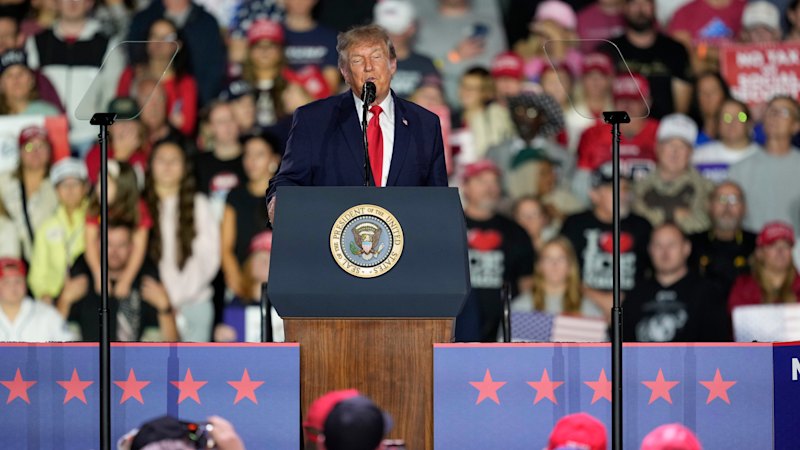
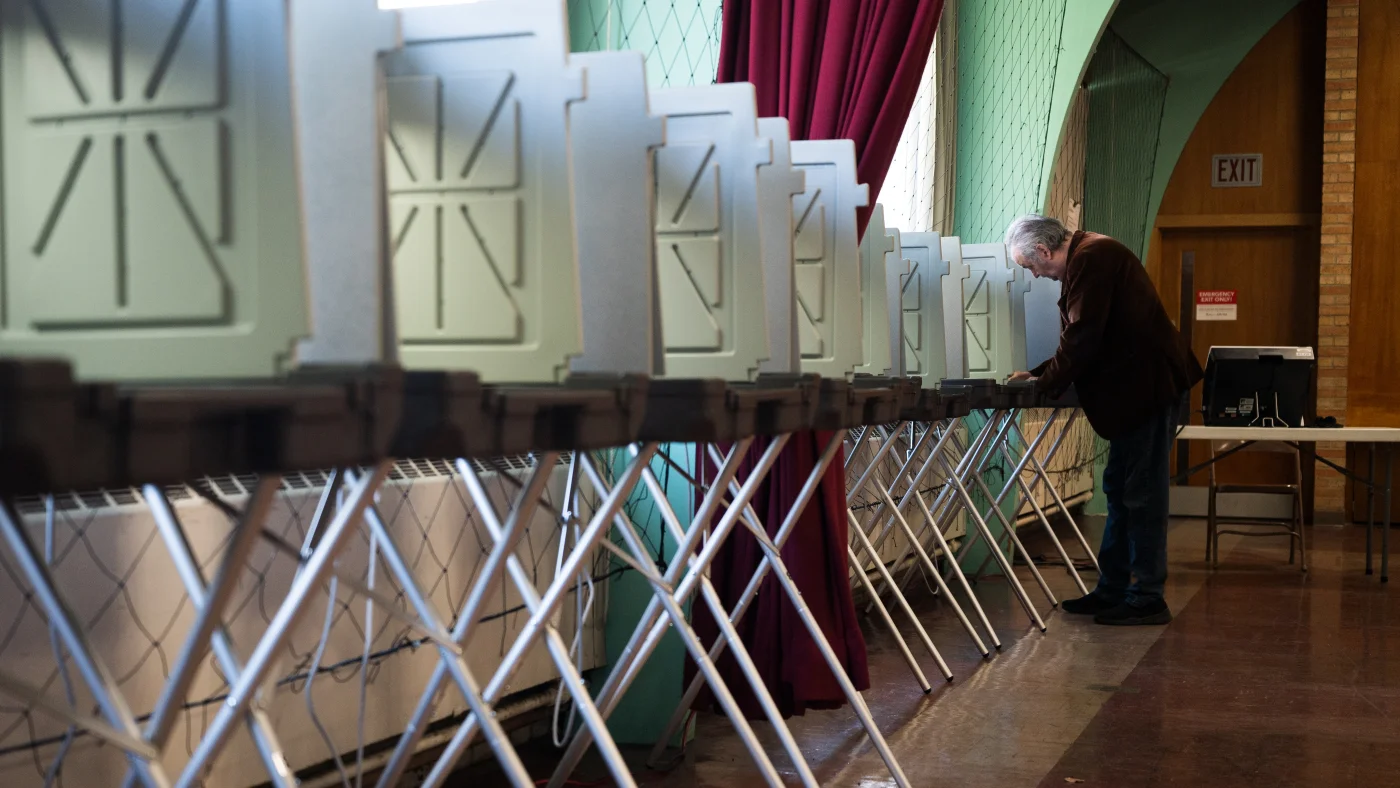
The polls leading into the US midterm elections are increasingly clear: Democrats are on track for a significant, possibly landslide, victory.
uncertain
Democrats → lead → victory
What began as a consensus that Republicans would lose their slim majority in the House of Representatives but likely retain the Senate has become a growing expectation that Democrats will win control of both chambers.
However, some pollsters are nervous about the accuracy of those surveys, and reluctant to predict a “blue wave” will eventuate.
asserted
wave → begin → surveys
In short, because they are pointing to results that would be unprecedented in some cases, and because they’ve been wrong before.
asserted
they → point → cases
The most ambitious outcomes currently predicted by the polls are Democrats winning a Senate seat in Texas, turning Ohio, Iowa and Alaska blue, and potentially squeaking home in Kansas – a state that has not sent a Democrat to the US Senate in 94 years.
asserted
that → predict → years
“The Senate is closer to a tossup than most people think,” GOP pollster Patrick Ruffini at Echelon Insights told The New York Times.
asserted
Ruffini → think → Times
“The prospect of another red-state polling error looms – particularly in the Midwest.”
asserted
prospect → loom → Midwest
Polls have chronically overrated the Democrats’ chances in some of those states.
asserted
Polls → overrate → states
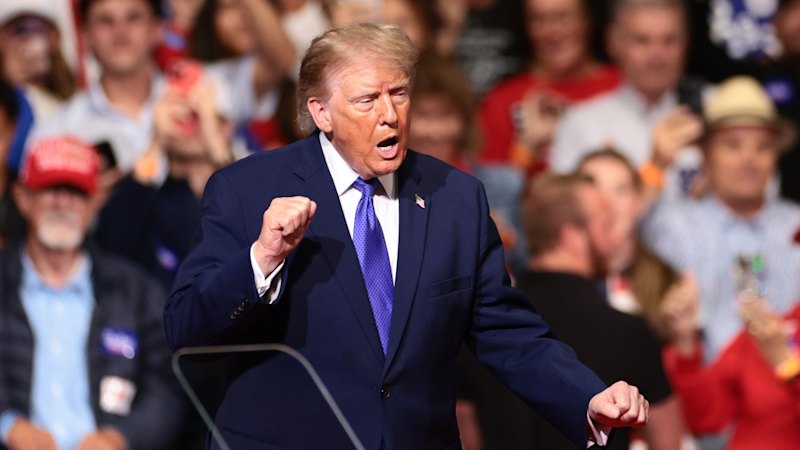
As Donald Trump loves to remind people, they predicted Hillary Clinton would beat him handily.
asserted
Clinton → love → him
And in 2024, a shock poll by veteran pollster Ann Selzer had liberals aflutter with the prediction that Kamala Harris would triumph in Iowa.
asserted
Harris → have → Iowa
Trump ended up winning by an even larger margin.
asserted
Trump → end → margin
‘No matter how much error there is in the polls, I don’t think they will miss by that big a margin.’Rob Shapiro, a political scientist at Columbia University
But those clangers have generally happened when Trump himself is on the ballot, because of polling companies’ failure to reach rural and working-class voters, and peculiar attributes of the president’s followers.
asserted
Trump → be → followers
“Trump voters don’t talk to the pollsters, and that can’t be adjusted for through adjusting demographic characteristics,” says Rob Shapiro, a political scientist at Columbia University specialising in public opinion polling and statistical methods.
asserted
Shapiro → talk → polling
“They’re basically personality and psychological profiles that have to be adjusted for, for which we don’t have a measure to adjust.”
asserted
we → ’re → measure
Shapiro points out that pollsters have a better track record with midterm elections.
asserted
pollsters → point → elections
They may overestimate the Democrats’ gains, but they are unlikely to be in the wrong direction entirely.
uncertain
they → overestimate → direction
“No matter how much error there is in the polls, I don’t think they will miss by that big a margin,” Shapiro says.
asserted
Shapiro → be → margin
“I wouldn’t adjust them by more than three points towards the Republicans.
asserted
I → adjust → Republicans
Even if you do that, these elections will still lead to a Democratic Congress.”
asserted
elections → do → Congress
Nobody seriously believes Republicans will retain their majority in the House, even though most analysts think massive gerrymandering has reduced the potential Democratic pickup to about 20 or 25 seats.
asserted
gerrymandering → believe → seats
Henry Olsen of the Ethics and Public Policy Centre monitors how midterm election outcomes track presidential job approval in this piece for The Washington Post.
asserted
outcomes → monitor → Post
“The Dems are going to take back the house, there’s no doubt about it,” says Douglas Heye, a Republican strategist and party operative who worked in the Bush administration.
asserted
who → go → administration
“There’s no realistic thought that [polls] can be wrong when it comes to the House of Representatives or the Dems gaining Senate seats.
asserted
it → ’ → seats
It’s very hard to predict what’s going to happen in Michigan or Maine or Alaska, and so forth.”
asserted
what → ’ → Michigan
Heye says Republican Michael Whatley will not be able to defend the Senate seat in North Carolina, where incumbent Thom Tillis is retiring.
asserted
Tillis → say → Carolina
The party long ago moved money and resources out of that contest.
asserted
party → move → contest
“We’re talking about South Carolina.
asserted
We → talk → Carolina
We’re not talking about North Carolina and Georgia.
asserted
We → talk → Carolina
That’s insanity.”
asserted
That → ’ → ?
, Republicans have been wounded in critical Senate contests by poor candidate selection, Heye says.
asserted
Heye → wound → selection
He points to Darline Graham in South Carolina – the inexperienced sister of late Republican senator Lindsey Graham – and Texas attorney-general Ken Paxton, who carries enormous baggage.
asserted
who → point → baggage
Shapiro believes a Senate tied at 50-50, with Vice President JD Vance holding the deciding vote, is still a live outcome.
asserted
Senate → believe → vote
But some pollsters who have urged caution up to this point are willing to make bolder calls with election day now upon us.
asserted
day → urge → us
Nate Silver, based on a rigorous analysis of the final polls from Siena and The New York Times, believes Democrats will win the Senate, “perhaps soundly”.
asserted
Democrats → base → Senate
He says the party’s chances of controlling that chamber are somewhere around 80 to 90 per cent.
asserted
chances → say → chamber
Read more on US politics:
- Trump worship: What it’s really like inside midterm election rallies
- Opinion: Even Elon Musk’s billions won’t be able to save Trump
- Opinion: The intimate photograph that captures Trump’s hunger
-
asserted
that → read → hunger
 The Aporia