Photo via CBC News

Experts suggest Canada lock in gains with EU amid 'associate member' confusion

Read the original at CBC News ↗
Cite

Robertson, D. (2026, November 2). Experts suggest Canada lock in gains with EU amid 'associate member' confusion. CBC News. https://www.cbc.ca/news/politics/canada-eu-associate-membership-experts-9.7406398?cmp=rss

Dated from the outlet's own feed. Check the original for its byline.

CBC News · collected 2026-11-03 · by Dylan Robertson

Quick Summary

Academics testified before Canada’s House foreign affairs committee on Monday regarding confusion over Canada potentially becoming an EU “associate member.” Following a recent summit in Montreal where Canadian and EU officials praised the partnership, experts like Mark Manger from the University of Toronto expressed skepticism about the lack of concrete announcements. Co-director Achim Hurrelmann from Carleton University’s Centre for European Studies suggested that while the term "associate membership" has gained attention, it lacks a clear definition within EU law and may not be necessary to achieve current goals without formal changes in both Canadian and EU legal frameworks.
Written by AI on 2026-11-03, from this article's own text only (the story summary below draws on all the coverage).

AI analysis

Story summary

Canadian experts are urging the country to solidify its gains within the European Union (EU) through legal frameworks, following a summit in Montreal on October 27 where Prime Minister Mark Carney and European Commission President Ursula von der Leyen discussed Canada potentially becoming the EU's first "associate member." This term has caused confusion among academics, who testified before the House foreign affairs committee that such agreements are largely symbolic without concrete details. University of Toronto professor Mark Manger noted that Mexico already holds many similar arrangements with the EU. Despite this, Carney and von der Leyen remain enthusiastic about the partnership, though specific legal definitions for "associate member" status have yet to be clearly defined by the EU.

Written for “Canada EU Trade Relations” on 2026-11-03, grounded in this article and the 0 other(s) covering the same event.
Why this leaning score
This article does not take a side on a contested political question, so it has no leaning score. That is an answer rather than a gap: a match report or a rescue can be warmly or critically written without being left or right, and scoring it anyway is how approval of a subject gets recorded as a political position.
No political leaning scored for article 124422 · logged 2026-11-03

Story

📰 Canada EU Trade Relations
Politics · 1 article(s) covering the same event.

Compared with similar articles

This article reads unscored and hedges 23% of its claims. Each row says how that neighbour differs.
CBC News
⚖️ Leans left Hedges 3 of 22 claims Outlet record 74/100
“The articles describe related discussions about Canada's relationship with the EU, but they refer to different time points and contexts: Article A covers a speech by Ursula von der Leyen in Montreal, while Article B discusses expert testimony after a summit.”
South China Morning Post
Hedges 0 of 4 claims Outlet record 63/100
“The articles discuss related developments regarding Canada's relationship with the EU, but describe different events: Article A focuses on Carney's expectations for concluding talks in June, while Article B reports on expert testimonies and a summit that occurred after the initial negotiations announcement.”
CBC News
⚖️ Leans left Hedges 3 of 35 claims Outlet record 60/100
“The articles discuss different aspects of Canada's relationship with the EU, one focusing on the initial announcement and discussions about closer ties, while the other covers expert testimony following a summit.”
Washington Examiner
Hedges 0 of 2 claims Outlet record 70/100
“The articles discuss different aspects of the Canada-EU relationship and summit; Article A reports on Carney's announcement about a target date for an agreement, while Article B discusses experts' testimony regarding confusion over 'associate member' status.”
The Straits Times
Hedges 1 of 25 claims Outlet record 66/100
“The articles describe different stages of the process, with Article A reporting on Ursula von der Leyen's speech at the Canada-EU summit and Article B discussing expert testimony after the summit.”
Toronto Star
Hedges 0 of 34 claims Outlet record 64/100
“While both articles discuss the Canada-EU summit in Montreal, Article A focuses on the debate over terminology for their relationship, while Article B discusses experts suggesting legal frameworks to solidify gains from the summit. These describe different aspects of a related series of events.”
CBC News
⚖️ Leans left Hedges 3 of 33 claims Outlet record 74/100
“The articles discuss related topics but describe different events: Article A covers EU chief's push for Canada to become an associate member, while Article B discusses experts' suggestions and academic testimony following a summit.”
Toronto Star
Hedges 1 of 36 claims Outlet record 64/100
“The articles describe different stages of the same topic, with Article A reporting von der Leyen's announcement and speech in Montreal, while Article B discusses expert testimony after the summit.”
The Globe and Mail
Hedges 4 of 38 claims Outlet record 52/100
“While both articles discuss Canada's relationship with the EU and mention the Montreal summit, Article A focuses on the EU dropping the 'associate member' label proposal, while Article B discusses expert opinions and testimonies given after the summit.”
Al Jazeera
Hedges 0 of 16 claims Outlet record 60/100
“The articles cover different aspects of the Canada-EU relationship: Article A reports on the summit and signed agreements, while Article B discusses expert opinions following the summit.”
How this article was measured signals, leaning charts, publisher record, byline, topics and claims

Signals How these are calculated →

Claims extracted
30
sentences that state something as happening or true
Uncertain
23%
7 of 30 hedged ("reportedly", "may", "according to")
Leaning
not political
takes no side on a contested political question
Publisher signals
60/100
CBC News's corrections and hedging, across everything collected from it. Not a measure of accuracy.
Outlets on this story
1
Politics
Same framing elsewhere
1
articles that frame the event the way this one does
Analyzed 2026-11-03 · how these are computed

How this is being covered How these are calculated →

Article leaning vs. publisher reliability
Source leaning vs. consistency

Publisher

CBC News · 787 article(s) · 1 correction(s) detected
Running correction rate · 1 correction(s)

Who wrote this

Dylan Robertson
34 article(s) here · 1 carrying a prediction
🔮 Achim Hurrelmann, co-director of the Centre for European Studies at Carleton University, said the phrasing was "a bit of a distraction from the policy work leading up to the summit — mainly because the EU, frankly, hadn't really done its homework in defining what this status would mean, and how it could be integrated into EU law." Still, Hurrelmann said Carney and von der Leyen are "keen to maintain" the buzz around such phrasing.
🔮 The two jurisdictions wrapped up a summit in Montreal on Friday with various agreements, many of which will take months or years to finalize.
🔮 Trump signed a diesel deal that will give millions of dollars to Moscow’s war effort and Ukraine has reported problems with its access to vital American satellite technology.
🔮 “We are confident that Canada will stay with us, as they have done in the past,” Cuban Ambassador to Canada Rodrigo Malmierca Diaz told The Canadian Press.
🔮 Canada’s deepening ties with Europe could help fill some of the massive gaps left behind as the United States pulls back from foreign aid and embraces a “transactional” approach, says the secretary of state for international development.
🔮 “The ideal for us would be to achieve 100 per cent European content but, once again, we’re being realistic.
🔮 Zahid said she now has 24/7 security at her home and she believes the incident could be linked to rising rhetoric against her fellow MPs.
🔮 The State of Israel was declared founded in May 1948, after the end of British rule over Palestine.
🔮 The department argued its Arctic team would work better out of Ottawa, particularly on shaping policies that aligned with the Biden administration.
Also by Dylan Robertson
Nothing else under this byline is closely related to this article, so these are simply their most recent.
All 34 articles by Dylan Robertson →

Topics

Canada Canadian European Union House Montreal

Subjects

Canada GPE · 9× Hurrelmann PERSON · 7× Carney PERSON · 4× Canadian NORP · 3× Montreal GPE · 2× von der Leyen PERSON · 2× European Union ORG · 1× House ORG · 1× Mark Manger PERSON · 1× University of Toronto ORG · 1×

Narrative

Canada seeking to become the EU's 1st associate member, Carney says Carney welcomes top EU officials to Montreal summit The testimony comes after weeks of confusion over nomenclature, with European Commission President Ursula von der Leyen pitching Canada become an associate member. Prime Minister Mark Carney had largely avoided that phrasing since von der Leyen introduced the concept in September, instead speaking of an "alliance for the future."
framing: mixed · carried by 1 article(s) · first seen 2026-11-03
🔮 Achim Hurrelmann, co-director of the Centre for European Studies at Carleton University, said the phrasing was "a bit of a distraction from the policy work leading up to the summit — mainly because the EU, frankly, hadn't really done its homework in defining what this status would mean, and how it could be integrated into EU law." Still, Hurrelmann said Carney and von der Leyen are "keen to maintain" the buzz around such phrasing.

Claims (30 extracted, 7 hedged)

Experts suggest Canada lock in gains with EU amid 'associate member' confusion Academics testified at committee on heels of Canada-EU summit Experts in European Union policy say Canada should try solidifying gains with the EU in legal frameworks, particularly as talk of becoming an EU "associate member" continues to cause confusion. asserted
talk → suggest → confusion
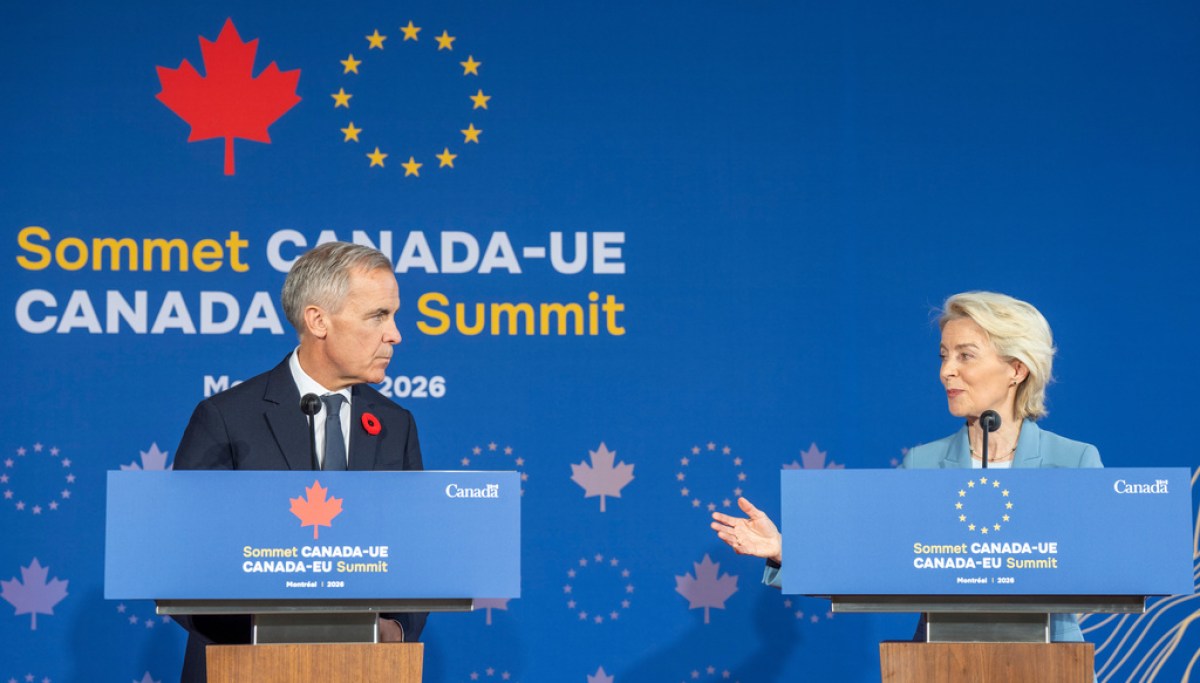
Academics studying EU relations testified on Monday to the House foreign affairs committee, after a summit in Montreal last week brought together top Canadian and EU officials. asserted
summit → study → officials
The officials praised the plan as a historic partnership. asserted
officials → praise → partnership
"A lot of these agreements are essentially expressions of intent," University of Toronto professor Mark Manger testified. asserted
Manger → testify → Toronto
"I'm still waiting for a concrete announcement." asserted
I → wait → announcement
Manger argued Mexico already has many of the arrangements with the EU that Canada is now gaining or seeking. asserted
Canada → argue → that
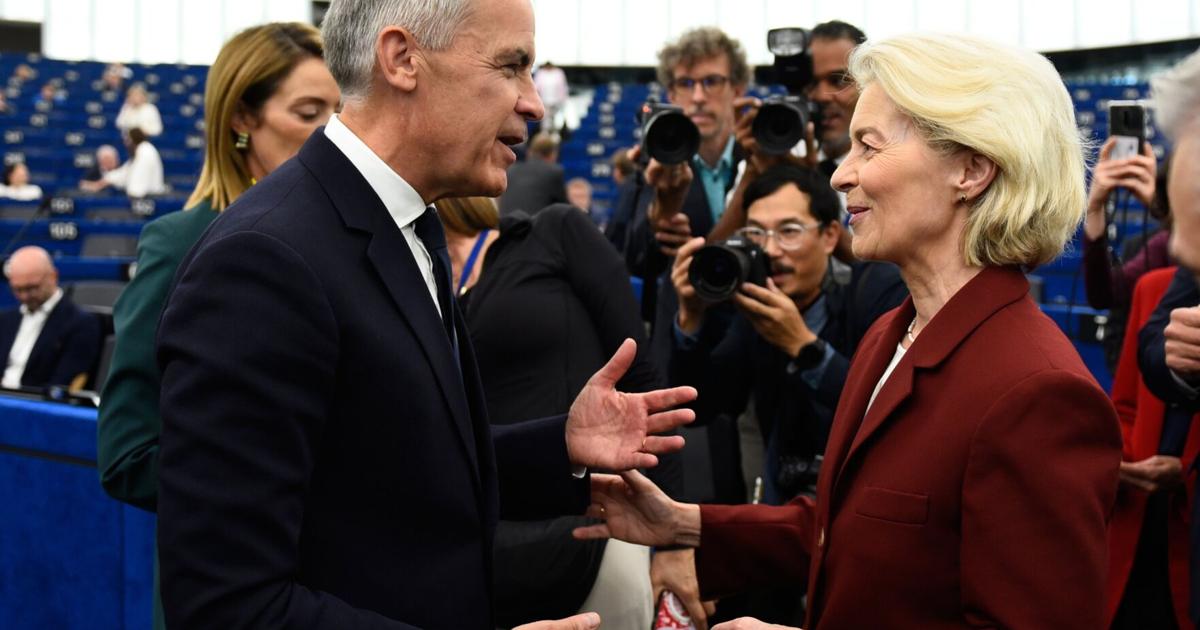
Canada seeking to become the EU's 1st associate member, Carney says Carney welcomes top EU officials to Montreal summit The testimony comes after weeks of confusion over nomenclature, with European Commission President Ursula von der Leyen pitching Canada become an associate member. Prime Minister Mark Carney had largely avoided that phrasing since von der Leyen introduced the concept in September, instead speaking of an "alliance for the future." asserted
Leyen → seek → future
But on Thursday Carney said the goal was associate EU membership — a term that has no official definition. asserted
that → say → definition
Achim Hurrelmann, co-director of the Centre for European Studies at Carleton University, said the phrasing was "a bit of a distraction from the policy work leading up to the summit — mainly because the EU, frankly, hadn't really done its homework in defining what this status would mean, and how it could be integrated into EU law." Still, Hurrelmann said Carney and von der Leyen are "keen to maintain" the buzz around such phrasing. uncertain
Carney → say → phrasing
"I don't think they are really fully attached to the concept of associate membership, but stick to it now because it brings this symbolic attention. asserted
it → think → attention
Everyone's talking about this," he testified. asserted
he → talk → this
Hurrelmann said both sides will need to settle on an arrangement that is somewhere between a mere political declaration and some formal status — which would require complicated amendments to EU treaties and votes in the Canadian Parliament. asserted
which → say → Parliament
"The proposals that we have heard do not require associate membership at all to be realized," he said. asserted
he → hear → that
Hurrelmann suggested thinking of associate membership as the "symbolic affirmation" of moving from a common-law relationship to marriage. uncertain
Hurrelmann → suggest → marriage
Anand Sundar, a transatlantic defence adviser at the European Council on Foreign Relations, testified that "associate membership" seems to be something Brussels is pushing despite strong objection from countries such as Germany. asserted
Brussels → testify → Germany
"It's a very political sort of game that we're seeing," he said. asserted
he → see → that
Hurrelmann said officials might need to move fast, as MPs raised concerns about rising far-right movements across Europe that are skeptical of partnering with other countries. uncertain
that → say → countries
"It's going to be important to ask how quickly can this agreement be put fully in legal force on the European side," Hurrelmann said. asserted
Hurrelmann → go → side
He also suggested Ottawa consider restructuring Canada's EU trade deal to increase economic gains, particularly by changing its status from the current "mixed agreement" that requires individual ratification by each member state. uncertain
that → suggest → state
Of the bloc's 27 members, nine still haven't put the decade-old Canada-European Union Comprehensive Economic and Trade Agreement (CETA) into full force. asserted
nine → put → force
Canadians chafe at food regulations that bar many Canadian imports. asserted
that → chafe → imports
Europeans complain about Canada's dairy quota and protected-origin phrasing, Hurrelmann noted, such as whether cheeses called feta can originate from anywhere outside a specific region of Greece. asserted
cheeses → complain → Greece
Hurrelmann noted the deal was praised at the time it was signed for innovative clauses on aligning regulations, assessing conformity with rules and recognizing professional qualifications — and that all these have had limited success, resulting in less trade than what was envisioned. "The joint statement from the summit has some very vague language on that. asserted
statement → note → that
But I would really encourage both sides to look at the CETA governance structure," he said. asserted
he → encourage → structure
Manger suggested Canada and the EU enhance the existing trade deal with "economic and legal parameters" that make it more appealing to boost exports and investments. uncertain
it → suggest → exports
"In international agreements, it's desirable to have something that is locking in a certain trade relationship, that makes it clear for Canadian firms … that this is a long-term relationship," he said. asserted
he → have → firms
He suggested Ottawa could allow European mobile networks to set up shop in Canada in exchange for European countries dropping restrictions on importing Canadian food. uncertain
countries → suggest → food
Hurrelmann suggested Ottawa focus on projects in areas where the EU has clear jurisdiction such as in research and academic exchanges, while working directly with countries on key issues where they have power, such as defence and energy. uncertain
they → suggest → defence
He also said closer ties to Europe will only work if there is cross-party collaboration. asserted
ties → say → Europe
That comes as Conservative Leader Pierre Poilievre argues the government has not been clear on its deals with Europe, that the Montreal summit was a waste of time meant to distract from domestic issues and that Canada risks losing sovereignty to Europe and control of its borders. asserted
Canada → come → borders

💬Give feedback
🕘History 🎫Support