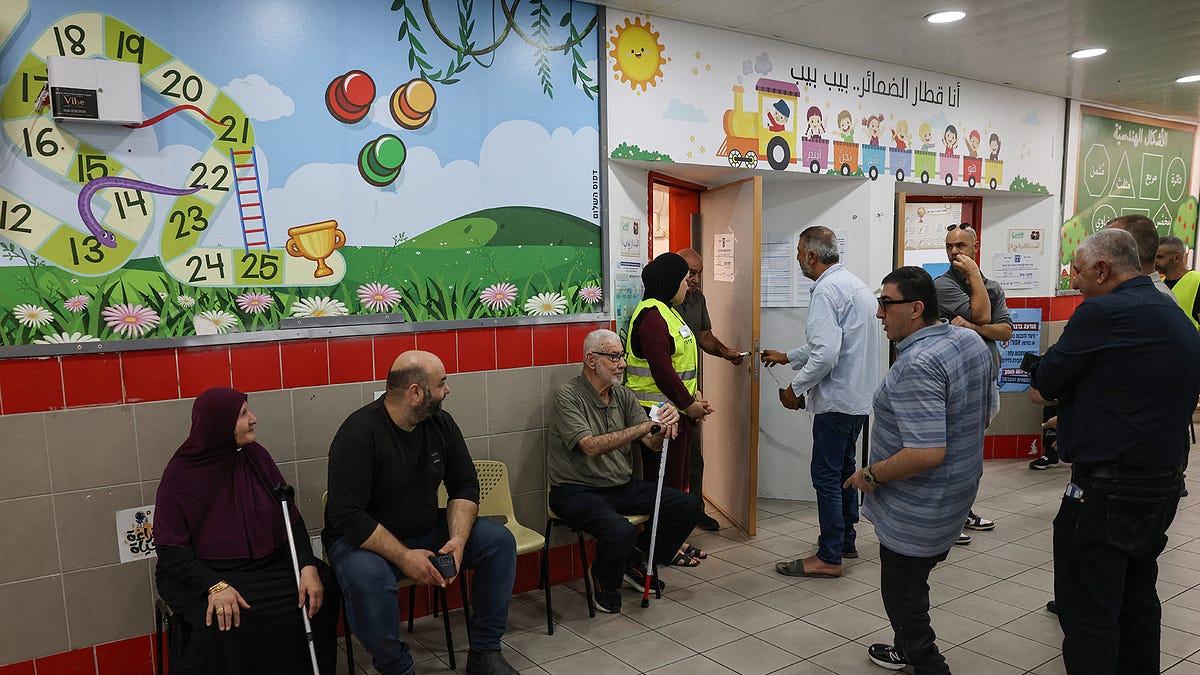
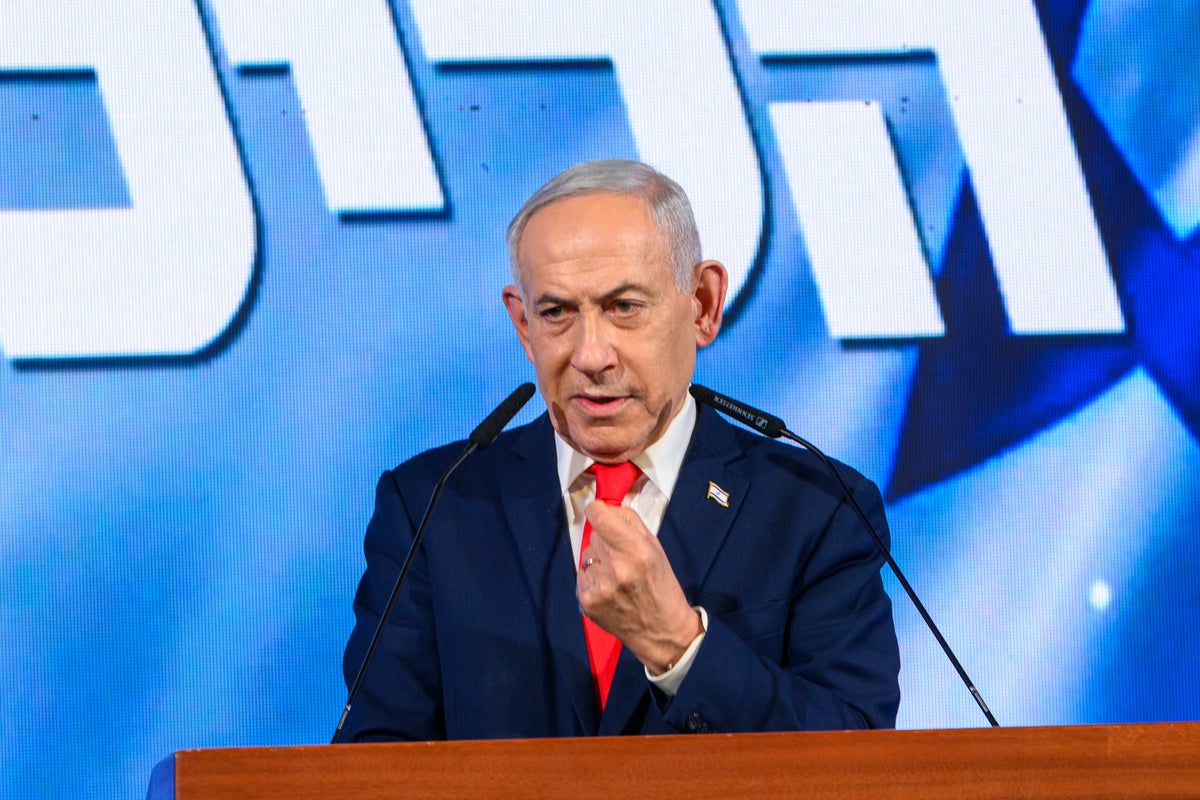
Photo via Al Jazeera

After Israel’s election: What’s next?

Read the original at Al Jazeera ↗
Cite

After Israel’s election: What’s next? (2026, November 2). Al Jazeera. https://www.aljazeera.com/video/the-bottom-line/2026/11/2/after-israels-election-whats-next?traffic_source=rss

Dated from the outlet's own feed. Check the original for its byline.

Al Jazeera · collected 2026-11-02

Quick Summary

Ofer Cassif, an Israeli Knesset member from a Palestinian-led party, discusses the political deadlock in Israel following recent elections. He argues that with 15% of the vote going to Palestinian-led parties, Israeli leaders must now decide whether to collaborate with non-Zionist groups or face continued gridlock. Despite Netanyahu’s bloc receiving the most support, it lacks sufficient seats for a ruling coalition. Cassif emphasizes the need for a Jewish-Palestinian partnership moving forward.
Written by AI on 2026-11-02, from this article's own text only (the story summary below draws on all the coverage).

AI analysis

Story summary

On October 27, 2026, Israelis voted in a parliamentary election for the Knesset, amid ongoing tensions from previous conflicts including Hamas's attacks in 2023 and the war in Gaza. The elections were seen as a critical moment to address issues such as military service exemptions for ultra-Orthodox Jews and how to respond to security failures. Former Israeli army chief Gadi Eisenkot emerged as a significant challenger to Prime Minister Benjamin Netanyahu, who has held office for an extended period. Thousands rallied in Tel Aviv against Netanyahu, calling for a commission of inquiry into the October 7 attacks. Arab-Israeli parties were poised to play a crucial role in potentially forming an opposition alliance aimed at removing Netanyahu from power. Palestinian-led parties secured 19 seats in the election, marking a historic result and complicating future coalition-building efforts. The election outcome was inconclusive, raising questions about potential political gridlock and the normalization of extreme nationalism in Israel's politics.

Written for “Israel Knesset Elections Outcome” on 2026-11-03, grounded in this article and the 258 other(s) covering the same event.

Story

📰 Israel Knesset Elections Outcome
Politics · 259 article(s) covering the same event. Compare every outlet's account →

Compared with similar articles

This article reads leans strongly left and hedges 0% of its claims. Each row says how that neighbour differs.
The Hindu
Hedges 0 of 9 claims Outlet record 77/100
Al Jazeera
⚖️ Leans right further right than this Hedges 3 of 60 claims Outlet record 60/100
“The articles discuss different stages and aspects of Israel's election aftermath, not the exact same occurrence.”
The Guardian
⚖️ Leans left further right than this Hedges 2 of 20 claims Outlet record 66/100
“The articles discuss different aspects of Israel's political situation and election outcomes without describing the same specific incident.”
The Hindu
⚖️ Leans strongly left Hedges 0 of 3 claims Outlet record 77/100
“The articles discuss different topics within the context of Israeli-Palestinian relations: Article A focuses on a justice's comments about Israel's policy towards Palestinians, while Article B discusses the political aftermath and implications of recent elections in Israel.”
Al Jazeera
⚖️ Leans left further right than this Hedges 2 of 6 claims Outlet record 60/100
“The articles discuss the implications and aftermath of Israel's election but do not describe the same specific moment or incident.”
Al Jazeera
⚖️ Leans strongly left Hedges 3 of 33 claims Outlet record 60/100
“While both articles discuss Israel's parliamentary elections and their implications for political blocs, they describe different aspects of the election aftermath. ARTICLE A focuses on the overall situation with Netanyahu's bloc not securing a majority, while ARTICLE B centers on Knesset member Ofer Cassif's perspective and argument about partnering with non-Zionist parties.”
Zeteo
⚖️ Leans strongly left Hedges 1 of 41 claims
“Article A discusses Deborah Lipstadt's use of social media during Israeli elections on Tuesday, while Article B covers post-election analysis and political implications involving Ofer Cassif.”
ABC News (AU)
⚖️ Leans left further right than this Hedges 13 of 39 claims Outlet record 68/100
“While both articles discuss the aftermath and implications of the Israeli election, they do not describe the same specific incident or occurrence. ARTICLE A focuses on the overall political landscape and challenges ahead following an inconclusive result, whereas ARTICLE B specifically mentions Knesset member Ofer Cassif's perspective on the 'politics of exclusion' and its impact on the election outcome.”
The Independent
⚖️ Leans left further right than this Hedges 8 of 30 claims Outlet record 59/100
“The articles discuss different aspects and perspectives on Israel's election aftermath rather than describing the exact same specific moment or incident.”
The Hindu
Hedges 2 of 9 claims Outlet record 77/100
“Article A discusses Palestinian President Abbas's statement regarding hopes for peace talks with a new Israeli government, while Article B focuses on the aftermath and implications of Israel’s elections, discussing political deadlock.”
How this article was measured signals, leaning charts, publisher record, byline, topics and claims

Signals How these are calculated →

Claims extracted
4
sentences that state something as happening or true
Uncertain
0%
0 of 4 hedged ("reportedly", "may", "according to")
Leaning
Leans strongly left
of the writing, not the subject · beta estimate
Publisher signals
60/100
Al Jazeera's corrections and hedging, across everything collected from it. Not a measure of accuracy.
Outlets on this story
259
Politics
Same framing elsewhere
1
articles that frame the event the way this one does
Analyzed 2026-11-02 · how these are computed

How this is being covered How these are calculated →

Article leaning vs. publisher reliability
Source leaning vs. consistency

Publisher

Al Jazeera · 4743 article(s) · 3 correction(s) detected
Running correction rate · 3 correction(s)

Who wrote this

No reporter is named on this article.

Topics

Israel Israeli Knesset Palestinian non-Zionists

Subjects

Israel GPE · 4× Israeli NORP · 4× Knesset ORG · 2× Ofer Cassif PERSON · 2× Palestinian NORP · 2× Benjamin Netanyahu PERSON · 1× Jewish NORP · 1× Steve Clemons PERSON · 1× non-Zionists NORP · 1×

Narrative

Israeli politician Ofer Cassif, a member of one of the Palestinian-led parties, tells host Steve Clemons that the Israeli people “need to understand that the future must be a future of Jewish-Palestinian partnership and not another form of exclusion.”
framing: assertive · carried by 1 article(s) · first seen 2026-11-02
2026-11-02 · Al Jazeera
After Israel’s election: What’s next? · assertive framing

Claims (4 extracted, 0 hedged)

Knesset member Ofer Cassif argues that the ‘politics of exclusion’ keep Israel in political deadlock. asserted
politics → argue → deadlock
The success of Palestinian-led parties – who won 15% of the vote in Israel’s elections – has created a conundrum for Israel’s leadership: partner with non-Zionists or accept political gridlock. asserted
who → lead → gridlock
While the bloc led by Israeli Prime Minister Benjamin Netanyahu got the most support from Israeli voters, it didn’t win enough seats in Israel’s parliament (Knesset) to build a ruling coalition so far. asserted
it → lead → coalition
Israeli politician Ofer Cassif, a member of one of the Palestinian-led parties, tells host Steve Clemons that the Israeli people “need to understand that the future must be a future of Jewish-Palestinian partnership and not another form of exclusion.” asserted
future → lead → exclusion
💬Give feedback
🕘History 🎫Support