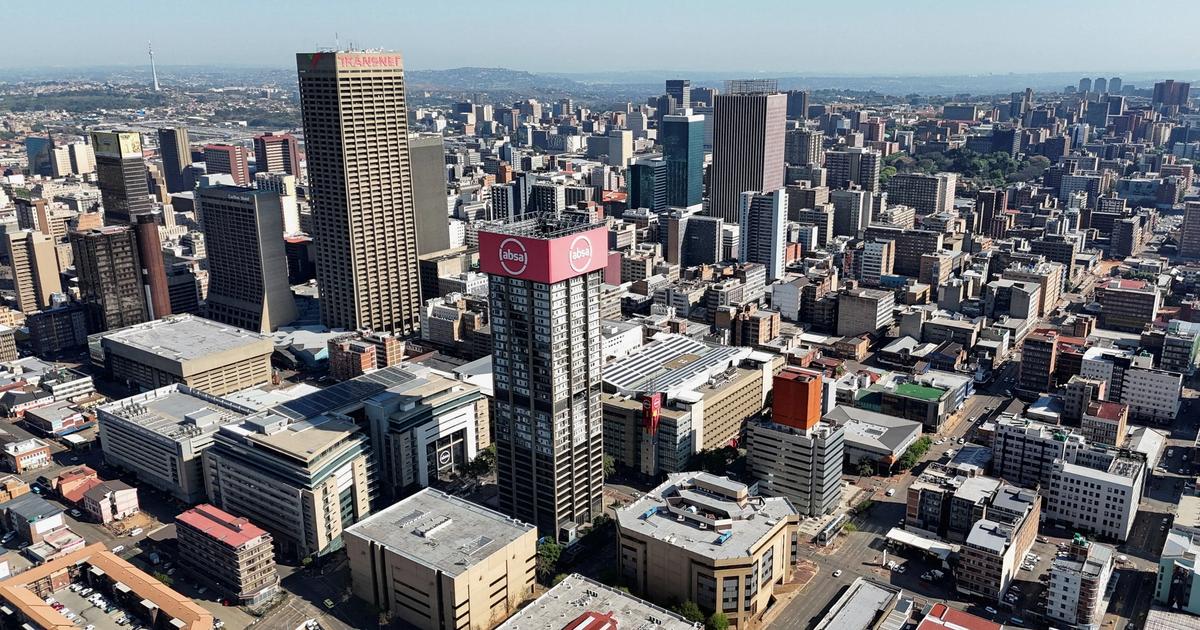
Photo via Semafor

The ANC set to lose South African cities

Read the original at Semafor ↗
Cite

Motsoeneng, T. (2026, November 2). The ANC set to lose South African cities. Semafor. https://www.semafor.com/article/11/02/2026/the-anc-set-to-lose-south-african-cities

Dated from the outlet's own feed. Check the original for its byline.

Semafor · collected 2026-11-02 · by Tiisetso Motsoeneng

Quick Summary

South Africa’s African National Congress (ANC) is projected to lose control of most major cities in upcoming local elections, according to recent polling data. In key urban areas like Johannesburg and Tshwane, support for the ANC hovers around 30%, while in Durban it falls to just 10%. The Ipsos poll conducted between September 12 and October 13 reveals the party’s national support at a record low of 30%. This decline indicates growing opposition influence in urban centers crucial to South Africa's economy, potentially reshaping political dynamics both locally and nationally.
Written by AI on 2026-11-02, from this article's own text only (the story summary below draws on all the coverage).

AI analysis

Story summary

South Africans are voting in local government elections on November 2, 2026, which will determine control of major cities and test whether the ruling African National Congress (ANC) continues its electoral decline. The ANC lost its parliamentary majority in 2024 and formed a unity government with the Democratic Alliance (DA), the second-largest party. Polling data suggests that the ANC is on course to lose control of most major cities, including Johannesburg, Tshwane, and Durban, where support has fallen sharply to just 10%. These elections will decide who runs 250-plus municipalities responsible for basic services such as water, sanitation, and refuse collection. Voters are also grappling with national issues like illegal immigration, high unemployment, and crime, potentially complicating the electoral landscape further.

Written for “ANC Faces Challenge In Local Elections” on 2026-11-02, grounded in this article and the 1 other(s) covering the same event.
Why this leaning score
This article does not take a side on a contested political question, so it has no leaning score. That is an answer rather than a gap: a match report or a rescue can be warmly or critically written without being left or right, and scoring it anyway is how approval of a subject gets recorded as a political position.
No political leaning scored for article 123038 · logged 2026-11-02

Story

📰 ANC Faces Challenge In Local Elections
Politics · 2 article(s) covering the same event. See how they differ ↓

Compared with similar articles

This article reads unscored and hedges 9% of its claims. Each row says how that neighbour differs.
Toronto Star
⚖️ Leans left Hedges 2 of 34 claims Outlet record 64/100
The Straits Times
Hedges 2 of 16 claims Outlet record 66/100
“While both articles discuss issues relevant to South African municipal elections on November 4, Article A focuses on key voter concerns in major cities, while Article B reports on polling data predicting the ANC's performance and potential shift in power dynamics.”
The Straits Times
Hedges 2 of 28 claims Outlet record 66/100
“While both articles discuss a similar trend in South Africa's local elections, they do not describe the exact same specific election or vote outcome occurring at the same time and place.”
How this article was measured signals, leaning charts, publisher record, byline, topics and claims

Signals How these are calculated →

Claims extracted
34
sentences that state something as happening or true
Uncertain
9%
3 of 34 hedged ("reportedly", "may", "according to")
Leaning
not political
takes no side on a contested political question
Publisher signals
59/100
Semafor's corrections and hedging, across everything collected from it. Not a measure of accuracy.
Outlets on this story
2
Politics
Same framing elsewhere
1
articles that frame the event the way this one does
Analyzed 2026-11-02 · how these are computed

How this is being covered How these are calculated →

Article leaning vs. publisher reliability
Source leaning vs. consistency

Publisher

Semafor · 1423 article(s) · 3 correction(s) detected
Running correction rate · 3 correction(s)

Who wrote this

Tiisetso Motsoeneng
16 article(s) here · 1 carrying a prediction
🔮 The local government vote will decide who runs 250-plus municipalities responsible for basic service provision including water, sanitation, and refuse collection.
2026-11-02 · assertive framing · The ANC set to lose South African cities
🔮 Absa CEO Kenny Fihla said the office, which is looking to benefit from advisory and credit-arrangement fees, would help “connect capital from the region and from wider international markets with opportunities across Africa.”
2026-10-30 · assertive framing · South African lender Absa opens Gulf office
🔮 The proposed connection of the Western-backed Lobito Corridor with China-backed TAZARA would stretch between ports on Angola’s Atlantic coast and Tanzania’s Indian Ocean coast through Zambia and DR Congo, home to Africa’s richest deposits of copper and cobalt — minerals deemed vital to economic security amid the global energy transition.
🔮 “We want to be in Hillside for the long term,” William Oplinger, Alcoa’s CEO, told investors what he’d said to President Cyril Ramaphosa in a recent meeting.
2026-10-26 · assertive framing · Business less skeptical than Trump on South Africa
🔮 The discussion on new guidelines, expected to be published around March next year, follows June’s court victory for Novo Nordisk against local compounding pharmacies making unauthorized copies.
2026-10-16 · assertive framing · South Africa tightens rules on weight-loss drugs
🔮 The ANC may benefit from Zuma’s absence, said Musa Xulu, an independent political analyst, adding that if he remains largely absent from the campaign trail, some ANC voters who followed him could drift back.
🔮 The IMF raised its 2026 growth forecast for sub-Saharan Africa to 4.5%, cementing its position as one of the world’s fastest growing regions.
2026-10-14 · assertive framing · IMF raises sub-Saharan Africa growth outlook
🔮 Its last program was a $175 million loan that expired in May last year, the latest in a string of support packages for one of the continent’s poorest countries, whose agriculture-based economy has been hit hard by extreme weather patterns.
🔮 “The government will not be sharing any specimens with the United States,” Health Minister Roma Chilengi said.
🔮 The creation of the Africa Credit Rating Agency (AfCRA) comes as global agencies face growing criticism for relying on offshore models that some African leaders and policymakers say misread local realities — a debate sharpened this year by Afreximbank’s public break with Fitch. AfCRA will rate governments, cities and companies, and it is meant to complement the three US firms, which control 95% of global ratings markets. The new ratings agency “will add another opinion in the market place of opinions,” said Marie-Antoinette Rose-Quatre, head of the AU body that incubated it.
2026-10-07 · assertive framing · Africa’s first credit rating agency set to launch
Also by Tiisetso Motsoeneng
Nothing else under this byline is closely related to this article, so these are simply their most recent.
All 16 articles by Tiisetso Motsoeneng →

Topics

ANC Ipsos Johannesburg News South Africa’s

Subjects

ANC ORG · 7× Ipsos ORG · 3× Johannesburg GPE · 2× South Africa’s GPE · 2× Durban GPE · 1× News ORG · 1× Pretoria GPE · 1× The African National Congress ORG · 1× Tshwane GPE · 1× uMkhonto weSizwe Party ORG · 1×

Narrative

The spending pressure is hardly hypothetical, with Finance Minister Enoch Godongwana saying government departments have asked for more than 700 billion rand ($41 billion) in additional spending over the next three years, more than a third of everything the government expected to spend this year.
framing: assertive · carried by 1 article(s) · first seen 2026-11-02
🔮 The local government vote will decide who runs 250-plus municipalities responsible for basic service provision including water, sanitation, and refuse collection.
2026-11-02 · Semafor
The ANC set to lose South African cities · assertive framing

Claims (34 extracted, 3 hedged)

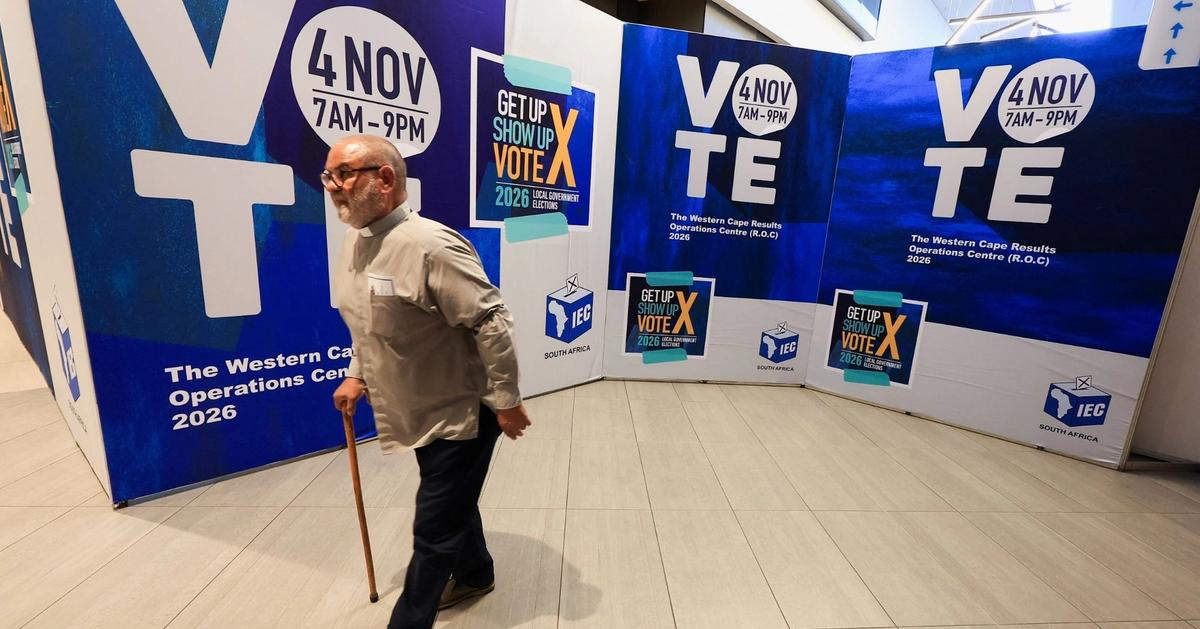
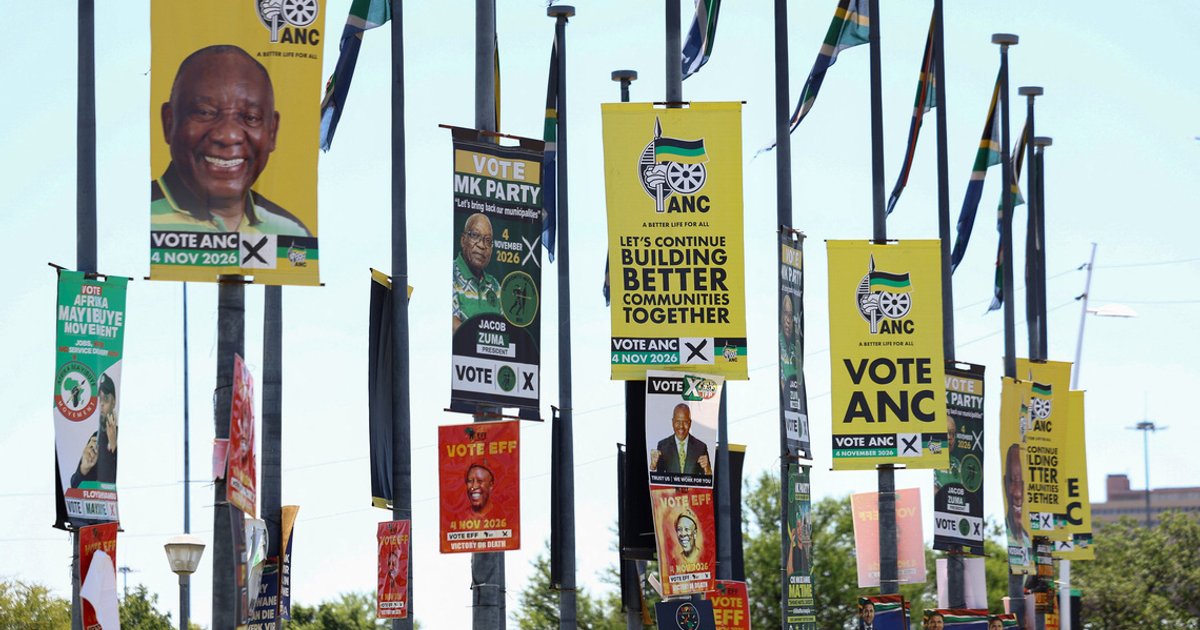
The African National Congress is on course to lose control of most of South Africa’s major cities in Wednesday’s local elections, according to polling data, potentially disrupting power dynamics in the national coalition government. uncertain
Congress → lose → government
Several polls suggest the party’s remaining support is increasingly concentrated in smaller towns and rural provinces as opposition parties make deeper inroads in the biggest cities that drive Africa’s largest economy. asserted
that → suggest → economy
The local government vote will decide who runs 250-plus municipalities responsible for basic service provision including water, sanitation, and refuse collection. asserted
who → decide → water
It is the ANC’s first nationwide test since falling support forced it to share power in 2024 after losing its parliamentary majority — unprecedented in the democratic era. asserted
support → fall → era
The latest Ipsos poll, conducted between Sept. 12 and Oct. 13, put the ANC’s national support at an “all-time low” of 30%, reflecting just how far its backing in urban areas has fallen. asserted
backing → conduct → areas
Roughly 30% of respondents in Johannesburg, the nation’s commercial hub, and Tshwane, home of the capital Pretoria, said they would vote for the ANC. asserted
they → say → ANC
And that figure fell to just 10% in the port city of Durban, where the populist uMkhonto weSizwe Party (or MK), which is pressing for sweeping state control of the economy and built around former president Jacob Zuma, is comfortably ahead in polls. asserted
which → fall → polls
Support for the ANC, the party once led by Nelson Mandela, remains near 60% in Limpopo and the Eastern Cape, vast provinces of villages, small towns, and dispersed settlements that remain far less urbanized than Gauteng or the Western Cape, an earlier Ipsos poll showed. asserted
poll → lead → Gauteng
“After 30 years of democracy, voting patterns are changing and we are moving into a completely new reconfiguration of the political spectrum,” said Andre Duvenhage, a political analyst at South Africa’s North-West University. asserted
Duvenhage → change → University
The Ipsos survey and several other polls — if replicated on voting day — indicate that most metropolitan municipalities would require coalition governments after the local elections. asserted
municipalities → replicate → elections
This broadly matches the assessment of think tank Oxford Economics, which has predicted that voting in six of the eight metros would fail to produce an outright winner, creating the need for coalition negotiations. asserted
voting → match → negotiations
A poor ANC showing would “upend the power dynamics” inside the national coalition government, said William Gumede, a political analyst and governance professor at the Johannesburg-based University of Witwatersrand. asserted
Gumede → upend → Witwatersrand
He argued that if the ANC’s share of the vote was close to or fell below the Democratic Alliance, it would force the former liberation movement to treat its junior partner “as an equal power” in policy-making and government decisions. asserted
it → argue → making
The two parties became governing partners after the 2024 general election for the first time, bringing ideological rivals into the same government where the ANC remains committed to state-led economic transformation policies while the DA has pushed for bigger private investment. asserted
DA → become → investment
Political parties have entered the final stretch of campaigning with failures of local government providing much of the ammunition. asserted
government → enter → ammunition
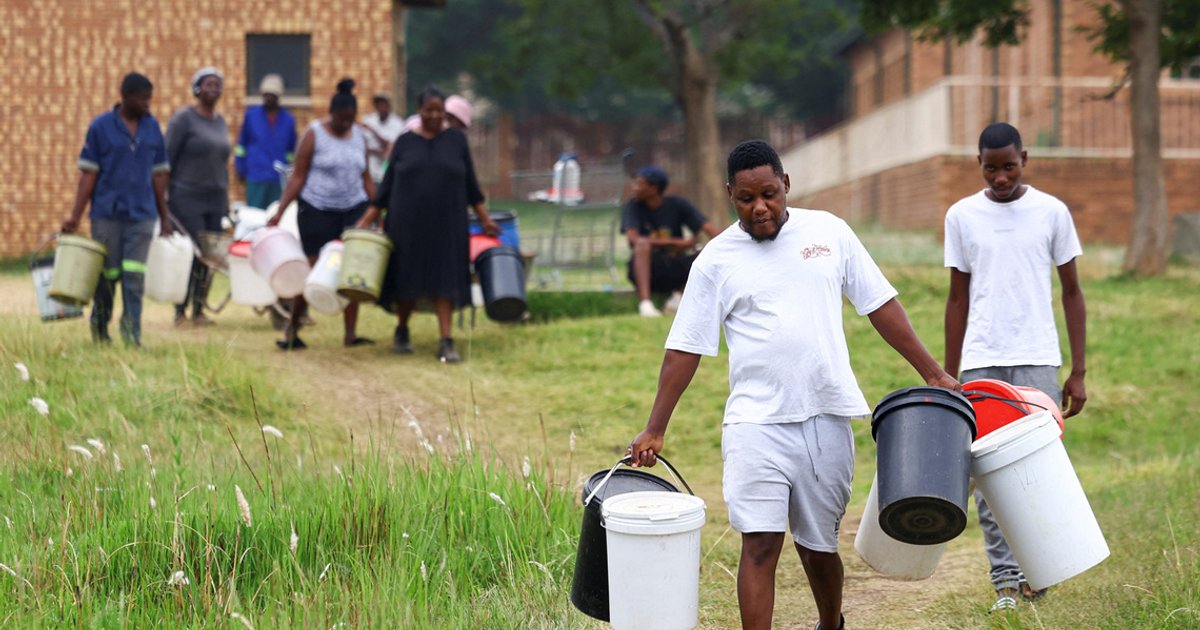
Unreliable water supplies, deteriorating roads, corruption, and mismanagement of municipal finances, have left many councils struggling to provide basic services. asserted
supplies → deteriorate → services
Companies are increasingly paying for the failures, said Busi Mavuso, CEO of lobby group Business Leadership South Africa, whose members account for nearly a third of the country’s $490 billion GDP. asserted
members → pay → GDP
She said businesses are investing in backup water storage, private security, and road repairs to remain operational. asserted
businesses → say → storage
“Capital is not sentimental,” she said, warning that investors can redirect money when infrastructure and municipalities fail. asserted
infrastructure → say → money
That makes the quality of municipal governments formed after the election important to investors, according to Awongiwe Booi, a fixed income analyst at South African lender Investec. uncertain
quality → make → Investec
“The alignment and performance of the coalition post the election will matter more than the poll results themselves,” she said. asserted
she → matter → results
South Africa’s eight metros house about 40% of the population and account for an outsized share of economic activity. asserted
metros → house → activity
That deserves testing. asserted
That → deserve → testing
For starters, there is a risk over what the party does to win voters back or retain those largely rural areas, where official data shows that these countryside towns accounted for nearly 60% of the country’s poor in 2023. asserted
towns → be → 2023
Under such circumstances the ANC, in its effort to recover voters and shore up support, would have every reason to demonstrate that the government can deliver more on its campaign promises to expand public employment and automatically enrol grant-receiving households for free basic services. asserted
government → recover → services
The spending pressure is hardly hypothetical, with Finance Minister Enoch Godongwana saying government departments have asked for more than 700 billion rand ($41 billion) in additional spending over the next three years, more than a third of everything the government expected to spend this year. asserted
government → say → everything
“That money simply doesn’t exist,” he told a local radio station last month. asserted
he → exist → station
Even so, an electoral decline makes saying no politically harder, creating a longer term political risk. asserted
decline → make → risk
It might just embolden those arguing that a post-President Cyril Ramaphosa ANC should move toward MK Party and Economic Freedom Fighters, a radical left movement advocating for nationalization of mines and banks, and ditch the market friendly DA, which has long struggled to shake off its image seen by many Black voters as a party of white interests. uncertain
which → embolden → interests
There’s nothing irrational about voters demanding more from a state where a third of the work force is unemployed and ranks highest in the World Bank inequality index. asserted
third → ’ → index
The problem is that political need does not create fiscal space. asserted
need → create → space
David Omojomolo, Africa economist at research house Capital Economics, said fears about the coalition government stability after the election are overdone, and expects the macroeconomic impact of the vote to be limited, with borrowing costs constraining the recovery remaining on track. asserted
costs → say → track
His comment rests on the DA, rather than MK or the EFF, picking up the ANC losses, which the polls support in Gauteng. asserted
DA → rest → Gauteng
“That should compel the next ANC leader to continue to follow business-and-investor-friendly policies, including the commitment to fiscal consolidation,” he said. asserted
he → compel → consolidation

💬Give feedback
🕘History 🎫Support