Ukrainians received a wave of messages Sunday night that raised alarm with a series of grave — and baseless — warnings.
asserted
that → receive → warnings
Authorities said the country’s emergency alert application had been targeted in a cyberattack, and hours later Russia said its own alert system had also been hacked.
asserted
system → say → cyberattack
The dueling accusations came just as a rare humanitarian ceasefire between the two sides ended, raising fears of intensified fighting rather than a move toward broader peace.
asserted
ceasefire → duel → peace
Residents in Ukraine have become used to the unsettling alerts that buzz their phones with news of incoming Russian missiles and drones — a service millions rely on to seek shelter before the attacks hit their cities.
asserted
attacks → become → cities
But the warnings on Sunday night immediately stood out.
asserted
warnings → stand → night
The messages, which began around 10:45 p.m. Kyiv time (3:45 pm ET), warned residents not to go outside because of radiation hazard, chemical threat and street fights.
asserted
which → begin → hazard
Another message professed, in Russian, that all of Ukraine was under nuclear alert.
asserted
all → profess → alert
“Don’t worry,” it added.
asserted
it → worry → ?
“Oreshnik is in action,” referring to Russia’s nuclear-capable hypersonic missile.
asserted
Oreshnik → refer → missile
Shortly after the alerts went out late Sunday, Ukraine’s Air Force said the country’s “Air Alert” app had likely been “compromised by the enemy,” confirming there was no “radiation threat” and urging calm.
asserted
app → go → calm
In separate statements, the app’s creators said “unauthorized third parties interfered with the operation of the app,” forcing them to temporarily suspend its operations.
asserted
parties → say → operations
It later called the incident a “cyberattack,” saying it was gradually restoring the service.
asserted
it → call → service
“The team is carrying out additional measures to protect the app in order to prevent similar situations in the future,” one of the statements said.
asserted
one → carry → statements
Ukrainian media reported that users across the country received the alert, and in the Western Lviv region authorities reported that some of the public warning sirens and loudspeaker systems broadcast a “radiation hazard” signal.
asserted
some → report → signal
Still, many Ukrainians did not appear unduly alarmed or panicked by the alerts.
asserted
Ukrainians → appear → alerts
In fact, many shared memes online, poking fun at what they saw as a blatant fake, and the fact the warning was issued in Russian.
asserted
warning → share → Russian
“No one was particularly surprised,” one user wrote on X.
asserted
user → surprise → X.
“They might as well have thrown in a dinosaur attack, too.”
uncertain
They → throw → attack
The State Emergency Service of Ukraine said Monday the national alert system was operating normally, and an NBC News producer in Kyiv did not experience any further issues with the “Air Alert” app.
Meanwhile, Russia’s emergencies ministry also said early Monday that its mobile application has suffered a “massive cyberattack,” resulting in what it said was “dissemination of fake information to the public.”
asserted
it → say → public
The public alert system was restored and was operating normally, the ministry said shortly after.
asserted
ministry → restore → ?
It emphasized that the app was only “an additional, supplementary information service.”
asserted
app → emphasize → ?
Screenshots shared by Russian media and some regional authorities suggested the alert, issued in Russian, warned of “nuclear warheads” launched at Russia.
uncertain
alert → share → Russia
As with the Ukrainian alert, the wording was casual and did not appear official.
asserted
wording → appear → alert
Russian authorities did not say who was to blame for the alleged cyberattack, only saying “malicious actors” were behind it.
It was not immediately clear whether the two incidents were linked.
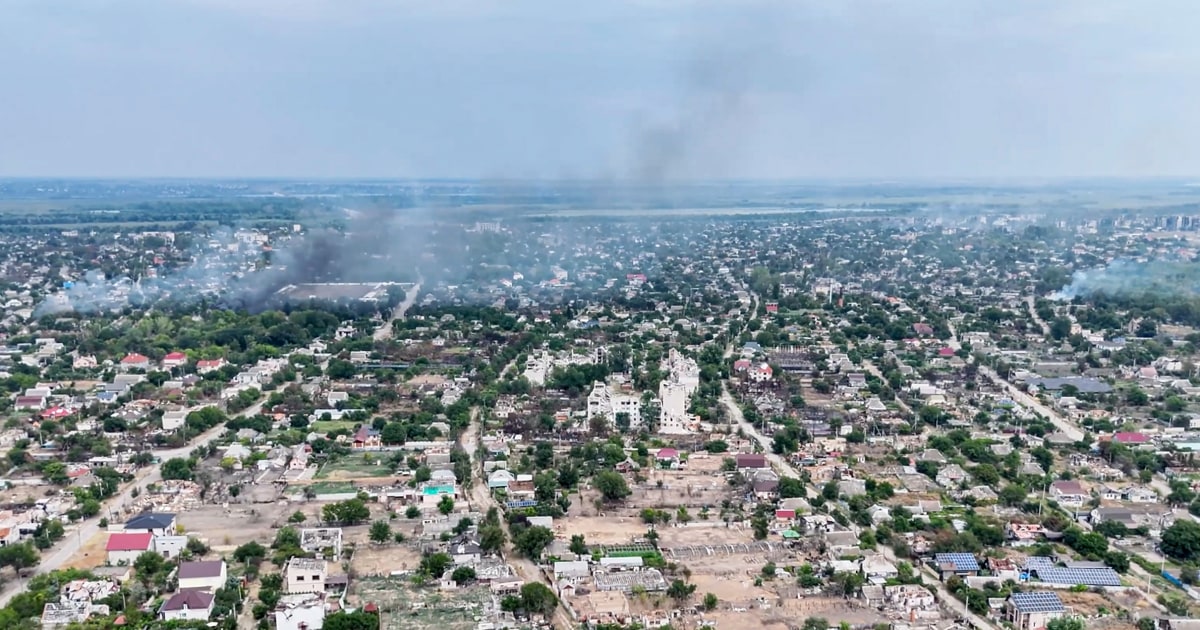
It came just hours after a temporary ceasefire between Kyiv and Moscow came to an end in the occupied southern Ukrainian region of Kherson.
Russian drone strikes in Ukraine kill two teenage girls
The truce, brokered with involvement from first lady Melania Trump and Pope Leo XIV, held without violations from either side for six days, allowing the evacuation of hundreds of residents from the town of Oleshky, which had been on the brink of a humanitarian catastrophe.
The truce amounted to the biggest de-escalation between Kyiv and Moscow since the war started in early 2022.
asserted
war → say → 2022
“On behalf of America, I commend Russia and Ukraine for their leadership and cooperation surrounding the Oleshky ceasefire,” the first lady said in a post on X on Sunday.
asserted
lady → commend → Sunday
“I hope Oleshky serves as a foundation for lasting peace between both nations.”
asserted
Oleshky → hope → nations
Ukraine’s Ombudsman for Human Rights Dmytro Lubinets said he was exploring opportunities for “further humanitarian initiatives” with his Russian counterpart, Yana Lantratova, adding that it was “important to maintain this mechanism of cooperation.”
Ukraine’s Armed Forces accused Russia on Monday of using the truce to rotate its units and fortify positions in the area.
asserted
Forces → say → area
Kremlin spokesman Dmitry Peskov said that Kyiv also could have used the ceasefire to regroup, calling it a “completely common practice in such situations.”
uncertain
Kyiv → say → situations
 The Aporia