In the early days of America's Parcel Post system it seemed everything that could fit within the rules was fair game for delivery.
uncertain
that → seem → delivery
Farmers sent crops, families sent food and household goods, and businesses soon discovered that the postal network could be an unexpectedly cheap alternative to traditional freight.
uncertain
network → send → freight
But in Utah, one businessman took the idea much further and used the mail to ship thousands of bricks for an entire bank.
asserted
businessman → take → bank
When the postal service was a shipping network
According to the Smithsonian National Postal Museum, on January 1, 1913, Parcel Post officially began, changing the way Americans could ship items.
uncertain
Americans → ship → items
The service was particularly popular with rural families who had to haul goods into towns with express offices before they could be sent on.
uncertain
they → have → offices
The new system linked packages straight to rural mailboxes, and it was nearly instantly popular.
asserted
it → link → mailboxes
In the first half of the year, some 300 million parcels were processed.
asserted
parcels → process → year
The weight limits increased quickly, from 11 pounds to 20 pounds, then eventually 50 pounds.
asserted
limits → increase → pounds
The service was not limited to normal household parcels.
asserted
service → limit → parcels
Eggs, butter, vegetables and other common commodities were regularly sent through the mail, and the need for specially designed packaging arose.
asserted
need → send → packaging
A cheaper way to build a bank
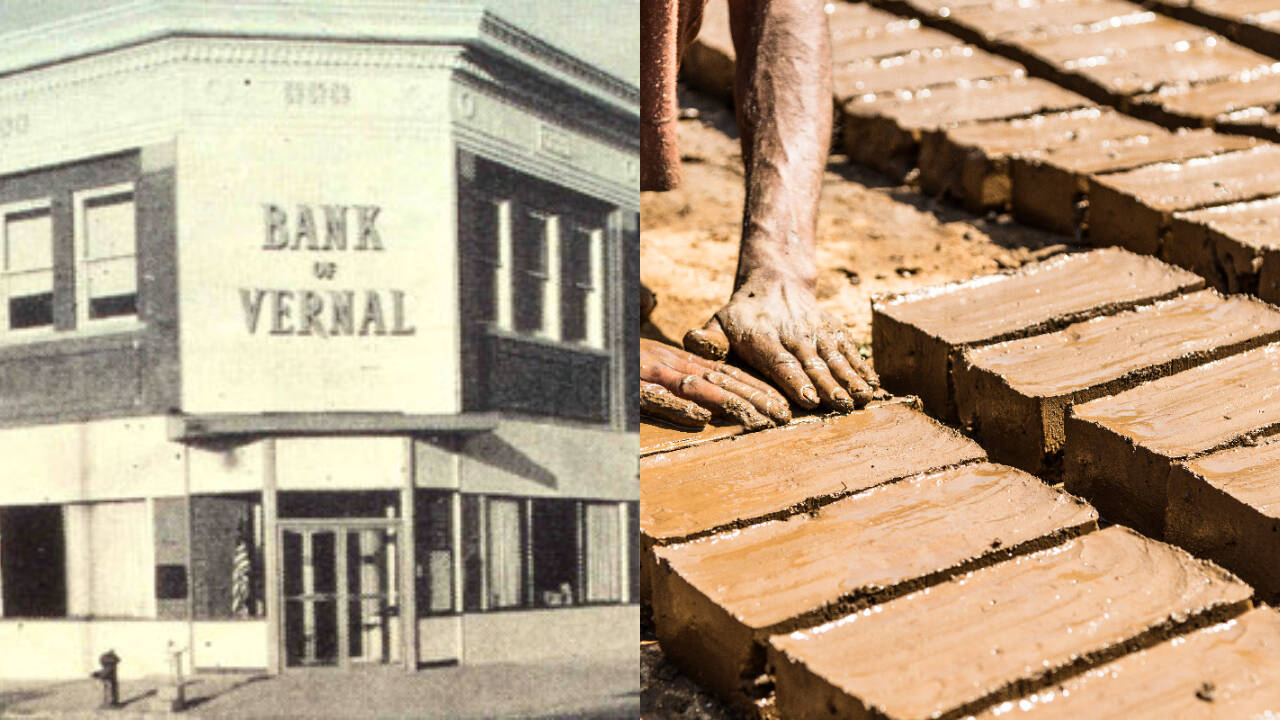
A report by the Medium states that in 1916, William Horace Coltharp, who had helped build the Bank of Vernal in Utah, had a strange transportation problem.
asserted
who → build → problem
The decorative pressed bricks he wanted were made by the Salt Lake Pressed Brick Company, which was about 125 miles away in a straight line.
asserted
which → press → line
Medium reports that shipping the bricks by normal freight routes would cost more than four times their value.
asserted
shipping → report → value
Coltharp looked to Parcel Post as a cheaper alternative.
asserted
Coltharp → look → alternative
Postal rates were determined by the actual distance between places not the much longer route freight had to travel.
asserted
freight → determine → route
Coltharp used the difference to have individual bricks wrapped and packed in boxes of about 50 pounds each, for mailing.
asserted
bricks → use → mailing
The post office starts to strain
asserted
office → start → ?
What started as a brilliant way to save money quickly became a logistical nightmare.
asserted
started → start → money
Thousands of bricks started arriving at Vernal, and the local postal operation was overwhelmed.
asserted
operation → start → Vernal
In the end, Coltharp sent about 15,000 bricks, for a total shipment of some 37.5 tons, or 75,000 pounds, according to Medium.
uncertain
Coltharp → send → Medium
At the height of construction, the Vernal post office was already handling some two tons of mail daily, so the brick deliveries were particularly taxing.
asserted
deliveries → handle → mail
The Smithsonian National Postal Museum estimates the shipment weighed 40 tons, and Salt Lake City and Vernal postmasters and the Uintah Railroad, which hauled the parcels, were overwhelmed by the deliveries.
asserted
which → estimate → deliveries
A new rule closes the loophole
Ultimately, the extraordinary shipment forced federal officials to rethink how Parcel Post could be used.
uncertain
Post → close → officials
The Post Office Department ruled that no one sender could send more than 200 pounds of parcels to one recipient in a single day.
uncertain
sender → rule → day
But by then Coltharp’s unconventional approach to building had already served its purpose.
asserted
approach → build → purpose
The bricks were sent from Salt Lake City to Vernal, piece by piece, by postal service.
asserted
bricks → send → service
The episode became one of the most memorable illustrations of how a new public service could be stretched far beyond its intended purpose, and how quickly an inventive shortcut could expose the limits of the system itself.
uncertain
shortcut → become → system
 The Aporia