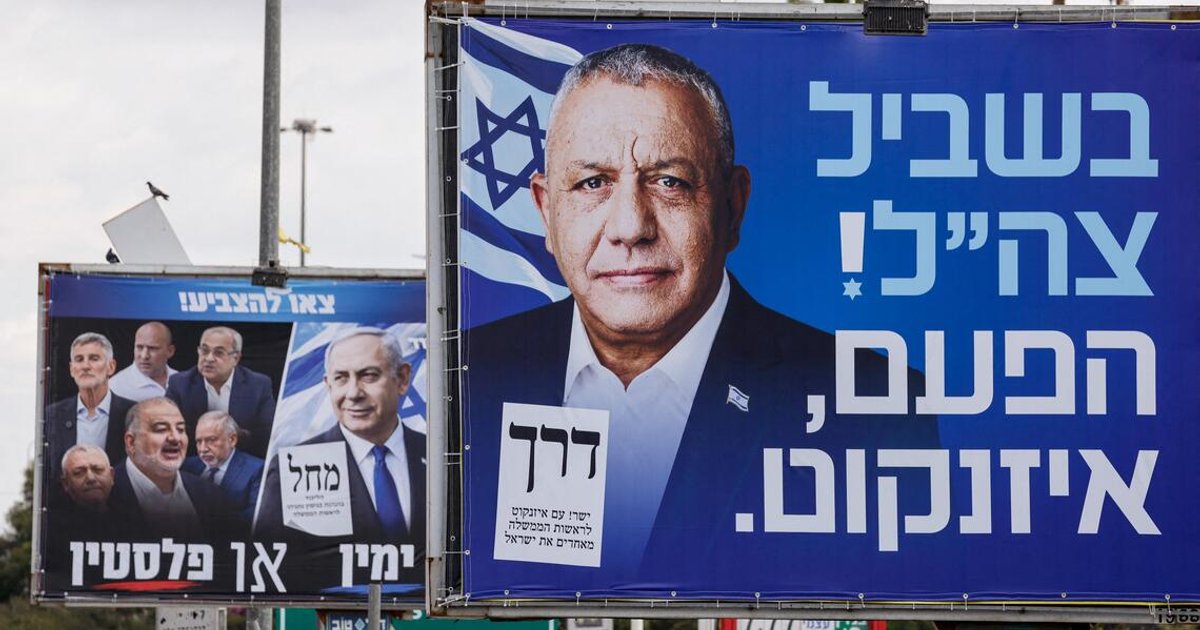
Photo via Al Jazeera

The future of the Palestinian vote in Israel

Read the original at Al Jazeera ↗
Cite

Shhadeh, A. A. (2026, November 2). The future of the Palestinian vote in Israel. Al Jazeera. https://www.aljazeera.com/opinions/2026/11/2/the-future-of-the-palestinian-vote-in-israel?traffic_source=rss

Dated from the outlet's own feed. Check the original for its byline.

Al Jazeera · collected 2026-11-02 · by Abed Abou Shhadeh

Quick Summary

In the recent Israeli elections, two Palestinian-led parties secured 19 seats in the Knesset after achieving an unprecedented voter turnout of around 80%. This significant electoral success for Palestinians contributed to Prime Minister Benjamin Netanyahu’s failure to secure a governing majority. However, this outcome has led some members of Netanyahu's camp to allege that the election was “stolen” and call for restrictions on Palestinian voting rights, highlighting the tension between formal political equality and informal social exclusion faced by Palestinian citizens in Israel.
Written by AI on 2026-11-02, from this article's own text only (the story summary below draws on all the coverage).

AI analysis

Story summary

On October 27, 2026, Israelis voted in parliamentary elections following three years of conflict with Hamas and other groups. The main challenger to incumbent Prime Minister Benjamin Netanyahu was retired Lt. Gen. Gadi Eisenkot, whose Yashar party was projected to win around 20 out of the 120 seats in parliament. Thousands rallied in Tel Aviv against Netanyahu ahead of the vote, calling for an inquiry into security failures that led to the October 7, 2023, Hamas attacks. Despite concerns over alleged foreign funding and irregularities during the election, Israel’s Central Elections Committee confirmed the results would stand. Netanyahu has since claimed the election was "stolen," but committee head Noam Sohlberg stated these claims would not undermine the integrity of the electoral process or results.

Written for “Israeli Election Results” on 2026-11-02, grounded in this article and the 256 other(s) covering the same event.
Why this leaning score
The article's own words the score was based on. Each is quoted verbatim and was checked against the article text before being stored, so you can find it in the original.
Reading Leans strongly left (beta estimate) Confidence medium
Leaning: leans strongly left for article 122621 (medium confidence, 5 verified quotes) · logged 2026-11-02

Story

📰 Israeli Election Results
Politics · 257 article(s) covering the same event. Compare every outlet's account →

Compared with similar articles

This article reads leans strongly left and hedges 11% of its claims. Each row says how that neighbour differs.
The Hindu
⚖️ Leans strongly left Hedges 1 of 30 claims Outlet record 77/100
Al Jazeera
⚖️ Leans strongly left Hedges 4 of 37 claims Outlet record 60/100
“While both articles discuss the Israeli election results on October 27, 2026, they focus on different aspects: Article A covers the overall outcome and implications for forming a government, while Article B focuses specifically on the impact of the Palestinian vote.”
The Hindu
Hedges 7 of 33 claims Outlet record 77/100
“While both articles discuss the Israeli election results from October 27, 2026, they focus on different aspects (one on Netanyahu's lack of a majority and one on the Arab parties' performance) without clearly describing the same specific incident.”
Al Jazeera
⚖️ Leans strongly right further right than this Hedges 3 of 15 claims Outlet record 60/100
“While both articles discuss the Israeli election results and their implications for political parties, they focus on different aspects of the broader event. Article A highlights provocative statements made during the election period, while Article B focuses on the unprecedented turnout and impact of Palestinian votes.”
BBC News
⚖️ Centre further right than this Hedges 0 of 4 claims Outlet record 68/100
“While both articles discuss the Israeli election results, they focus on different aspects: Article A focuses on Netanyahu's position and the overall deadlock, while Article B emphasizes the impact of Palestinian voters. They do not describe the same specific incident or outcome.”
Al Jazeera
⚖️ Leans strongly right further right than this Hedges 5 of 22 claims Outlet record 60/100
“While both articles discuss the Israeli election results from October 27, 2026, they focus on different aspects: Article A covers the overall outcome and seat distribution, while Article B focuses specifically on the role and impact of Arab/Palestinian parties in the election.”
The Straits Times
⚖️ Leans strongly left Hedges 7 of 31 claims Outlet record 66/100
“The articles cover different aspects of the Israeli election, with Article A focusing on Palestinian views and hopelessness regarding the election outcomes, while Article B discusses the historic voting turnout and impact of Palestinian citizens in the election.”
Toronto Star
⚖️ Leans strongly left Hedges 6 of 52 claims Outlet record 64/100
ABC News (AU)
⚖️ Leans left further right than this Hedges 2 of 67 claims Outlet record 68/100
Al Jazeera
⚖️ Leans left further right than this Hedges 0 of 3 claims Outlet record 60/100
“Article A describes a protest rally in Tel Aviv on November 1, 2026, urging for a Jewish-Arab coalition government. Article B discusses Palestinian voter mobilization and election results from October 27, 2026.”
How this article was measured signals, leaning charts, publisher record, byline, topics and claims

Signals How these are calculated →

Claims extracted
56
sentences that state something as happening or true
Uncertain
11%
6 of 56 hedged ("reportedly", "may", "according to")
Leaning
Leans strongly left
of the writing, not the subject · beta estimate
Publisher signals
60/100
Al Jazeera's corrections and hedging, across everything collected from it. Not a measure of accuracy.
Outlets on this story
257
Politics
Same framing elsewhere
1
articles that frame the event the way this one does
Analyzed 2026-11-02 · how these are computed

How this is being covered How these are calculated →

Article leaning vs. publisher reliability
Source leaning vs. consistency

Publisher

Al Jazeera · 4688 article(s) · 3 correction(s) detected
Running correction rate · 3 correction(s)

Who wrote this

Abed Abou Shhadeh
1 article(s) here · 1 carrying a prediction
🔮 If they do not mobilise to vote, the risk is that the Jewish right would come to power is high.
2026-11-02 · assertive framing · The future of the Palestinian vote in Israel
The only article under this byline in the corpus.

Topics

Arab Israel Israeli Jewish Palestinian

Subjects

Palestinian NORP · 19× Jewish NORP · 5× Arab NORP · 4× Israel GPE · 4× Netanyahu PERSON · 4× Israeli NORP · 3× Knesset ORG · 2× Palestinians NORP · 2× Ra’am ORG · 2× Benjamin Netanyahu PERSON · 1×

Narrative

However, the parties they voted for face isolation unless they fulfil the conditions set by the Jewish-led opposition: namely, recognising Israel as exclusively Jewish, labelling Hamas a “terrorist” organisation and accepting compulsory military or national service, from which Palestinian citizens are now exempt.
framing: assertive · carried by 1 article(s) · first seen 2026-11-02
🔮 If they do not mobilise to vote, the risk is that the Jewish right would come to power is high.
2026-11-02 · Al Jazeera
The future of the Palestinian vote in Israel · assertive framing

Claims (56 extracted, 6 hedged)

In the October 27 Israeli elections, 38 parties ran for office. asserted
parties → run → office
Of these, only two supported peace, equality and an end to the occupation of Palestinian territories. asserted
two → support → territories
Both were “Arab parties” – made up of Palestinian citizens of Israel. asserted
Both → make → Israel
These two parties earned a historic result, securing 19 seats in the Knesset, after some 80 percent of Palestinian citizens cast a vote. asserted
percent → earn → vote
This unprecedented turnout contributed to Prime Minister Benjamin Netanyahu’s failure to secure a majority. asserted
turnout → contribute → majority
His bloc won 53 seats, while the Jewish-led opposition won 48. asserted
opposition → win → 48
The electoral mobilisation of Palestinians was immediately spun as a threat and Palestinian communities now face intensified incitement by members of Netanyahu’s camp. asserted
communities → spin → camp
The pro-Netanyahu camp has alleged that the election was “stolen” and is now calling for restrictions on the “Arab vote”. asserted
election → allege → vote
Thus, Palestinian electoral success exposed an uncomfortable question for Israeli politics: what happens when citizens who are informally isolated on the political scene but whose vote is formally equal become powerful enough to determine who governs? asserted
who → expose → scene
Palestinian citizens face a fundamental question: Can they truly determine the political outcome and if they can, does that make them equal citizens? asserted
them → face → citizens
Formal inclusion, informal exclusion Palestinian citizens of Israel have long faced a dilemma over voting. asserted
citizens → face → voting
If they do not mobilise to vote, the risk is that the Jewish right would come to power is high. asserted
right → mobilise → power
If they do vote, there is no guarantee that their participation would translate into policies that protect or benefit their communities. asserted
that → vote → communities
In 1999, Arab turnout reached approximately 75 percent in the elections and Palestinian citizens overwhelmingly supported Ehud Barak of the Labour Party against Netanyahu. asserted
citizens → reach → Netanyahu
A year later, after Ariel Sharon’s visit to Al-Aqsa compound and the outbreak of the second Intifada, Israeli police killed 13 Palestinian citizens. asserted
police → kill → citizens
Outrage and disillusionment contributed to an Arab boycott of the 2001 election, when turnout fell to about 19 percent. asserted
turnout → contribute → percent
Sharon won. asserted
Sharon → win → ?
Today, Palestinian electoral participation still retains its sway. asserted
participation → retain → sway
Higher turnout among Palestinians means fewer seats for two main blocs – the pro- and anti-Netanyahu camps – which could tip the balance in the Knesset. uncertain
which → mean → Knesset
This is what happened on October 27 . asserted
what → happen → October
But this potentially powerful position of the Palestinian parties has been diminished by the refusal of Jewish-led parties to work with them on government formation. asserted
position → diminish → formation
The logic of this exclusion was made clear in April 2021, when far-right politician Bezalel Smotrich rejected Netanyahu’s attempt to establish a government supported by one of the Palestinian parties, Ra’am. asserted
Smotrich → make → parties
Smotrich argued that doing so would encourage greater Palestinian turnout which would allow the Palestinian community to enable the return of the left to power in Israel. asserted
community → argue → Israel
Accepting Palestinian parties would therefore challenge the Jewish right’s political dominance. asserted
Accepting → accept → dominance
Ra’am eventually joined the short-lived coalition government formed by Naftali Bennett and Yair Lapid, without making any national demands, but its participation came at the cost of significant concessions on national issues. asserted
participation → join → issues
For the first time, Palestinian political leaders recognised Israel as a Jewish state and were even willing to set aside the national question in favour of addressing civil and socioeconomic issues. asserted
leaders → recognise → issues
Despite these concessions, the Bennett–Lapid government ultimately collapsed following the resignation of two coalition members who opposed sitting in a government alongside Palestinian representatives. asserted
who → collapse → representatives
Netanyahu then realised that to prevent the formation of any future government of change, he needed to delegitimise the Palestinian parties and limit their political representation. asserted
he → realise → representation
Following October 7, 2023, Palestinian citizens experienced a sharp contraction of political space. asserted
citizens → follow → space
Students faced disciplinary proceedings over social-media posts; employees lost jobs; antiwar speech prompted police investigations and arrests. asserted
speech → face → investigations
The electoral process itself reflected this climate. asserted
process → reflect → climate
Israel’s Central Elections Committee voted to disqualify both Palestinian electoral lists, along with lawmaker Ofer Cassif and Balad chairman Sami Abu Shehadeh. asserted
Committee → vote → Cassif
The Supreme Court eventually reversed the bans on the lists. asserted
Court → reverse → lists
Meanwhile, attacking Palestinians, including Palestinian citizens of Israel, became a political staple. asserted
attacking → attack → Israel
Ahead of this election, media outlet Arabic Post conducted an analysis of more than 10,000 election-related social-media items. asserted
Post → conduct → items
It reported that 40 percent of posts by candidates from Netanyahu’s camp concerned Arabs or Palestinians, and that 94 percent of those were hostile. asserted
percent → report → those
More troubling were the police raids on the homes of Ra’am activists in the Negev, following suspicions of electoral bribery which led to the arrest of three men. asserted
which → follow → men
Police acknowledged searches without warrants and later reports questioned the strength of the evidence. asserted
reports → acknowledge → evidence
All three men were released. asserted
men → release → ?
But the ripple effect of those allegations helped shape a narrative of suspicion against the Palestinian community. asserted
effect → help → community
…and 16 more, not listed.

💬Give feedback
🕘History 🎫Support