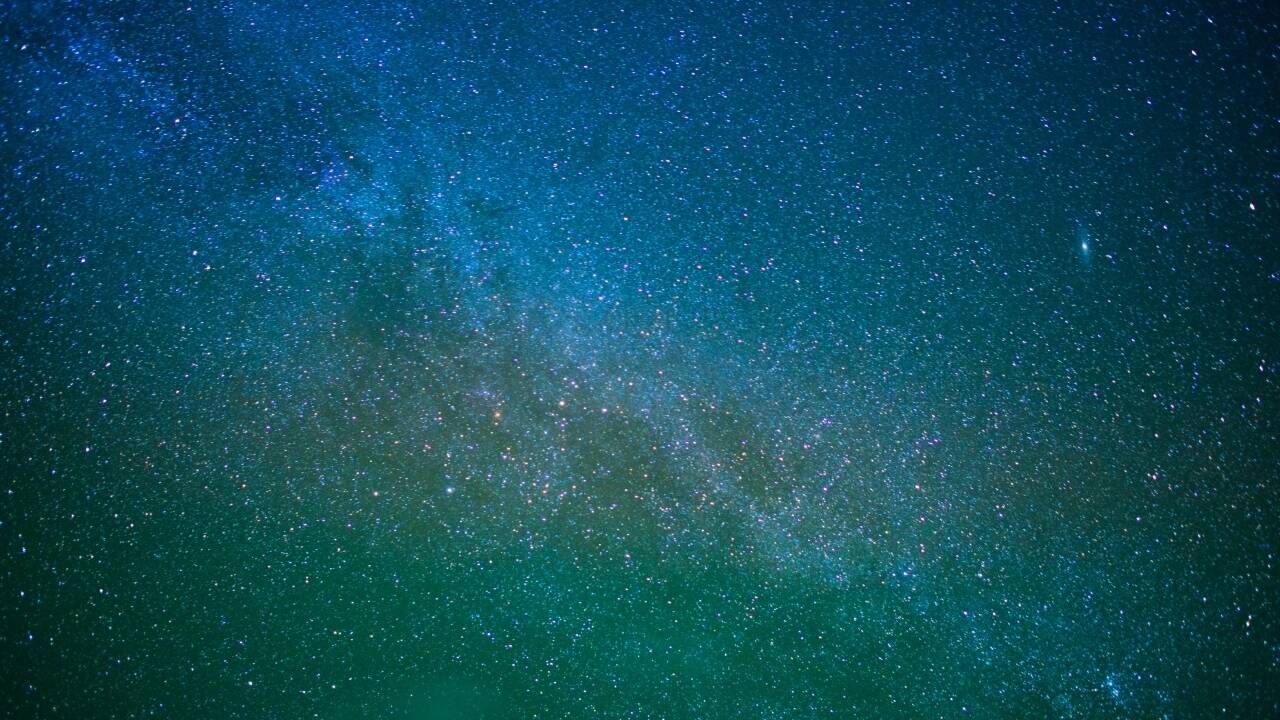
Photo via Times of India

Black Hole Blast Shapes Structure: Astronomers trace ‘Treble Clef’ origins; collision revives radio glow

Read the original at Times of India ↗
Cite

TOI Science Desk. (2026, November 2). Black Hole Blast Shapes Structure: Astronomers trace ‘Treble Clef’ origins; collision revives radio glow. Times of India. https://timesofindia.indiatimes.com/science/space/nasas-chandra-decodes-a-giant-radio-wave-formation-shaped-like-a-musical-treble-clef-a-black-holes-outburst-followed-by-a-collision-between-galaxy-clusters-created-it/articleshow/134961486.cms

Dated from the outlet's own feed. Check the original for its byline.

Times of India · collected 2026-11-02 · by TOI Science Desk

Quick Summary

Astronomers led by Andrea Botteon have identified the origins of a cosmic formation resembling a treble clef, located behind the Milky Way’s plane and observed through NASA's Chandra X-ray Observatory and other telescopes. They found that the structure, named for its distinctive shape in radio wavelengths, formed due to an ancient black hole eruption followed by a collision between two galaxy clusters. This process has left behind a vast reservoir of hot gas with bright radio emissions. The research, published in Astronomy & Astrophysics, explains how such violent cosmic events can significantly reshape large structures in the universe over time.
Written by AI on 2026-11-02, from this article's own text only (the story summary below draws on all the coverage).

AI analysis

Story summary

Astronomers have traced the origins of a cosmic formation resembling a musical treble clef to an ancient black hole eruption and a subsequent collision between two galaxy clusters. The discovery, published in Astronomy & Astrophysics, was led by Andrea Botteon of Italy’s National Institute for Astrophysics (INAF). Using data from NASA’s Chandra X-ray Observatory, ESA’s eROSITA telescope, the LOFAR radio telescope network, and the UKIRT infrared telescope, researchers found that the formation, nicknamed the "Treble Clef," is shaped by a black hole blast and later collisions between galaxy clusters. The location of this cosmic structure behind the plane of the Milky Way made it challenging to observe due to obscuring stars, gas, and dust. This finding provides new insight into how violent events can reshape vast structures across the universe.

Written for “Black Hole Collision Reveals Treble Clef Origins” on 2026-11-02, grounded in this article and the 0 other(s) covering the same event.
Why this leaning score
This article does not take a side on a contested political question, so it has no leaning score. That is an answer rather than a gap: a match report or a rescue can be warmly or critically written without being left or right, and scoring it anyway is how approval of a subject gets recorded as a political position.
No political leaning scored for article 122526 · logged 2026-11-02

Story

📰 Black Hole Collision Reveals Treble Clef Origins
Science · 1 article(s) covering the same event.

Compared with similar articles

Nothing to compare against. No article is close enough to this one for the pipeline to have linked or judged the pair.
How this article was measured signals, leaning charts, publisher record, byline, topics and claims

Signals How these are calculated →

Claims extracted
29
sentences that state something as happening or true
Uncertain
14%
4 of 29 hedged ("reportedly", "may", "according to")
Leaning
not political
takes no side on a contested political question
Publisher signals
59/100
Times of India's corrections and hedging, across everything collected from it. Not a measure of accuracy.
Outlets on this story
1
Science
Same framing elsewhere
1
articles that frame the event the way this one does
Analyzed 2026-11-02 · how these are computed

How this is being covered How these are calculated →

Article leaning vs. publisher reliability
Source leaning vs. consistency

Publisher

Times of India · 3913 article(s) · 3 correction(s) detected
Running correction rate · 3 correction(s)

Who wrote this

TOI Science Desk
306 article(s) here · 1 carrying a prediction
🔮 “Normally, my job is quite monotonous, so I wanted to create something that would entertain people, turning my ‘serious’ job into something fun,” he said in a Guinness World Records news release.
🔮 The subsequent collision between the two galaxy clusters may then have compressed the cloud or re-energised its particles, causing it to shine more brightly in radio wavelengths once again.
🔮 The mathematicians at the University of California, Davis, argue that the answer may already lie within Einstein’s own equations and that an invisible form of energy may not be needed at all.
🔮 The work will be carried out by the West Tennessee River Basin Authority, which is preparing a plan to restore the river and the land around it.
🔮 Cornell University scientists have developed genetically engineered tomato plants that turn red-purple when nitrogen becomes scarce, giving farmers a visible warning that crops may need fertiliser.
🔮 By studying these crystals and other mineral grains, scientists could establish the meteorite's age and identify later changes caused by water.
🔮 Centuries later, bronze objects found in Scandinavia would preserve chemical signatures consistent with the metals produced at this Spanish site, offering evidence of connections that may have crossed much of Europe.
🔮 Deposited impurities and staining may also have contributed, while low temperatures and humidity could cause the fabric to crack.
🔮 Two male king cobras meeting during the breeding season may engage in a prolonged contest, using their bodies to wrestle for control rather than relying on the venomous strikes associated with these snakes.
🔮 The project could offer a new way to build more affordable and sustainable homes across Canada.
Wire or desk byline, not an individual reporter.
Also by TOI Science Desk
Nothing else under this byline is closely related to this article, so these are simply their most recent.
All 306 articles by TOI Science Desk →

Topics

Astronomy & Astrophysics INAF Italy NASA National Institute for Astrophysics

Subjects

NASA ORG · 2× Andrea Botteon PERSON · 1× Astronomy & Astrophysics ORG · 1× INAF ORG · 1× Italy GPE · 1× National Institute for Astrophysics ORG · 1× the European Space Agency’s ORG · 1×

Narrative

The combined image brings together the different layers of the discovery: X-rays show the hot gas associated with the merging clusters, radio observations reveal the treble-clef-shaped structure, and infrared data provide additional detail about the surrounding field. By connecting the radio formation to both black hole activity and a galaxy-cluster merger, the findings show how separate cosmic events can combine to produce unusual structures on enormous scales.
framing: assertive · carried by 1 article(s) · first seen 2026-11-02
🔮 The subsequent collision between the two galaxy clusters may then have compressed the cloud or re-energised its particles, causing it to shine more brightly in radio wavelengths once again.

Claims (29 extracted, 4 hedged)

Astronomers have traced the origins of an unusual cosmic formation resembling a musical treble clef to an ancient black hole eruption and a subsequent collision between two galaxy clusters. asserted
Astronomers → trace → clusters
According to NASA’s Chandra X-ray Observatory and a study published in Astronomy & Astrophysics, the discovery offers fresh insight into how violent events can reshape enormous structures across the universe. uncertain
events → accord → universe
The formation, nicknamed the “Treble Clef” because of its distinctive appearance in radio observations, had long presented a challenge to astronomers. asserted
formation → nickname → astronomers
Its location behind the plane of the Milky Way makes it difficult to observe, as foreground stars, gas and dust obscure much of the region. asserted
stars → make → region
By combining observations across multiple wavelengths, researchers were able to piece together a possible explanation for its unusual shape. asserted
researchers → combine → shape
A cosmic formation hidden behind the Milky Way The research, led by Andrea Botteon of Italy’s National Institute for Astrophysics (INAF), brought together data from NASA’s Chandra X-ray Observatory, the European Space Agency’s eROSITA telescope, the LOw Frequency ARray (LOFAR) radio telescope network and the United Kingdom Infrared Telescope (UKIRT). asserted
research → hide → Observatory
The observations revealed a vast reservoir of extremely hot gas surrounding the formation, indicating that it lies within a galaxy cluster. asserted
it → reveal → cluster
Further analysis showed that the region is not a single, undisturbed cluster but two clusters in the process of merging. asserted
region → show → merging
Galaxy clusters are among the largest gravitationally bound structures in the universe. asserted
clusters → bind → universe
They contain hundreds of galaxies, along with immense quantities of hot gas. asserted
They → contain → gas
When two such systems collide, the resulting disturbances can generate shock waves and alter the physical conditions of the material within them. asserted
disturbances → collide → them
How a black hole helped shape the Treble Clef asserted
hole → shape → Clef
The researchers believe the formation developed in two stages, beginning with an outburst from a supermassive black hole near the centre of the galaxy cluster. asserted
formation → believe → cluster
Such black holes can release enormous amounts of energy, launching jets and driving clouds of charged particles and magnetic fields into their surroundings. asserted
holes → release → surroundings
In this case, the eruption is thought to have produced bright radio emissions as the particles moved through space at speeds approaching that of light. asserted
particles → think → light
Over time, the particles lost energy and the radio emission weakened. asserted
emission → lose → energy
The subsequent collision between the two galaxy clusters may then have compressed the cloud or re-energised its particles, causing it to shine more brightly in radio wavelengths once again. uncertain
it → compress → wavelengths
Shock waves generated by the collision could also have contributed to this revival. uncertain
waves → generate → revival
The process helps explain why the radio structure has such a striking appearance despite the considerable time that may have passed since the black hole’s initial outburst. uncertain
that → help → outburst
X-ray observations reveal evidence of a collision To investigate the merger, the team examined the distribution of hot gas using X-ray observations from Chandra. asserted
team → reveal → Chandra
The gas appeared broadly oval-shaped, but subtle variations in its distribution offered clues about the collision. asserted
variations → appear → collision
The researchers used an image-processing technique to remove the cluster’s symmetrical oval profile, making deviations from that shape easier to identify. asserted
deviations → use → shape
The resulting image showed stronger X-ray emission on either side of the cluster’s centre, suggesting that the collision occurred along a roughly left-to-right direction from the perspective of the image. asserted
collision → result → image
The scientists estimate that the direct collision took place a few hundred million years ago, with the two clusters now moving away from one another. asserted
clusters → estimate → one
The X-ray evidence supports the idea that the merger disturbed the surrounding gas and helped revive the radio-emitting particles responsible for the Treble Clef. asserted
merger → support → Clef
When cosmic structures resemble familiar symbols The Treble Clef’s resemblance to musical notation is an example of pareidolia, a common perceptual phenomenon in which people recognise familiar patterns in otherwise unrelated shapes. asserted
people → resemble → shapes
The formation has no physical connection to music; its nickname simply reflects the distinctive outline revealed by radio observations. asserted
nickname → have → observations
The combined image brings together the different layers of the discovery: X-rays show the hot gas associated with the merging clusters, radio observations reveal the treble-clef-shaped structure, and infrared data provide additional detail about the surrounding field. By connecting the radio formation to both black hole activity and a galaxy-cluster merger, the findings show how separate cosmic events can combine to produce unusual structures on enormous scales. asserted
events → combine → scales
They also demonstrate the value of observing the universe in different wavelengths, particularly in regions where foreground material makes conventional observations difficult. asserted
observations → demonstrate → regions

💬Give feedback
🕘History 🎫Support