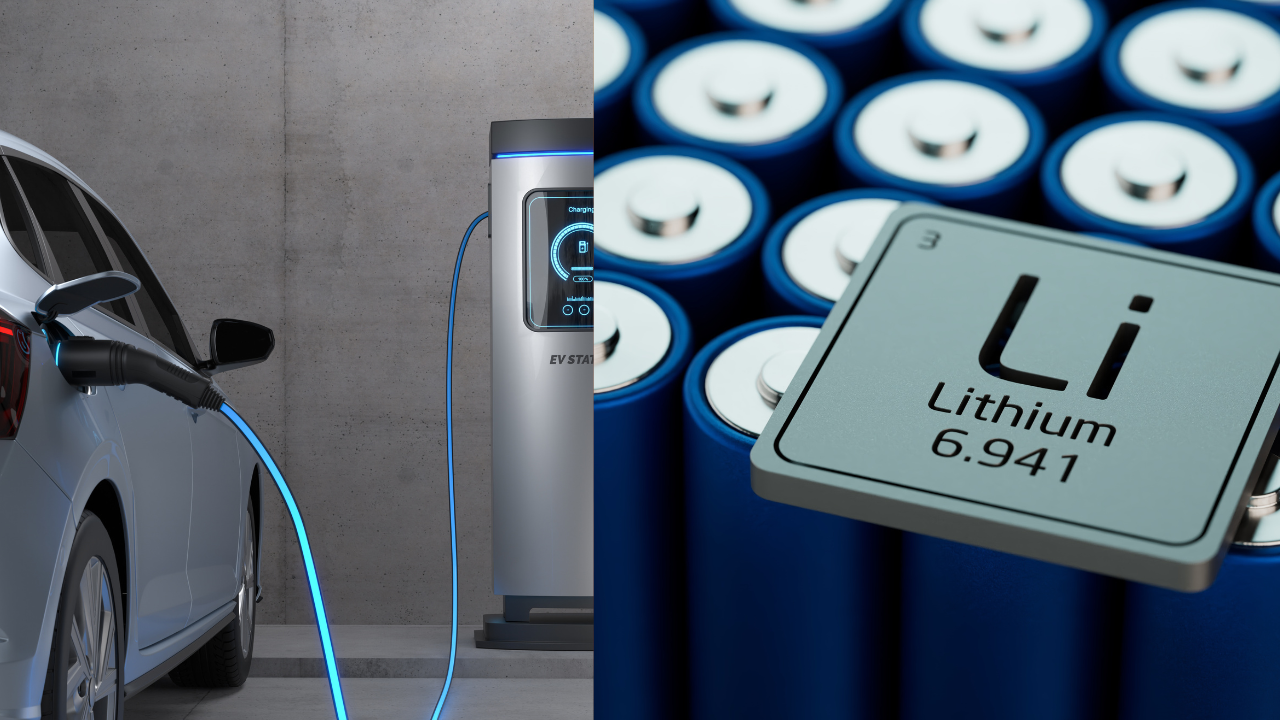
Every day we look at the rise of EVs and climate concerns and think about shifting to electric vehicles.
asserted
we → look → vehicles
But one of the biggest concerns people have when buying an electric car is its driving range.
asserted
people → have → car
While manufacturers are constantly working to improve battery performance, making batteries larger is not always the best solution, especially when it adds more weight to the vehicle.
asserted
it → work → vehicle
But what if electric cars could travel farther without carrying bigger and heavier batteries?
uncertain
cars → travel → batteries
Scientists may have found a way to make this possible by rethinking how batteries are designed.
uncertain
batteries → find → way
Researchers from the Korea Advanced Institute of Science and Technology (KAIST) have developed a new technology that could make electric vehicle batteries smaller, lighter and longer-lasting.
uncertain
batteries → develop → technology
The team has found a way to address one of the biggest problems with anode-free batteries, a next-generation design that removes conventional materials such as graphite to make more room for energy storage.
asserted
that → find → storage
The findings were published in the journal
Advanced Functional Materials.
asserted
findings → publish → Materials
Why are scientists working on anode-free batteries?
asserted
scientists → work → batteries
In conventional lithium-ion batteries, lithium is stored in a component called the anode, which is generally made using graphite.
asserted
which → store → graphite
However, anode-free batteries work differently.
asserted
batteries → work → ?
Instead of using a separate anode material, lithium accumulates directly on a thin copper sheet when the battery is charged.
asserted
battery → use → sheet
By removing the conventional anode, manufacturers can potentially reduce the battery's weight and thickness while storing more energy in the same amount of space.
asserted
manufacturers → remove → space
This could eventually allow electric vehicles to travel longer distances without requiring larger battery packs.
uncertain
vehicles → allow → packs
During repeated charging and discharging, lithium does not always spread evenly across the copper surface.
asserted
lithium → repeat → surface
Instead, it can form sharp, needle-like structures known as dendrites.
asserted
it → form → dendrites
These structures can damage the battery and interfere with its performance, while an unstable protective layer around the lithium can further accelerate its deterioration.
asserted
layer → damage → deterioration
How did researchers solve the problem?
asserted
researchers → solve → problem
To address this issue, the researchers redesigned the copper surface where lithium accumulates.
asserted
lithium → address → surface
Using a manufacturing technique borrowed from the semiconductor industry, known as secondary sputtering lithography, they created microscopic tube-like structures across the copper foil.
asserted
they → use → foil
Each of these tiny structures measures approximately 300 nanometres in diameter and 150 nanometres in height.
asserted
Each → measure → height
Together, they increase the available surface area for lithium deposition to around four times that of an ordinary flat copper sheet.
asserted
they → increase → sheet
This provides more space for lithium to settle evenly instead of accumulating in concentrated areas and forming damaging spikes.
asserted
lithium → provide → spikes
The researchers also applied an extremely thin coating of MXene, a two-dimensional material, measuring approximately 10 nanometres in thickness.
asserted
researchers → apply → thickness
Rather than acting as a protective layer itself, the coating encourages the formation of a stable protective layer rich in lithium fluoride as the battery operates.
asserted
battery → act → fluoride
This layer helps reduce unwanted chemical reactions between lithium and the electrolyte while also limiting the growth of damaging lithium structures.
asserted
layer → help → structures
Could this change the future of electric cars?
uncertain
this → change → cars
According to the researchers, the new approach could help overcome one of the major obstacles preventing anode-free batteries from becoming commercially viable.
uncertain
approach → accord → batteries
By improving the stability of lithium deposition without adding excess materials, the technology could help preserve the advantages of these batteries, particularly their reduced weight and size.
uncertain
technology → improve → batteries
Professor Jinwoo Lee, who led the research alongside Professor Hee-Tae Jung, said the study demonstrates how precise manufacturing techniques used in semiconductor production can create uniform sites for lithium deposition and a stable protective layer without adding excess lithium or changing the bulk electrolyte formulation.
asserted
techniques → lead → formulation
Although the findings are promising, further development and testing will be needed before the technology can be used in commercial electric vehicles.
asserted
technology → need → vehicles
Still, the research offers a possible route towards batteries that take up less space, weigh less, and potentially allow electric cars to travel farther on a single charge.
asserted
cars → offer → charge
Many people who miss out on EVs because of this issue could be encouraged to make the switch, potentially giving a boost to EV sales.
uncertain
who → miss → sales
 The Aporia