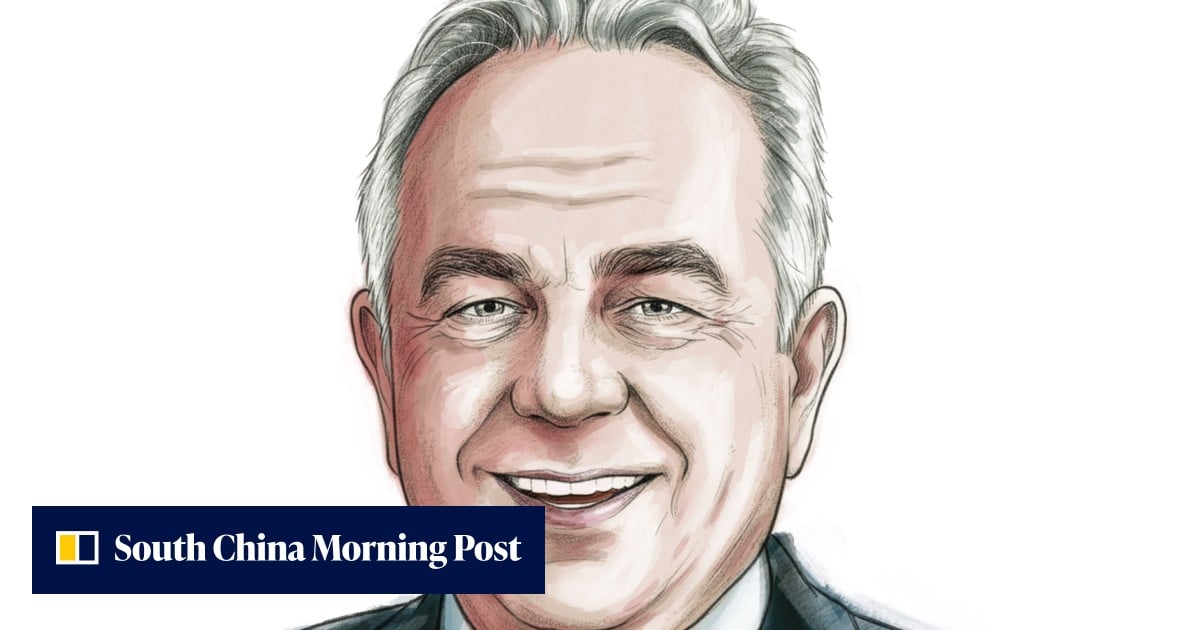
Photo via South China Morning Post

Joshua Cooper Ramo on whether the US can handle the stress test of China’s rise

Read the original at South China Morning Post ↗
Cite

Jiangtao, S. (2026, November 1). Joshua Cooper Ramo on whether the US can handle the stress test of China’s rise. South China Morning Post. https://www.scmp.com/news/china/diplomacy/article/3372879/joshua-cooper-ramo-whether-us-can-handle-stress-test-chinas-rise

Dated from the outlet's own feed. Check the original for its byline.

South China Morning Post · collected 2026-11-01 · by Shi Jiangtao

Quick Summary

Joshua Cooper Ramo discusses the challenges the United States faces as China rises in power, emphasizing the importance of cooperation between the superpowers. Ramo, former CEO of Kissinger Associates and current chairman of Sornay, reflects on his career shift from journalism to strategic advisory work, particularly his time in Beijing during the early 2000s. He explains how this experience influenced his perspective on navigating global affairs amid conflicting narratives.
Written by AI on 2026-11-02, from this article's own text only (the story summary below draws on all the coverage).

AI analysis

Story summary

Joshua Cooper Ramo, chairman and CEO of Sornay and former CEO of Kissinger Associates, discusses in an exclusive interview whether the US can handle the challenges posed by China's rise. Ramo, who has lived in Beijing since the early 2000s and shifted from a career at Time to high-level strategic advisory work in China, emphasizes that if superpowers like the US and China cannot cooperate, global issues will remain unresolved. His new book, "Darwin’s Lock: America, China and the Shared Future of Nations," delves into the contrasting economic development models of the West and China, highlighting the importance of clear understanding amid competing narratives in international affairs.

Written for “China’S Rise Challenges US” on 2026-11-02, grounded in this article and the 0 other(s) covering the same event.
Why this leaning score
This article does not take a side on a contested political question, so it has no leaning score. That is an answer rather than a gap: a match report or a rescue can be warmly or critically written without being left or right, and scoring it anyway is how approval of a subject gets recorded as a political position.
No political leaning scored for article 121987 · logged 2026-11-02

Story

📰 China’S Rise Challenges US
Politics · 1 article(s) covering the same event.

Compared with similar articles

This article reads unscored and hedges 0% of its claims. Each row says how that neighbour differs.
South China Morning Post
Hedges 0 of 4 claims Outlet record 63/100
“The articles describe different discussions about US-China relations, with Article A focusing on a gathering in Shanghai for the China-US Intergenerational Dialogue 2026 and Article B featuring an interview with Joshua Cooper Ramo.”
South China Morning Post
Hedges 0 of 4 claims Outlet record 63/100
“The articles discuss different topics within the broader context of geopolitical and economic tensions between the US and China, but do not describe the same specific occurrence.”
How this article was measured signals, leaning charts, publisher record, byline, topics and claims

Signals How these are calculated →

Claims extracted
7
sentences that state something as happening or true
Uncertain
0%
0 of 7 hedged ("reportedly", "may", "according to")
Leaning
not political
takes no side on a contested political question
Publisher signals
63/100
South China Morning Post's corrections and hedging, across everything collected from it. Not a measure of accuracy.
Outlets on this story
1
Politics
Same framing elsewhere
1
articles that frame the event the way this one does
Analyzed 2026-11-02 · how these are computed

How this is being covered How these are calculated →

Article leaning vs. publisher reliability
Source leaning vs. consistency

Publisher

South China Morning Post · 3547 article(s) · 7 correction(s) detected
Running correction rate · 7 correction(s)

Who wrote this

Shi Jiangtao
8 article(s) here · 0 carrying a prediction
🔮 Why Southeast Asia feels relief and caution after the Xi-Trump summit Countries in the region could feel less pressure as the thaw in US-China ties continues but deeper disputes remain unresolved, analysts say Yet, caution persists as the summit left deeper disputes unresolved.
🔮 “Protectionism will not enhance Europe’s competitiveness but will instead deprive consumers of high-quality and affordable products, drive up inflation and hamper the process of green transition,” Beijing’s top diplomat was quoted as saying.
🔮 According to a separate read-out by China’s foreign ministry, Sheikh Mohammed said Qatar “would overcome difficulties, prioritise China’s energy supply and work hand in hand with China to create a more brilliant next ‘golden decade’ for bilateral relations”, noting Beijing was Doha’s largest trading and energy partner.
Also by Shi Jiangtao
Nothing else under this byline is closely related to this article, so these are simply their most recent.
All 8 articles by Shi Jiangtao →

Topics

America Beijing China Kissinger Associates Sornay

Subjects

China GPE · 3× Kissinger Associates ORG · 3× Beijing GPE · 2× America GPE · 1× Chinese NORP · 1× ExclusiveJoshua Cooper Ramo PERSON · 1× Joshua Cooper Ramo PERSON · 1× Ramo PERSON · 1× Sornay ORG · 1× Western NORP · 1×

Narrative

You moved from competitive aerobatic flying and becoming one of the youngest senior and foreign editors at Time to living in Beijing in the early 2000s, and later into high-level strategic advisory work in China and at Kissinger Associates.
framing: assertive · carried by 1 article(s) · first seen 2026-11-02
2026-11-02 · South China Morning Post
Joshua Cooper Ramo on whether the US can handle the stress test of China’s rise · assertive framing

Claims (7 extracted, 0 hedged)

ExclusiveJoshua Cooper Ramo on whether the US can handle the stress test of China’s rise asserted
US → handle → rise
If the superpowers cannot work together, the world’s problems cannot be addressed, the ex-CEO of Kissinger Associates says asserted
CEO → work → Associates
His 2004 analysis of “the Beijing consensus” contrasted the Western and Chinese economic development models. asserted
analysis → contrast → models
He is the author of two New York Times best-selling books and now lives in Shanghai with his family. asserted
He → sell → family
You moved from competitive aerobatic flying and becoming one of the youngest senior and foreign editors at Time to living in Beijing in the early 2000s, and later into high-level strategic advisory work in China and at Kissinger Associates. asserted
You → move → Associates
Looking back, what prompted that shift? asserted
what → look → shift
How has that experience shaped your understanding of what it means to “see clearly” at a time when competing narratives increasingly define global affairs? asserted
narratives → shape → affairs
💬Give feedback
🕘History 🎫Support