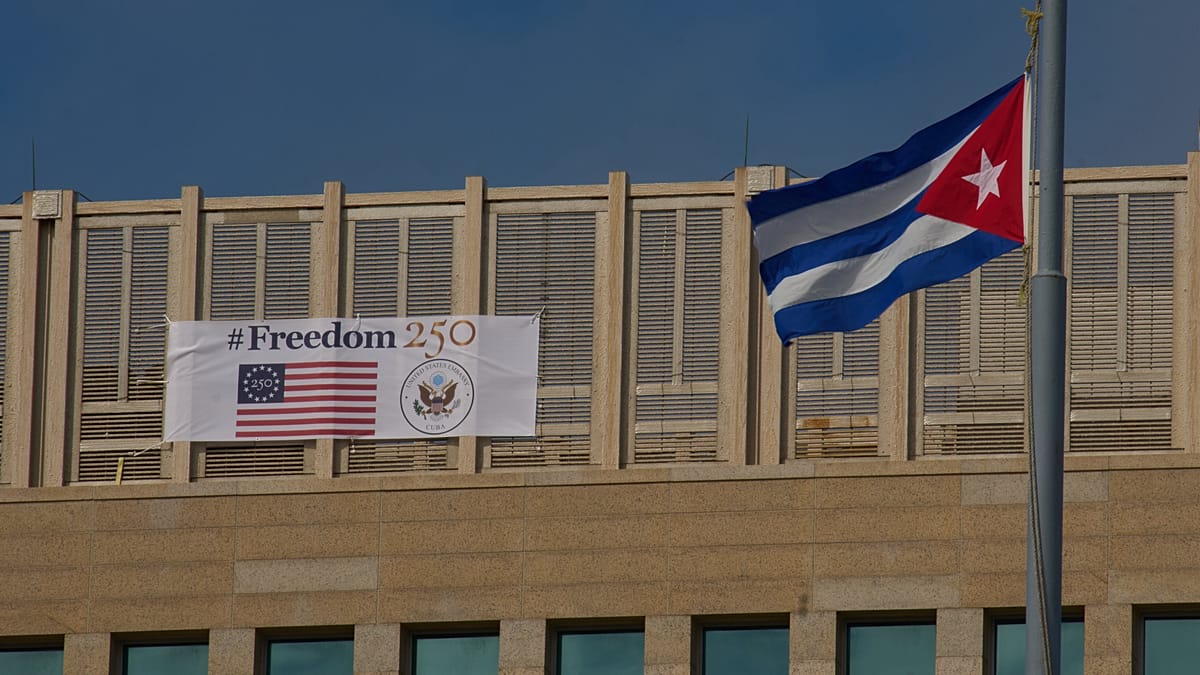
Photo via The Hindu

Dwindling support: On the U.S. and the Cuban embargo

Read the original at The Hindu ↗
Cite

Hindu, T. (2026, November 1). Dwindling support: On the U.S. and the Cuban embargo. The Hindu. https://www.thehindu.com/opinion/editorial/the-hindu-editorial-dwindling-support-on-the-us-and-the-cuban-embargo/article71654007.ece

Dated from the outlet's own feed. Check the original for its byline.

The Hindu · collected 2026-11-01 · by The Hindu

Quick Summary

The United Nations General Assembly passed a resolution on October 30 calling for an end to the U.S. embargo on Cuba, but with significantly reduced support compared to previous years. While nearly all member states typically backed the resolution in past decades, this year only 130 countries voted in favor, down from over 180 previously. The shift reflects pressure exerted by the Trump administration and geopolitical changes like U.S. intervention in Venezuela and Cuba's closer ties with Russia, which influenced votes from Latin American and some Western nations.
Written by AI on 2026-11-01, from this article's own text only (the story summary below draws on all the coverage).

AI analysis

Story summary

The UN General Assembly voted on October 28, 2026, condemning the US's decades-long economic embargo on Cuba, with 130 countries in favor, 17 against (including the US and Israel), and 25 abstentions. This marks the 34th consecutive year of such a vote. The resolution saw fewer supporters this year compared to previous years, when over 160 nations typically supported it. Cuban Foreign Minister Bruno Rodríguez claimed that the US was "once again isolated" in its efforts to maintain the embargo, asserting that no amount of pressure could overcome "the force of facts and truth." Cuba accused Washington of attempting to coerce other countries into opposing the resolution.

Written for “UN Vote On US Cuba Embargo” on 2026-11-02, grounded in this article and the 10 other(s) covering the same event.

Story

📰 UN Vote On US Cuba Embargo
Politics · 11 article(s) covering the same event. Compare every outlet's account →

Compared with similar articles

This article reads leans strongly left and hedges 0% of its claims. Each row says how that neighbour differs.
Euronews
⚖️ Leans left further right than this Hedges 0 of 19 claims Outlet record 60/100
The Straits Times
⚖️ Leans strongly left Hedges 0 of 16 claims Outlet record 66/100
Al Jazeera
Hedges 0 of 4 claims Outlet record 60/100
“Article A describes a heated confrontation between US and Cuban diplomats during a UN vote on the trade embargo, while Article B discusses the declining support for a UNGA resolution calling for an end to the economic embargo over multiple years.”
CBC News
⚖️ Leans left further right than this Hedges 0 of 22 claims Outlet record 60/100
South China Morning Post
⚖️ Leans left further right than this Hedges 0 of 4 claims Outlet record 63/100
The Independent
⚖️ Leans strongly left Hedges 1 of 21 claims Outlet record 59/100
South China Morning Post
⚖️ Leans strongly left Hedges 1 of 5 claims Outlet record 63/100
“The articles discuss different aspects related to the US-Cuba embargo but do not describe the same specific incident or occurrence.”
Al Jazeera
⚖️ Leans left further right than this Hedges 0 of 15 claims Outlet record 60/100
“The articles refer to a resolution condemning the US embargo on Cuba, but differ in details such as the date and level of support expressed.”
CBC News
⚖️ Leans left further right than this Hedges 0 of 16 claims Outlet record 60/100
“Article A describes a shouting match between U.S. and Cuban officials on October 27, while Article B discusses the vote results of the resolution condemning the embargo on October 30.”
ABC News (US)
⚖️ Leans left further right than this Hedges 0 of 14 claims Outlet record 70/100
“While both articles discuss the UN debate on the US-Cuba economic embargo, Article A focuses on a specific shouting match between US and Cuban officials, while Article B discusses the voting trend for the annual resolution to end the embargo.”
How this article was measured signals, leaning charts, publisher record, byline, topics and claims

Signals How these are calculated →

Claims extracted
12
sentences that state something as happening or true
Uncertain
0%
0 of 12 hedged ("reportedly", "may", "according to")
Leaning
Leans strongly left
of the writing, not the subject · beta estimate
Publisher signals
77/100
The Hindu's corrections and hedging, across everything collected from it. Not a measure of accuracy.
Outlets on this story
11
Politics
Same framing elsewhere
1
articles that frame the event the way this one does
Analyzed 2026-11-01 · how these are computed

How this is being covered How these are calculated →

Article leaning vs. publisher reliability
Source leaning vs. consistency

Publisher

The Hindu · 782 article(s) · 2 correction(s) detected
Running correction rate · 2 correction(s)

Who wrote this

The Hindu
2 article(s) here · 0 carrying a prediction
🔮 His Likud party is projected to win 26 seats, while its main rival Yashar, led by former military chief Gadi Eisenkot, is expected to secure 21.
2026-10-28 · assertive framing · Clinging on: On Netanyahu and the Israel elections
Also by The Hindu
Nothing else under this byline is closely related to this article, so these are simply their most recent.

Topics

Cuba Havana Russia U.S. UNGA

Subjects

Cuba GPE · 5× U.S. GPE · 5× Havana GPE · 2× India GPE · 2× New Delhi GPE · 2× Russia GPE · 2× UNGA ORG · 2× Ukraine GPE · 2× the United Nations General Assembly ORG · 1× the United States of America GPE · 1×

Narrative

For the preceding decade, more than 180 countries of the 193-member UNGA had expressed their support for ending the embargo, but the numbers dropped to 165 in favour in 2025; this year’s tally dropped sharply lower, with 130 in favour, 25 abstaining and 17 countries voting against the resolution.
framing: assertive · carried by 1 article(s) · first seen 2026-11-01
2026-11-01 · The Hindu
Dwindling support: On the U.S. and the Cuban embargo · assertive framing

Claims (12 extracted, 0 hedged)

Nearly every year since 1992, the United Nations General Assembly has passed a resolution calling on the U.S. to end its decades-old economic embargo on Cuba. asserted
Assembly → pass → Cuba
As a result, the outcome at the UNGA resolution titled the ‘Necessity of ending the economic, commercial and financial embargo imposed by the United States of America against Cuba’ passed on October 30, was expected. asserted
outcome → title → October
For the preceding decade, more than 180 countries of the 193-member UNGA had expressed their support for ending the embargo, but the numbers dropped to 165 in favour in 2025; this year’s tally dropped sharply lower, with 130 in favour, 25 abstaining and 17 countries voting against the resolution. asserted
countries → precede → resolution
The trend clearly points to efforts by the Trump administration to use its pressure on countries to change their votes, and many appear to have succumbed to those threats. asserted
many → point → threats
Among those were several Latin American countries, that have more recently grown closer to the U.S., particularly after the operation in Venezuela in January 2026, where U.S. marines abducted President Maduro and brought him to the U.S. for a trial. asserted
marines → grow → trial
Countries in the region such as Costa Rica, Ecuador, Argentina, and Colombia that have downgraded ties with Havana, switched votes on the resolution. asserted
that → downgrade → resolution
In addition, U.S. diplomats argued that Havana-Moscow ties emboldened Russia’s war in Ukraine, which led to several western countries switching their vote. asserted
countries → argue → vote
Diplomats from Ukraine and Poland, for example, referred to Cuba’s ties with Russia while explaining their vote, and Germany and Italy switched for the first time in many years to abstaining on the resolution. asserted
Germany → refer → resolution
While it is clear that the bulk of the Group of 77 and non-aligned states including India maintained their support on the resolution for Cuba, the vote by the others demonstrates a disquieting turn. asserted
vote → include → turn
Amidst these turns, New Delhi must be credited for standing firm on the issue, opposing the embargo, and calling for “dialogue and diplomacy” in its statement. asserted
Delhi → credit → statement
The vote came a month after the BRICS New Delhi declaration expressed “deep concern” over the tightening of unilateral blockade measures on Cuba, and the “worrying humanitarian impact” on the Cuban people. asserted
declaration → come → people
It is important that India continue to stand up to such unilateral measures and amplify the voice of smaller countries, particularly those in the Global South. asserted
India → continue → South

💬Give feedback
🕘History 🎫Support