When we hear about Dracula, the first thing that probably comes to mind is the famous vampire, with long, sharp teeth, a blood-filled mouth and a desire to kill.
asserted
that → hear → teeth
A soft flower would probably be the last thing to come to mind, but nature has its own version of Dracula, and these are not creatures hiding deep inside dark forests, but rather some strange-looking flowers found in the cloud forests of South America.
asserted
these → come → America
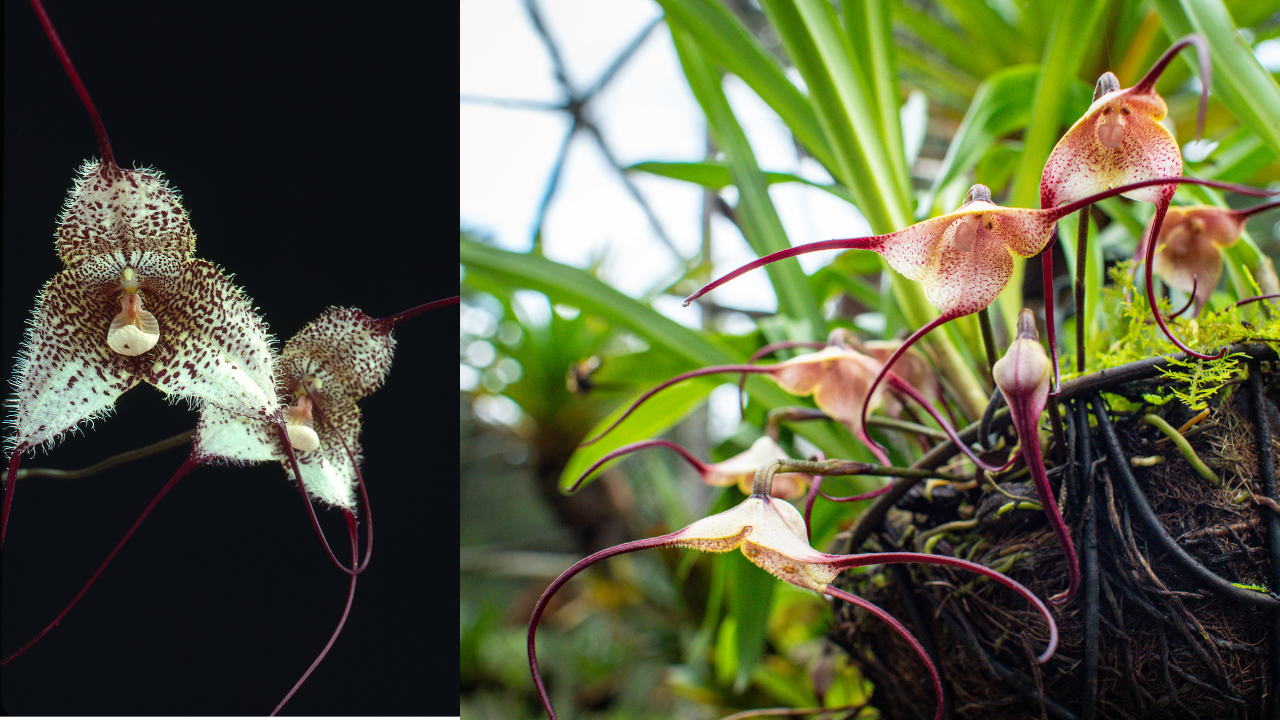
With faces that resemble monkeys, dragons and, if your mind is a little more creative, goblins from horror movies, Dracula orchids have recently attracted attention after a collection at Chester Zoo in England was recognised as a National Plant Collection, highlighting the importance of protecting these unusual flowers as their natural habitats face growing threats.
asserted
habitats → resemble → threats
The recognition was awarded by Plant Heritage, a UK-based plant conservation charity, to Chester Zoo's collection of Dracula orchids.
asserted
recognition → award → orchids
The zoo looks after more than 75 of the 147 scientifically recognised species of these orchids, making it home to one of the most significant collections of the genus.
asserted
it → look → genus
The recognition also marks the sixth National Plant Collection held by the zoo.
asserted
recognition → mark → zoo
What makes Dracula orchids look so unusual?
asserted
orchids → make → ?
They belong to a genus of orchids native to the cloud forests of the Andes in Latin America, where they grow in cool, humid conditions, often among moss-covered trees and vegetation.
asserted
they → belong → trees
Their flowers are what make them really fascinating.
asserted
them → make → ?
Unlike the familiar orchids that people often associate with colourful petals and elegant shapes, many Dracula orchids are known for their uncanny resemblance to a human face.
asserted
orchids → associate → face
Some look like monkeys, while others have the shape of a dragon.
asserted
others → look → dragon
Even their name has an interesting origin.
asserted
name → have → origin
The word Dracula comes from a Latin root meaning ‘little dragon’, referring to the distinctive appearance of their flowers.
asserted
Dracula → come → flowers
One particularly unusual species that people specifically come to see at Chester Zoo is
Dracula roezlii, which produces a flower that resembles a skull, giving it a spooky appearance.
asserted
that → come → appearance
How do these unusual flowers attract pollinators?
asserted
flowers → attract → pollinators
Unlike other flowers with sweet floral scents, these flowers give off a mushroom-like smell that attracts fungus gnats.
asserted
that → give → gnats
These tiny insects are drawn towards the scent and visit the flowers, carrying pollen from one plant to another in the process.
asserted
insects → draw → process
This is an example of how plants have developed different ways of attracting pollinators, sometimes using smells and appearances that humans might find rather unusual.
uncertain
humans → develop → smells
Their very specific dependence on environmental and pollination conditions is also what makes them difficult to cultivate.
asserted
them → make → conditions
According to Brie Langley, Assistant Team Manager at Chester Zoo's plant nursery, these flowers need conditions that closely resemble the cloud cover and humidity of their natural habitats.
uncertain
that → accord → habitats
They can quickly wilt if the environment is not suitable, which also makes them difficult to display for visitors.
asserted
them → wilt → visitors
Why are Dracula orchids increasingly threatened in the wild?
asserted
orchids → threaten → wild
These forests provide the cool temperatures and consistently humid conditions that the orchids need to survive.
asserted
orchids → provide → that
However, habitat loss, illegal extraction and mining activities are putting pressure on these fragile environments.
asserted
loss → put → environments
The problem is not limited to the destruction of their natural habitats; they are also victims of human greed.
asserted
they → limit → greed
Dracula orchids are vulnerable to illegal collection, as unusual and highly sought-after species can attract collectors and traders.
asserted
species → seek → collectors
Removing plants from their natural habitats can further threaten already vulnerable populations, particularly when species have specific growing requirements and limited natural distributions.
asserted
species → remove → requirements
Chester Zoo says every Dracula orchid species in its collection faces threats from illegal extraction, habitat loss or illicit mining.
asserted
species → say → extraction
The zoo's horticulturists are therefore working to safeguard these plants through cultivation and conservation efforts, helping preserve species that are increasingly difficult to protect in their natural environments.
asserted
that → work → environments
Why is Chester Zoo's collection being recognised?
asserted
collection → recognise → ?
A member of Chester Zoo helping preserve the rare flower (source: Chester Zoo official website)
The National Plant Collection status is awarded by Plant Heritage to collections that are properly documented and maintained, helping preserve the diversity of cultivated plants for future generations.
asserted
that → help → generations
These collections act as living records of plant varieties and species, while also supporting research, education and conservation.
asserted
collections → act → research
Chester Zoo's Dracula orchids have received this recognition because of the number of species it maintains and their importance for conservation.
asserted
it → receive → conservation
The collection is particularly valuable because it brings together more than half of all scientifically recognised Dracula orchid species in one place, allowing horticulturists to study and safeguard plants that are rarely available in cultivation.
asserted
that → bring → cultivation
However, visitors hoping to see these unusual flowers should know that the Dracula orchids are not currently on public display at the zoo.
asserted
orchids → hop → zoo
Some of its other National Plant Collections, including tropical pitcher plants and rare cactus species, can be seen by visitors.
asserted
Some → include → visitors
The recognition is a reminder that conservation is not limited to protecting large animals or familiar endangered species.
asserted
conservation → limit → animals
Sometimes, it also means safeguarding small and unusual plants that most people may never have encountered, but which play their own role in the biodiversity of our natural world.
uncertain
which → mean → world
 The Aporia