Have you ever thought about how our ancestors lived?
asserted
ancestors → think → ?
The things that we commonly use now, like Wi-Fi, smartphones and fancy cars, did not exist even a few years ago, so what can we expect from the people who lived hundreds of years ago?
asserted
who → use → years
The mere thought of their existence fascinates historians and archaeologists as well.
asserted
thought → fascinate → historians
To know more about them is to know humanity, to understand how we came here and who we are better.
asserted
we → know → humanity
Ultimately, to know is to be.
asserted
know → know → ?
We often associate archaeological discoveries with grand monuments, royal tombs and ancient treasures from lost civilisations.
asserted
We → associate → civilisations
But sometimes, it is the smallest and most ordinary objects that tell us the most about how people actually lived thousands of years ago.
asserted
people → tell → years
Civilisation was not built in palaces; it was built around communities.
asserted
it → build → communities
Everyday objects, like a perfume bottle, a cooking pot, a handful of coins or even a childhood necklace, can reveal details about the everyday lives of the masses.
asserted
objects → reveal → masses
In a recent discovery at Pompeii, according to the Pompeii Archaeological Park, Italian archaeologists have uncovered the remains of a wooden cupboard that had remained sealed for nearly 2,000 years after Mount Vesuvius destroyed the ancient Roman city in AD 79.
uncertain
Vesuvius → accord → AD
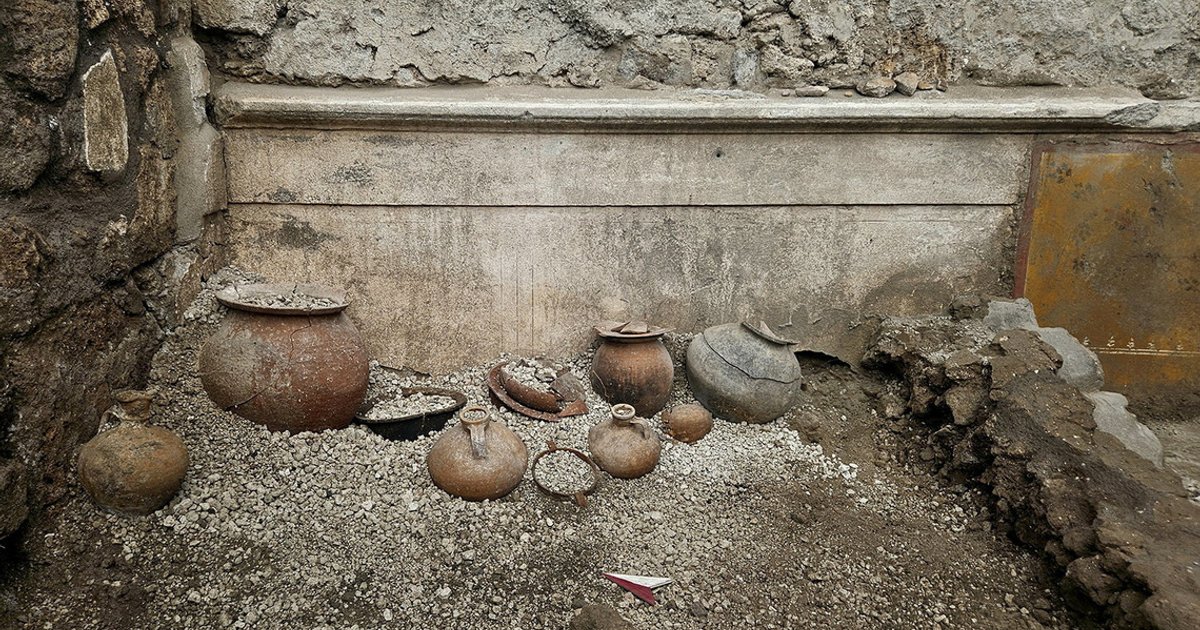
The cupboard, reconstructed from traces preserved in a house on Via dell'Abbondanza, one of the busiest streets of ancient Pompeii, contained a collection of household belongings, including 38 bronze coins, cosmetic utensils, cooking vessels and at least 24 tiny childhood charms.
asserted
cupboard → reconstruct → coins
Together, these objects offer an intimate glimpse into the personal habits, work and memories of someone who lived in the city before the volcanic eruption buried it under metres of ash.
asserted
eruption → offer → ash
What did archaeologists find inside the ancient cupboard?
A cupboard buried when Mount Vesuvius destroyed Pompeii in AD 79 has yielded 38 bronze coins and at least 24 tiny childhood charms.
asserted
Vesuvius → find → coins
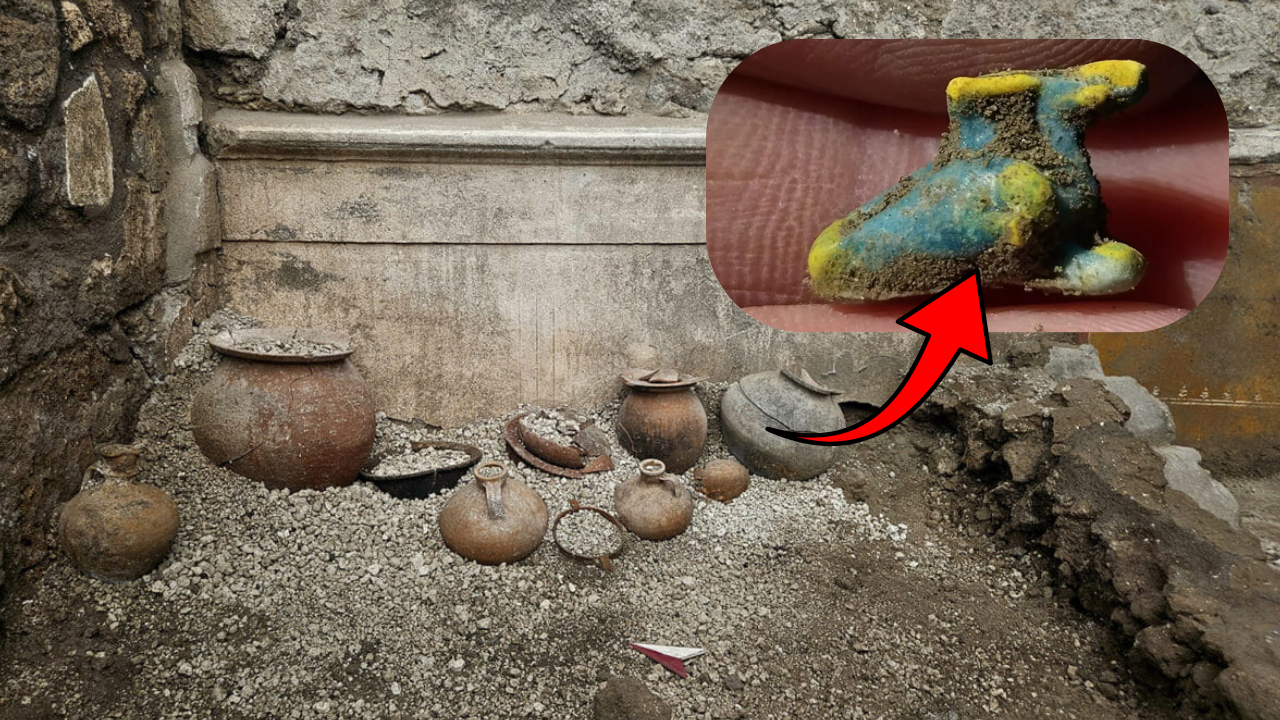
Among the most interesting discoveries was a necklace containing at least 24 tiny objects made from different materials, including bone, glass plate, earthenware and rock crystal.
asserted
necklace → contain → crystal
These objects included miniature representations of ancient gods such as Bes and Mercury, worshipped by the people of that era, along with small hands, feet, pine cones and a bunch of grapes.
asserted
objects → include → grapes
The objects are known as crepundia, a type of necklace worn by Roman children as protective amulets.
asserted
objects → know → amulets
Apart from their symbolic significance, the small objects could also produce sounds when they moved, acting as rattles that helped adults keep track of young children.
uncertain
adults → produce → children
In Roman traditions, these necklaces were not necessarily discarded once a child grew older.
asserted
child → discard → traditions
Some people continued to keep them into adulthood as reminders of their childhood, making the discovery particularly personal.
asserted
discovery → continue → childhood
Archaeologists cannot determine who owned the necklace, but its presence among the household belongings suggests that it may have held sentimental value for someone living in the house.
uncertain
it → determine → house
The cupboard also contained several objects associated with everyday personal care and household activities.
asserted
cupboard → contain → care
Archaeologists found a pair of tweezers, a small glass bottle that may have been used for perfume or ointment, and an incense burner.
uncertain
that → find → perfume
Another interesting discovery was a collection of lead weights stored in a small wooden box.
asserted
discovery → store → box
These may have been used for commercial activities, suggesting that someone living in the house could have been involved in trade.
uncertain
someone → use → trade
38 bronze coins and objects that nobody returned to collect
Along with coins, many other valuable items as well as everyday items were found on the site.
asserted
items → return → site
Apart from the childhood charms and household belongings, archaeologists also discovered a small woven container holding 38 bronze coins.
asserted
archaeologists → discover → coins
The container was made from plant material and had preserved the coins together for nearly two millennia.
asserted
container → make → millennia
The presence of the coins alongside objects that may have carried personal and sentimental value raises an interesting question about what happened to the people who lived in the house when Mount Vesuvius erupted.
uncertain
Vesuvius → carry → house
According to archaeologists, the fact that both money and personal belongings remained inside the cupboard suggests that the residents may not have had enough time to retrieve them when the eruption struck.
uncertain
eruption → accord → them
However, the exact circumstances of their departure and what happened to the household members remain unknown.
asserted
what → happen → members
Archaeologists have not been able to establish the identity of the people who owned these objects.
asserted
who → establish → objects
A house that remained hidden for centuries
These objects reveal glimpses of a family's lost everyday life (Courtesy of the Archaeological Park of Pompeii)
Interestingly, the house where these coins were found was excavated in 1912.
asserted
coins → remain → 1912
However, archaeologists have just now decided to explore some of the rooms behind it as part of a wider restoration project.
asserted
archaeologists → decide → project
The house is located on Via dell'Abbondanza, a major street in ancient Pompeii.
asserted
house → locate → Pompeii
The discovery is a reminder of how much of Pompeii's everyday history remains buried beneath the ancient city.
asserted
much → bury → city
While the site is widely known for its preserved buildings, paintings and public spaces, household objects such as these offer another way of understanding the people who once lived there.
asserted
who → know → people
As Gabriel Zuchtriegel, director of the Pompeii Archaeological Park, explained, the discovery allows archaeologists to bring together different traces of an individual's life, including personal habits, work and memories.
asserted
archaeologists → explain → habits
Nearly 2,000 years later, these seemingly ordinary objects give us a glimpse of how people actually lived in that era.
asserted
people → give → era
Although the Roman Empire is well documented and studied as part of history, civilisations are not built in royal palaces.
asserted
civilisations → document → palaces
They are built by ordinary people and their ordinary objects, which often get lost from sight.
asserted
which → build → sight
…and 1 more, not listed.
 The Aporia