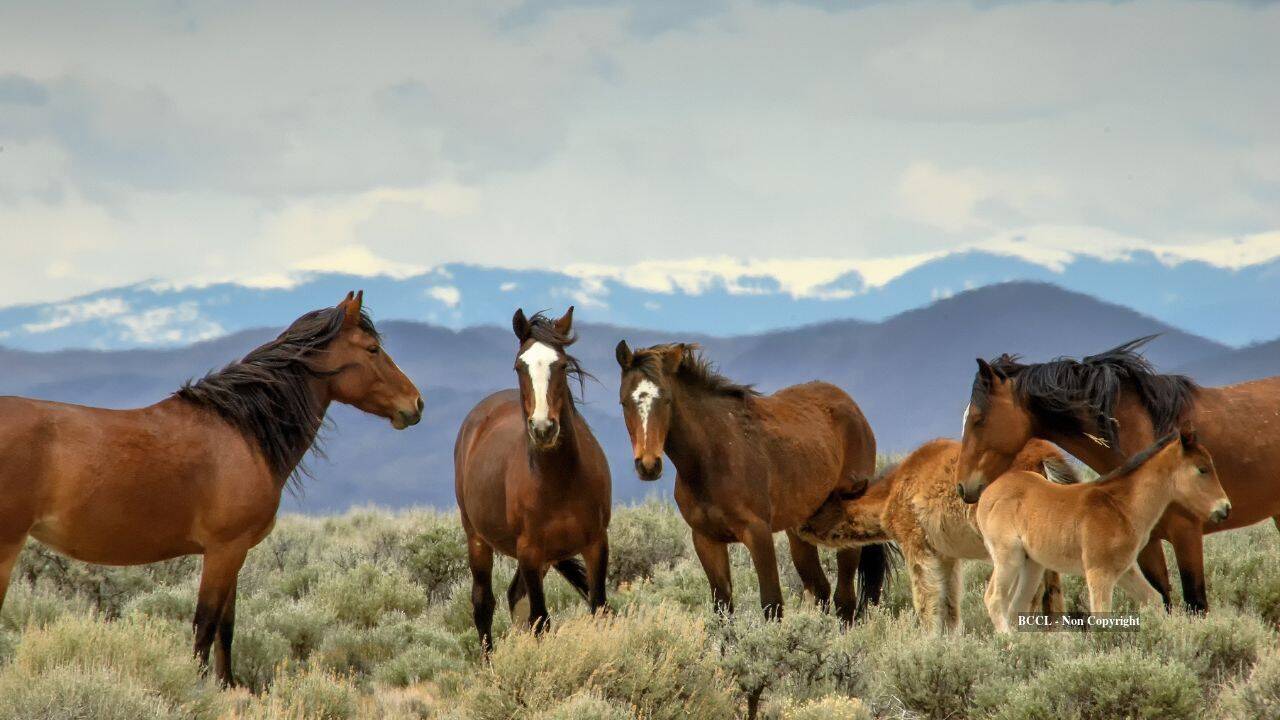
Nevada ranchers who wanted federal officials to remove excess wild horses more quickly have lost their appeal.
asserted
officials → want → appeal
On October 29, the U.S. Court of Appeals for the Ninth Circuit affirmed a lower court ruling in favor of the U.S. Department of the Interior and other federal officials, holding that the Bureau of Land Management does not have to set a fixed timetable for gathering and removing excess wild horses.
asserted
Bureau → affirm → horses
The court said the law requires removal as promptly as is logistically and reasonably possible, while also accounting for humane treatment and other statutory considerations.
asserted
law → say → treatment
According to Justia U.S. Law, the case involved Gather Plans for the Little Fish Lake Joint Management Area and the Stone Cabin Complex in Nye County, Nevada.
uncertain
case → accord → County
Ranchers Colvin & Son, LLC and Stone Cabin Ranch argued that the plans violated the Wild Free Roaming Horses and Burros Act because they did not require immediate action and did not establish a specific schedule for initial gathers.
asserted
they → argue → gathers
The Ninth Circuit disagreed, concluding that the plans met the Act’s immediacy requirement.
asserted
plans → disagree → requirement
What the law requires
The dispute centered on language in the Wild Free Roaming Horses and Burros Act, which directs officials to immediately remove excess animals from the range in order to achieve appropriate management levels.
asserted
which → require → levels
The ranchers argued that this language imposed a strict, near immediate deadline.
asserted
language → argue → deadline
They said the Bureau of Land Management’s plans were unlawful because they did not include timing requirements for the initial gathers.
asserted
they → say → gathers
The appeals court took a broader view of the statute.
asserted
court → take → statute
It held that the Act requires the Bureau to remove excess animals as promptly as is logistically and reasonably possible.
asserted
Act → hold → animals
In making that judgment, officials may consider the humane treatment of wild horses and burros, along with other considerations required by the law.
uncertain
officials → make → law
The court found that this standard does not demand a specific date or timetable for every removal operation.
asserted
standard → find → operation
That distinction mattered because the ranchers were not arguing that the Bureau had actually moved too slowly in practice.
asserted
Bureau → matter → practice
Instead, they challenged the plans themselves, claiming that the absence of a mandated schedule made the agency action unlawful.
asserted
action → challenge → schedule
The court framed the question as whether the plans violated the immediacy requirement, not whether the Bureau had acted quickly enough on the ground.
asserted
Bureau → frame → ground
Why the court rejected the ranchers’ argument
The Ninth Circuit rejected the ranchers’ central argument that the Gather Plans were invalid because they lacked a timing requirement for the initial gathers.
asserted
they → reject → gathers
According to the court, the Wild Horses Act does not require the Bureau of Land Management to set a specific time frame for removal actions.
uncertain
Act → accord → actions
The agency can instead determine how quickly removal can reasonably and safely occur.
asserted
removal → determine → ?
The court also rejected the ranchers’ argument that the plans violated the immediacy requirement because they conditioned population control measures and follow-up gathers on off-site conditions.
asserted
they → reject → conditions
The panel said the immediacy requirement did not apply to those maintenance actions and the conditions attached to them.
asserted
requirement → say → them
Because the court found that the Gather Plans complied with the Act, it affirmed the district court’s summary judgment in favor of the Secretary of the Interior and the other federal officials.
asserted
it → find → Interior
The decision leaves the Bureau with discretion to balance removal goals against practical realities, including animal welfare, logistics, and the broader management framework established by Congress.
asserted
decision → leave → Congress
Ranchers often argue that excess horses compete with livestock for forage and water, damage rangeland, and make it harder to maintain sustainable grazing operations.
asserted
it → argue → operations
They have pushed for faster gathers and removals, particularly in areas where horse populations exceed the levels federal managers have identified as appropriate.
asserted
managers → push → levels
Animal welfare advocates, on the other hand, often raise concerns about how gathers are conducted, the stress placed on horses during roundups, and the long-term care of animals removed from the range.
asserted
gathers → raise → range
The court’s ruling reflects that tension.
asserted
ruling → reflect → tension
It recognizes that Congress required removal of excess animals, but it also recognizes that removal must be carried out humanely and within practical limits.
asserted
removal → recognize → limits
The Ninth Circuit’s decision does not end the debate over how many wild horses should remain on public lands or how quickly populations should be reduced.
asserted
populations → end → lands
It does, however, clarify an important legal point.
asserted
It → clarify → point
Federal officials are not required to impose a rigid deadline in their gather plans, provided they pursue removal as promptly as is reasonably and logistically possible while respecting the Act’s other requirements.
asserted
they → require → requirements
What the ruling means
For the Bureau of Land Management, the ruling preserves flexibility in planning future gathers.
asserted
ruling → mean → gathers
The agency can structure removal programs around conditions on the ground, available resources, animal welfare considerations, and the need for follow-up population management.
asserted
agency → structure → management
It does not have to promise a fixed schedule simply because a plan calls for removing excess horses.
asserted
plan → have → horses
For the Nevada ranchers, the decision means their challenge to the Gather Plans has failed at the appellate level.
asserted
challenge → mean → level
The court found no legal basis to require the Bureau to act on a stricter timetable than the one set out in the plans.
asserted
court → find → plans
The district court’s judgment in favor of federal officials therefore stands.
asserted
judgment → stand → officials
It confirms that the law’s call for immediate removal is not a demand for instant action, but a requirement to act as promptly as reasonably possible while balancing humane treatment, logistics, and the broader goals of the Wild Free Roaming Horses and Burros Act.
asserted
call → confirm → Act
 The Aporia