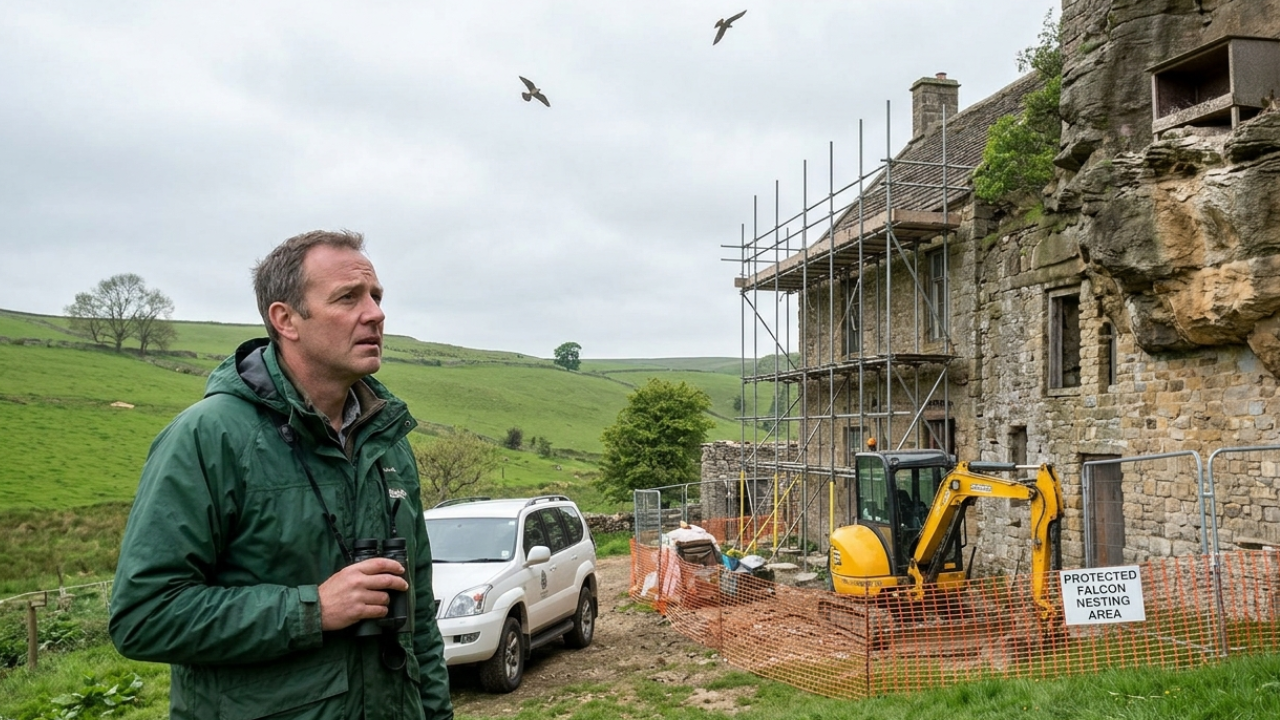
Three falcons died and eggs were damaged after building work near a neighbouring aviary in Cornwall, sparking a legal dispute that has left former reality TV contestant Barnes Thomas facing a reported bill of around £500,000, as reported by The Independent.
asserted
that → die → Independent
Thomas, who appeared on Bear Grylls’ survival programme The Island in 2018, was sued by falcon breeders Martin and Scott Nicholas, whose business operated beside his land.
asserted
business → appear → land
One of the dead birds was valued at £150,000.
asserted
One → value → 150,000
The Court of Appeal overturned the finding of private nuisance but upheld Thomas’s liability in negligence.
asserted
Court → overturn → negligence
The dispute has since moved towards a potential Supreme Court appeal, with both sides challenging aspects of the ruling.
asserted
sides → move → ruling
Why a former reality TV star’s move to Cornwall ended in a £500,000 legal battle
Thomas moved from dealing in art in London to farming near St Just, close to Land’s End.
asserted
Thomas → end → End
The change of setting did not bring a quiet life.
asserted
change → bring → life
His relationship with neighbours Martin Nicholas, 43, and Scott Nicholas, 45, deteriorated as disagreements developed over activities on his property.
asserted
disagreements → deteriorate → property
The brothers ran Raptors of Penwith Ltd, a falcon-breeding business on adjoining land, where they raised gyr and peregrine falcons for sale to racing enthusiasts, including buyers in Dubai.
asserted
they → run → Dubai
The disagreement eventually became a legal battle involving both the use of the land and the potential consequences for the birds kept next door.
asserted
disagreement → become → birds
The brothers maintained that building work on Thomas’s property had exposed their falcons to excessive noise and visual disturbance during a particularly sensitive period.
asserted
work → maintain → period
They also alleged that the activity had affected breeding, resulting in lost eggs and damage to eggs caused by distressed birds.
asserted
activity → allege → birds
Their company brought claims for nuisance and negligence against Thomas and Upper Cot Estate Limited, his company.
uncertain
company → bring → Thomas
The High Court in Bristol heard the case over nine days in 2025.
asserted
Court → hear → 2025
Judge Jonathan Russen KC found in favour of the falcon breeders, concluding that the conduct of Thomas and his company had caused the deaths of three gyr falcons.
asserted
conduct → find → falcons
As reported by The Independent, the financial consequences were substantial: approximately £300,000 in compensation and interest, alongside more than £180,000 towards the breeders’ legal expenses.
asserted
consequences → report → expenses
How construction work during breeding season disturbed the neighbouring falcons
asserted
work → disturb → falcons
The court had to consider how that work was conducted and whether reasonable precautions had been taken to avoid disturbing the neighbouring birds.
asserted
precautions → have → birds
According to the High Court judgment, Thomas had been told that the period from March to June was a time when excessive noise and visual disturbance should be avoided.
uncertain
noise → accord → June
Evidence included videos recorded inside the falcons’ incubation room while work was taking place in a barn.
asserted
work → include → barn
The judge considered that material evidence of the effect the construction activity was having on the birds.
asserted
activity → consider → birds
A particular incident involved a JCB digger bucket being left raised for three days close to the aviary.
asserted
bucket → involve → aviary
The machine was positioned for an engineer’s inspection, but its location meant it obstructed the line of sight from at least some of the birds in the western pens.
asserted
it → position → pens
Scott Nicholas said the falcons reacted strongly to the sight of the machinery, describing their response as becoming agitated at what appeared to them to be an unfamiliar object.
asserted
what → say → them
The judge accepted that the activity had caused undue disturbance.
asserted
activity → accept → disturbance
He found that the three birds had died as a result of stress associated with the nuisance and concluded that the work had been undertaken without proper consideration of the breeding operation next door.
asserted
work → find → door
The legal argument over property rights and a neighbouring falcon business
Thomas challenged the ruling on the grounds that it placed an unreasonable restriction on how he could use his own property.
uncertain
he → challenge → property
His barrister, Tom Weekes KC, argued before the Court of Appeal in February 2026 that the construction of a barn and the storage of materials for Thomas’s scaffolding business were ordinary uses of land.
asserted
construction → argue → land
The appeal raised a question about the extent to which one landowner should have to accommodate a neighbouring business that depends on particularly sensitive conditions.
asserted
that → raise → conditions
Weekes argued that the falcon breeders’ activities should not effectively require Thomas to maintain a buffer zone on his own property to protect their birds.
asserted
activities → argue → birds
The judges disagreed on the legal basis for liability
asserted
judges → disagree → liability
The Court of Appeal dismissed Thomas’s appeal on negligence but allowed it on nuisance grounds, with each issue decided 2-1.
asserted
issue → dismiss → grounds
Lady Justice Whipple found that Thomas and Upper Cot Estate Limited were liable for both nuisance and negligence.
asserted
Thomas → find → nuisance
Lord Justice Nugee concluded that negligence had been established, while Lord Justice Moylan would have found neither form of liability.
asserted
Moylan → conclude → liability
Lord Justice Nugee accepted that parking a digger on one’s own land was an ordinary activity.
asserted
parking → accept → land
However, he considered the circumstances surrounding its placement to be decisive.
asserted
circumstances → consider → placement
The machine did not have to be left next to the aviary, and even if that location had been necessary for the engineer’s visit, the bucket should not have been left raised.
asserted
bucket → have → visit
His reasoning focused on whether Thomas and his company had acted with appropriate care.
asserted
Thomas → focus → care
The judge considered that reasonable alternatives were available and that leaving the machinery in that position was unnecessary for the defendants’ purposes.
asserted
leaving → consider → purposes
The failure to take reasonable steps to avoid inconvenience to the neighbouring business supported the finding of negligence.
asserted
failure → take → negligence
…and 9 more, not listed.
 The Aporia