Photo via Times of India

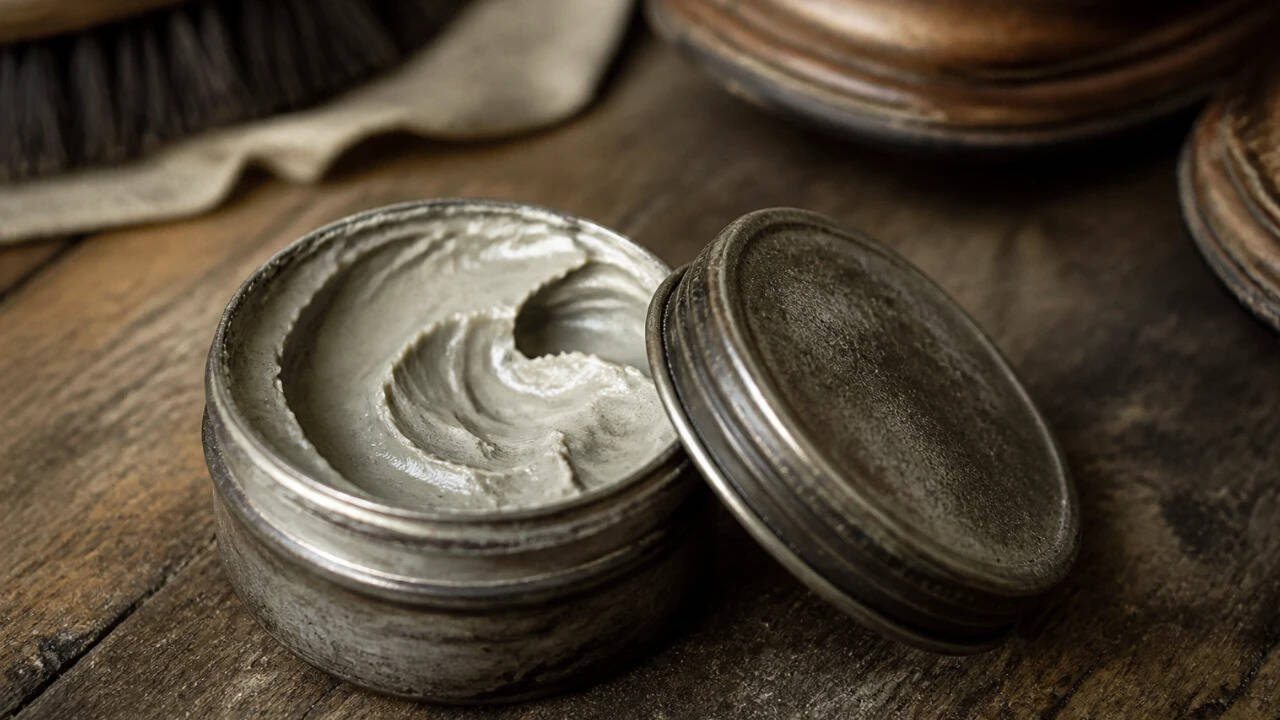
In 2003, archaeologists in London found a tin pot nearly 2,000 years old full of face cream

Read the original at Times of India ↗
Cite

TOI Lifestyle Desk. (2026, October 31). In 2003, archaeologists in London found a tin pot nearly 2,000 years old full of face cream. Times of India. https://timesofindia.indiatimes.com/science/archaeology/in-2003-archaeologists-in-london-found-a-sealed-tin-pot-nearly-2000-years-old-still-full-of-a-roman-face-cream-with-the-finger-marks-of-the-last-person-to-scoop-out-the-white-paste-still-visible-inside/articleshow/135353594.cms

Dated from the outlet's own feed. Check the original for its byline.

Times of India · collected 2026-10-31 · by TOI Lifestyle Desk

Quick Summary

In July 2003, archaeologists in London discovered a nearly 2,000-year-old tin pot during excavations at a Roman temple complex in Tabard Square, Southwark. Inside the sealed container was a white paste with distinct fingerprints, likely used as an ancient cosmetic cream. Researchers from the University of Bristol analyzed the contents and found it to be made primarily of animal fat, starch, and tin oxide, resembling modern moisturizing creams. The discovery provides insight into Roman beauty practices and everyday life in ancient London.
Written by AI on 2026-11-01, from this article's own text only (the story summary below draws on all the coverage).

AI analysis

Story summary

In July 2003, archaeologists excavating a Roman temple complex at Tabard Square in Southwark, London, discovered a tin pot nearly 2,000 years old that still contained remnants of cosmetic cream. The small container, measuring approximately 6 centimeters in diameter and with its lid tightly sealed, was found to hold white paste that had likely been used as face cream by an ancient Roman. This discovery provided unique insights into the beauty routines of people from that era, including fingerprints left on the container's interior. The find has become one of the most intriguing discoveries in the study of ancient cosmetics, offering a tangible connection to the daily lives and personal care practices of Romans in London nearly two millennia ago.

Written for “Ancient Face Cream Discovery London” on 2026-11-01, grounded in this article and the 0 other(s) covering the same event.

Story

📰 Ancient Face Cream Discovery London
Science · 1 article(s) covering the same event.

Compared with similar articles

Nothing to compare against. No article is close enough to this one for the pipeline to have linked or judged the pair.
How this article was measured signals, leaning charts, publisher record, byline, topics and claims

Signals How these are calculated →

Claims extracted
31
sentences that state something as happening or true
Uncertain
16%
5 of 31 hedged ("reportedly", "may", "according to")
Leaning
not political
takes no side on a contested political question
Publisher signals
59/100
Times of India's corrections and hedging, across everything collected from it. Not a measure of accuracy.
Outlets on this story
1
Science
Same framing elsewhere
1
articles that frame the event the way this one does
Analyzed 2026-11-01 · how these are computed

How this is being covered How these are calculated →

Article leaning vs. publisher reliability
Source leaning vs. consistency

Publisher

Times of India · 3837 article(s) · 2 correction(s) detected
Running correction rate · 2 correction(s)

Who wrote this

TOI Lifestyle Desk
59 article(s) here · 1 carrying a prediction
🔮 What shoppers could find at Joely Fisher’s 2-day living estate sale in Calabasas The sale ran on Saturday, December 13, and Sunday, December 14, from 10am to 3:30pm, according to the EstateSales.net listing.
🔮 Kristen Wiig’s Pasadena home returns to the market after four months Wiig bought the Pasadena house for $5.5 million in February 2026 and initially listed it for $6.3 million in May, according to The Spaces and Robb Report.
🔮 If you're young, building your own home could mean balancing a lot.
🔮 In July 2003, archaeologists excavating a Roman temple complex at Tabard Square in Southwark, London, came across a sealed metal pot, o that would soon become one of the more fascinating discoveries in the study of ancient cosmetics.
🔮 Rather than simply marking the passage of days or months, it could represent the relationship between different astronomical cycles.
🔮 That is more or less what happened to Stan Sacrison in 1987, when he came across bones that would eventually be identified as belonging to a Tyrannosaurus rex, a dinosaur that lived around 67 million years ago.
🔮 Today, a community in South Australia is opposing a proposed hyperscale data centre near its dark-sky reserve, fearing that the development could change the rural landscape and threaten the darkness that draws visitors from far and wide.
🔮 Scientists have long been curious to ascertain what may happen when other animals fall asleep.
🔮 Maybe it sounded impossible then, but now researchers have developed a groundbreaking invisibility cloak that can actually hide complex objects from infrared cameras while protecting them from extreme heat and cold.
🔮 The waters surrounding Japan have been changing in ways that may not be immediately visible to the people who depend on them.
Wire or desk byline, not an individual reporter.
Also by TOI Lifestyle Desk
Nothing else under this byline is closely related to this article, so these are simply their most recent.
All 59 articles by TOI Lifestyle Desk →

Topics

London Roman Romano-Celtic Southwark the University of Bristol

Subjects

Roman NORP · 6× London GPE · 4× Romano-Celtic NORP · 1× Southwark GPE · 1× the University of Bristol ORG · 1×

Narrative

In 2003, a rather unusual discovery beneath the streets of London offered something far more personal: a small tin container, almost 2,000 years old, still holding the remnants of a cosmetic cream, complete with the fingerprints of the person who had last used it.
framing: assertive · carried by 1 article(s) · first seen 2026-11-01
🔮 In July 2003, archaeologists excavating a Roman temple complex at Tabard Square in Southwark, London, came across a sealed metal pot, o that would soon become one of the more fascinating discoveries in the study of ancient cosmetics.

Claims (31 extracted, 5 hedged)

The length and breadth of beauty preserved across time, from one era to another, tell stories that continue to unfold. asserted
that → preserve → stories
In the world around us, multiple time zones and realities coalesce, with people across different periods finding their own ways of preserving and enhancing their appearance. asserted
people → coalesce → appearance
Some beauty secrets still lie buried in the world around us, remnants of centuries gone by, while certain marks of beauty lie indelibly etched, sealed, and buried beneath the passage of time. asserted
marks → lie → time
In 2003, a rather unusual discovery beneath the streets of London offered something far more personal: a small tin container, almost 2,000 years old, still holding the remnants of a cosmetic cream, complete with the fingerprints of the person who had last used it. asserted
who → offer → it
In July 2003, archaeologists excavating a Roman temple complex at Tabard Square in Southwark, London, came across a sealed metal pot, o that would soon become one of the more fascinating discoveries in the study of ancient cosmetics. asserted
that → excavate → cosmetics
Measuring approximately 6 centimetres in diameter, the little container had remained remarkably well preserved, with its close-fitting lid protecting the white paste inside. asserted
lid → measure → paste
When conservators at the London museum finally opened it, they found not only the ancient substance but also the delicate impressions of fingers left behind by someone who had scooped out the cream almost two millennia earlier. asserted
who → open → cream
A Roman beauty ritual preserved through centuries The discovery initially left archaeologists with several questions about what the substance might have been used for. uncertain
substance → preserve → what
Its white appearance and peculiar smell prompted researchers to ascertain whether it was a medicinal ointment, a cosmetic preparation or even something associated with religious ceremonies. asserted
it → prompt → ceremonies
The container had been recovered from a ditch surrounding the temple complex, which was believed to have held ritual significance. asserted
which → recover → significance
The archaeological site itself was an important Roman religious centre, with two Romano-Celtic temples and a possible guesthouse among its discoveries, dating to approximately the middle of the 2nd century AD. asserted
site → date → AD
However, it was the contents of the container that offered scientists an opportunity to look beyond the circumstances of its discovery. asserted
that → offer → discovery
In 2004, researchers from the University of Bristol published their findings in the scientific journal Nature, following a detailed chemical examination of the ancient cream. asserted
researchers → publish → cream
Their investigation revealed that the white paste was most likely a cosmetic preparation, with a formulation surprisingly reminiscent of some of the basic principles behind modern moisturising creams and foundations. asserted
paste → reveal → creams
What went into a Roman face cream? asserted
What → go → cream
The chemical analysis identified three principal ingredients: animal fat, starch and tin oxide. asserted
analysis → identify → ingredients
The animal fat, which researchers believed probably came from a cow or goat, and starch each accounted for approximately 40 per cent of the cream. asserted
researchers → believe → cream
The remaining ingredient was tin oxide, which gave the otherwise pale preparation its distinctive white appearance. asserted
which → remain → appearance
What makes this formulation particularly interesting is that each ingredient seems to have served a different purpose. asserted
ingredient → make → purpose
The animal fat, presumably belonging to a sheep or cow, may have provided the cream with its moisturising base, while the starch helped reduce the greasy sensation that would otherwise have been felt after applying the animal fat. uncertain
that → belong → fat
Interestingly, starch continues to be used in certain modern body lotions and hand creams for a similar purpose. asserted
starch → continue → purpose
White face preparations in the Roman world could contain lead compounds, including lead acetate, which presented considerable health risks. uncertain
which → contain → risks
Tin oxide offered a different way of achieving a white pigment. asserted
oxide → offer → pigment
Researchers considered its use in the London cream significant, although the discovery alone does not establish whether its maker deliberately chose it as a safer alternative. asserted
maker → consider → alternative
Bringing an ancient beauty secret back to life Perhaps the most fascinating aspect of the research was that scientists did not stop at identifying the ingredients. asserted
scientists → bring → ingredients
Through these chemical findings, the team led by Richard Evershed at the University of Bristol recreated the cream with fresh materials, allowing them to examine how the original formulation might have felt and appeared when applied to the skin. uncertain
formulation → lead → skin
The reconstructed preparation produced a smooth, white cream with a powdery texture, offering coverage comparable to some modern foundation products. asserted
preparation → reconstruct → products
The researchers found that the starch helped give the mixture its softer finish, while the tin oxide provided the characteristic pale appearance. asserted
oxide → find → appearance
Even years later, this discovery remains a compelling archaeological find. asserted
discovery → remain → ?
Through the quotidian object it draws a connection to a world not known before. asserted
it → draw → world
Alongside the science that went into making this cream, the intimate human connection has survived too, belonging to a person whose name, appearance, story may never be known. uncertain
story → go → appearance

💬Give feedback
🕘History 🎫Support