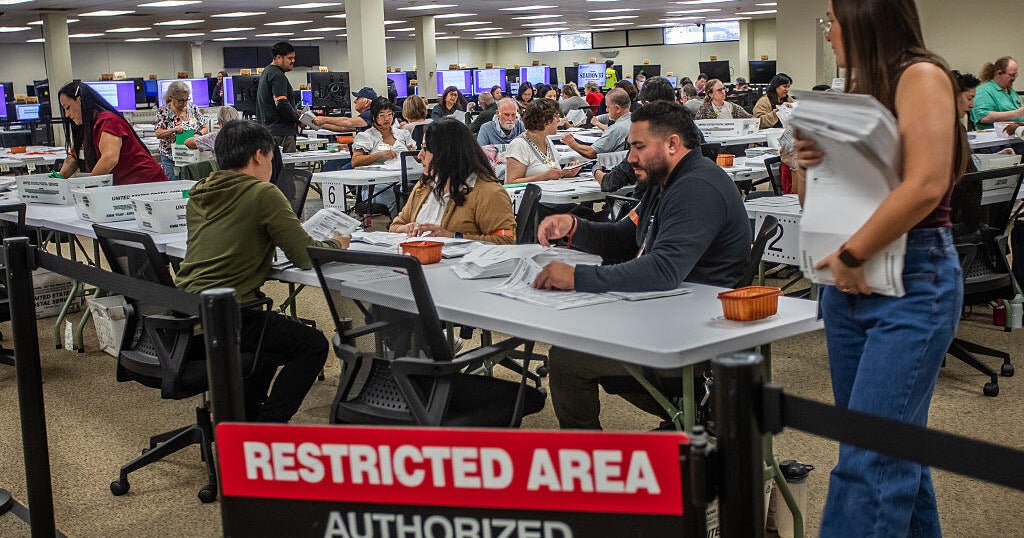
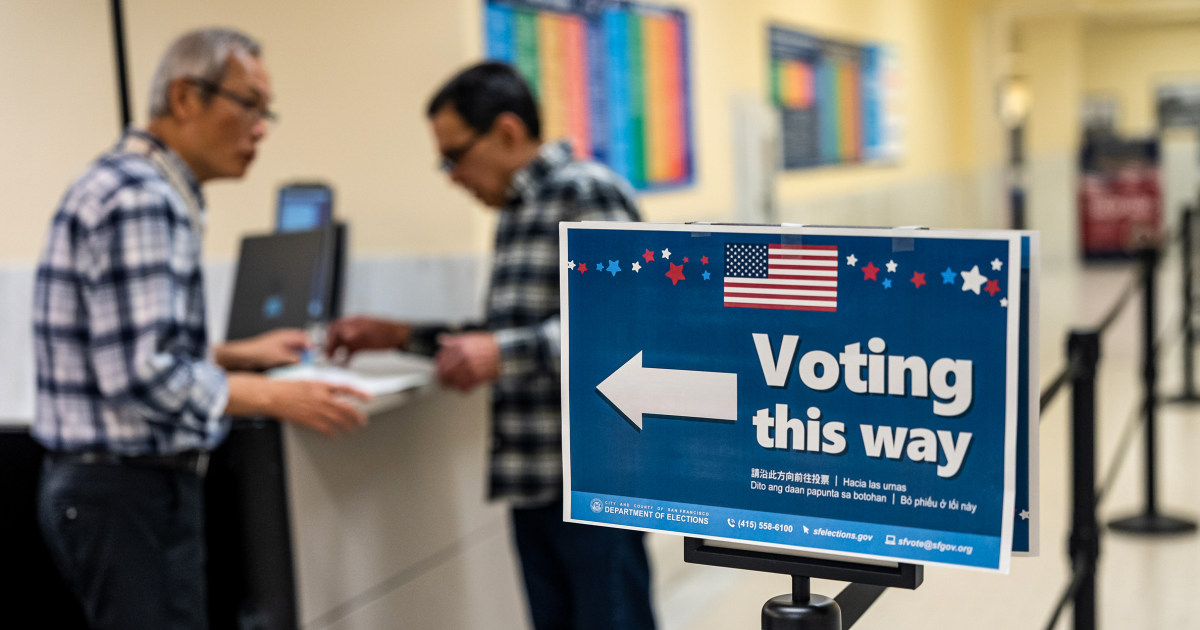
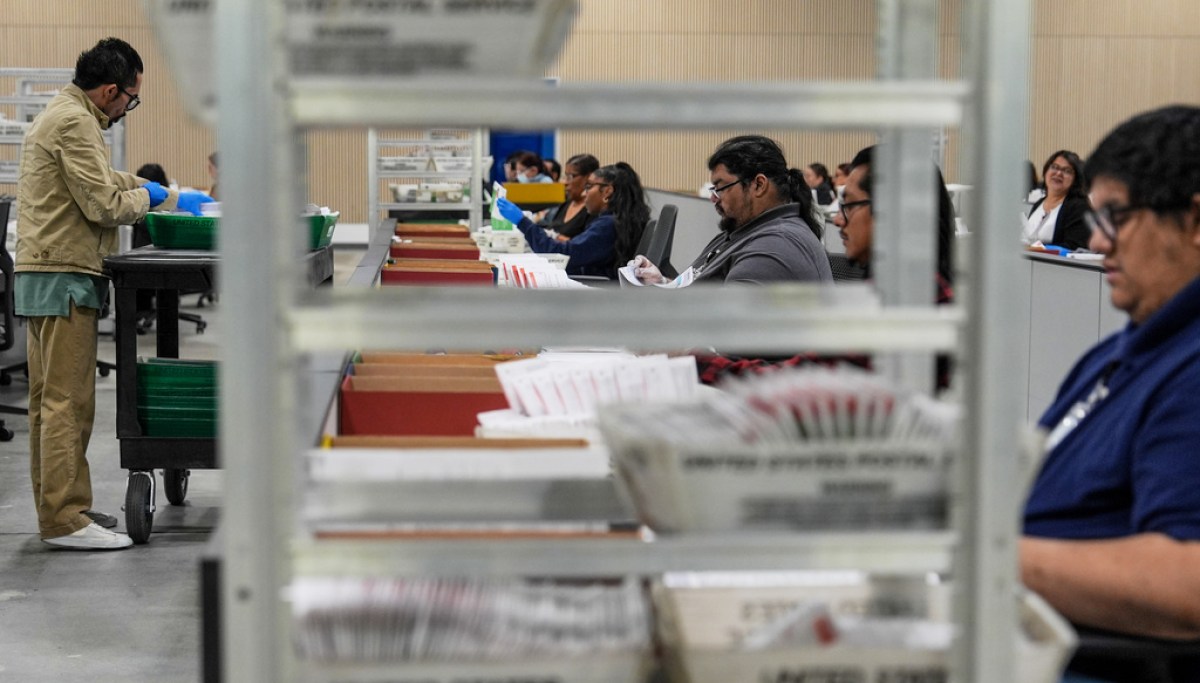
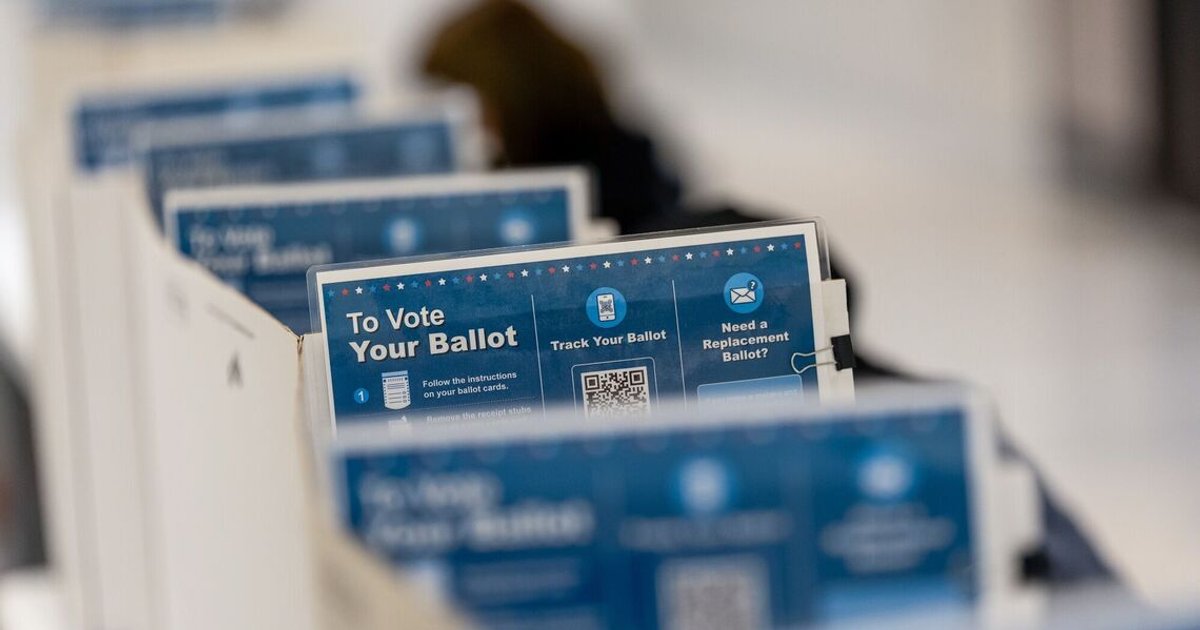
A federal appeals court has rejected the Trump administration’s latest attempt to stop counting 20,000 ballots in California, an effort that a panel of appeals court judges said could “jeopardize” midterm elections and disenfranchise thousands of eligible voters.
uncertain
panel → reject → voters
Friday’s 2-1 decision marks the third straight loss for the administration in its efforts to block ballots from alleged noncitizen voters, a legal battle that is expected to make its way to the Supreme Court with just three days left until Election Day with the balance of power in Congress at stake.
asserted
balance → mark → stake
“We decline the United States’s invitation to contravene the Elections Clause by undermining the Constitution’s plain text,” the court’s majority wrote.
asserted
majority → decline → text
The court has “major concerns” that the administration’s attempts to seize control of the state’s election process will risk “disenfranchisement of eligible voters” and could put the “entire tabulation process in jeopardy,” judges wrote.
uncertain
judges → have → jeopardy
On Wednesday, a federal judge in California warned that the administration’s attempts to separate ballots could “wreak havoc” on elections and threatens to endanger American democracy.
uncertain
attempts → warn → democracy
“Eroded trust in our democracy is irreparable.
asserted
trust → erode → democracy
Once a vote is segregated, lasting harm has occurred,” U.S. District Judge David O. Carter wrote.
asserted
Carter → segregate → ?
“If the Executive can discount votes and threaten an ongoing election due to unproven allegations, then our democracy is in danger.
asserted
democracy → discount → danger
This Court declines to be a party to such a process.”
asserted
Court → decline → process
The administration’s request also could create “a chilling effect on election workers and voters alike, and discount the votes of United States citizens."
The Department of Justice immediately appealed Carter’s order and then escalated its investigations in the state by issuing federal grand jury subpoenas to local election officials in a last-ditch attempt to prove unsubstantiated claims that thousands of noncitizens are on the state’s voter rolls.
uncertain
thousands → create → rolls
On Friday, the union representing California election workers sued the Justice Department for what it called “unprecedented and unlawful threats” that “risk interfering with the lawful administration of the ongoing 2026 midterm elections and the counting of ballots.”
asserted
that → represent → ballots
The Justice Department has also pressed officials in Washington state to sequester ballots from at least 400 people the administration has accused of being noncitizens.
asserted
administration → press → people
Federal law mandates a “quiet period” 90 days before an election to ensure voters aren’t wrongly disenfranchised without enough time to make corrections.
asserted
voters → mandate → corrections
But less than four weeks before Election Day, the Trump administration sent a thumb drive containing the names of 20,000 alleged noncitizens to election officials in Los Angeles with a demand to investigate each of them within 48 hours.
asserted
administration → send → hours
California mails ballots to all 23 million registered voters in the state.
asserted
California → mail → state
More than 500,000 ballots had already been processed in the week before Election Day, meaning their envelopes had been verified and the ballots removed — making it virtually impossible for election officials and law enforcement to know which ballot belonged to which voter.
asserted
ballot → process → voter
State officials reviewed a sample of 200 names from the list, and more than half had never even had ballots mailed to them, nearly three-quarters never voted at all, and nearly 40 percent were citizens.
asserted
percent → review → them
The administration’s request likely violates the National Voter Registration Act, which establishes the 90-day “quiet period” rule, appeals court Judges Mark J. Bennett and Gabriel P. Sanchez wrote Friday.
asserted
Bennett → violate → rule
“As the district court found — and we discern no clear error — there is no feasible way to identify and segregate the ballots of specific individuals without potentially catastrophic effects on the entire system,” they said.
asserted
they → find → system
Following Carter’s ruling earlier this week, First Assistant U.S. Attorney Bill Essayli said the judge’s decision “disenfranchises American citizens through dilution.”
asserted
decision → follow → dilution
“Segregating a ballot does not prevent it from being counted later,” he argued.
asserted
he → segregate → it
“It is designed to preserve the status quo and prevent the infection of our election with illegal ballots.
asserted
It → design → ballots
Meanwhile, a federal judge in a separate case playing out in Washington, D.C., ordered the Trump administration to hand over a disputed list of voters it claims are not U.S. citizens.
uncertain
it → play → voters
D.C.’s Chief District Judge James E. Boasberg ordered the government to share the list with Coalition for Humane Immigrant Rights and the UCLA Voting Rights Project, two groups that sued the administration to find out who exactly is on the list and assess its impact on eligible voters in the state.
asserted
who → order → state
 The Aporia