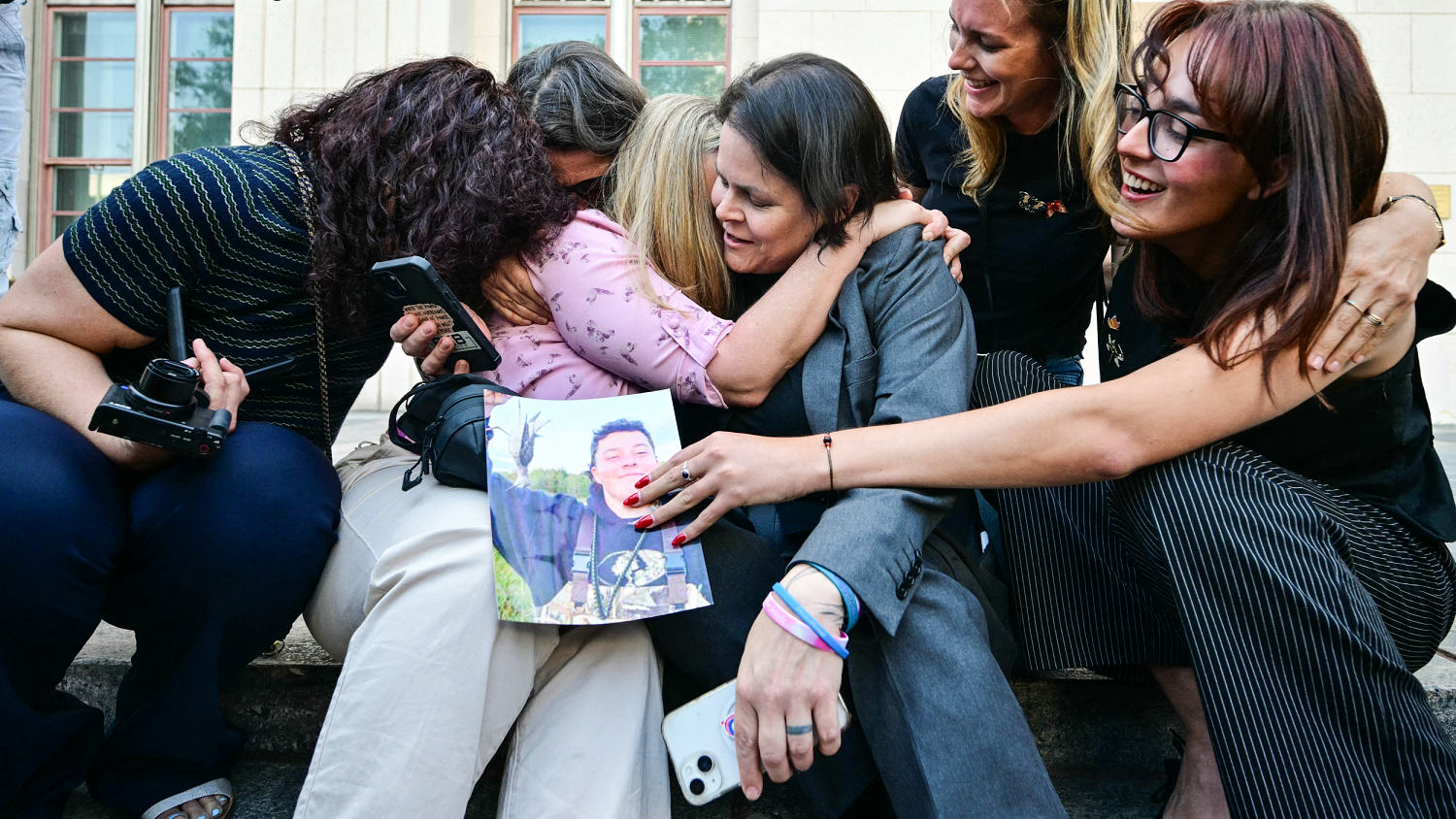
Meta on Friday reached a settlement with a teen plaintiff, identified in court documents as K.D.B., who claimed the company’s platforms, Instagram and Facebook, were addictive and caused her mental health problems, attorneys for the plaintiff said.
asserted
attorneys → reach → plaintiff
The news comes just one day after the tech giant reached a settlement with S.J., the second teen plaintiff who had sued the company over similar claims.
uncertain
who → come → claims
In the weeks leading up to trial, TikTok and YouTube reached agreements to resolve the claims brought against them by both S.J. and K.D.B.
“We remain committed to improving safety for kids on social media apps and holding tech companies accountable, and we are pleased to have brought this matter to a just resolution on behalf of our client,” Emily Jeffcott, trial counsel for K.D.B., said in a statement.
uncertain
Jeffcott → lead → statement
Snap Inc. now remains the lone defendant in the trial, which began this week in Los Angeles with jury selection.
asserted
which → remain → selection
Opening arguments are slated for Nov. 4.
asserted
arguments → open → Nov.
In their lawsuit, K.D.B. and S.J. allege that Snap, the maker of Snapchat, designed features that would maximize the time young users spend on the app.
asserted
users → allege → app
Those features include Snapstreaks, Snapscores and filters that can trigger compulsive use of Snapchat, leading to severe mental and physical health issues like self-harm.
asserted
that → include → harm
Meta settles social media addiction lawsuit for $18 billion
Their case is the fourth bellwether in a consolidated group of cases brought against Instagram, YouTube, TikTok and Snap by more than 1,600 plaintiffs, including over 350 families and over 250 school districts.
asserted
case → settle → families
The plaintiffs accuse the tech companies of knowingly designing addictive products harmful to young users’ mental health.
asserted
plaintiffs → accuse → health
Historically, social media platforms have largely been shielded by Section 230, a provision added to the Communications Act of 1934 that says internet companies aren’t liable for the content users post.
asserted
users → shield → content
Meta, which owns Instagram and Facebook, has repeatedly denied that its apps are purposefully harmful and addictive for young users.
asserted
apps → own → users
In March, during a landmark social media addiction trial in Los Angeles, a jury found Meta and Google’s YouTube negligent in the design or operation of their social media platforms.
asserted
Meta → find → platforms
The jurors determined that Meta’s and Google’s negligence was a substantial factor in causing harm to the plaintiff, identified in court by her initials, K.G.M., and that the companies failed to adequately warn users of the dangers of Instagram and YouTube, their respective platforms.
asserted
companies → determine → Instagram
The jury awarded K.G.M. $3 million in compensatory damages, finding Meta 70% responsible for harm caused to the now-20-year-old plaintiff, and YouTube responsible for 30%.
asserted
YouTube → award → %
In August, Meta agreed to settle a wide-ranging social media addiction lawsuit with the state of California and a number of other states for about $18 billion.
asserted
Meta → agree → billion
The court filing says that the company “denies the allegations against it and that it has any liability to the Plaintiffs,” which are a collection of 29 states.
asserted
which → say → states
In a statement to NBC News on Friday, a spokesperson for Meta said the company will continue to defend itself in court and stand by its record.
asserted
company → say → record
“We’ve spent more than a decade building protections for teens, and our agreement with 52 bipartisan attorneys general goes even further with strict time limits, no access at night, and no notifications during school hours,” the statement read in part.
asserted
statement → spend → part
“We hope the rest of our industry joins us in setting this new standard.”
asserted
rest → hope → standard
A spokesperson for Snap on Friday sent NBC News its statement from earlier this week, which read, in part, “From the beginning, Snapchat was built differently from traditional social media: it opens to a camera, not a feed, not a ranking of what other people post or other social comparison metrics.”
asserted
people → send → what
“We have built safeguards into the platform, introduced safety tools and educational resources,” the statement continued, “and we believe the evidence will support that we have put our community first, and that these allegations fundamentally misrepresent the plaintiffs’ experiences on Snapchat and how our platform was designed.”
asserted
platform → build → Snapchat
 The Aporia