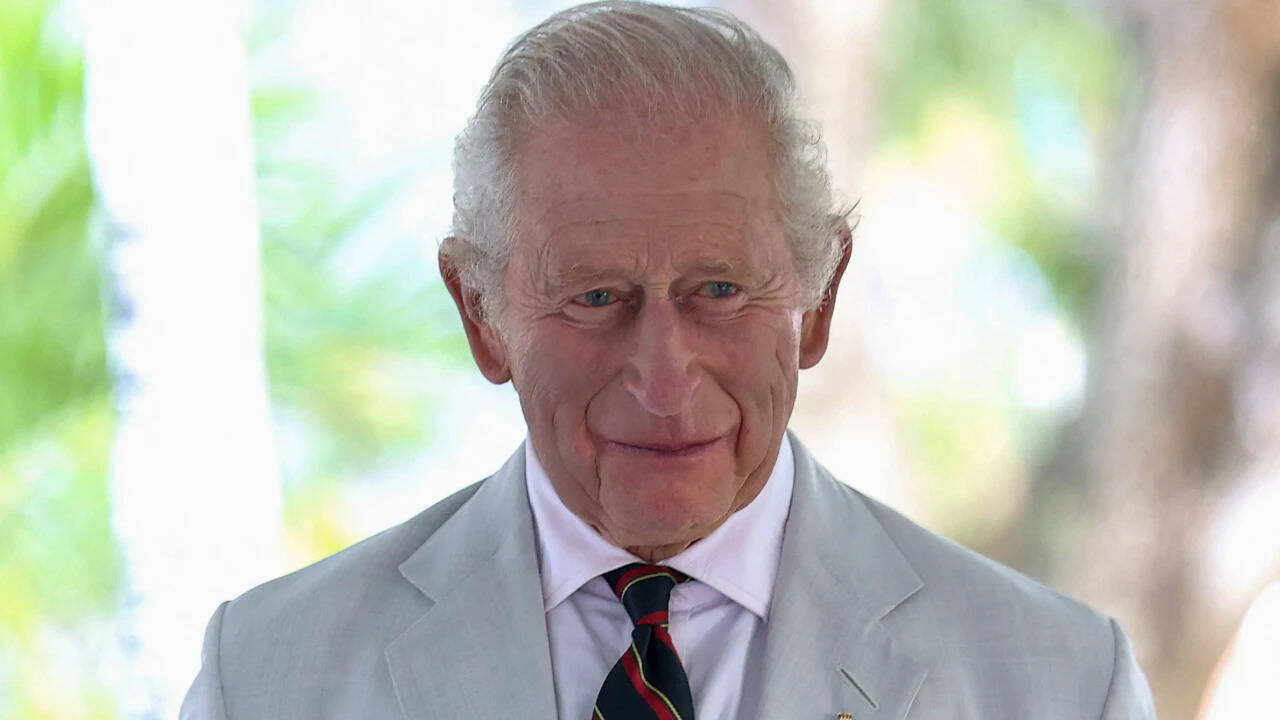
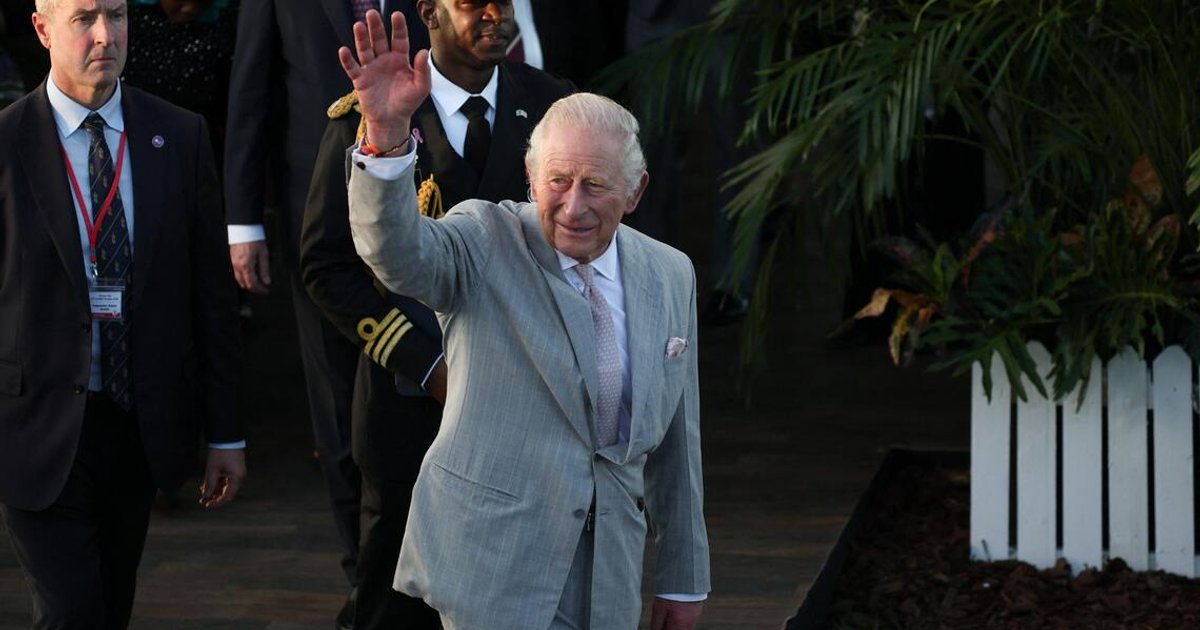
Photo via Evening Standard

Charles visits execution site of 1823 uprising against slavery

Read the original at Evening Standard ↗
Cite

Jones, T. (2026, October 30). Charles visits execution site of 1823 uprising against slavery. Evening Standard. https://www.standard.co.uk/news/uk/charles-king-the-king-caribbean-b1303014.html

Dated from the outlet's own feed. Check the original for its byline.

Evening Standard · collected 2026-10-30 · by Tony Jones

Quick Summary

On Tuesday, King Charles visited a park in Guyana where executions took place following an 1823 slave uprising, commemorating those who were hanged there. Joined by Guyana’s culture minister Steven Jacobs, Charles acknowledged the country's history of slavery and resistance. The visit comes amid discussions about the legacy of slavery during his nine-day trip to the region. While Charles has previously spoken about the enduring impact of slavery, some activists, like MP Terrence Campbell, argue that an apology and reparations are necessary steps that have yet to be taken by the British government or its ministers advising the King.
Written by AI on 2026-10-30, from this article's own text only (the story summary below draws on all the coverage).

AI analysis

Story summary

On October 30, 2026, King Charles visited Independence Park in Georgetown, Guyana, as part of his nine-day Caribbean tour. The park is a site where hundreds of enslaved individuals were killed and executed during the Demerera Slave Rebellion of 1823. Accompanied by Guyana’s Culture Minister Steven Jacobs, Charles acknowledged the country's history of slavery and resistance. At the entrance of the former parade ground, Jacobs spoke about the brutal suppression of the rebellion led by Jack Gladstone, an enslaved man who rang the plantation bell to signal its start. Charles listened intently and read a plaque commemorating those executed at the site. The visit was seen as an opportunity for reflection on the UK's colonial legacy without offering apologies or reparations, in line with the UK government’s position.

Written for “King Visits Slave Rebellion Site” on 2026-10-31, grounded in this article and the 1 other(s) covering the same event.
Why this leaning score
The article's own words the score was based on. Each is quoted verbatim and was checked against the article text before being stored, so you can find it in the original.
Reading Leans left (beta estimate) Confidence high
Leaning: leans left for article 118139 (high confidence, 2 verified quotes) · logged 2026-10-30

Story

📰 King Visits Slave Rebellion Site
Politics · 2 article(s) covering the same event. See how they differ ↓

Compared with similar articles

This article reads leans left and hedges 0% of its claims. Each row says how that neighbour differs.
BBC News
Hedges 1 of 23 claims Outlet record 69/100
Evening Standard
⚖️ Leans left Hedges 1 of 18 claims Outlet record 65/100
“The articles describe different parts of Charles's nine-day tour in the Caribbean, with one focusing on his participation in a carnival parade and the other on his visit to an execution site related to slavery.”
The Guardian
⚖️ Leans strongly left further left than this Hedges 2 of 33 claims Outlet record 66/100
“While both articles discuss King Charles's tour addressing slavery in the Caribbean, they describe different parts of his trip.”
Evening Standard
⚖️ Leans left Hedges 0 of 14 claims Outlet record 65/100
“While both articles describe King Charles's visit to the Bahamas, they report on different aspects of his trip at distinct times and locations.”
Times of India
⚖️ Centre further right than this Hedges 2 of 32 claims Outlet record 59/100
“While both articles describe King Charles III's tour acknowledging the suffering caused by slavery, Article A focuses on his speech in Nassau, while Article B describes a visit to an execution site later in the trip.”
Evening Standard
⚖️ Leans left Hedges 0 of 19 claims Outlet record 65/100
“The articles describe different parts of King Charles's tour, with Article A focusing on his visit to Antigua for CHOGM and discussions about an apology for slavery. Article B describes a specific event during the tour where he visited an execution site in the Bahamas.”
The Straits Times
⚖️ Leans left Hedges 2 of 27 claims Outlet record 66/100
“Article A describes the beginning of Charles's Caribbean trip, while Article B details a specific visit to an execution site later in his tour.”
The Guardian
Hedges 0 of 27 claims Outlet record 66/100
“While both articles cover King Charles's discussions about slavery during his Caribbean tour, they describe different specific events and locations.”
Daily Mail
Hedges 2 of 50 claims Outlet record 68/100
“The articles describe different parts of King Charles's visit to The Bahamas, not a single specific incident.”
Evening Standard
⚖️ Leans left Hedges 1 of 6 claims Outlet record 65/100
“The articles describe different parts of Charles's nine-day tour in the Bahamas, not the same specific incident.”
How this article was measured signals, leaning charts, publisher record, byline, topics and claims

Signals How these are calculated →

Claims extracted
12
sentences that state something as happening or true
Uncertain
0%
0 of 12 hedged ("reportedly", "may", "according to")
Leaning
Leans left
of the writing, not the subject · beta estimate
Publisher signals
65/100
Evening Standard's corrections and hedging, across everything collected from it. Not a measure of accuracy.
Outlets on this story
2
Politics
Same framing elsewhere
1
articles that frame the event the way this one does
Analyzed 2026-10-30 · how these are computed

How this is being covered How these are calculated →

Article leaning vs. publisher reliability
Source leaning vs. consistency

Publisher

Evening Standard · 7849 article(s) · 64 correction(s) detected
Running correction rate · 64 correction(s)

Who wrote this

Tony Jones
46 article(s) here · 1 carrying a prediction
🔮 Charles began his nine-day trip on Tuesday by acknowledging the “great suffering of the past” in a speech at a youth rally in the Bahamas, and confirmed a Commonwealth leaders’ summit he will open in Antigua next week would discuss the legacy of slavery.
🔮 Somebody else will have to finish it!”
🔮 Within a few hours of arriving in the Bahamas on Tuesday the King acknowledged the “great suffering of the past” and confirmed the Commonwealth Heads of Government Meeting would discuss the legacy of slavery.
🔮 Within a few hours of arriving in the Bahamas on Tuesday, he acknowledged the “great suffering of the past” and confirmed the Commonwealth Heads of Government Meeting would discuss the legacy of slavery at their gathering he will open next week, in his role as head of the “family of nations”.
🔮 A few hours after arriving in the Bahamas on Tuesday he acknowledged the “great suffering of the past” and confirmed the Commonwealth Heads of Government Meeting would discuss the legacy of slavery at the gathering next week. His tour comes in the wake of renewed calls from Caribbean nations for Britain to apologise for its role in selling enslaved people for profit, and for reparations. The King will be formally welcomed to Guyana by the country’s President Mohamed Irfaan Ali, Britain’s High Commissioner to the country, Joseph Fisher, and Ed Miliband, following protocol and joining the King on a state visit in his role as Foreign Secretary. The president and the King will set down for talks before Guyana’s leader hosts a state reception for the King in the garden of state house – his official residence in the capital Georgetown.
🔮 A few hours after arriving in the Bahamas on Tuesday, he acknowledged the “great suffering of the past” and confirmed Commonwealth leaders will discuss the legacy of slavery at a major summit he will open in Antigua next week.
🔮 When he chatted to a group of children, Charles joked about their gym sessions, asking: “It’s not an excuse to get out of school?”, before adding: “I might see you at a Commonwealth Games.”
Also by Tony Jones
Nothing else under this byline is closely related to this article, so these are simply their most recent.
All 46 articles by Tony Jones →

Topics

Antigua Bahamas Commonwealth Guyana St Lucia

Subjects

Charles PERSON · 6× Guyana GPE · 4× Commonwealth ORG · 2× Quamina PERSON · 2× Antigua GPE · 1× Bahamas GPE · 1× Jacobs PERSON · 1× John Gladstone PERSON · 1× Steven Jacobs PERSON · 1× William Gladstone PERSON · 1×

Narrative

Mr Campbell said Charles had “moral persuasion” adding: “If the King comes out a little more boldly in the United Kingdom and also at the Commonwealth Heads of Government Conference, I think that he can use moral persuasion to move the needle, the needle of the British government, the needle of the other colonial powers, on this important issue of reparations.”
framing: assertive · carried by 1 article(s) · first seen 2026-10-30
🔮 Charles began his nine-day trip on Tuesday by acknowledging the “great suffering of the past” in a speech at a youth rally in the Bahamas, and confirmed a Commonwealth leaders’ summit he will open in Antigua next week would discuss the legacy of slavery.
2026-10-30 · Evening Standard
Charles visits execution site of 1823 uprising against slavery · assertive framing

Claims (12 extracted, 0 hedged)

Charles began his nine-day trip on Tuesday by acknowledging the “great suffering of the past” in a speech at a youth rally in the Bahamas, and confirmed a Commonwealth leaders’ summit he will open in Antigua next week would discuss the legacy of slavery. asserted
he → begin → slavery
At the park Charles was joined by Guyana’s culture minister Steven Jacobs, to acknowledge the country’s history of slavery and resistance. asserted
Charles → join → slavery
The King listened intently as Mr Jacobs talked at the entrance of the former parade ground and showed him a plaque commemorating those who were condemned to death and hanged from gallows erected on site. asserted
who → listen → site
The rising began in August 1823 on the plantation of Sir John Gladstone, father of the future prime minister William Gladstone, when Jack Gladstone, an enslaved man named after his owner, rang the plantation bell to signal the start of the rebellion. asserted
Gladstone → begin → rebellion
His father Quamina, a carpenter on the same estate and a deacon at the local chapel, had urged a peaceful strike but the uprising was crushed with brutal force and hundreds were killed. asserted
hundreds → urge → force
Quamina was hunted down and killed the following month and his body was displayed outside the plantation as a warning to others – he is now one of Guyana’s national heroes – while his son was sold and sent to St Lucia. asserted
son → hunt → Lucia
Guyana’s President Mohamed Irfaan Ali said ahead of the visit Charles has recognised slavery as the darkest days in human history – but moving to the apology is “the next step”. asserted
moving → say → apology
In 2023, Charles described how he was on a personal journey of discovery and was continuing to “deepen my own understanding of slavery’s enduring impact”, in a speech at the opening of a Commonwealth summit hosted by Rwanda. asserted
he → describe → Rwanda
Terrence Campbell, an MP from Guyana’s A Partnership for Unity Party, claimed he and a small group of activists were stopped from protesting about reparations in the area by police. asserted
he → claim → police
They moved on to stage their demonstration outside a building where Charles met indigenous leaders in the capital, and held placards which read “No apology will return what was stolen reparations now”. asserted
what → move → reparations
The King follows the guidance of his ministers and it is understood the Government has not advised him to offer an apology or reparations, in keeping with established policy. asserted
Government → follow → policy
Mr Campbell said Charles had “moral persuasion” adding: “If the King comes out a little more boldly in the United Kingdom and also at the Commonwealth Heads of Government Conference, I think that he can use moral persuasion to move the needle, the needle of the British government, the needle of the other colonial powers, on this important issue of reparations.” asserted
he → say → reparations
💬Give feedback
🕘History 🎫Support