Photo via Times of India

Syria dreamed of a new dawn after Assad, but economic misery clouds its future

Read the original at Times of India ↗
Cite

Srivastava, V. (2026, October 30). Syria dreamed of a new dawn after Assad, but economic misery clouds its future. Times of India. https://timesofindia.indiatimes.com/world/middle-east/syria-dreamed-of-a-new-dawn-after-assad-but-economic-misery-clouds-its-future/articleshow/135370315.cms

Dated from the outlet's own feed. Check the original for its byline.

Times of India · collected 2026-10-30 · by Vijaya Srivastava

Quick Summary

Syrians are experiencing severe economic hardship nearly two years after President Bashar al-Assad was ousted, hoping for better conditions under new leadership. In September, fuel price hikes by 40% and more led to widespread protests across the country, with diesel initially increasing from 125 Syrian pounds per litre to 175 pounds. The government partially rolled back these increases amid public unrest, offering different pricing tiers based on intended use but maintaining higher prices for standard diesel. This economic crisis is pushing over 90% of Syrians below the poverty line, according to UN estimates, compared to about a third before the civil war began in 2011.
Written by AI on 2026-10-30, from this article's own text only (the story summary below draws on all the coverage).

AI analysis

Story summary

Nearly two years after Bashar al-Assad was ousted as president, Syrians are struggling with soaring prices under the new administration led by President Ahmed al-Sharaa, leading to widespread protests across the country. In September 2026, fuel price hikes of up to 40% triggered demonstrations in squares and streets, with protesters burning tires and blocking roads. The government partially rolled back these increases after facing public backlash but has not addressed the broader economic crisis that continues to worsen daily life for Syrians. Locally produced diesel was initially raised to 175 Syrian pounds per litre from 125 pounds, while other fuel prices saw significant hikes as well. This financial strain is particularly acute in Damascus and Aleppo, where basic necessities like bread are becoming unaffordable for many citizens.

Written for “Syria's Economic Misery Continues” on 2026-10-31, grounded in this article and the 1 other(s) covering the same event.
Why this leaning score
The article's own words the score was based on. Each is quoted verbatim and was checked against the article text before being stored, so you can find it in the original.
Reading Leans left (beta estimate) Confidence medium
Leaning: leans left for article 117892 (medium confidence, 2 verified quotes) · logged 2026-10-30

Story

📰 Syria's Economic Misery Continues
Politics · 2 article(s) covering the same event. See how they differ ↓

Compared with similar articles

This article reads leans left and hedges 10% of its claims. Each row says how that neighbour differs.
BBC News
⚖️ Leans strongly left further left than this Hedges 3 of 76 claims Outlet record 69/100
How this article was measured signals, leaning charts, publisher record, byline, topics and claims

Signals How these are calculated →

Claims extracted
71
sentences that state something as happening or true
Uncertain
10%
7 of 71 hedged ("reportedly", "may", "according to")
Leaning
Leans left
of the writing, not the subject · beta estimate
Publisher signals
59/100
Times of India's corrections and hedging, across everything collected from it. Not a measure of accuracy.
Outlets on this story
2
Politics
Same framing elsewhere
1
articles that frame the event the way this one does
Analyzed 2026-10-30 · how these are computed

How this is being covered How these are calculated →

Article leaning vs. publisher reliability
Source leaning vs. consistency

Publisher

Times of India · 3737 article(s) · 2 correction(s) detected
Running correction rate · 2 correction(s)

Who wrote this

Vijaya Srivastava
27 article(s) here · 1 carrying a prediction
🔮 Locally produced diesel would be sold at 115 Syrian pounds per litre for heating, agriculture and other eligible users.
🔮 In the video, Ben Gvir said he would continue to act "as strongly as possible" against what he described as election theft.
🔮 Its final report is not expected to be submitted to the president until next week.
🔮 Both men were also handed six-year driving bans and will have to take an extended driving test before they can drive again.
🔮 Businesses have also been forced to adjust, while expatriates who regularly travel home on weekends are weighing their options amid uncertainty over when flights will resume.
🔮 US diplomats visited the Christian Palestinian town of Taybeh in the Israeli-occupied West Bank on Sunday after masked Israeli settlers attacked European diplomats and a French mayor near the village a day earlier.
🔮 It warned that anyone who attacks the security of others or violates their right to life and safety would face the consequences under the law.
🔮 This Act could have helped enormously – and still can!
🔮 Describing the operations as a response to Russian attacks, Zelenskyy said Ukraine would continue its long-range strikes as Moscow was prolonging the war.
🔮 The medical group warned that the death toll could rise as several injured miners are in serious condition and access to healthcare facilities is limited.
Also by Vijaya Srivastava
Nothing else under this byline is closely related to this article, so these are simply their most recent.
All 27 articles by Vijaya Srivastava →

Topics

Aleppo Damascus Reuters Syria Syrians

Subjects

Syria GPE · 4× BBC ORG · 3× Syrians NORP · 3× Aleppo GPE · 2× Assad PERSON · 2× Bashir PERSON · 2× Damascus GPE · 2× Reuters ORG · 2× al-Sharaa PERSON · 2× Bashar al-Assad PERSON · 1×

Narrative

Its energy ministry spokesperson Abdulhamid Salat said the September price increases were a temporary measure driven by higher global procurement costs and the country's heavy dependence on imports.
framing: assertive · carried by 1 article(s) · first seen 2026-10-30
🔮 Locally produced diesel would be sold at 115 Syrian pounds per litre for heating, agriculture and other eligible users.
2026-10-30 · Times of India
Syria dreamed of a new dawn after Assad, but economic misery clouds its future · assertive framing

Claims (71 extracted, 7 hedged)

Nearly two years after Bashar al-Assad was ousted, Syrians who had hoped for a better life under President Ahmed al-Sharaa are still struggling to afford basic necessities. asserted
who → oust → necessities
Rising food, fuel and electricity costs are deepening an economic crisis that has fuelled public anger against the new administration. asserted
that → rise → administration
The government's inability to ease the financial burden on households was laid bare in September, when a sharp increase in fuel prices triggered widespread protests. asserted
increase → ease → protests
The unrest forced authorities to partially roll back the decision, according to a Reuters report. uncertain
unrest → force → report
The government had raised diesel prices by 40 per cent on September 14, taking them to 175 Syrian pounds per litre from 125 pounds. asserted
government → raise → pounds
It also increased the prices of 95-octane petrol by 28 per cent to 195 pounds, 90-octane petrol by 26 per cent to 185 pounds, and household and industrial gas by around 9 per cent. asserted
It → increase → cent
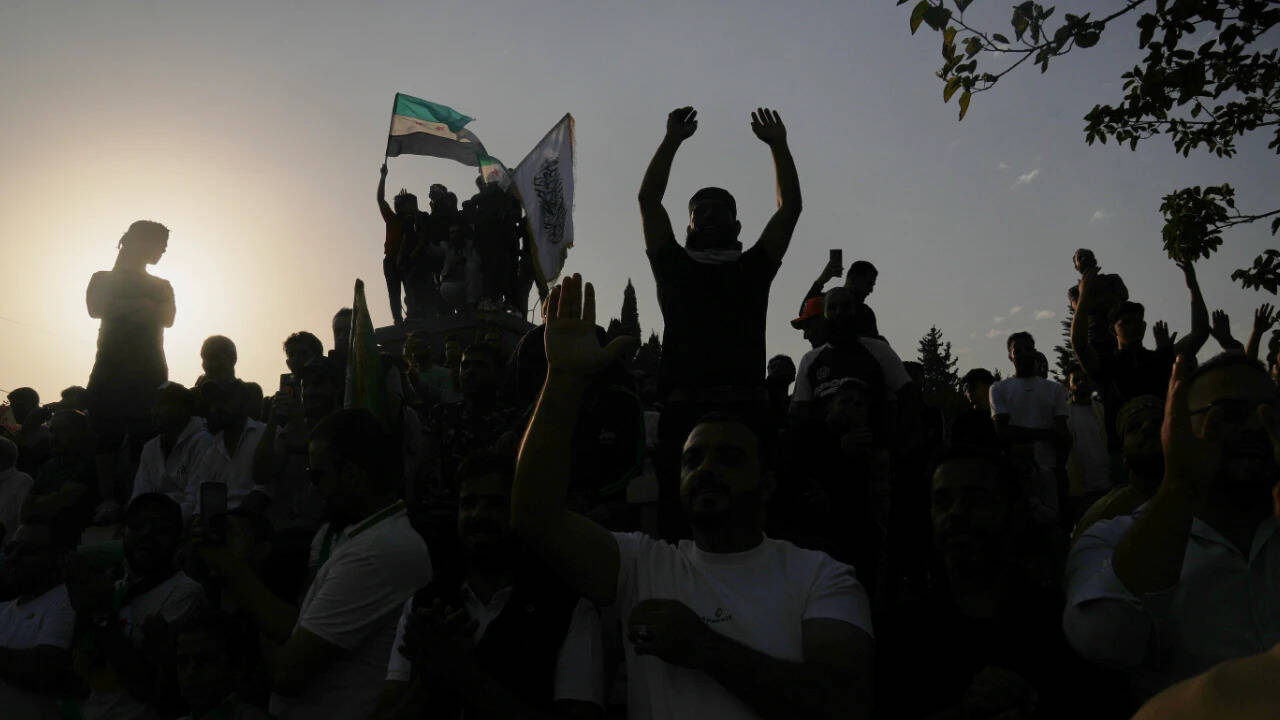
The increases triggered demonstrations across Syria is the most widespread since Assad's fall. asserted
increases → trigger → fall
Protesters burned tyres, blocked key roads, including the highway linking Damascus to Aleppo, and disrupted crude tanker convoys heading towards refineries in central Syria. asserted
Protesters → burn → Syria
Some demanded the dismissal of the energy and economy ministers and the head of the Syrian Petroleum Company. asserted
Some → demand → Company
"We don't want higher wages. asserted
We → want → wages
All we want is lower diesel and other fuel prices," news agency Reuters reported citing protestor Yasser Salim in Aleppo. asserted
Reuters → want → Aleppo
Another protester, Bassam al-Ali, appealed directly to al-Sharaa. asserted
protester → appeal → Sharaa
"Border crossings bring in millions of dollars. asserted
crossings → bring → dollars
We don't want new roundabouts or malls. asserted
We → want → roundabouts
We just want to live," he said. asserted
he → want → ?
Days later, in mid September, Syria's energy minister Mohammed al-Bashir announced a partial retreat, offering diesel at three different prices depending on its intended use. asserted
minister → announce → use
Locally produced diesel would be sold at 115 Syrian pounds per litre for heating, agriculture and other eligible users. asserted
diesel → produce → heating
A second grade, sourced with the help of what Bashir described as "friendly countries", would cost 150 pounds for productive and service sectors and heavy machinery. asserted
Bashir → source → sectors
The standard grade would remain at 175 pounds per litre, while petrol and gas prices would remain unchanged. asserted
prices → remain → litre
Bashir said the government was selling standard diesel below its production cost of 206 pounds per litre. asserted
government → say → litre
He also announced plans to restart small local refineries, known in Syria as "burners", with a combined crude-processing capacity of up to 35,000 barrels per day. asserted
He → announce → day
The move followed a meeting with al-Sharaa over the fuel crisis. asserted
move → follow → crisis
The protests were the latest indication of the economic pressures confronting the new administration. asserted
protests → confront → administration
In a separate report by BBC , several Syrians struggling to afford food, pay electricity bills and find employment said their financial circumstances had deteriorated since Assad's removal. asserted
circumstances → struggle → removal
The United Nations Development Programme estimates that 90 per cent of Syrians live below the poverty line, compared with around a third before the civil war began in 2011. asserted
war → estimate → 2011
The government has cut long-standing subsidies as part of an austerity drive. asserted
government → cut → drive
The price of bread, a staple food, has increased tenfold, while electricity prices have risen by several hundred per cent for some consumers. asserted
prices → increase → consumers
Higher fuel costs have also pushed up transportation expenses and added pressure on farmers, according to the BBC. uncertain
costs → push → BBC
The administration has adjusted public sector salaries and pensions, but rising prices have eroded the benefit of the additional payments. asserted
prices → adjust → payments
For many households, even basic food has become difficult to afford. asserted
food → become → households
Fatima Saleh Eid, a 50-year-old cleaner in a suburb of Damascus, told the BBC that her family had reduced its food consumption and could no longer afford meat. uncertain
family → tell → meat
"We eat more sparingly now. asserted
We → eat → ?
We can't afford chicken anymore, nor meat. asserted
We → afford → chicken
We only eat vegetables but even [that is] expensive," she said. asserted
she → eat → vegetables
Another resident, Nabil al-Remhein, a 63-year-old pensioner said that his family had been reduced to one meal a day. asserted
family → say → meal
None of his four adult children could find work. uncertain
None → find → work
His electricity bill accounted for around a third of the family's income, forcing them to cut back on lighting and switch off their refrigerator for about five hours a day. asserted
bill → account → hours
"We're now having only one meal a day. asserted
We → have → meal
It's tragic," he said. asserted
he → say → ?
Marwan Bashour, a 68-year-old pensioner, said his monthly income was around $90, equivalent to the public sector minimum wage. asserted
income → say → wage
…and 31 more, not listed.

💬Give feedback
🕘History 🎫Support