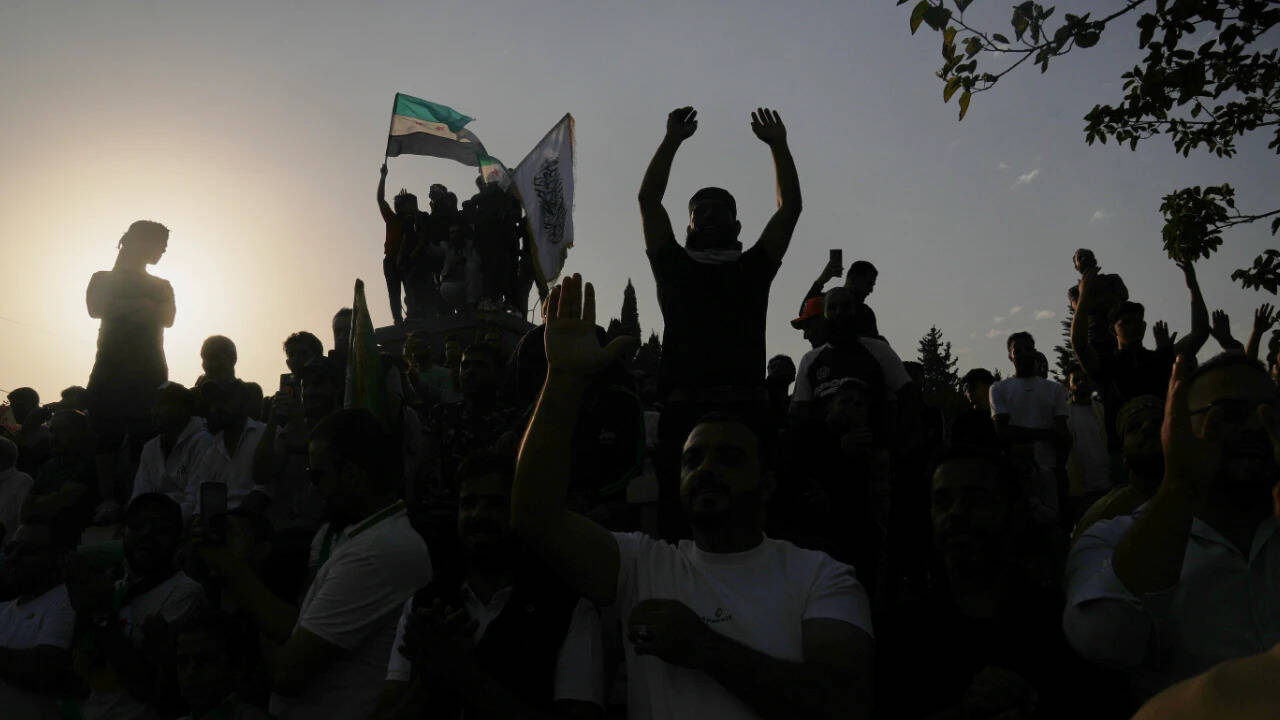
Photo via BBC News

Syrians struggle with soaring prices as crisis challenges post-Assad recovery

Read the original at BBC News ↗
Cite

Bachega, H. (2026, October 30). Syrians struggle with soaring prices as crisis challenges post-Assad recovery. BBC News. https://www.bbc.co.uk/news/articles/cmn4egvez1yzo?at_medium=RSS&at_campaign=rss

Dated from the outlet's own feed. Check the original for its byline.

BBC News · collected 2026-10-30 · by Hugo Bachega

Quick Summary

Protests erupted across Syria last month over the government’s decision to raise fuel prices, marking one of the largest displays of discontent since President Ahmed al-Sharaa took office two years ago. Demonstrators criticized the economic austerity measures implemented by Sharaa's administration, including significant increases in bread and electricity costs—electricity rates have risen several hundred percent for some—and a tenfold increase in bread prices. Fatima Saleh Eid, a 50-year-old cleaner supporting her family, expressed frustration over rising costs and limited job opportunities, noting that essential items like chicken and meat are now unaffordable.
Written by AI on 2026-10-30, from this article's own text only (the story summary below draws on all the coverage).

AI analysis

Story summary

Nearly two years after Bashar al-Assad was ousted as president, Syrians are struggling with soaring prices under the new administration led by President Ahmed al-Sharaa, leading to widespread protests across the country. In September 2026, fuel price hikes of up to 40% triggered demonstrations in squares and streets, with protesters burning tires and blocking roads. The government partially rolled back these increases after facing public backlash but has not addressed the broader economic crisis that continues to worsen daily life for Syrians. Locally produced diesel was initially raised to 175 Syrian pounds per litre from 125 pounds, while other fuel prices saw significant hikes as well. This financial strain is particularly acute in Damascus and Aleppo, where basic necessities like bread are becoming unaffordable for many citizens.

Written for “Syria's Economic Misery Continues” on 2026-10-31, grounded in this article and the 1 other(s) covering the same event.
Why this leaning score
The article's own words the score was based on. Each is quoted verbatim and was checked against the article text before being stored, so you can find it in the original.
Reading Leans strongly left (beta estimate) Confidence high 1 quote(s) discarded as not found in the article
Leaning: leans strongly left for article 116624 (high confidence, 2 verified quotes) · logged 2026-10-30

Story

📰 Syria's Economic Misery Continues
Politics · 2 article(s) covering the same event. See how they differ ↓

Compared with similar articles

This article reads leans strongly left and hedges 4% of its claims. Each row says how that neighbour differs.
Times of India
⚖️ Leans left further right than this Hedges 7 of 71 claims Outlet record 59/100
How this article was measured signals, leaning charts, publisher record, byline, topics and claims

Signals How these are calculated →

Claims extracted
76
sentences that state something as happening or true
Uncertain
4%
3 of 76 hedged ("reportedly", "may", "according to")
Leaning
Leans strongly left
of the writing, not the subject · beta estimate
Publisher signals
69/100
BBC News's corrections and hedging, across everything collected from it. Not a measure of accuracy.
Outlets on this story
2
Politics
Same framing elsewhere
1
articles that frame the event the way this one does
Analyzed 2026-10-30 · how these are computed

How this is being covered How these are calculated →

Article leaning vs. publisher reliability
Source leaning vs. consistency

Publisher

BBC News · 4716 article(s) · 6 correction(s) detected
Running correction rate · 6 correction(s)

Who wrote this

Hugo Bachega
2 article(s) here · 1 carrying a prediction
🔮 Speaking on a Syrian TV channel, a man said he still supported the authorities but that his situation had deteriorated to the point where he could no longer afford to buy bread.
Also by Hugo Bachega
Nothing else under this byline is closely related to this article, so these are simply their most recent.

Topics

Damascus Sharaa Syria Syrian Syrians

Subjects

Syrians NORP · 4× Sharaa ORG · 3× Marwan PERSON · 2× Syria GPE · 2× Syrian NORP · 2× Ahmed al-Sharaa PERSON · 1× Assad PERSON · 1× Bashar al-Assad PERSON · 1× Damascus GPE · 1× Fatima Saleh Eid PERSON · 1×

Narrative

"But it's also the direct impact of the new policies that are moving [Syria] towards a liberal and free-market sort of economy, which don't take into account the impact on people". A spokesman for the Syrian economy and industry ministry told me no-one was available for an interview.
framing: assertive · carried by 1 article(s) · first seen 2026-10-30
🔮 Speaking on a Syrian TV channel, a man said he still supported the authorities but that his situation had deteriorated to the point where he could no longer afford to buy bread.

Claims (76 extracted, 3 hedged)

- Published Last month, protests erupted in squares and streets across Syria. asserted
protests → publish → Syria
People burned tyres, blocked roads and chanted slogans, angry at the government's decision to raise fuel prices again. asserted
People → burn → prices
It was the largest show of discontent yet since President Ahmed al-Sharaa came to power two years ago. asserted
Sharaa → come → power
Speaking on a Syrian TV channel, a man said he still supported the authorities but that his situation had deteriorated to the point where he could no longer afford to buy bread. uncertain
he → speak → bread
"Honestly," another said, "we have begun to fear what kind of new decision each morning will bring". asserted
morning → say → decision
The increase was the latest in a series of measures people blame for a growing cost-of-living crisis. asserted
people → blame → crisis
For many Syrians, life, financially, has worsened since rebels led by Sharaa ousted President Bashar al-Assad, ending five decades of his family's brutal rule and more than 13 years of a devastating civil war. asserted
rebels → worsen → war
Catapulted to the presidency, Sharaa has, since then, led Syria's transition and efforts to revive a broken economy after a long period of mismanagement, isolation and conflict. asserted
Sharaa → catapult → mismanagement
There was never any doubt about how challenging this would be. asserted
this → be → ?
But as they celebrated Assad's overthrow and their new freedoms, Syrians, perhaps unrealistically, hoped things would quickly improve. asserted
things → celebrate → overthrow
That, however, has not materialised, and the handling of the economy has frustrated many here. asserted
handling → materialise → many
From essential bills to basic items, the cost of virtually everything has gone up. asserted
cost → go → everything
And many saw a further and unexpected rise in fuel prices as a sign of a government out of touch with its country. asserted
many → see → country
"We don't want roundabouts. asserted
We → want → roundabouts
Every day they build a new roundabout. asserted
they → build → roundabout
People stood by you and are still with you," another protester said, addressing Sharaa, "but this will [make] things explode". asserted
things → stand → Sharaa
Days later, amid calls for further demonstrations, the increase was revoked. asserted
increase → revoke → demonstrations
In a suburb of Damascus, I joined Fatima Saleh Eid at an open-air market for her weekly shop. asserted
I → join → shop
At 50, she works as a cleaner to help support her family. asserted
she → work → family
"We've suffered a lot," she said. asserted
she → suffer → ?
Her husband had recently been hired by a ceramic factory after a year unemployed. asserted
husband → hire → year
He is among the lucky ones, as many are struggling to find work. asserted
many → struggle → work
In some streets, men gather in the hope of meeting someone offering a day job; often, they wait in vain. asserted
they → gather → job
Since coming to power, the government has slashed long-held subsidies as part of an austerity drive. asserted
government → come → drive
The price of bread, a Syrian staple, has increased tenfold. asserted
price → increase → bread
Fuel prices are now in line with the international average, which has put pressure on farmers and made transportation more expensive, while the cost of electricity has gone up several hundred per cent for some. asserted
cost → put → some
The authorities, in response, have adjusted public sector wages, including pensions; unsurprisingly, the effect of the additional pay for people has been lost as prices keep rising. asserted
prices → adjust → people
"We eat more sparingly now. asserted
We → eat → ?
We can't afford chicken anymore nor meat. asserted
We → afford → meat
We only eat vegetables but even [that is] expensive," Fatima said. asserted
Fatima → eat → vegetables
"Inshallah [God willing] things will get cheaper." asserted
things → get → ?
As she spoke, around a dozen people, of all ages, gathered around us. asserted
people → speak → us
Nobody disagreed. asserted
Nobody → disagree → ?
One elderly man also said he had stopped eating meat. asserted
he → say → meat
Another, in his 20s, told me his family were no longer able to pay the medicine for his father, who had a heart condition. asserted
who → tell → condition
One young woman said she and her four children could only afford to have a proper meal every two days. uncertain
she → say → meal
Marwan Bashour, a 68-year-old pensioner, said his monthly pay was around $90 (£70), which is the public sector minimum wage. asserted
which → say → ?
"It's not enough at all," he said. asserted
he → say → ?
The United Nations Development Programme said 90% of Syrians were in poverty last year. asserted
% → say → poverty
Marwan told me how he made ends meet. asserted
ends → tell → me
…and 36 more, not listed.

💬Give feedback
🕘History 🎫Support