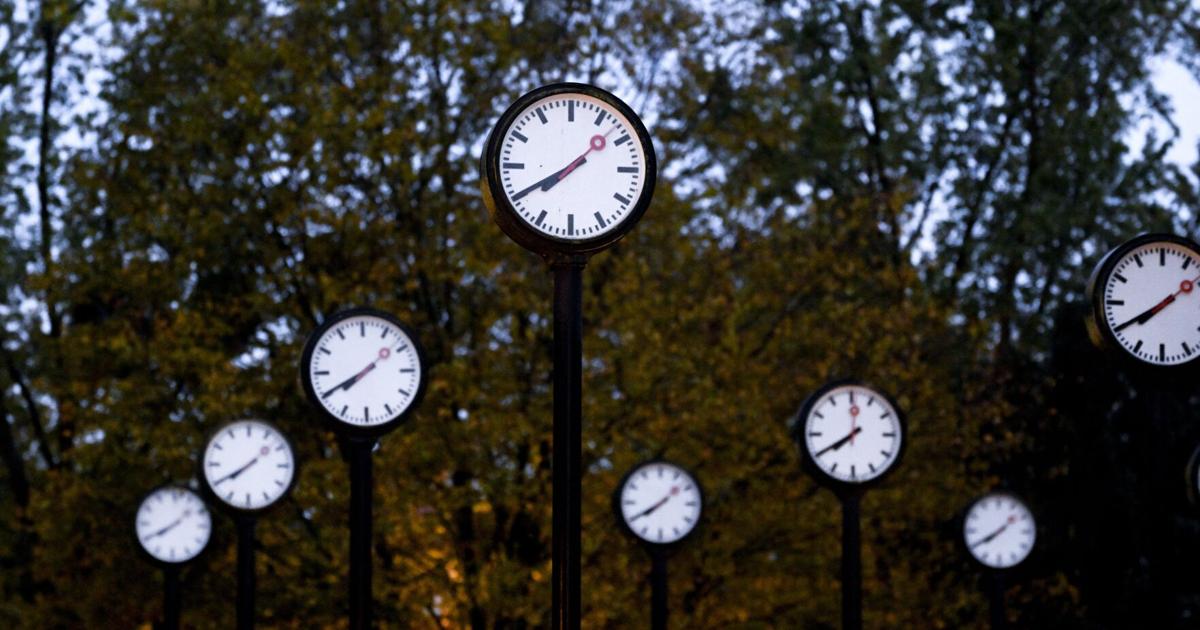
On Nov. 1, clocks will fall back an hour for Toronto and much of Canada as we transition back to standard time.
asserted
we → fall → time
Not so for British Columbia, Alberta and the Northwest Territories: For the first time, these provinces and territories will be ditching the time change and sticking with daylight saving time year-round.
asserted
provinces → ditch → time
We’re resurfacing this story, first published on April 30, 2026, in which we asked sleep experts whether Ontario should follow suit.
asserted
Ontario → resurface → suit
Ontario sleep researcher Joseph De Koninck has spent the past two decades fighting to abolish the twice-yearly time change across Canada.
asserted
Koninck → spend → Canada
So when B.C., Alberta and Northwest Territories recently moved to adopt daylight saving time year-round, you’d think the 79-year-old professor emeritus would have been ecstatic.
asserted
emeritus → move → time
But all he felt was frustration.
asserted
he → feel → ?
That’s because from a health perspective, he feels the change is going the wrong way.
asserted
change → ’ → perspective
“The worst situation by far is making daylight saving permanent,” said De Koninck, who researches sleep and dreams at the University of Ottawa.
asserted
who → make → Ottawa
While most Ontarians will turn their clocks back an hour this weekend, some communities in the province will no longer have to make the switch.
asserted
communities → turn → switch
While most Ontarians will turn their clocks back an hour this weekend, some communities in the province will no longer have to make the switch.
asserted
communities → turn → switch
Most sleep experts, and Canada’s major sleep associations, recommend adopting permanent standard time instead of daylight saving time.
asserted
experts → recommend → time
But several provinces — including Ontario — favour daylight saving time regardless, despite urging from the Canadian Sleep Society, the Canadian Society for Chronobiology, the Canadian Sleep Research Consortium and more.
asserted
provinces → include → Chronobiology
“It is a little bit frustrating,” said Rebecca Robillard, co-chair of the Canadian Sleep Research Consortium and an associate professor of psychology at the University of Ottawa.
asserted
Robillard → say → Ottawa
We’ve been vocal about it, and we’ve been trying to reach out.”
asserted
we → try → it
Here’s why sleep experts are opposed to year-round daylight saving time — and what happened in other places that opted for it.
asserted
that → ’ → it
Standard time versus daylight saving time
Daylight saving time is the practice of moving the clocks an hour forward from standard time in the spring, before returning back to standard time in the fall.
asserted
time → move → fall
This bi-annual time change was adopted nationwide during the First World War to save on energy costs and has stuck around since — despite research showing the energy saved from the practice today is negligible.
asserted
energy → adopt → practice
Standard time is based on the position of the sun, meaning daylight is equally distributed before and after noon.
asserted
daylight → base → noon
So when we switch to daylight saving time, we’re shorting ourselves an hour of sunlight in the morning, especially during the winter.
asserted
we → switch → winter
And that’s the crux of the issue.
asserted
that → ’ → issue
Our sleep-wake cycles — as well as most biological rhythms in the body — are informed by sunlight.
asserted
cycles → inform → sunlight
That’s why it’s crucial to get exposure to sunlight as soon as possible after we wake up; this sets our biological clocks, while elevating certain hormones that help keep us aware and alert throughout the day, explained Dr. Mark Boulos, a staff neurologist and medical lead at Sunnybrook Hospital’s sleep laboratories.
asserted
Boulos → ’ → laboratories
Meanwhile, an extra hour of sunlight in the evening “actually pushes our biological clocks back,” Robillard said, “so it makes it harder to fall asleep and harder to wake up.”
asserted
it → push → clocks
These effects can be especially pronounced in Canada, where our winter days are already short on sunlight given our northern latitude.
asserted
days → pronounce → latitude
“Springing forward in time is generally not good for you,” Boulos said.
asserted
Boulos → spring → you
“It can certainly contribute towards health consequences like dementia, stroke, heart attack, diabetes, weight gain and depression.”
asserted
It → contribute → dementia
A study published last year found that adopting permanent daylight savings time would increase the prevalence of obesity, heart attacks and strokes compared to year-round standard time — although it found permanent daylight saving time to still be preferable over the bi-annual time change.
asserted
time → publish → change
Historically, car accidents and even suicides tend to spike shortly after the transition to daylight saving time in spring.
asserted
accidents → tend → spring
Research has also linked the time change to heart disease and mood issues.
asserted
Research → link → disease
Will Canada eliminate the time change for good?
asserted
Canada → eliminate → change
Patricia Lakin-Thomas is a biology professor at York University who favours staying at standard time year-round because it is better for our
Patricia Lakin-Thomas is a biology professor at York University who favours staying at standard time year-round because it is better for our
We appear to be moving that way.
In early March, B.C. announced it will make daylight saving time permanent year-round.
asserted
time → favour → March
In April, Alberta tabled legislation to do the same, and the Northwest Territories followed soon after.
asserted
Territories → table → same
Meanwhile, Saskatchewan and the Yukon have adopted standard time year-round, which sleep experts strongly prefer.
asserted
experts → adopt → which
A spokesperson for B.C.‘s Ministry of Attorney General defended its move, telling the Star that 93 per cent of residents were in favour of year-round daylight saving time, according to a 2019 survey, and that “people have different preferences regarding whether they want that potential extra hour of light in the morning or evening.”
uncertain
they → defend → morning
“The extra evening daylight will provide more opportunities for family time, outdoor activity, and safer commutes,” they said over email.
asserted
they → provide → email
Meanwhile, Dale Nally, Minister of Service Alberta and Red Tape Reduction, told the Star: “Our move to permanent daylight time keeps more daylight later in the day, when people can actually use it.
asserted
people → tell → it
We’re in daylight time for 8 months of the year already and if we went to standard time, the sun would rise as early as 4 a.m. in some communities during the summer.”
asserted
sun → ’re → summer
Ontario already has a bill, which received Royal Assent in 2020, that would make daylight saving time permanent year-round once enacted.
asserted
time → have → 2020
But it requires neighbouring Quebec and New York to enact the same change before it can be proclaimed to come into force.
asserted
it → require → force
“Making daylight savings time permanent in Ontario without Quebec and New York State following suit would be disruptive for trade, stock markets and broadcasting,” said Hannah Jensen, spokesperson for Ontario Premier Doug Ford.
asserted
Jensen → make → Ford
…and 13 more, not listed.
 The Aporia