During his first visit to Kazakhstan, Nvidia CEO Jensen Huang said the country's growing computing capacity could make it a major AI hub for Europe, as Kazakhstan expands its energy and digital infrastructure.
uncertain
Kazakhstan → say → infrastructure
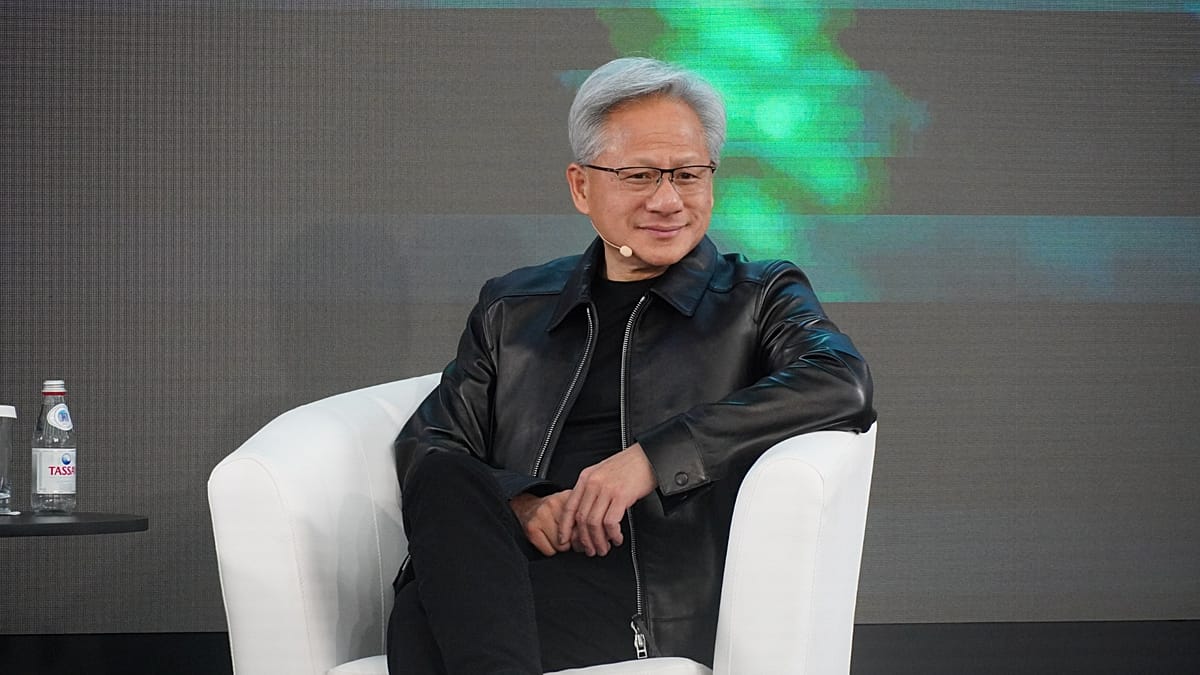
Nvidia founder and CEO Jensen Huang has visited Kazakhstan for the first time, saying the Central Asian country could emerge as a major AI computing hub for Europe.
uncertain
country → visit → Europe
Huang made the remarks during a fireside chat with Zhaslan Madiyev, Kazakhstan's Deputy Prime Minister and Minister of Artificial Intelligence and Digital Development, at the Alem.ai International Artificial Intelligence Centre in Astana.
asserted
Huang → make → Astana
During the discussion, Madiyev said Kazakhstan plans to nearly double its installed power capacity to more than 40 gigawatts by 2035 as the country expands the infrastructure needed to support its growing AI sector.
asserted
country → say → sector
One of its flagship projects is the Data Center Valley, a large-scale AI computing campus under development in Ekibastuz, one of Kazakhstan's main power-generating centres.
asserted
One → generate → centres
Its first 50-megawatt phase is expected to begin operations in 2027, while the project's energy infrastructure could eventually scale up to one gigawatt.
uncertain
infrastructure → expect → gigawatt
Huang said Kazakhstan's energy resources and growing computing capacity could give the country a significant role in Europe's AI ecosystem.
uncertain
resources → say → ecosystem
It also has a lot of energy,” Huang said.
asserted
Huang → have → energy
“You're going to have a lot of compute right here in Kazakhstan.
asserted
You → go → Kazakhstan
It's going to be a hub, a computing hub, an AI factory hub for all of Europe.”
asserted
It → go → Europe
Huang described the country's abundant energy resources as a potential competitive advantage in the AI economy, arguing that electricity could increasingly be used to generate computing power and AI rather than simply being exported as energy.
uncertain
electricity → describe → energy
“Kazakhstan has a fundamental advantage because you have so much natural resource already.
asserted
you → have → resource
You have so much energy, and instead of just exporting energy in the future, you could transform the energy into intelligence and export intelligence,” Huang said.
uncertain
Huang → have → intelligence
But energy alone, Huang argued, will not be enough.
asserted
Huang → argue → ?
Kazakhstan will also need to retain control over another resource — its data.
asserted
Kazakhstan → need → resource
Madiyev said the country is already developing Kazakh-language large language models based on open-source foundation models and asked whether Kazakhstan should eventually build its own foundation model from scratch.
asserted
Kazakhstan → say → scratch
Huang said building a domestic foundation model “makes complete sense”, describing it as a national security concern.
asserted
building → say → concern
He argued that countries should retain control over both their data and the AI infrastructure used to serve their citizens, comparing it to other essential national infrastructure.
“In the future, you will have your own electric grid, your own internet, your own telecommunications and your own intelligence grid,” Huang said.
asserted
Huang → argue → grid
The potential of Physical AI
Beyond computing infrastructure and sovereign AI, Kazakhstan is also looking to position itself in the emerging field of Physical AI — systems that can interact with and operate in the physical world.
asserted
that → compute → world
Pointing to Kazakhstan's industrial base in mining, agriculture, transport and logistics, Madiyev asked whether the country could become a hub for developing and training Physical AI models and robots.
uncertain
country → point → models
Huang called the idea “fantastic”, saying these industries could be among the first to benefit.
uncertain
industries → call → first
“Physical AI is not just robotics,” Huang said.
asserted
Huang → say → ?
“It includes everything from seismic understanding to mapping mines and wells, to understanding geography and geology — where to mine, how best to mine — understanding material science, the processing of chemicals.”
asserted
It → include → chemicals
With the technology still at an early stage, Huang said Kazakhstan has an opportunity to help shape the emerging industry.
asserted
Kazakhstan → say → industry
The discussion also turned to Higgsfield AI, a Kazakh-founded generative video startup in which Nvidia has invested.
asserted
Nvidia → turn → which
Asked what attracted Nvidia to the company, Huang said the decision ultimately came down to its founders.
“The first thing and the last thing is you invest in people, not companies,” Huang said, describing Higgsfield's founders as “visionary” and capable of competing with leading AI companies globally.
asserted
Huang → ask → companies
Huang also pointed to the company's presence in both Kazakhstan and the United States, saying it could help bridge the two ecosystems.
uncertain
it → point → ecosystems
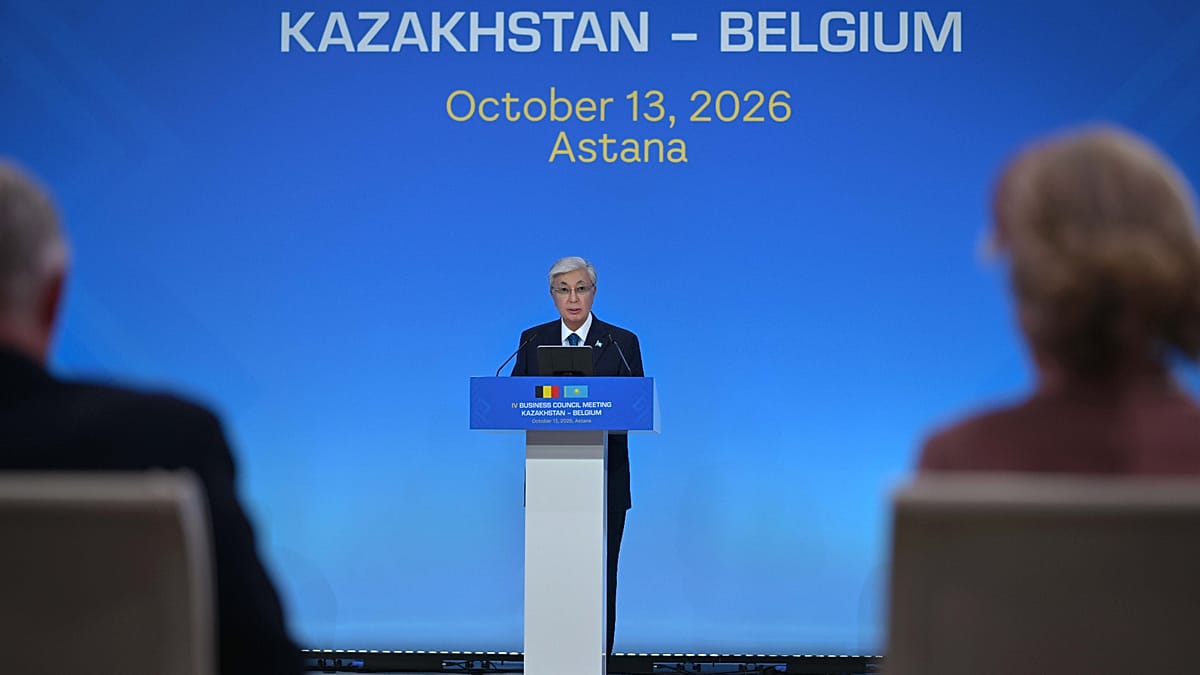
Later that day, Huang met President Kassym-Jomart Tokayev, who described the development of artificial intelligence and digitalisation as a national priority.
asserted
who → meet → priority
“This visit is very important for us in terms of giving a serious boost to cooperation with Nvidia,” Tokayev said.
asserted
Tokayev → give → Nvidia
Huang welcomed Kazakhstan's ambition to become an “AI nation” and said the country had the potential to become a global hub for Physical AI.
asserted
country → welcome → AI
Huang's first visit to Kazakhstan came at the close of AI Month, a nationwide initiative launched in September as part of the country's Year of Digitalisation and Artificial Intelligence.
asserted
visit → come → Digitalisation
 The Aporia