Photo via Times of India

Idaho couple's 47-year land dispute takes turn as Supreme Court reverses ruling favouring state

Read the original at Times of India ↗
Cite

TOI World Desk. (2026, October 30). Idaho couple's 47-year land dispute takes turn as Supreme Court reverses ruling favouring state. Times of India. https://timesofindia.indiatimes.com/world/us/an-idaho-couple-who-have-farmed-beside-a-barbed-wire-fence-since-1979-fought-the-state-over-5-95-acres-and-an-october-27-supreme-court-ruling-reversed-the-states-title-victory-and-reopened-their-ownership-claim/articleshow/135347836.cms

Dated from the outlet's own feed. Check the original for its byline.

Times of India · collected 2026-10-30 · by TOI World Desk

Quick Summary

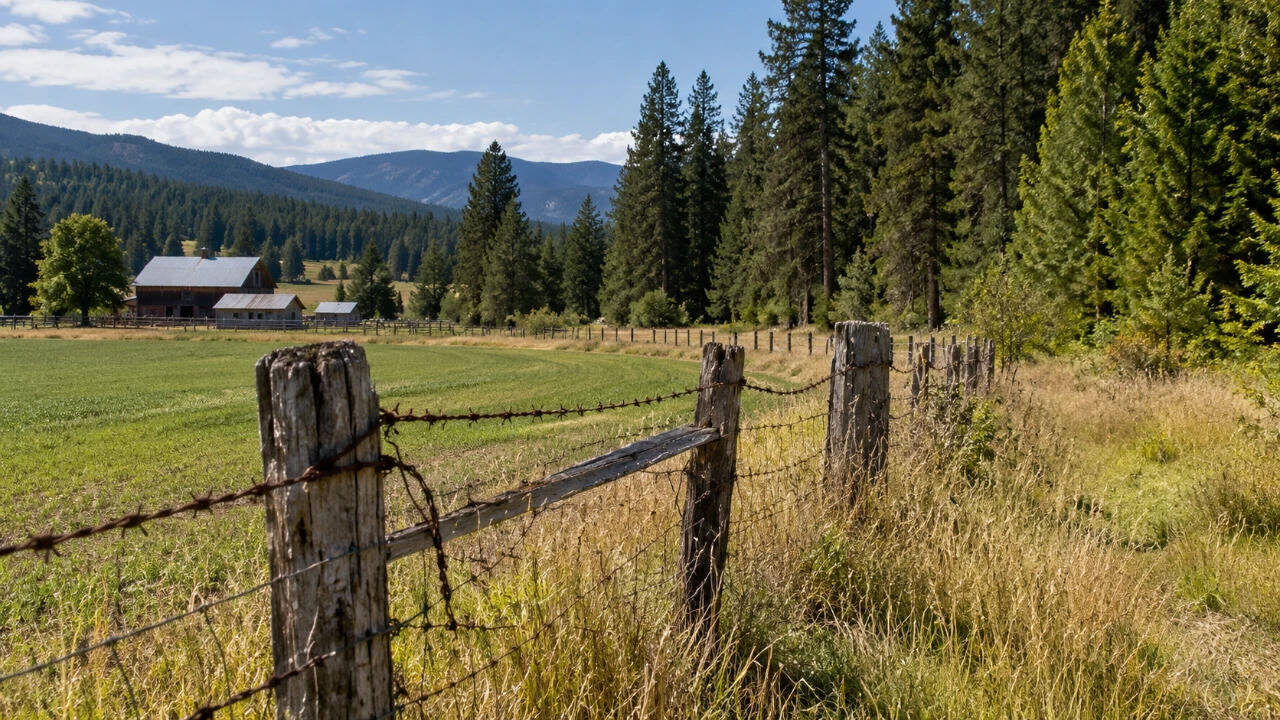
Greg and Leah Sempel, Idaho farmers since 1979, have won a Supreme Court appeal against the state’s claim over 5.95 acres of their farmland. The dispute began when the state claimed ownership in 2022 based on documents showing it acquired the land in 1996; however, the Sempels argue they had been using the land since before that date and rely on a long-standing barbed-wire fence marking what they believe to be their property boundary. The Supreme Court’s recent ruling reverses an earlier decision favoring the state and sends the case back for further examination.
Written by AI on 2026-11-02, from this article's own text only (the story summary below draws on all the coverage).

AI analysis

Story summary

As of October 30, 2026, the Idaho Supreme Court reversed a previous ruling that favored the state over Greg and Leah Sempel's claim to nearly six acres of land in Benewah County, Idaho. The Sempels have farmed this property since 1979 and based their ownership on an old barbed-wire fence marking their boundary for decades. However, in 2022, the state sued them, arguing that they had been using 5.95 acres of land without authorization. The court's decision to overturn the earlier ruling means that the Sempels' long-standing dispute with the state will now be re-examined. This case highlights ongoing tensions over property rights and historical claims in rural areas.

Written for “Supreme Court Reverses Ruling In Land Dispute” on 2026-11-02, grounded in this article and the 0 other(s) covering the same event.
Why this leaning score
This article does not take a side on a contested political question, so it has no leaning score. That is an answer rather than a gap: a match report or a rescue can be warmly or critically written without being left or right, and scoring it anyway is how approval of a subject gets recorded as a political position.
No political leaning scored for article 116883 · logged 2026-11-02

Story

📰 Supreme Court Reverses Ruling In Land Dispute
Politics · 1 article(s) covering the same event.

Compared with similar articles

Nothing to compare against. No article is close enough to this one for the pipeline to have linked or judged the pair.
How this article was measured signals, leaning charts, publisher record, byline, topics and claims

Signals How these are calculated →

Claims extracted
44
sentences that state something as happening or true
Uncertain
25%
11 of 44 hedged ("reportedly", "may", "according to")
Leaning
not political
takes no side on a contested political question
Publisher signals
59/100
Times of India's corrections and hedging, across everything collected from it. Not a measure of accuracy.
Outlets on this story
1
Politics
Same framing elsewhere
1
articles that frame the event the way this one does
Analyzed 2026-11-02 · how these are computed

How this is being covered How these are calculated →

Article leaning vs. publisher reliability
Source leaning vs. consistency

Publisher

Times of India · 3922 article(s) · 3 correction(s) detected
Running correction rate · 3 correction(s)

Who wrote this

TOI World Desk
1369 article(s) here · 1 carrying a prediction
🔮 According to the court's ruling, available on Justia under Lampton Securities Partnership, LLP v. Louisville-Jefferson County Metro Government, the landowner had not obtained a final decision from the relevant authorities about what could be built on the property.
🔮 In one incident in May 2025, Scotty took the child out of school without informing Jill or the school.
🔮 The idea was met with resistance from administrators who believed it would be too complicated to implement.
🔮 According to the North Dakota Department of Agriculture, at 12, he was developing flavours, preparing batches and finding customers willing to pay $2 for a bag of his seasoned creations.
🔮 Before the wedding, Chen hired a lawyer in Kentucky to prepare an agreement that would protect his property for his two children.
🔮 In the early days of America's Parcel Post system it seemed everything that could fit within the rules was fair game for delivery.
🔮 Their efforts reached a new milestone in May 2026, when the Born This Way Foundation announced that more than 100,000 Be There Certificates had been earned worldwide through a free online programme teaching people how to support someone struggling with their mental health.
🔮 Her project received the award at the Regeneron International Science and Engineering Fair (ISEF), held in Phoenix in May.
🔮 Children in Need said the money would help young people in communities blighted by violence and knife crime, especially in Nottingham.
🔮 The proposed raptor building would provide a larger flight enclosure for recovering birds.
Wire or desk byline, not an individual reporter.
Also by TOI World Desk
Nothing else under this byline is closely related to this article, so these are simply their most recent.
All 1369 articles by TOI World Desk →

Topics

Benewah County Idaho Sempels Supreme Court the Supreme Court's

Subjects

Greg PERSON · 6× Idaho GPE · 3× Sempels ORG · 3× Leah PERSON · 2× Supreme Court ORG · 2× the Supreme Court ORG · 2× Benewah County GPE · 1× Leah Sempel PERSON · 1× Tom Rathbone PERSON · 1× the Supreme Court's ORG · 1×

Narrative

However, the judges said its present condition did not establish what it looked like when the couple first occupied the property or whether earlier landowners had accepted it as the boundary.
framing: mixed · carried by 1 article(s) · first seen 2026-11-02
🔮 With the Supreme Court's latest ruling, the competing claim will be examined again.

Claims (44 extracted, 11 hedged)

An Idaho couple who have farmed in Benewah County since 1979 have won another chance to claim 5.95 acres of disputed land after the state Supreme Court overturned an earlier ruling in Idaho's favour on Tuesday. uncertain
Court → farm → Tuesday
Greg and Leah Sempel believed the land was theirs because an old barbed-wire fence had marked their property's boundary for decades. asserted
fence → believe → decades
However, the state claims the land belongs to it and sued the couple in 2022 over its alleged unauthorised use. uncertain
land → claim → use
According to the judgment, the couple run Pokey Creek Farm, where they have grown crops, kept animals and built structures over the years. uncertain
they → accord → years
They say the land inside the fence was theirs because that was what they had been told when the property was purchased. asserted
property → say → what
They said the fence had been there long before they arrived, and they continued to treat it as the boundary. asserted
they → say → boundary
The state, however, has documents showing that the disputed 5.95 acres are part of a much larger property it acquired in 1996. asserted
it → have → 1996
But the Sempels argue that they had already been using the area for many years before the state became its owner. asserted
state → argue → owner
With the Supreme Court's latest ruling, the competing claim will be examined again. uncertain
claim → compete → ruling
The story began in 1979, when Greg's parents purchased the property for him and Leah to use. asserted
him → begin → property
Before the purchase, Greg said he walked around the land with Tom Rathbone, a representative of the company selling it. asserted
he → say → it
During that visit, Rathbone pointed towards a barbed-wire fence and told him it marked the northern boundary. asserted
it → point → boundary
Greg later spoke to Chester Henning, who had owned the property previously. asserted
who → speak → property
According to Greg, Henning told him that the fence had been built in the 1960s after an agreement with the company that owned the neighbouring land. uncertain
that → accord → land
The couple say they had followed that boundary ever since. asserted
they → say → boundary
In their early years, they planted crops and kept horses in the area. asserted
they → plant → area
During the 1980s, they harvested timber, laid a gravel access road and built several structures. asserted
they → harvest → structures
In the following decade, they added a greenhouse and raised livestock. asserted
they → follow → livestock
They also claimed that government workers carrying out logging operations had treated the fence as the dividing line between the properties. asserted
workers → claim → properties
How state came to claim the land While the Sempels continued farming, the neighbouring property changed hands. uncertain
property → come → hands
It belonged to Milwaukee Land Company until 1981, when Potlatch Corporation acquired it. asserted
Corporation → belong → it
In December 1996, Potlatch transferred more than 4,100 acres to the State of Idaho through a land exchange. asserted
Potlatch → transfer → exchange
The disputed 5.95 acres were included in that transfer. asserted
acres → include → transfer
Years later, a survey carried out in 2016 raised questions about the couple's use of the land. asserted
survey → carry → land
The state claimed that they were occupying part of its property without permission. asserted
they → claim → permission
In August 2022, Idaho took the couple to court. asserted
Idaho → take → court
Apart from asking the court to recognise its ownership, it sought compensation over the alleged unauthorised use of the land, timber removal and property damage. asserted
it → ask → land
Couple refuse to give up land The Sempels said they had been using the disputed area openly since 1979 and had treated it as part of their farm. asserted
they → refuse → farm
They relied on a legal principle known as adverse possession, which can allow someone to claim ownership of land they have occupied for a required period, provided certain conditions are satisfied. uncertain
conditions → rely → period
The couple argued that they had met those conditions by 1984, long before the state acquired the property. asserted
state → argue → property
They also maintained that the fence was not simply something built to keep animals inside. asserted
fence → maintain → animals
According to their account, it had been accepted as the boundary by previous landowners. uncertain
it → accord → landowners
The lower court, however, ruled in the state's favour on the ownership dispute. asserted
court → rule → dispute
On the issue of property taxes, Greg said he and Leah had always paid taxes on their property, but the lower court found that they had not provided enough evidence to establish it. asserted
they → say → it
The couple challenged that decision in the Supreme Court. asserted
couple → challenge → Court
What changed in Supreme Court The Supreme Court found that the lower court had dismissed important parts of the couple's case without properly considering the evidence. asserted
court → change → evidence
For example, Greg had given a sworn statement saying they had paid their property taxes. asserted
they → give → taxes
Although older receipts were unavailable, the judges said that statement could not simply be treated as though no evidence had been presented. uncertain
evidence → say → ?
The court also considered whether taxes paid on the couple's recorded property could count towards the disputed area under an exception recognised by Idaho law. uncertain
taxes → consider → law
Photographs showed that some sections of the wire fence had become embedded in trees as they grew. asserted
they → show → trees
…and 4 more, not listed.

💬Give feedback
🕘History 🎫Support