You’re reading Dispatch Markets, a weekly dive into the forces driving economic growth—and those holding it back—featuring Scott Lincicome, Kyla Scanlon, Karl Smith, Marian Tupy, and Adam Ozimek.
asserted
You → read → Lincicome
With the midterms mercifully just a few days away, a spate of bad polls has panicked farm-state Republicans.
asserted
spate → panic → Republicans
An October New York Times/Siena survey has President Donald Trump deeply underwater (38 percent approval versus 57 percent disapproval), and Senate races in Trump-voting states with large rural populations (Iowa, Kansas, Nebraska, and more) are suddenly competitive.
asserted
races → have → populations
Among the chief panickers is Trump himself, who’s responded to the numbers in typical fashion—not by reversing the policies that demonstrably hurt these farming communities but by throwing even more taxpayer dollars at them.
asserted
that → respond → them
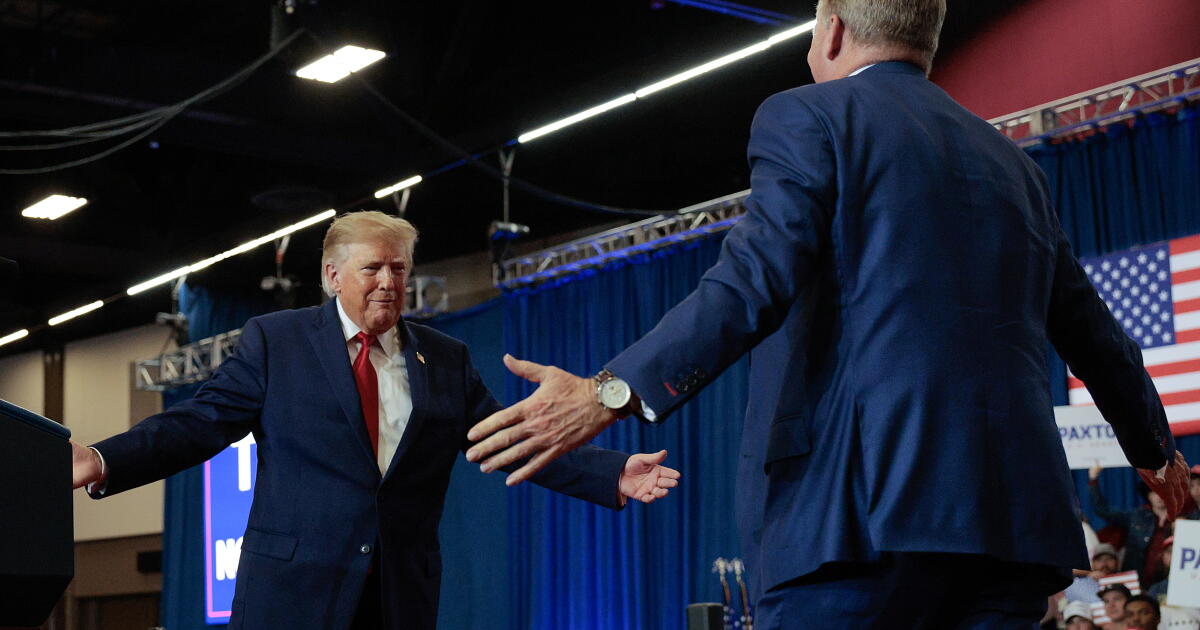
In just the last two weeks, Trump went to Kansas to announce $8 billion in “Harvest Fuel Relief” to offset record diesel prices, caused in large part by Trump’s ill-fated Iran adventure.
asserted
Trump → go → adventure
Three days later, Vice President J.D. Vance went to Nebraska and unveiled a plan to subsidize U.S. fertilizer production and (somehow) lower fertilizer prices, which both the Iran war and Trump’s tariffs inflated.
asserted
war → go → which
Both ploys are the latest in a long line of monetary and nonmonetary payoffs to American farmers hurt by Trump’s policies—tens of billions of dollars that haven’t been authorized by Congress, aren’t going to less politically important groups also hurt by these policies, and come atop billions in “normal” government support for U.S. agriculture.
asserted
that → hurt → agriculture
“We just got thrown some more election candy,” grumbled Nebraska Farmers Union President John Hansen after hearing Vance’s fertilizer sop.
asserted
Hansen → throw → sop
The candy’s costs—fiscal, economic, and political—just keep climbing.
asserted
costs → climb → ?
Adding It Up
Before we get to the tally, let’s first recall why American farmers are hurting.
asserted
farmers → add → tally
As I wrote last September, most of this “farmer crisis” was government-grown: Tariffs on inputs and machinery, as well as immigration restrictions and deportation raids, raised their costs; foreign retaliation and closed overseas markets depressed their sales prices; and subsidies and other policies discouraged adjustment.
asserted
subsidies → write → adjustment
Throw in bad weather and high interest rates, and the result was a predictable mess: costs exceeding sales prices, widespread bankruptcies, and worse.
asserted
result → throw → prices
The Iran war exacerbated these problems.
asserted
war → exacerbate → problems
Prices of diesel and fertilizer—two inputs of farmers can’t do without—spiked after hostilities began in late February, adding thousands of dollars to their already high monthly expenses.
asserted
hostilities → do → expenses
According to the USDA’s September forecast, farmers will spend $5 billion more on fertilizer and $5 billion more on fuel this year, and median farm income is projected to be negative $467 for 2026.
uncertain
income → accord → 2026
As several experts just told the Washington Examiner, the Trump administration never would’ve needed to bail out farmers last week if the tariffs and the war hadn’t started.
asserted
tariffs → tell → farmers
Since 2018, the Trump administration has unilaterally directed roughly $46 billion in “emergency” aid to farmers hurt by the president’s own policies.
asserted
administration → direct → policies
Almost all of it comes via the Commodity Credit Corporation (CCC), which allows the president to spend billions on farm “emergencies” without congressional oversight, and it excludes similarly dubious nonmonetary support for American farmers, pandemic relief, and other farm aid—both emergency and not—appropriated by Congress.
asserted
it → come → Congress
Before we get to that other stuff, let’s first document the direct payments:
asserted
’s → get → payments
- During Trump’s first term, farmers received $23 billion in ad hoc “Market Facilitation Program” funds, plus about $2.3 billion in government food purchases and $0.3 billion in export promotion.
asserted
farmers → receive → promotion
All of it was intended to compensate farmers for lower prices and lost export sales caused by foreign retaliation to Trump’s tariffs—especially by the Chinese government.
asserted
All → intend → government
And, just like this time around, the money had a clear electoral motive: The first trade war aid arrived in summer 2018, just a few months before that year’s midterms, and Trump announced roughly $13 billion in CCC aid at a Wisconsin campaign rally in September 2020.
asserted
Trump → have → September
Trump’s second term has already added about $20 billion more to the “emergency” tab: $11 billion in “Farmer Bridge Assistance” announced last December, another $1.6 billion for specialty crops, and now the $8 billion for diesel.
asserted
term → add → diesel
In each case, the political motivation was again clear—and championed by the administration at midterm campaign rallies across U.S. farm country.
asserted
motivation → champion → country
In the grand scheme of the federal budget, $46 billion is (unfortunately) little more than a rounding error, but it’s still quite big.
asserted
it → ’ → error
The annual budget of NASA, for example, was $24.4 billion this fiscal year, and the CHIP S Act spread out $39 billion in manufacturing incentives over five years.
asserted
Act → spread → years
Both were approved by Congress, and each is smaller than Trump’s farm payouts.
asserted
each → approve → payouts
The $46 billion is also large in terms of who’s paying and who gets paid.
asserted
who → pay → paying
Spread out evenly, it’s akin to the government taking $290 from each American taxpayer and then handing about $25,000 to each farm—all financed through borrowing at increasingly high interest rates.
asserted
all → Spread → rates
In reality, of course, the redistribution is probably even more distasteful, given that farm subsidies are usually concentrated among the largest producers, not struggling family farms.
asserted
subsidies → give → producers
It’s also important to remember that this $46 billion is only what’s been promised so far.
asserted
what → ’ → ?
Another year of tariff and war pain could increase the totals, and if farmers are still struggling in 2028, there’s no telling how much cash they could see (sigh).
uncertain
they → increase → cash
Finally, the cash comes atop plenty of other special government support for U.S. agriculture.
asserted
cash → come → agriculture
For starters, the Trump administration has used other unilateral levers to line American farmers’ pockets:
asserted
administration → use → pockets
- The aforementioned fertilizer plant grants, for example, will cost taxpayers more than $573 million to (supposedly) cut farmers’ fertilizer bills.
asserted
grants → cost → bills
- In March, the EPA mandated record biofuel volumes for 2026 and 2027 under the Renewable Fuel Standard, adding an estimated $3 billion to $4 billion a year to U.S. farm income—paid by U.S. refiners and drivers.
asserted
EPA → mandate → refiners
(Trump just promised Kansas voters even more if they vote Republican next week.)
asserted
they → promise → Republican
- The administration lowered minimum wages that farmers can offer guest workers on H-2A visas, saving them $2.5 billion a year in labor costs.
- And the White House has exempted various farm inputs—fertilizers, machinery and equipment, packaging materials, etc.—from Trump’s tariffs, while also suspending trade remedy duties on Moroccan phosphate, translating into hundreds of millions of dollars in direct tax savings plus billions more via lower U.S. prices.
asserted
House → lower → prices
There’s even more—a Great American Cotton Plan, a USDA/Federal Trade Commission inquiry into farm-equipment competition on October 7, apparel tariff preferences tied to U.S. cotton purchases, etc.—that we can’t quantify.
asserted
we → ’ → purchases
Some of this stuff (e.g., tariff relief) would be good and defensible if applied broadly and offered to everyone, but it isn’t.
asserted
it → apply → everyone
…and 48 more, not listed.
 The Aporia