Skeletal remains believed to be ritual offering unearthed in Peru

Home - CBSNews.com · collected 2026-08-19
Read the original at Home - CBSNews.com ↗

Summary

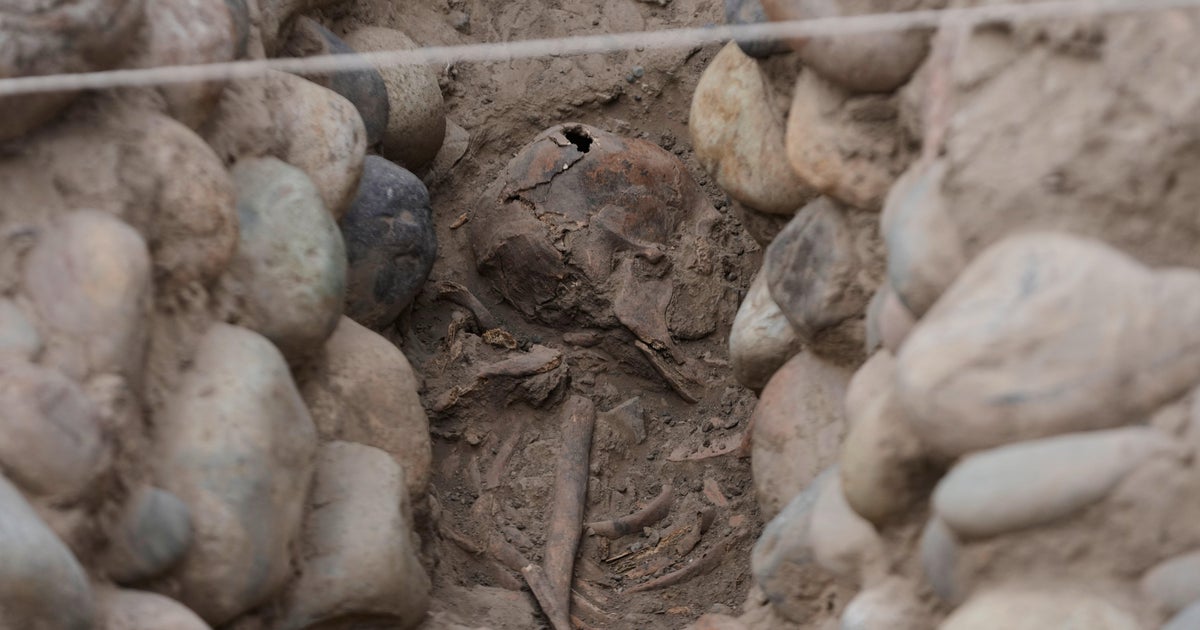
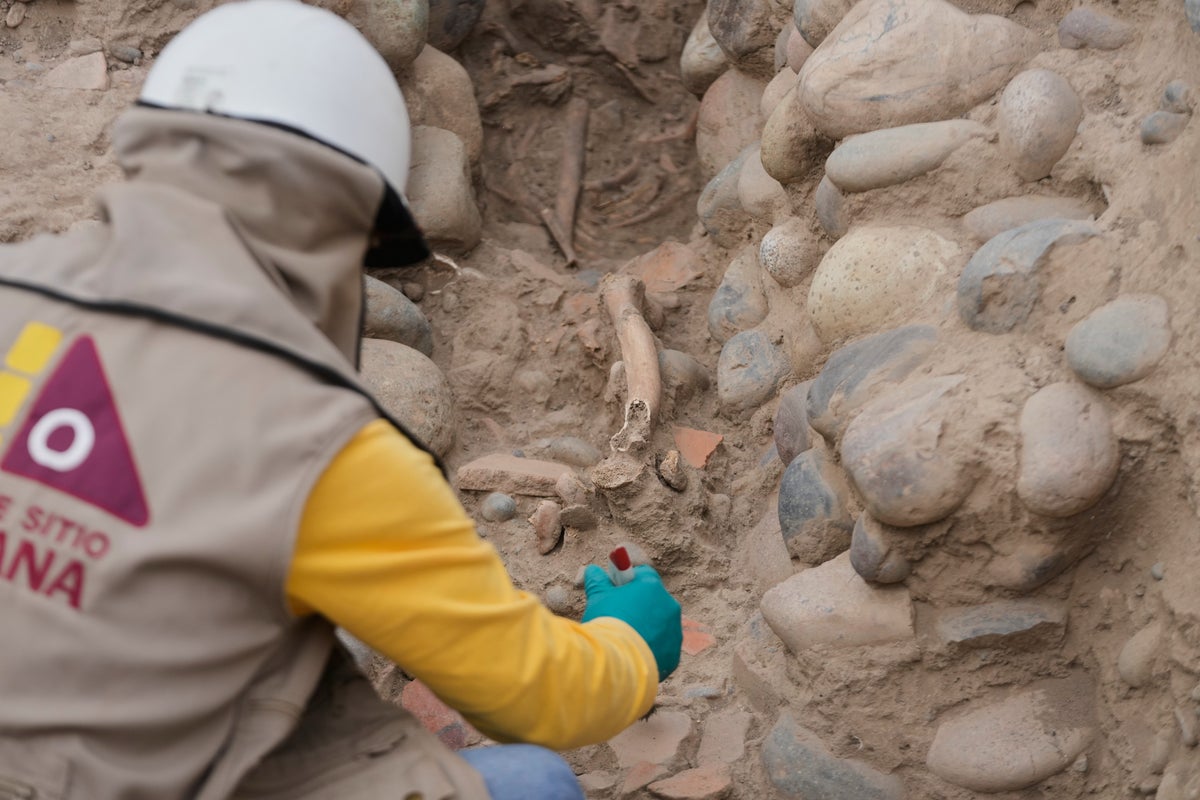
Archaeologists have unearthed skeletal remains believed to be around 1,400 years old near the base of Huaca Pucllana, an ancient adobe pyramid in Lima, Peru. The remains are thought to be those of a man who may have been sacrificed during a ritual, and were buried inside a canal with its skull facing the Pacific Ocean and the pyramid. The discovery has provided researchers with new insights into "the rituals of the Lima culture", according to lead archaeologist Gladys Paz. Preliminary dating suggests the remains date back to around A.D. 650, during the time when the Lima culture flourished along Peru's central coast.
Written by the local model on 2026-08-19, using this article's own text rather than the other coverage of the same event (that is the story summary below).

Signals How these are calculated →

Claims extracted
16
claim-shaped sentences
Uncertain
6%
1 of 16 hedged
Leaning
not scored
needs a local LLM pass
Publisher trust
58.0
red-flag proxy, not a credibility rating
Outlets on this story
2
World
Narrative spread
1
articles carrying this framing
Analyzed 2026-08-19 · how these are computed

AI analysis (generated at analysis time, not now)

Story summary

Archaeologists have unearthed skeletal remains at an ancient pyramid in Peru, believed to be around 1,400 years old. The remains are thought to be those of a man who was buried as an offering near the base of Huaca Pucllana, an adobe pyramid in Lima's capital, during a ritual where a canal linked to a ceremonial pool was closed. This discovery is significant because it will help researchers understand the "rituals of the Lima culture" and reconstruct ceremonies that took place hundreds of years ago. The body was buried inside a canal, with its skull facing the Pacific Ocean and the pyramid. The Lima culture** flourished from the 1st to the 7th century, predating the rise of the Inca Empire by around 700 years. This find is particularly notable because it will provide insight into human sacrifice rituals in this time period, which could rewrite what we know about these practices.

Written for “Ritual Human Sacrifice Discovery” on 2026-08-31, grounded in this article and the 1 other(s) covering the same event.
Why this leaning score
This article does not take a side on a contested political question, so it has no leaning score. That is an answer rather than a gap: a match report or a rescue can be warmly or critically written without being left or right, and scoring it anyway is how approval of a subject gets recorded as a political position.
No political leaning scored for article 1154 · logged 2026-08-24

Story

📰 Ritual Human Sacrifice Discovery
World · 2 article(s) covering the same event.

How this is being covered How these are calculated →

Article leaning vs. publisher reliability
Source leaning vs. consistency

Compared with similar articles

This article reads unscored and hedges 6% of its claims. Each row says how that neighbour differs.
The Independent World · 0.87 cosine similarity
⚖️ leaning not scored 🔴 0% hedged 0 of 12 📰 publisher trust 95
“Both articles describe the discovery of skeletal remains near Huaca Pucllana, an ancient adobe pyramid in Lima, Peru, on the same day and date.”
World News, Today World News, Latest International News, World Breaking News, Trending News of World - Times of India
⚖️ leaning not scored 🔴 6% hedged 2 of 32 📰 publisher trust 94
“The articles report on two separate archaeological discoveries in different locations: Peru and Italy.”

Publisher

Home - CBSNews.com · 113 article(s) · 1 correction(s) detected
SignalValueWeight
Correction rate 0.009 0.4
Uncertainty density 0.093 0.25
Assertive mismatch rate 1.000 0.35
Running correction rate · 1 correction(s)
2026-08-24
Sean Grayson, convicted in killing of Sonya Massey, dies in prison, attorney says

Who wrote this

No reporter is named on this article.

Topics

Lima Peru Peruvian Spanish the Inca Empire

Subjects

Lima GPE · 6× Peru GPE · 6× Peruvian NORP · 2× Gladys Paz PERSON · 1× Miraflores GPE · 1× Paz PERSON · 1× Pieter Van Dalen PERSON · 1× San Isidro GPE · 1× Spanish NORP · 1× the Inca Empire GPE · 1×

Narrative

Pieter Van Dalen, an archaeology professor at the National University of San Marcos who was not involved in the excavation, said that it's common to find tombs, mummified remains and other burial-related items along Peru's coast.
framing: assertive · carried by 1 article(s) · first seen 2026-08-19
🔮 The remains are believed to be those of a man who may have been sacrificed during a ritual in which a canal linked to a ceremonial pool was closed.
2026-08-19 · Home - CBSNews.com
Skeletal remains believed to be ritual offering unearthed in Peru · assertive framing

Claims (16 extracted, 1 hedged)

Archaeologists on Tuesday unveiled the skeletal remains of an adult they believe was buried as an offering near the base of Huaca Pucllana, an ancient adobe pyramid in Peru's capital of Lima. asserted
they → unveil → Lima
The remains are believed to be those of a man who may have been sacrificed during a ritual in which a canal linked to a ceremonial pool was closed. uncertain
canal → believe → pool
The discovery has been preliminarily dated to around A.D. 650, so it would be approximately 1,400 years old, Peru's culture ministry said in a statement, while releasing multiple images of the excavation site. asserted
ministry → date → site
Gladys Paz, the archaeologist who led the excavation, said the bones will help researchers better understand "the rituals of the Lima culture" and reconstruct ceremonies performed hundreds of years ago. asserted
researchers → lead → years
Paz said that the body was buried inside a canal, resting on its left flank, with the skull facing the pyramid and the Pacific Ocean. asserted
skull → say → pyramid
"One of the most significant aspects of the discovery is the architecture of the ceremonial well," the culture ministry said. asserted
ministry → say → well
"Unlike other known structures at Huaca Pucllana, characterized by the use of small mud bricks, this well was built with river stones. asserted
well → know → stones
The Lima culture flourished between the first and seventh centuries along Peru's arid central coast, about 700 years before the rise of the Inca Empire. asserted
culture → flourish → Empire
Huaca Pucllana was one of the most important ceremonial and administrative centers of the Lima culture, which disappeared centuries before a group of Spanish conquistadors founded Lima in 1535. asserted
group → disappear → 1535
Today, the pyramid is surrounded by parks, leafy streets and upscale apartment buildings in the districts of Miraflores and San Isidro. asserted
pyramid → surround → Miraflores
Huaca Pucllana is open to tourists, with a restaurant serving Peruvian specialties like ceviche, stir-fried beef and roasted alpaca meat. asserted
Pucllana → serve → ceviche
Pieter Van Dalen, an archaeology professor at the National University of San Marcos who was not involved in the excavation, said that it's common to find tombs, mummified remains and other burial-related items along Peru's coast. asserted
it → involve → coast
Such discoveries have also been made while construction workers dig canals to install gas pipes. asserted
workers → make → pipes
In July 2025, utility workers excavating trenches to expand an underground gas network in Peru's capital unearthed two pre-Incan tombs that were over 1,000 years old. asserted
that → excavate → tombs
A month before that, utility workers found a 1,000-year-old mummy of a child while installing pipes. asserted
workers → find → pipes
In April 2025, archaeologists announced they found the at the sacred Peruvian city of Caral, in an area that for decades was used as a garbage dump. asserted
that → announce → dump

💬 Give feedback
🕘 History 🎫 Support