Who's behind viral online posts fuelling a crisis over migration in Europe?

CBC | World News · collected 2026-08-19 · by Nahlah Ayed, Christian Paas-Lang, Jordan Pearson
Read the original at CBC | World News ↗

Summary

A visual investigation by CBC found that a series of viral online posts on Instagram, TikTok, and other platforms helped mobilize at least two waves of irregular migration from Morocco into Ceuta, with over 72,000 people crossing the border on July 30. The posts were amplified by multiple online communities focused on migration-related culture, with some accounts garnering millions of views. Nearly 100 people died trying to make the crossing, and around 5,000 remain in Ceuta after being unable to return to Morocco. The investigation suggests that misinformation, rather than a single central organizer, was behind the mobilization of migrants towards Ceuta.
Written by the local model on 2026-08-19, using this article's own text rather than the other coverage of the same event (that is the story summary below).

Signals How these are calculated →

Claims extracted
62
claim-shaped sentences
Uncertain
8%
5 of 62 hedged
Leaning
not scored
needs a local LLM pass
Publisher trust
95.3
red-flag proxy, not a credibility rating
Outlets on this story
4
World
Narrative spread
1
articles carrying this framing
Analyzed 2026-08-19 · how these are computed

AI analysis (generated at analysis time, not now)

Story summary

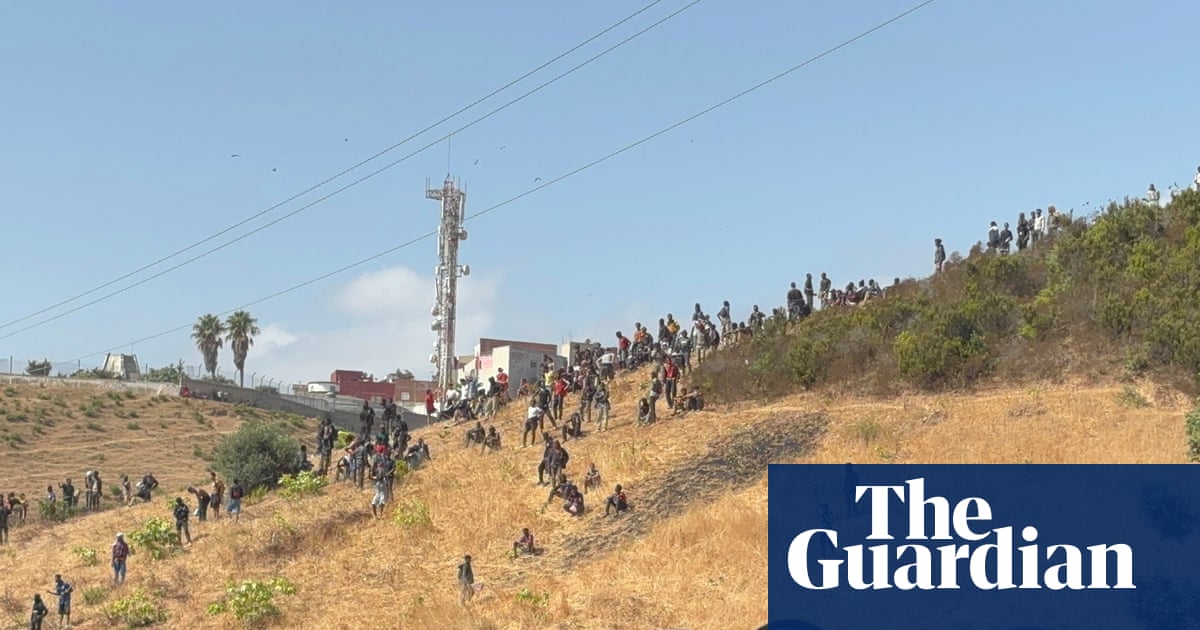
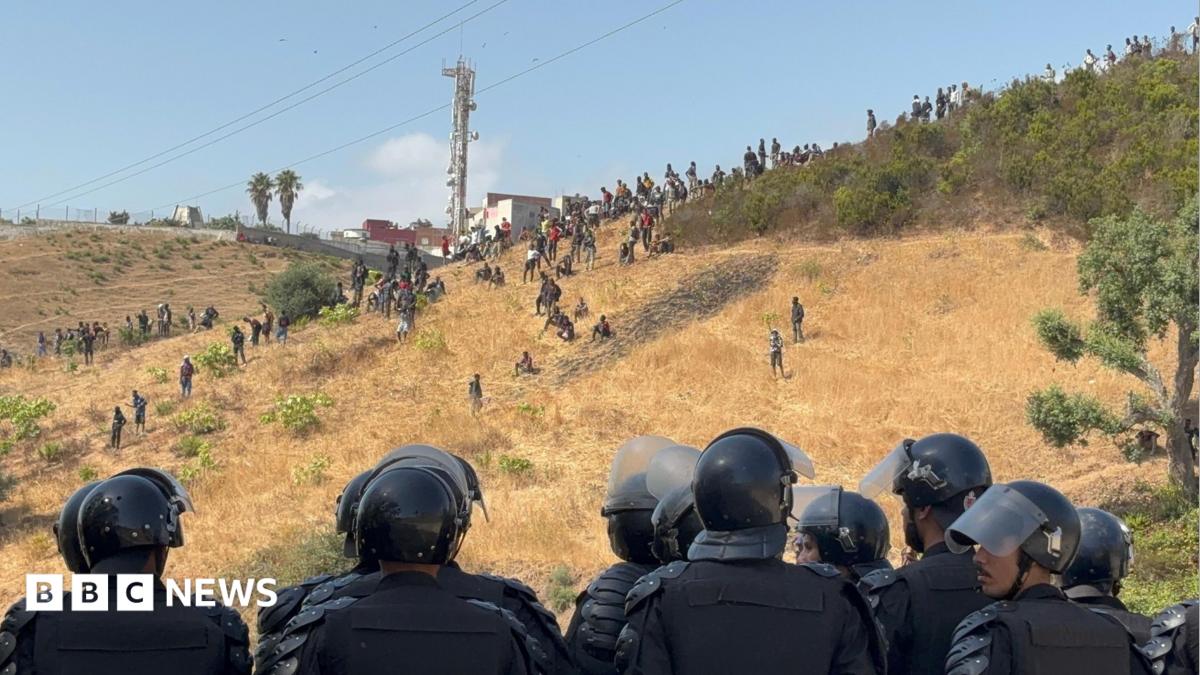
Moroccan police arrested at least 111 people, including 109 migrants from sub-Saharan Africa and two Moroccan citizens, on Saturday as they tried to enter Spain's North African enclave of Ceuta. The attempted crossing came just two weeks after more than 72,000 migrants surged into Ceuta, sparking tensions within the European Union and fueling anti-immigration rhetoric among far-right parties worldwide. At least 96 people died in the attempt to reach European soil. Moroccan police used tear gas to disperse groups of migrants gathered on hills about three kilometres from the border, according to Spanish media reports. The arrests were made amid tightened security on both sides of the border, with Morocco's government warning that it would prosecute organizers and participants of a mass crossing attempt. A source in Morocco's Interior Ministry told Reuters that those detained included 109 migrants from sub-Saharan Africa and two Moroccan citizens arrested in or around Fnideq, the Moroccan city opposite Ceuta. The incident follows a social media campaign calling for another mass migrant crossing, which was reportedly monitored by Morocco's government before the attempt on Saturday.

Written for “Ceuta Migration Crackdown” on 2026-08-31, grounded in this article and the 3 other(s) covering the same event.
Why this leaning score
The article's own words the score was based on. Each is quoted verbatim and was checked against the article text before being stored, so you can find it in the original.
Score -0.35 Confidence high
Leaning score -0.35 for article 1152 (high confidence, 1 verified quote) · logged 2026-08-24

Story

📰 Ceuta Migration Crackdown
World · 4 article(s) covering the same event. This is the one the site leads with.

How this is being covered How these are calculated →

Article leaning vs. publisher reliability
Source leaning vs. consistency

Compared with similar articles

This article reads unscored and hedges 8% of its claims. Each row says how that neighbour differs.
CBC | World News
⚖️ leaning not scored 🔴 3% hedged 1 of 30 📰 publisher trust 95
“Both articles report on the mass migrant crossing attempt into Ceuta, with Article A detailing the arrests and Article B exploring the viral social media posts that allegedly incited the movement.”
World news | The Guardian
⚖️ leaning not scored 🔴 5% hedged 1 of 21 📰 publisher trust 95
“Both articles describe the attempted mass crossing into Ceuta on Saturday, mentioning the same number of people (111) and referencing previous events and consequences”
BBC News
⚖️ leaning not scored 🔴 21% hedged 4 of 19 📰 publisher trust 96
“Article A describes an interception of migrants by Moroccan authorities, while Article B appears to be investigating online posts that may have contributed to a mass migration event, but does not describe the actual event itself”

Publisher

CBC | World News · 214 article(s) · 0 correction(s) detected
SignalValueWeight
Correction rate 0.000 0.4
Uncertainty density 0.093 0.25
Assertive mismatch rate 0.000 0.35
No corrections detected for this publisher. That may mean careful reporting, or simply that nothing has been checked.

Who wrote this

Christian Paas-Lang
2 article(s) here · 1 carrying a prediction
🔮 The surge in posts was initially triggered by misinformation suggesting a Spanish court ruling meant the country would no longer turn away migrants arriving by sea.
🔮 "I didn’t think that would come to our small little town, in our backyard."
Also by Christian Paas-Lang
Nothing else under this byline is closely related to this article, so these are simply their most recent.
Jordan Pearson
2 article(s) here · 1 carrying a prediction
🔮 The surge in posts was initially triggered by misinformation suggesting a Spanish court ruling meant the country would no longer turn away migrants arriving by sea.
🔮 "I didn’t think that would come to our small little town, in our backyard."
Also by Jordan Pearson
Nothing else under this byline is closely related to this article, so these are simply their most recent.
Nahlah Ayed
1 article(s) here · 1 carrying a prediction
🔮 The surge in posts was initially triggered by misinformation suggesting a Spanish court ruling meant the country would no longer turn away migrants arriving by sea.
The only article under this byline in the corpus.

Topics

Ceuta Fnideq Instagram Morocco Spanish

Subjects

Ceuta GPE · 8× Instagram ORG · 4× Spanish NORP · 4× Morocco GPE · 3× CBC ORG · 2× TikTok ORG · 2× African NORP · 1× Fnideq GPE · 1× Middle Eastern NORP · 1× online ORG · 1×

Narrative

It is a stark illustration of how misinformation and manipulation can have "real-world impact" when amplified across online communities and directed at people desperate for answers, said Moustafa Ayad, executive director for Africa, the Middle East and Asia at the Institute for Strategic Dialogue.
framing: assertive · carried by 1 article(s) · first seen 2026-08-19
🔮 The surge in posts was initially triggered by misinformation suggesting a Spanish court ruling meant the country would no longer turn away migrants arriving by sea.
2026-08-19 · CBC | World News
Who's behind viral online posts fuelling a crisis over migration in Europe? · assertive framing

Claims (62 extracted, 5 hedged)

Who's behind viral online posts fuelling a crisis over migration in Europe? asserted
Who → fuel → Europe
Visual investigation did not uncover clear, centralized organizer of movement In the days leading up to the largest mass arrival of migrants to Europe in recent years, a short video posted to Instagram garnered 1.4 million views. asserted
video → uncover → views
It shows a young man submerged up to his neck in water before panning to land in the distance. asserted
It → show → distance
In the top-right corner, a map traces a sea route from Fnideq, Morocco, to Ceuta, a Spanish enclave on the northern tip of Africa. asserted
map → trace → Africa
Responding to comments later, the account holder claimed "we've arrived." asserted
we → respond → comments
The video was one of many viral posts on Instagram, TikTok and other platforms that appear to have helped mobilize at least two waves of irregular migration from Morocco into Ceuta. asserted
that → appear → Ceuta
The latest, attempted on August 15, led to dozens of arrests. asserted
latest → attempt → arrests
The accounts belong to several online communities that are part of a broader ecosystem focused on migration-related culture — music, memes and imagery. asserted
that → belong → culture
Some tap into, and appear to be trying to profit from, the desperation of mostly African and Middle Eastern youth seeking better lives abroad. asserted
Some → tap → lives
There is disagreement among governments and organizations over whether a single entity was behind what happened in Ceuta or whether migration was weaponized for geopolitical aims. asserted
migration → be → aims
What is clear is that misinformation, amplified by multiple online communities, helped drive this summer's waves toward Ceuta. asserted
misinformation → amplify → Ceuta
How the crossings took shape online CBC's visual investigations team, with assistance from Sebastian Vandermeersch of the investigative collective Bellingcat, identified multiple social media accounts, particularly on Instagram, that were active ahead of the first wave on July 30. asserted
that → take → July
The surge in posts was initially triggered by misinformation suggesting a Spanish court ruling meant the country would no longer turn away migrants arriving by sea. asserted
country → trigger → sea
Many faceless accounts subsequently began promoting the idea the crossing was possible, using similar language and images. asserted
crossing → begin → language
Some posts garnered millions of views. asserted
posts → garner → views
The consequences were significant: more than 72,000 people crossed the border on July 30, overwhelming authorities in Ceuta and setting off a political crisis in Europe. asserted
people → cross → Europe
The vast majority of those who crossed at the end of July have since returned to Morocco, but at least 5,000 remain in Ceuta, many living on a beach with help from charities. asserted
many → cross → charities
Nearly 100 people died trying to make the crossing. asserted
people → die → crossing
It is a stark illustration of how misinformation and manipulation can have "real-world impact" when amplified across online communities and directed at people desperate for answers, said Moustafa Ayad, executive director for Africa, the Middle East and Asia at the Institute for Strategic Dialogue. asserted
Ayad → amplify → Dialogue
His team has tracked the surge in social media activity over the past month. asserted
team → track → month
Some social media accounts funnelled followers toward WhatsApp chats where users planned crossings and shared information about how to reach Ceuta. asserted
users → funnel → Ceuta
Others offered advice directly in their feeds. asserted
Others → offer → feeds
One Instagram video titled "the shortest distance," viewed more than 320,000 times, shows a reinforced fence topped with barbed wire and marks the Spanish and Moroccan sides with their respective flags. asserted
video → title → flags
Large red and yellow arrows — the colours of the Spanish flag — point to a specific section. asserted
arrows → point → section
The message is clear: for someone trying to cross the fence, that is the best spot. asserted
that → try → fence
A BBC reporter exchanged direct messages with anonymous accounts that promised advice on entering Ceuta in exchange for money — about $750 in one case — paid up front. asserted
that → exchange → front
Following the July 30 crossing, Meta and TikTok agreed to fact-check posts in an effort to prevent criminal organizations from using misinformation to exploit would-be migrants for profit. asserted
Meta → follow → profit
But another wave of posts began building ahead of August 15, promoted as the next "window" for entering Spain by land and sea. asserted
wave → build → land
CBC found some of the same accounts that had helped mobilize the July 30 crossing, along with many new accounts created in the days before August 15. asserted
that → find → August
Several posts used variations of the message: "15/08/2026. asserted
posts → use → message
Everything will become clear on this day." asserted
Everything → become → day
Reports from Morocco indicate hundreds or more people made their way to the border on August 15. asserted
people → indicate → August
Thousands of police were deployed on both sides of the border. asserted
Thousands → deploy → border
According to Morocco's state broadcaster, authorities arrested nearly 300 migrants that Saturday. uncertain
authorities → accord → migrants
Ahead of the weekend, the government said it was monitoring "the circulation of social media posts and messages of unknown origin" encouraging the crossing and would act against those responsible. asserted
it → say → those
Several Instagram accounts involved in the July 30 crossing have since been disabled. asserted
accounts → involve → crossing
Why the messages found an audience asserted
messages → find → audience
One factor that helped fuel the online surge was that growing numbers of migrants had successfully reached Ceuta even before the Spanish court ruling, according to the Mixed Migration Centre, a migration research organization headquartered in Geneva. uncertain
numbers → help → Geneva
Researchers there found Ceuta, long a destination for migrants, had become the most popular entry point into Spain in the first quarter of this year. asserted
Ceuta → find → year
According to the International Organization for Migration, the Spanish government reported that more than 2,200 people entered by land by the end of May — three times as many as during the same period a year earlier. uncertain
people → accord → period
…and 22 more, not listed.

💬 Give feedback
🕘 History 🎫 Support