High-profile races that will determine which party controls the Senate for the next two years are extremely tight, according to a new CNN poll, as Maine and Kansas remain close and Democrats extended their leads in Texas and Michigan.
uncertain
Democrats → determine → Texas
Democrats, who are widely projected to win a majority in the House of Representatives, need to flip four Senate seats from red to blue in order to gain a 51-seat majority, protecting their majority from the vice presidential tiebreaker.
asserted
who → project → tiebreaker
In Maine, Sen. Susan Collins, R-Maine, is the only Republican incumbent running in a state that went for Kamala Harris in 2024.
asserted
that → run → 2024
Collins' Democratic challenger is Troy Jackson, the former president of the state Senate who jumped into the race as a replacement for the previous nominee, scandal-plagued Graham Platner.
asserted
who → jump → nominee
The race has no clear frontrunner, according to the CNN poll, though Jackson holds a marginal lead.
uncertain
Jackson → have → lead
Forty-nine percent of respondents told the outlet's pollsters they favored Jackson, compared to 45% for Collins.
asserted
they → tell → Collins
While Jackson is slightly ahead, at least 12.5% of voters say they could still change their minds.
uncertain
they → say → minds
Respondents tied Collins to her party less than any other Republican running for Senate in the nation, with 46% of respondents saying they believe she would choose her constituents over the Republican Party.
asserted
she → tie → Party
Collins was one of seven Republicans to vote in favor of President Donald Trump's second impeachment in 2021, and she joined Sen. Lisa Murkowski, R-Alaska, as the only Republicans to vote against Secretary of Defense Pete Hegseth's Senate confirmation in 2025.
asserted
she → vote → 2025
With Collins managing to distance herself from Trump, her race has largely become a referendum on her own career.
asserted
race → manage → career
Three-quarters of respondents from either party told CNN pollsters that their choice was motivated more by Collins than Jackson.
asserted
choice → tell → Jackson
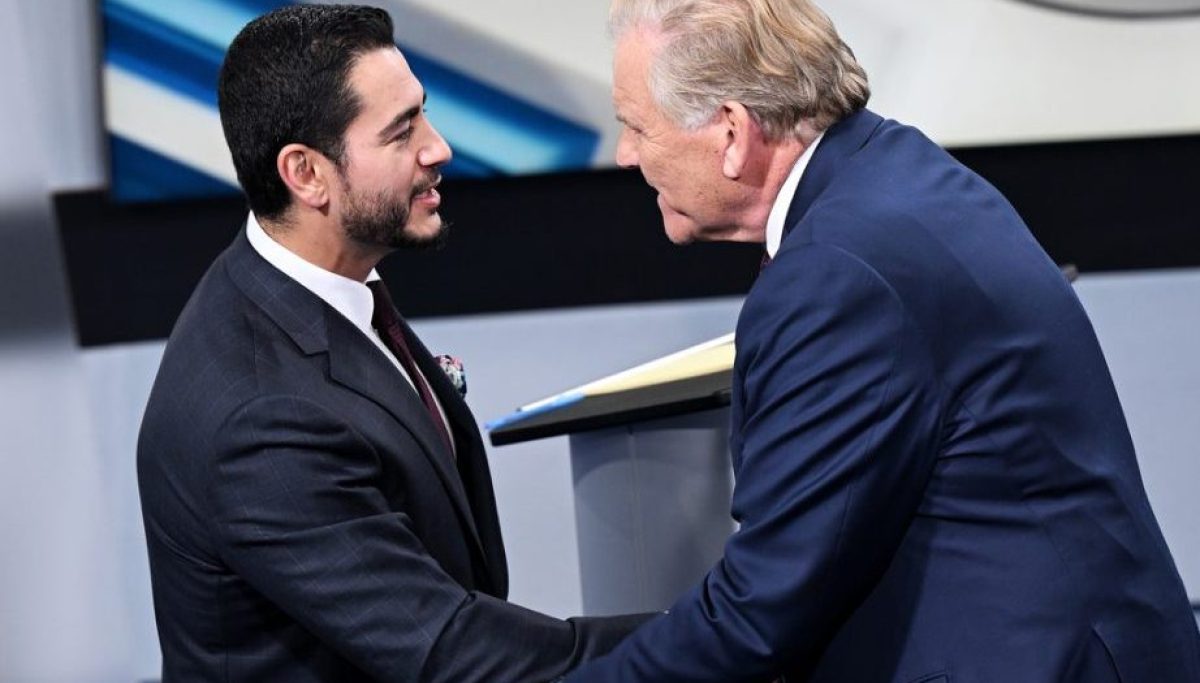
In Michigan, despite warnings from some mainstream Democrats and the state's Jewish community, Democratic candidate Abdul El-Sayed is building a lead over former Rep. Mike Rogers, R-Mich.
Respondents favored El-Sayed at 49% compared to the 42% who favored Rogers, according to the poll.
uncertain
who → build → poll
CNN's previous poll, released in early September, showed El-Sayed with a 47% share compared to Rogers' 44%, showing the former public health director El-Sayed building on his lead.
asserted
director → release → lead
The Democrat has consolidated his party's support after a contentious primary with Rep. Haley Stevens, D-Mich.
asserted
Democrat → consolidate → Stevens
Ninty-five percent of likely Democrat voters say they'll punch the ticket for El-Sayed, up from 90% in the September poll.
asserted
they → say → poll
Rogers voters, meanwhile, are motivated more by dislike for the Democratic candidate than faith in the Republican.
asserted
voters → motivate → Republican
57% told CNN pollsters they were voting against El-Sayed, up from 41% in a previous poll.
asserted
they → tell → poll
Rogers' favorability has also taken a hit, moving from 58% in September to 50% in October.
Texas
Texas State Rep. James Talarico also built upon a narrow lead over Republican Attorney General Ken Paxton, despite Talarico's extended absence from the campaign trail in early October.
Forty-nine percent of likely voters told pollsters they'd vote for Talarico, while 43% said they would vote for Paxton, according to the poll.
Texas, a state that has voted for exactly one new Democratic Senate candidate into office since Lyndon B. Johnson vacated his seat to become vice president, also voted more strongly for Trump in 2024 than in either of his previous elections.
uncertain
Johnson → take → elections
Despite the typically steadfast support for the GOP in the Lone Star State, Talarico is riding a wave of favorability and minority support to remain in pole position five days before polls close.
asserted
polls → rid → position
CNN's poll says 64% of likely voters of color support Talarico, including 22% of the cohort that voted for Trump in 2024.
asserted
that → say → 2024
Talarico is also leading Paxton in favorability within their own parties.
asserted
Talarico → lead → parties
24% of Republicans have an unfavorable view of Paxton, according to the poll.
uncertain
% → have → poll
Just 2% of Democrats, meanwhile, view Talarico unfavorably.
asserted
% → view → Talarico
In Kansas, a state which Trump won by 16 percentage points in 2024, incumbent Sen. Roger Marshall, R-Kan., is falling behind Democratic challenger Adam Hamilton.
asserted
Marshall → win → Hamilton
Forty-nine percent of likely voters say they support Hamilton, 45% say they support Marshall.
asserted
they → say → Marshall
Hamilton, a relatively unknown candidate, is far outperforming his own party in a state where Democrats are broadly unfavorable.
asserted
Democrats → outperform → state
57% of voters view the Democratic Party as unfavorable while only 38% of them feel the same about Hamilton.
asserted
% → view → Hamilton
Like Republicans in Michigan, likely voters in Kansas appear to be more highly motivated by a dislike for one candidate than strong positive feelings for another.
asserted
voters → appear → another
59% of Hamilton backers say they're motivated by opposition to Marshall.
asserted
they → say → Marshall
Hamilton, a Christian pastor, is even drawing support from across the aisle.
asserted
Hamilton → draw → aisle
Roughly 12% of Republicans and Republican-leaning likely voters say they support Hamilton, according to the poll.
uncertain
they → lean → poll
CNN conducted its polling via telephone between Oct. 20 and Oct. 27.
asserted
CNN → conduct → Oct.
Registered voters were randomly sampled, according to the outlet.
uncertain
voters → sample → outlet
838 likely voters were considered in Kansas, 783 in Maine, 768 in Michigan and 923 in Texas.
asserted
voters → consider → Texas
CNN tabulated its margins of sampling error at plus or minus 4.5% for Kansas and Maine, 4.7% in Michigan and 4.2% in Texas.
asserted
CNN → tabulate → Texas
Fox News Digital contacted all eight campaigns for further comment.
asserted
Digital → contact → comment
 The Aporia