Assume the following: A person unlawfully entered the United States 20 years ago and has since started a business and raised U.S.-citizen children, has no criminal record, and has never been found to be dangerous.
asserted
person → assume → record
Should federal immigration law treat that person the same way it treats someone who was just apprehended at the border?
asserted
who → treat → border
Should the law treat that person as if Congress had specifically made them subject to mandatory detention for criminal or terrorism-related conduct?
asserted
them → treat → conduct
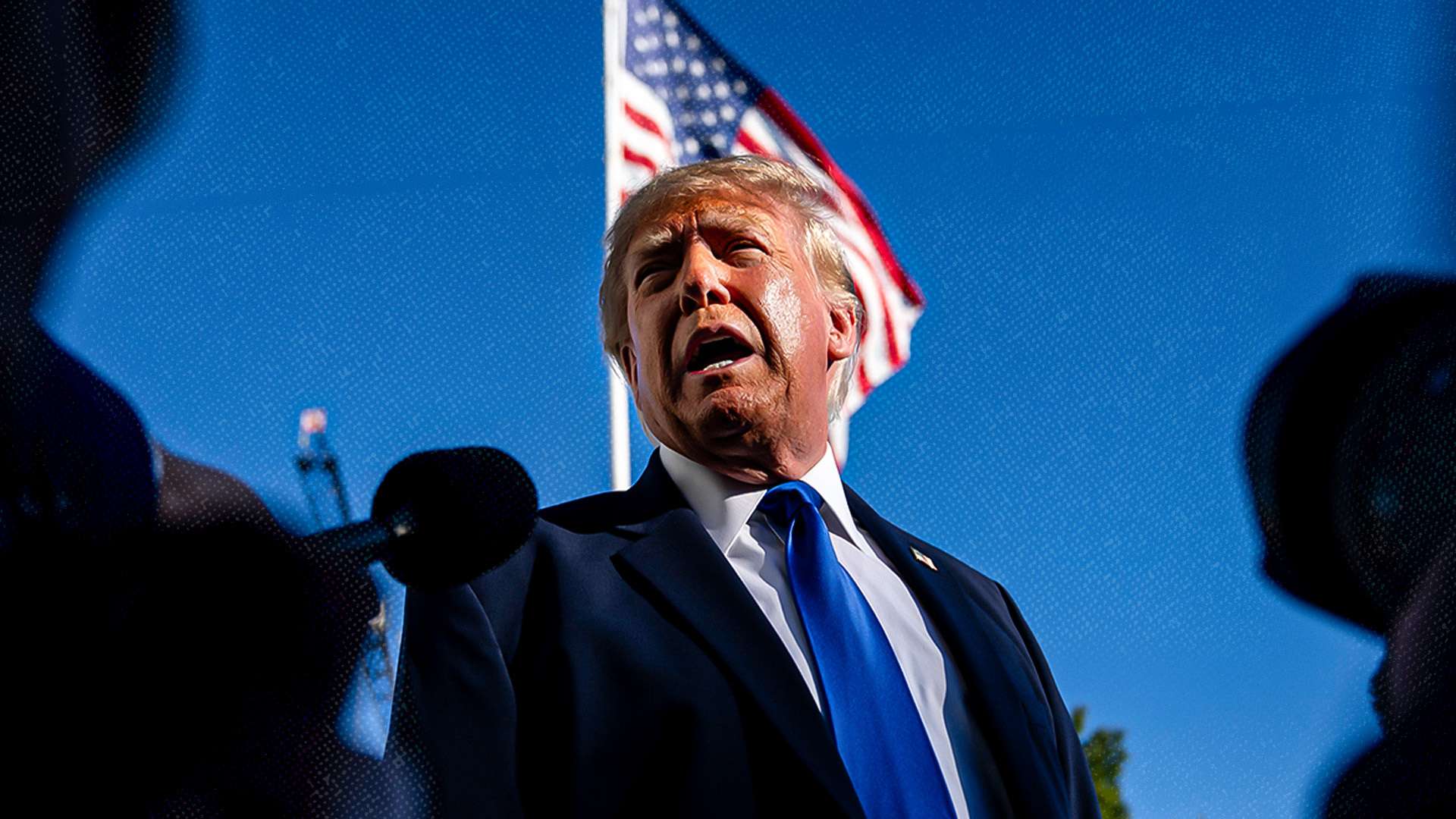
President Donald Trump's current policy treats noncitizens who entered without lawful admission as subject to mandatory detention without bond throughout removal proceedings, even if they have lived in the United States for decades and have no criminal record.
asserted
they → treat → record
The executive branch adopted that position in new Immigration and Customs Enforcement (ICE) guidance issued in July 2025, reversing its prior interpretation of the same detention law.
asserted
branch → adopt → law
The U.S. Supreme Court will now decide whether Congress actually required the result Trump is seeking.
asserted
Trump → decide → result
On October 1, the justices agreed to hear the case of Rhoney v. Barbosa da Cunha.
asserted
justices → agree → Cunha
Ricardo Aparecido Barbosa da Cunha, a Brazilian national, entered the United States without inspection around 2005.
asserted
Cunha → enter → 2005
He later applied for asylum, received work authorization, and eventually bought a home.
asserted
He → apply → home
He operates a small construction business and lives with his wife and two U.S.-citizen children.
asserted
He → operate → wife
He has no criminal record.
asserted
He → have → record
But immigration officers still arrested him while he was driving to work in Massachusetts in September 2025.
asserted
he → arrest → September
After Cunha challenged his detention, a federal court ordered a bond hearing and an immigration judge found that he posed neither a danger nor a flight risk and therefore released him on bond while his case proceeded.
asserted
case → challenge → bond
The Trump administration then appealed to the U.S. Court of Appeals for the 2nd Circuit and lost.
asserted
administration → appeal → Circuit
Now the Supreme Court will have the final word.
asserted
Court → have → word
The Supreme Court is not deciding whether Cunha may ultimately remain in the country.
uncertain
Cunha → decide → country
Instead, it is deciding the narrower question of whether the Immigration and Nationality Act mandates detention pending removal proceedings for someone like Cunha who is present in the United States without having been lawfully admitted.
asserted
who → decide → States
The legal dispute turns on two phrases in one section of this federal immigration law.
asserted
dispute → turn → law
According to Section 1225, a noncitizen present in the United States who has not been legally admitted is considered an "applicant for admission."
uncertain
who → accord → admission
But when Congress imposed mandatory detention later in that same section, it used additional language, applying it to an applicant for admission who is "seeking admission."
asserted
who → impose → admission
That distinction may sound technical and trivial, but its consequences are enormous.
uncertain
consequences → sound → ?
If every statutory "applicant for admission" is automatically still "seeking admission," then the government can treat someone who crossed the border 20 years ago the same as someone arriving today and keep them in jail without the possibility of bond.
asserted
who → seek → bond
If the two phrases mean two different things, however, then Cunha and others like him are generally eligible for a bond hearing under Section 1226, which permits both detention and release on bond or conditional parole.
asserted
which → mean → bond
The Trump administration argues that if Congress has deemed someone an applicant for admission, that person must necessarily still be seeking the admission for which they are considered an applicant.
asserted
they → argue → which
But the administration's argument asks the Court to stretch federal law beyond its reasonable limits.
asserted
argument → ask → limits
Congress expressly deemed certain people "applicants for admission."
asserted
people → deem → admission
It did not separately deem them to be "seeking admission."
asserted
them → deem → admission
And as the late Justice Antonin Scalia and his co-author Bryan Garner argue in their book, Reading Law: The Interpretation of Legal Texts, one of the key principles of textualism is that "a material variation in terms suggests a variation in meaning."
uncertain
variation → argue → meaning
When Congress uses different words in closely related provisions, in other words, courts should hesitate before assuming that the different words mean the exact same thing.
asserted
words → use → thing
In ordinary English, it is certainly difficult to describe a man driving from home to work after living in the United States for over two decades as presently "seeking admission."
asserted
it → describe → admission
He is not seeking to enter the U.S.; he already entered decades earlier.
asserted
he → seek → U.S.
The 2nd Circuit's unanimous opinion—written by Judge Joseph Bianco, a Trump appointee—reached this conclusion, holding that "seeking admission" describes ongoing activity rather than merely a retained statutory status.
asserted
seeking → write → status
Meanwhile, when the U.S. Court of Appeals for the 5th Circuit upheld the administration's position in a similar case, Judge Dana Douglas, an appointee of former President Joe Biden, invoked the same Scalia-Garner textualist principles in dissent.
asserted
Douglas → uphold → dissent
The legal dispute, therefore, does not follow neat partisan lines.
asserted
dispute → follow → lines
Judges from different ideological backgrounds have both concluded that the administration's reading goes beyond the words that Congress wrote.
asserted
Congress → conclude → that
The broader statutory structure also supports that conclusion.
asserted
structure → support → conclusion
Congress has long required mandatory detention in Section 1226 for specified criminal and terrorism-related grounds.
asserted
Congress → require → grounds
And the Laken Riley Act of 2025 expanded those mandatory-detention categories.
asserted
Act → expand → categories
But if nearly everyone who ever illegally entered the country is already subject to mandatory detention, as the administration asserts, then all of those carefully drawn separate categories for mandatory detention suddenly become superfluous and pointless for noncitizens who illegally entered the country, an objection that Douglas raised in dissent.
asserted
Douglas → enter → dissent
History also clarifies the point.
asserted
History → clarify → point
…and 21 more, not listed.
 The Aporia