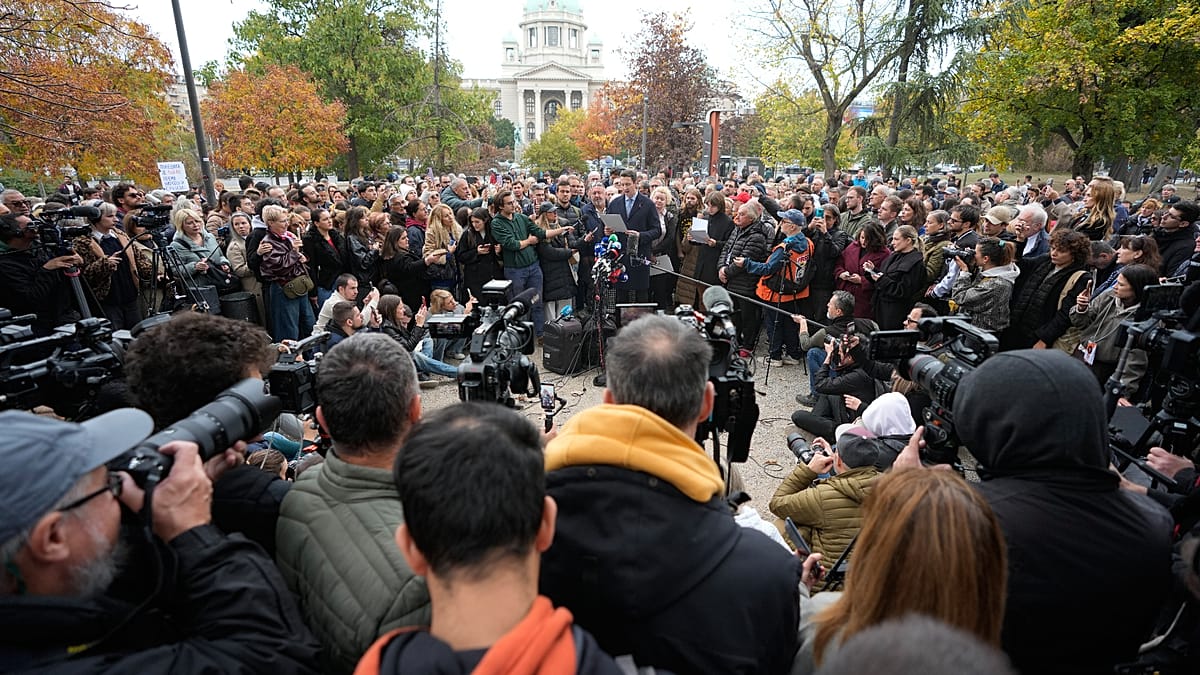
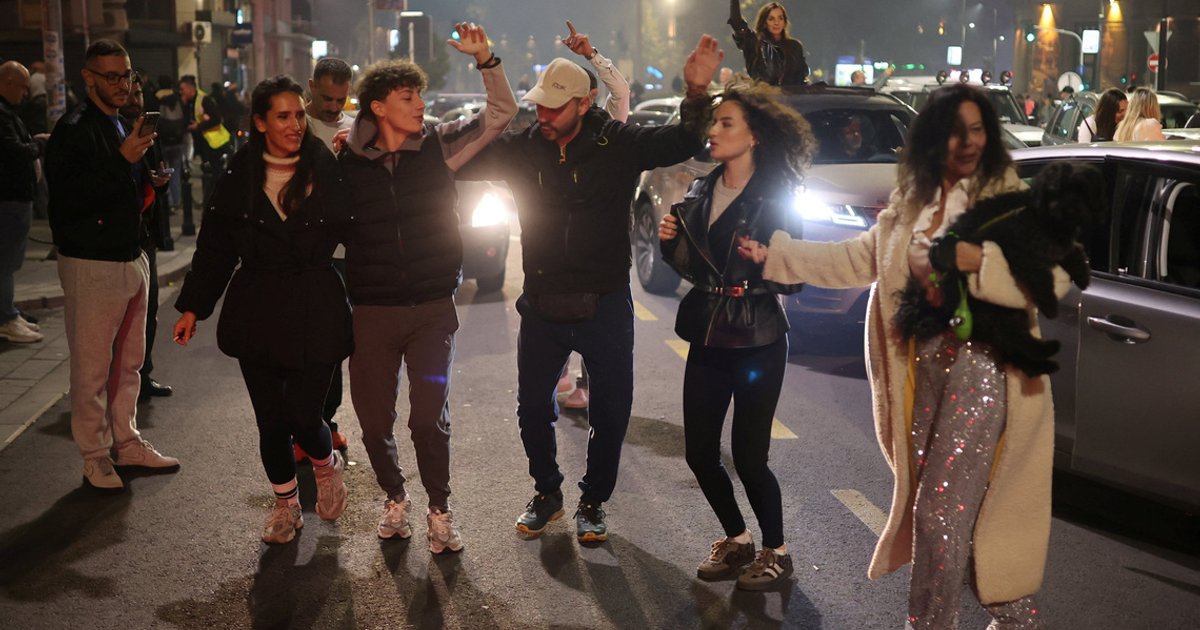
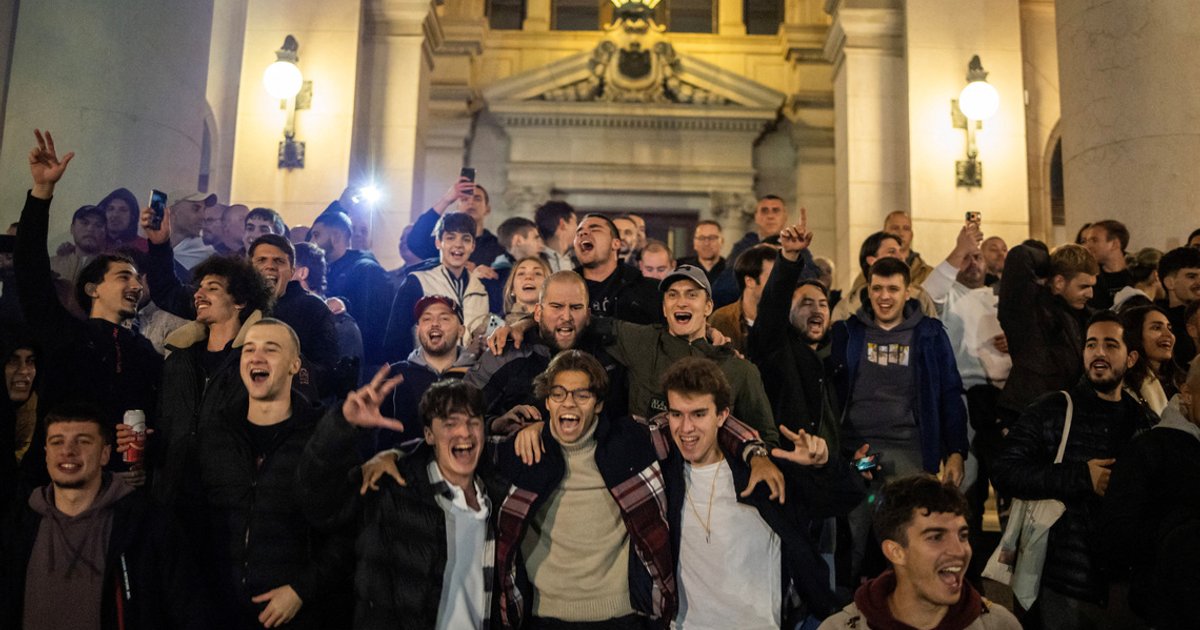
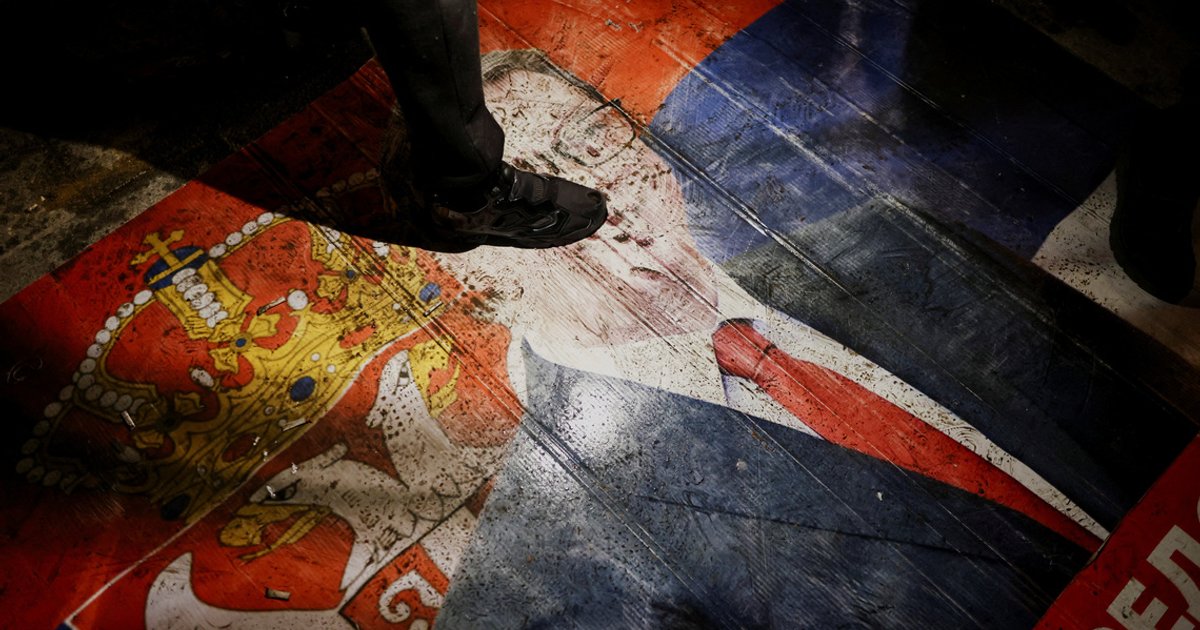
Photo via Al Jazeera

What European students can learn from their Serbian peers

Read the original at Al Jazeera ↗
Cite

Matković, A. (2026, October 29). What European students can learn from their Serbian peers. Al Jazeera. https://www.aljazeera.com/opinions/2026/10/29/what-european-students-can-learn-from-their-serbian-peers?traffic_source=rss

Dated from the outlet's own feed. Check the original for its byline.

Al Jazeera · collected 2026-10-29 · by Aleksandar Matković

Quick Summary

Serbian students played a crucial role in recent elections that significantly weakened the long-standing rule of President Aleksandar Vucic. Despite initial skepticism from international media, these students organized nationwide protests independently from political parties and foreign influences for nearly two years. By establishing their own governance structures within universities and holding peaceful demonstrations, they created an alternative model of politics that resonated with broader societal frustrations over corruption and economic precarity.
Written by AI on 2026-10-30, from this article's own text only (the story summary below draws on all the coverage).

AI analysis

Story summary

On October 29, 2026, Serbia's student movement demanded the resignations of top officials in the police, intelligence agencies, and judiciary after winning a historic election against former leader Aleksandar Vucic. The movement, known as "The Students’ List," secured victory on October 25, marking a significant shift in Serbia’s political landscape. Earlier, around 150,000 supporters gathered for the final rally in Belgrade before the election, seeking to oust Vucic's party. The election was seen as one of the most competitive in recent history due to close polling between Vucic’s SNS and the Students’ List. After the victory, the new MPs called for swift action against corruption and demanded that key institutions be cleansed of officials linked to past regimes. This movement follows nearly two years of student-led protests initiated by a canopy collapse at a railway station in Novi Sad in 2024, which killed 16 people.

Written for “Serbia's Student List Triumph” on 2026-10-30, grounded in this article and the 56 other(s) covering the same event.

Story

📰 Serbia's Student List Triumph
Politics · 57 article(s) covering the same event. Compare every outlet's account →

Compared with similar articles

This article reads leans strongly left and hedges 5% of its claims. Each row says how that neighbour differs.
The Guardian
⚖️ Leans left further right than this Hedges 0 of 6 claims Outlet record 66/100
Euronews
Hedges 13 of 128 claims Outlet record 60/100
“While both articles discuss Serbia's student movement winning an election, Article A describes the context leading up to the victory and its impact on the political landscape, whereas Article B focuses on the challenges facing the student movement after their electoral success.”
Al Jazeera
⚖️ Leans left further right than this Hedges 1 of 2 claims Outlet record 60/100
“Article A discusses the student movement demanding justice for victims of a railway station canopy collapse, while Article B focuses on the electoral impact and broader political significance of the student movement.”
The Straits Times
Hedges 0 of 13 claims Outlet record 66/100
“Article A covers immediate reactions to the election victory, while Article B provides a broader analysis of what European students can learn from their Serbian peers' actions over the past two years.”
The Hindu
⚖️ Leans left further right than this Hedges 1 of 24 claims Outlet record 77/100
“While both articles discuss the impact of Serbian students' actions following an election, Article A covers the initial movement and its electoral victory, whereas Article B discusses subsequent demands made by the students after winning the election.”
The Straits Times
⚖️ Leans left further right than this Hedges 1 of 26 claims Outlet record 66/100
“While both articles discuss the success of Serbia's student movement in an election, Article A focuses on the immediate aftermath and implications of Vucic's defeat, while Article B provides a broader perspective on what other European students can learn from this movement, suggesting they cover different aspects or timeframes.”
Los Angeles Times
⚖️ Leans strongly left Hedges 2 of 41 claims Outlet record 95/100
“Article A reports on the electoral defeat of Aleksandar Vucic in Serbia, while Article B focuses more broadly on the nationwide student movement that led up to this victory and what it means for other European students.”
BBC News
⚖️ Leans left further right than this Hedges 3 of 35 claims Outlet record 69/100
“Article A discusses the initial impact of the student movement on the election results, while Article B reports on the aftermath and demands made by newly elected MPs from the Student List.”
The Straits Times
Hedges 3 of 18 claims Outlet record 66/100
“Article A describes the immediate aftermath of Vucic's electoral defeat and subsequent celebrations, while Article B reflects on the broader impact and significance of the student movement that led to his defeat.”
The Guardian
⚖️ Leans left further right than this Hedges 1 of 39 claims Outlet record 66/100
“Article A discusses the impact and outcome of a nationwide student movement leading to an electoral victory, while Article B focuses on the Student List candidates gathering to discuss their plans for cleaning up institutions post-election.”
How this article was measured signals, leaning charts, publisher record, byline, topics and claims

Signals How these are calculated →

Claims extracted
56
sentences that state something as happening or true
Uncertain
5%
3 of 56 hedged ("reportedly", "may", "according to")
Leaning
Leans strongly left
of the writing, not the subject · beta estimate
Publisher signals
60/100
Al Jazeera's corrections and hedging, across everything collected from it. Not a measure of accuracy.
Outlets on this story
57
Politics
Same framing elsewhere
1
articles that frame the event the way this one does
Analyzed 2026-10-30 · how these are computed

How this is being covered How these are calculated →

Article leaning vs. publisher reliability
Source leaning vs. consistency

Publisher

Al Jazeera · 4438 article(s) · 2 correction(s) detected
Running correction rate · 2 correction(s)

Who wrote this

Aleksandar Matković
1 article(s) here · 1 carrying a prediction
🔮 Associating with them would have been damaging to the movement.
The only article under this byline in the corpus.

Topics

China Russia Serbia Serbian the European Union

Subjects

Serbia GPE · 4× Serbian NORP · 4× Novi Sad GPE · 2× Aleksandar Vucic PERSON · 1× China GPE · 1× Russia GPE · 1× Vucic PERSON · 1× the European Union ORG · 1× the Faculty of Technical Sciences ORG · 1× the United States GPE · 1×

Narrative

Students and their families had been squeezed from all sides: by local elites whose corruption and mismanagement eroded the standard of living and plunged them into precarity; and by international corporations, which fed that corruption, while offering substandard jobs with little prospect of social mobility.
framing: assertive · carried by 1 article(s) · first seen 2026-10-30
🔮 Associating with them would have been damaging to the movement.
2026-10-30 · Al Jazeera
What European students can learn from their Serbian peers · assertive framing

Claims (56 extracted, 3 hedged)

A nationwide student movement shook the foundations of a deeply entrenched government and on Sunday, it dealt it an unprecedented electoral blow – something opposition parties had failed to do for more than a decade. asserted
parties → shake → decade
Until the election results came out, the Serbian student movement was largely ignored by international media. asserted
movement → come → media
The students were seen as naive, irrelevant, disaffected youth. asserted
students → see → youth
That they were underestimated by the world and by President Aleksandar Vucic was perhaps to their advantage. asserted
underestimated → underestimate → advantage
But Serbian students did not just rely on their opponent’s overconfidence. asserted
students → rely → overconfidence
For almost two years, they built and practised an alternative model of politics that soon became visible and eventually triumphed at the polls. asserted
that → build → polls
The hidden abode of alternative politics Although the student protests were triggered by one particular incident – the death of 16 people in a train canopy collapse at a newly renovated station in 2024 – their anger had much deeper roots. asserted
anger → trigger → roots
Students and their families had been squeezed from all sides: by local elites whose corruption and mismanagement eroded the standard of living and plunged them into precarity; and by international corporations, which fed that corruption, while offering substandard jobs with little prospect of social mobility. asserted
which → squeeze → mobility
The protests the students started were not the first against Vucic and his government. asserted
students → start → Vucic
But what was different this time is that they remained independent: neither aligned with any domestic political party nor any of the four superpowers Serbia is dealing with – Russia, China, the European Union and the United States. asserted
Serbia → remain → superpowers
Students managed to sustain the pressure because they did not join existing politics. asserted
they → manage → politics
Most Serbian opposition parties are small, centralised and increasingly detached from the crises people face daily. asserted
people → face → crises
Associating with them would have been damaging to the movement. asserted
Associating → associate → movement
Instead, the students created their own alternative political scene. asserted
students → create → scene
Across the country, they blockaded and took over universities, bringing higher education to a standstill. asserted
they → blockade → standstill
They filled squares with peaceful protests and vigils. asserted
They → fill → protests
They set up their own structures to run their affairs at occupied buildings. asserted
They → set → buildings
This strong self-reliance was apparent at the Faculty of Technical Sciences in Novi Sad — Serbia’s largest university department, with more than 16,000 students enrolled — which I visited for the first time in March 2025. asserted
I → enrol → March
I was invited there to speak to students. asserted
I → invite → students
The faculty looked nothing like it had before. asserted
it → look → ?
Student guards controlled entrances with communication equipment and metal fencing. asserted
guards → control → equipment
LED screens in the corridors announced plenaries and alternative lectures for students. asserted
screens → announce → students
There were rooms stocked with food sorted by type, and medical supplies, with student nurses tending to anyone in need. asserted
nurses → be → need
Kitchens, reading rooms and a student-run administration could also be seen at the faculty. uncertain
Kitchens → see → faculty
Discussions on current political and economic issues of interest to Serbia, organised by the students’ alternative education sections, often involved 300 to 400 students and lasted five or six hours, covering topics that would later enter the movement’s electoral programme. asserted
that → organise → programme
The more the government and its repressive apparatus attacked them, the more the people stood with them. asserted
people → attack → them
Introducing direct democracy As this bond between the students and the wider population grew deeper, democratic participation expanded. asserted
participation → introduce → students
By March 2025, suffering more and more attacks, the students called for people to establish citizens’ assemblies akin to the student plenaries, in order to aid them in seeking justice for the 16 killed in Novi Sad. asserted
people → suffer → Sad
As the Serbian government continued its repressive strategy, the students realised that a change was necessary and made the first public demand for snap elections. asserted
change → continue → elections
The students took decisions collectively. asserted
students → take → decisions
They chose academics and activists whom they had invited to their occupied faculties to discuss and debate with well-known public figures. asserted
they → choose → figures
It was collectively decided that established politicians would not be nominated. asserted
politicians → decide → ?
The students made it clear they rejected being incorporated into a type of leadership-based politics that was failing all across Europe. asserted
that → make → Europe
Candidates were chosen after interviews with students. asserted
Candidates → choose → students
Last summer, I was invited to one such interview session near Novi Sad. asserted
I → invite → Sad
There was a large group of 300 students who questioned each candidate. asserted
who → be → candidate
Phones had to be left outside. asserted
Phones → have → ?
This was the hidden abode of a new kind of politics: decisions were made not at a party headquarters by a select few, but by a network of assemblies, local committees and informal institutions. asserted
decisions → make → assemblies
It was leaderless, and in that particular moment, it worked. asserted
it → work → moment
The challenges ahead The Student List has already started negotiations to form the government. asserted
List → start → government
…and 16 more, not listed.

💬Give feedback
🕘History 🎫Support