Australia’s defence chief has ruled out further action against senior military commanders over failures linked to alleged war crimes in Afghanistan, despite a damning secret inquiry finding a breakdown of leadership allowed a culture of lawlessness to flourish within the nation’s elite special forces.
asserted
culture → rule → forces
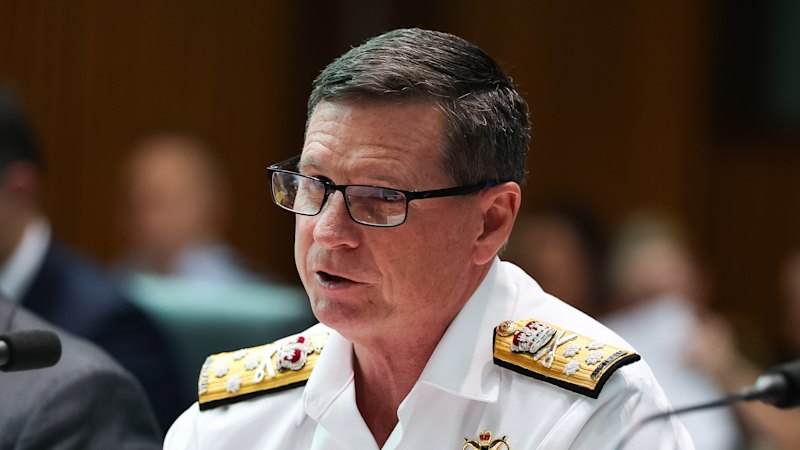
Chief of the Defence Force Admiral Mark Hammond told a Senate estimates hearing on Thursday that Defence had completed its response to the inquiry, which found commanders ignored warning signs, tolerated serious misconduct and failed to challenge an increasingly arrogant and insular Special Air Service Regiment.
asserted
commanders → tell → Regiment
His declaration follows the publication of a long-suppressed report that raises fresh questions about whether senior officers have escaped accountability for one of the darkest chapters in Australian military history.
asserted
officers → follow → history
The Inspector-General of the Australian Defence Force inquiry found a “significant failure of good leadership and effective command” within the SAS, where some soldiers came to regard themselves as untouchable and ordinary military rules as optional.
asserted
soldiers → find → themselves
“Those findings and recommendations were actioned by my predecessors.
asserted
findings → action → predecessors
All departmental actions relevant to that inquiry have been completed,” Hammond said.
asserted
Hammond → complete → inquiry
“Referrals were made where necessary to government, and I have no additional testimony to add to that of my predecessors.”
asserted
I → make → predecessors
The inquiry, completed in 2022 but only partly released this week, found an “absence of effective leadership at various levels”, with warning signs of deteriorating standards reaching higher headquarters without prompting adequate intervention.
asserted
inquiry → complete → intervention
An executive summary of the findings was uploaded to the IGADF’s website on Tuesday and was first published by The Australian.
asserted
summary → upload → Australian
Defence had twice refused to release the report under freedom of information laws and Labor and the Coalition voted to keep it secret.
asserted
Labor → refuse → it
Among the most disturbing findings was the revelation that commanders had access to battlefield statistics showing unusually high numbers of enemy combatants killed, but almost no wounded insurgents and few Australian casualties.
asserted
commanders → show → combatants
“Some commanders were alert to this data and rumours that accompanied it while others were not, which may suggest an abandonment of curiosity,” the report found.
uncertain
report → accompany → curiosity
“It is extraordinary that no effective action was taken given the gravity of the matters the subject of rumours.”
The findings expose a troubling gap between the accountability demanded of soldiers accused of unlawful killings and the responsibility borne by those commanding them.
asserted
findings → take → them
The original 2020 Brereton inquiry uncovered credible evidence that Australian special forces unlawfully killed 39 Afghan civilians and prisoners, but largely confined responsibility to soldiers and junior commanders.
asserted
forces → uncover → soldiers
The latest inquiry did not establish that senior commanders knew war crimes were being committed, but found a succession of leadership failures had allowed serious cultural problems to go unchecked.
asserted
problems → establish → failures
Under questioning from Greens leader David Shoebridge, Hammond agreed the IGADF report identified “serious failures here that need to be addressed” but said recommendations for change had already been made by past ADF chiefs.
asserted
recommendations → agree → chiefs
Liberal frontbencher and former SAS captain Andrew Hastie, who served in Afghanistan, said the findings closely reflected his own experience and demonstrated that responsibility extended well beyond individual soldiers.
“I lived a lot of what I read in that report.
asserted
I → serve → report
There’s almost 50 findings, and a lot of it rings very true to me as a junior officer at the time,” Hastie told ABC radio.
asserted
Hastie → ’ → radio
“In the end, if you hold a commission in the Australian Army, then you are accountable for those underneath you.
asserted
you → hold → you
The inquiry described a regiment consumed by its own exceptionalism, where junior officers were sometimes effectively subservient to experienced non-commissioned officers and attempts to challenge entrenched behaviour were undermined.
asserted
attempts → describe → behaviour
Some soldiers pursued battlefield engagements for medals and personal recognition, while a closed culture likened by witnesses to a “bikie gang” fostered arrogance and contempt for outsiders.
asserted
culture → pursue → outsiders
Even the establishment of a drinking venue at Camp Russell, despite explicit bans on alcohol in Afghanistan, illustrated the breakdown of military discipline.
asserted
establishment → illustrate → discipline
The report also criticised successive deployments and decisions by government and military leaders that encouraged the SAS to see itself as superior rather than specialist.
asserted
that → criticise → itself
Hastie, who gave evidence against Victoria Cross recipient Ben Roberts-Smith in his unsuccessful defamation case against this masthead, said he welcomed the report’s release.
asserted
he → give → release
“I believe in transparency, and this is an important part of our military history that we need to understand and learn from,” he said.
asserted
he → believe → that
Roberts-Smith and former SAS soldier Oliver Schulz are separately facing war crimes charges, who have strongly denied the claims.
uncertain
who → face → claims
The full inquiry remains secret because it contains sensitive evidence gathered during the original Afghanistan investigation.
asserted
it → remain → investigation
Subscribers can sign up to our weekly Inside Politics newsletter.
asserted
Subscribers → sign → newsletter
 The Aporia