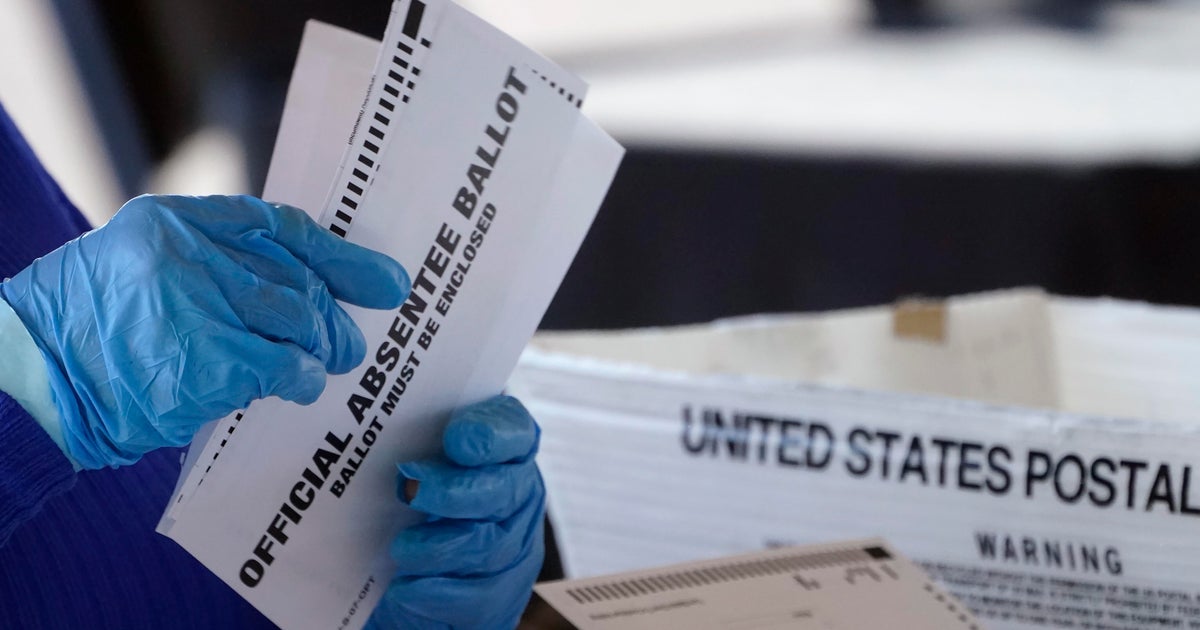
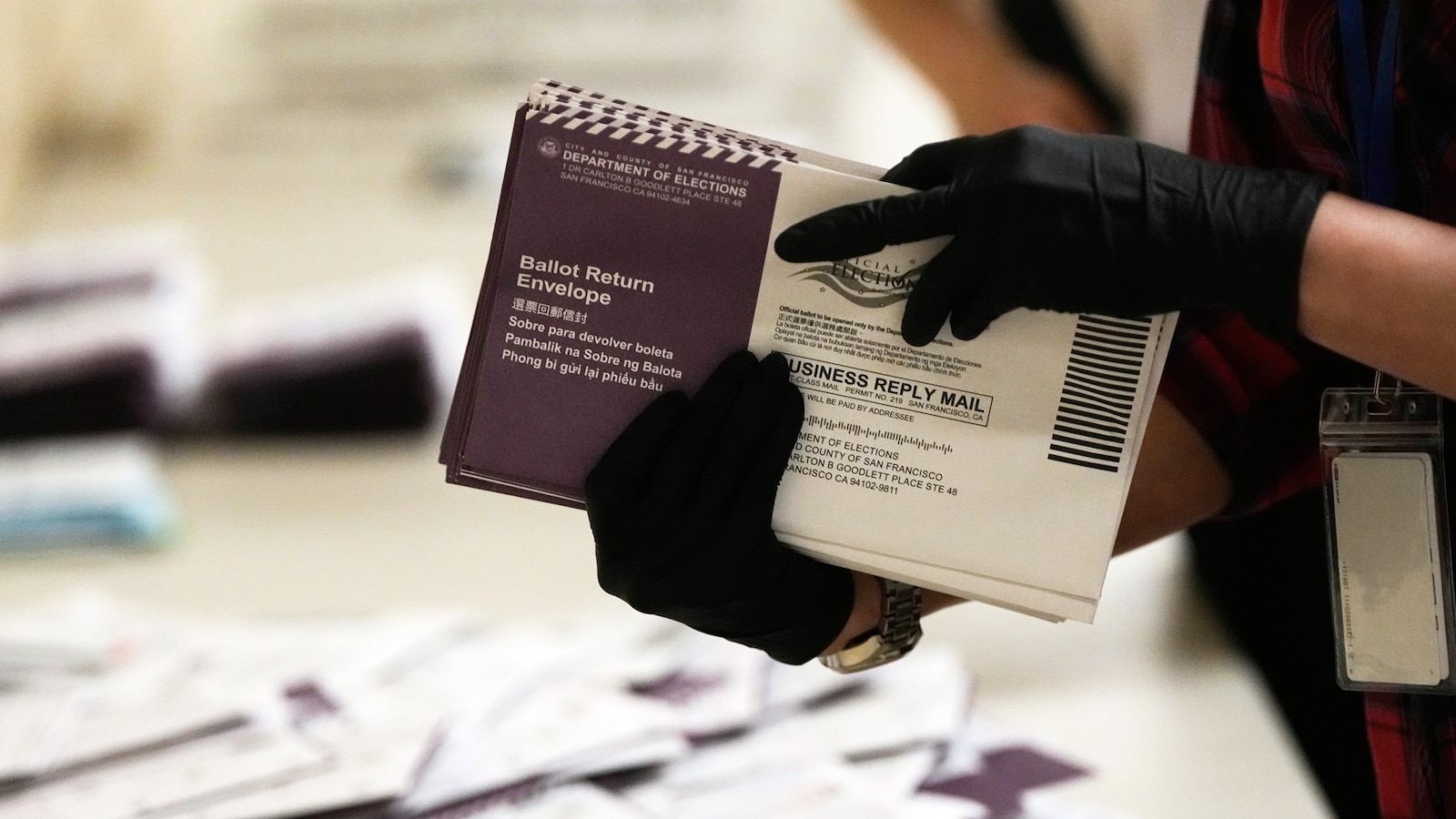
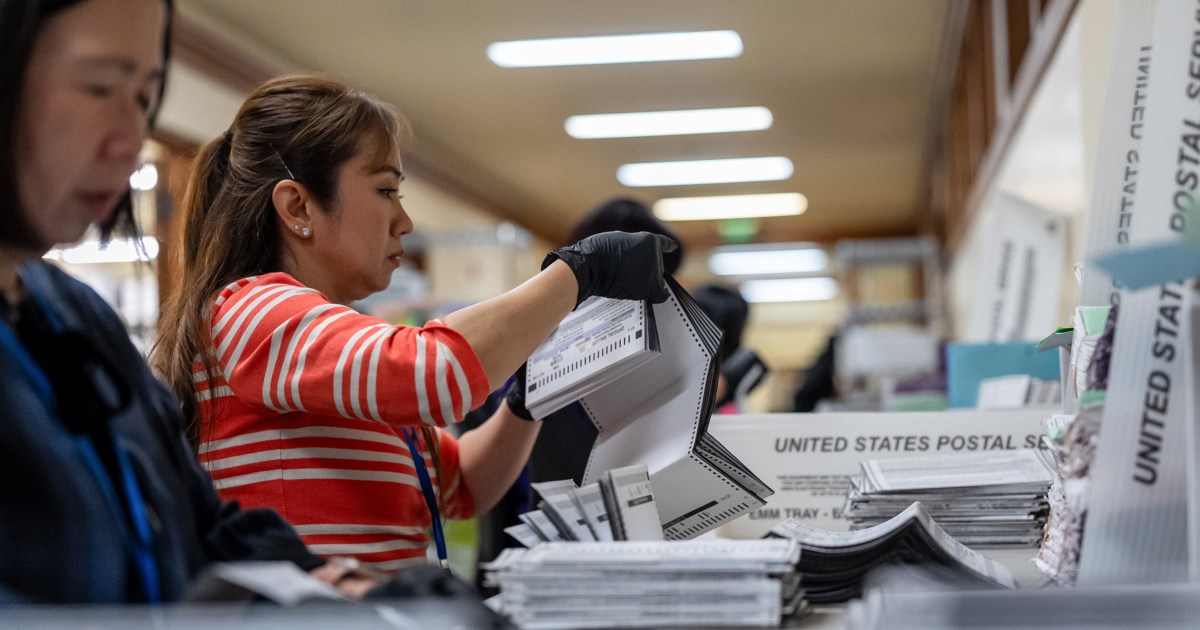
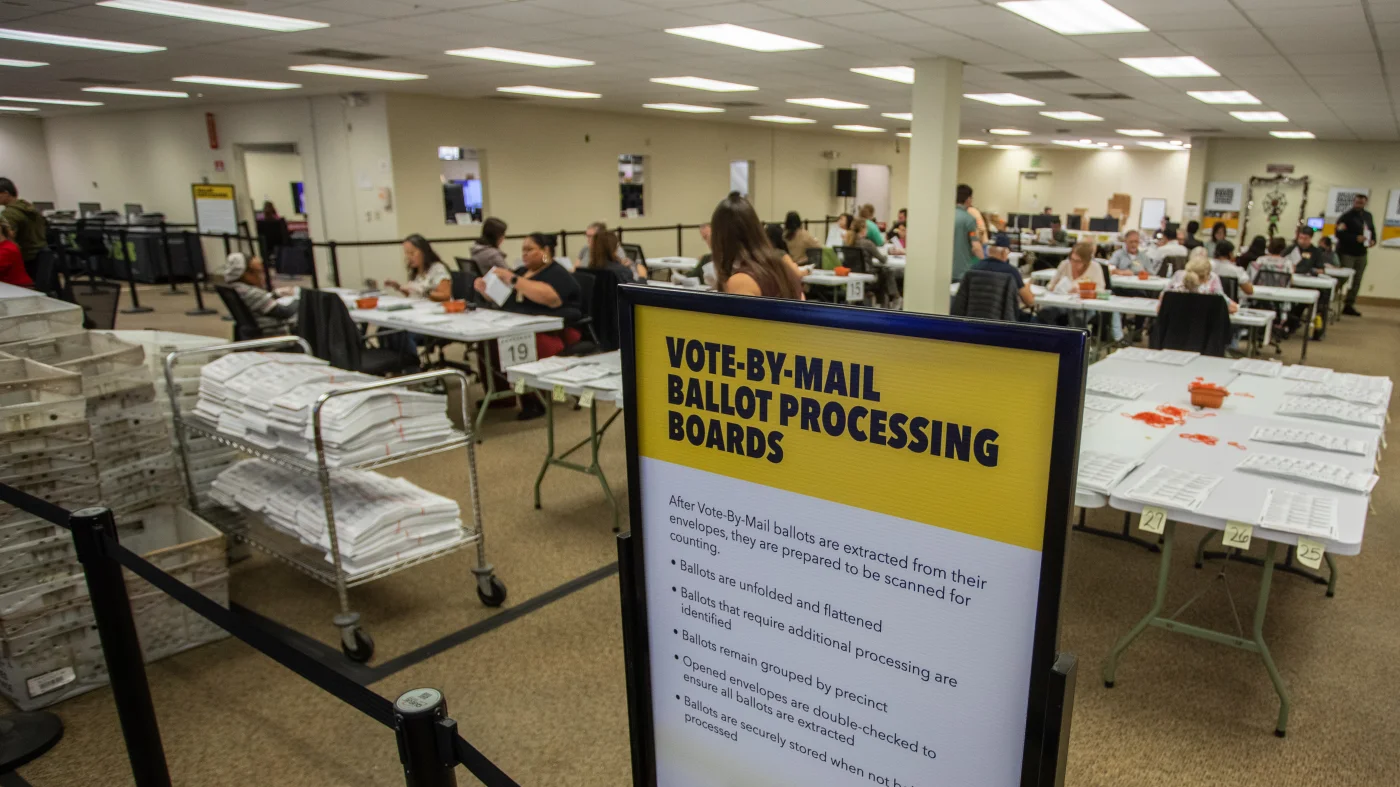
A federal judge on Wednesday rejected the Trump administration's bid to require California election officials to separate out mail ballots received from roughly 20,000 people it claims are not U.S. citizens.
uncertain
it → reject → people
The decision from U.S. District Judge David Carter is the latest setback for the Trump administration in its efforts to exert more federal control over election administration just ahead of the Nov. 3 midterm elections, when voters will decide which party controls the House and Senate.
asserted
party → exert → House
Carter said that the Justice Department's request for California to segregate and exclude more than 20,000 ballots violates "longstanding constitutional principles" giving states the authority to administer their own elections.
asserted
California → say → elections
"Never before in American history has the federal government, on the eve of an election, sought to coerce a state and local government to abandon their own Constitutional elections procedures and bend to the will of the Executive Branch," the judge wrote in a 26-page decision.
asserted
judge → seek → decision
"In bringing this lawsuit, the Executive would have this Court believe that it reigns as a sole sovereign.
asserted
it → bring → sovereign
"
If he granted the Trump administration the relief it sought, either political party could "create chaos for their own political purpose to disrupt the election process," Carter wrote.
uncertain
Carter → grant → process
"Over 20,000 registered Californians would potentially lose the right that generations of Americans have fought to preserve," he said.
asserted
he → register → Americans
Carter echoed concerns raised by lawyers for California and Los Angeles County about the accuracy of the list of people that the Justice Department said are not U.S. citizens, writing that its protocol for verifying citizenship "raises significant concerns."
The judge called the Trump administration's methodology for creating the list "vague" and said he "cannot conclude that plaintiffs' process is credible."
asserted
process → echo → list
Carter also warned that requiring California election officials to set aside mail ballots received from those alleged noncitizens would likely lead to disenfranchisement.
asserted
requiring → warn → disenfranchisement
"This Court will not deprive Californians who have met the requirements for voter registration of their fundamental right because of Plaintiff's unfounded allegations," he wrote.
asserted
he → deprive → allegations
During a hearing a day earlier, Carter appeared skeptical of the government's arguments that thousands of ballots should be set aside and not counted while election workers verify they were cast by U.S. citizens.
asserted
they → appear → citizens
"I think there's always been an encouragement of people's right to vote, we the people, because when we exercise our right to vote, we exercise equality," Carter said.
asserted
Carter → think → equality
The judge pressed the Justice Department as to why, rather than risk disenfranchising lawful voters, prosecutors can't instead pursue indictments after the election of those they believe voted illegally.
asserted
they → press → those
He noted the Justice Department can rely on the envelopes from returned ballots, which have identifying information, to show a noncitizen voted in violation of federal and state law.
asserted
noncitizen → note → law
"The remedy as a good prosecutor is to make sure these people are prosecuted," he told Justice Department lawyers.
asserted
he → make → lawyers
Carter said the Justice Department's request to separate out ballots from people the government believes are noncitizens until their citizenship can be verified would be a "monumental change" to election procedures while voting is taking place.
asserted
voting → say → place
The decision from Carter, appointed by former President Bill Clinton, came after the Justice Department went to the U.S. Court of Appeals for the 9th Circuit on Friday and asked that court to require California election workers to set apart ballots from voters on a government list of 20,000 people it claims are noncitizens.
But the appeals court ruled 2-1 on Monday to
, finding that the Trump administration failed to give the district judge "adequate opportunity" to consider whether to grant temporary relief.
uncertain
administration → appoint → relief
against California, its secretary of state Shirley Weber and Los Angeles County registrar-recorder and county clerk Dean Logan earlier this month after it claiming that roughly 20,000 suspected noncitizens were registered to vote and had received mail ballots.
asserted
noncitizens → claim → ballots
There are more thanThe government gave the elections officials 48 hours to review its list of people it said are ineligible to vote and asked California to ensure ballots received from them are not tabulated until their citizenship can be confirmed.
Shortly after California officials raised concerns with the accuracy of the list and the Justice Department's demand, the government sued and asked the court to issue a temporary order requiring state election workers to sequester ballots from the suspected noncitizen voters.
asserted
government → be → voters
The Justice Department has argued that California's refusal to segregate the ballots risks diluting Americans' votes.
asserted
refusal → argue → votes
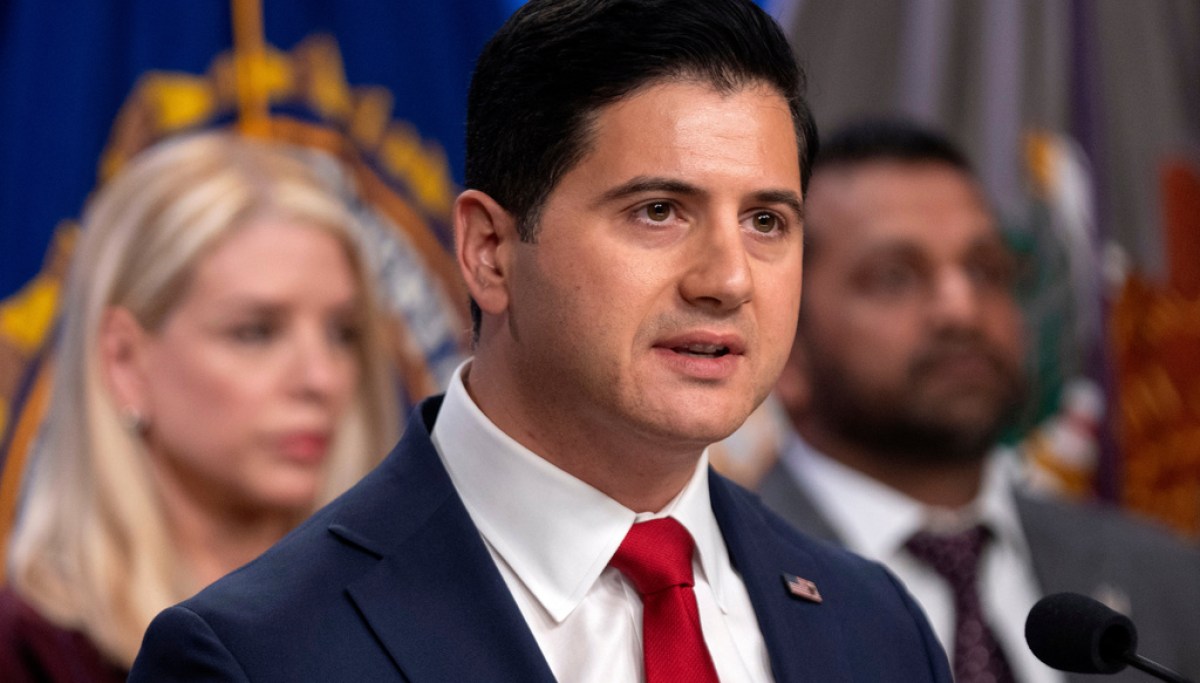
Additionally, because California is potentially commingling lawful ballots with those cast by alleged noncitizens, the state is thwarting Congress's efforts to protect election integrity, Bill Essayli, the top federal prosecutor in Los Angeles, said during a hearing.
asserted
Essayli → commingle → hearing
Federal and California law prohibit noncitizens from voting.
asserted
law → prohibit → noncitizens
"There's an interest in the American public having trust and confidence in their elections," Essayli said.
asserted
Essayli → be → elections
He stressed that the Trump administration is not asking to void or cancel any ballots.
asserted
administration → stress → ballots
But California officials have denounced the Justice Department's lawsuit as a "reckless political stunt" designed to cast doubt on its election results.
asserted
officials → denounce → results
Anne Bellows, a deputy attorney general for California, told the court during the hearing that the relief sought by the Trump administration — an order prohibiting California from tabulating ballots from the voters it identified as "likely" noncitizens — would be "incredibly disruptive" for election officials and a "recipe for disenfranchisement."
asserted
it → tell → disenfranchisement
Lawyers for the state also said the Trump administration has not been transparent about how or when it received California's publicly available voter registration list, raising concerns the government used outdated information to come up with its list of the 20,000 alleged noncitizens on the state's voter rolls.
asserted
government → say → rolls
The Trump administration said that it "enhances" that voter data using a third-party service.
asserted
it → say → service
Lawyers for Los Angeles County, meanwhile, warned that it would be "impossible" for election workers there to segregate ballots returned by alleged noncitizens by the end of the election period, since they would have to review ballot envelopes by hand to identify those received from voters on the Trump administration's list.
asserted
they → warn → list
And in court filings, Los Angeles County argued the Justice Department's data is "unreliable."
asserted
data → argue → filings
Of the 20,000 records on the government's list, only just over 7,000 had addresses in Los Angeles County, lawyers said.
asserted
lawyers → have → County
Additionally, a review of a sample of 200 records from the list found that more than half corresponded to voter registrations that were canceled or inactive, so no ballot was mailed.
asserted
ballot → find → registrations
For the sample of 200 voters who reported their birthplace, just over 38% indicated they were born in the U.S., Los Angeles County officials said.
asserted
officials → report → U.S.
But an official with U.S. Citizenship and Immigration Services said in a declaration filed with the district court that the agency conducted its own review of immigration records for the 200 people in the county's sample and determined none were born in the U.S.
The official, Nicolas Bartell, separately acknowledged that as part of an "ongoing" analysis of voter data, USCIS identified roughly 189 records "with minor data discrepancies" that were on the list of 20,000 registered voters sent to California.
asserted
that → say → California
Voting in California has been underway since early October, when mail ballots were sent out to registered voters.
asserted
ballots → send → voters
In Los Angeles County, more than 550,000 ballots have already been processed, lawyers for Logan, the registrar-recorder and county clerk, said.
asserted
lawyers → process → Logan
More than 3.5 million mail ballots have been returned statewide.
asserted
ballots → return → ?
President Trump has for months claimed that Democratic-led states had voters on their rolls who are not U.S. citizens, though instances of noncitizen voting are rare.
asserted
instances → claim → voting
The president's claims are part of a broader effort by his administration to assert more control over federal elections.
uncertain
claims → assert → elections
Beyond the effort in California, federal prosecutors in Washington state
there to set aside ballots received from more than 400 people they allege are not U.S. citizens and warned legal action could follow.
uncertain
action → set → people
…and 1 more, not listed.
 The Aporia